12 Best Decagon Alternatives in 2026: Features, Pricing, and Fit Compared
:quality(80))
Quick Summary
Callers leads for teams that want omnichannel automation across voice and messaging, with inbound and outbound handled by one agent, live in weeks on transparent pricing. Sierra, Intercom Fin, and Ada are the closest support-concierge peers. Cognigy, PolyAI, Cresta, Parloa, Wonderful, and Five9 cover enterprise CX. Voiceflow and Anyreach round out the 12.
# | Tool | Key features | Best for | Pricing |
|---|---|---|---|---|
1 | Callers | Omnichannel agents across voice, SMS, WhatsApp, email, and chat; Script Builder and Workflow Orchestration; model-agnostic LLM optimization; step-level analytics | Teams running high-volume inbound and outbound, not just chat deflection | Custom, usage-based per minute |
2 | Sierra | Agent OS, Ghostwriter, omnichannel including voice and ChatGPT | Enterprises wanting a branded concierge agent | Outcome-based (contact sales) |
3 | Intercom Fin | $0.99 per outcome, runs on any helpdesk, proven resolution | SMB to enterprise wanting public, self-serve pricing | $0.99 per outcome |
4 | Ada | Multi-LLM reasoning, Playbooks, omnichannel, deep compliance | Large brands with 300k+ yearly conversations | Custom (contact sales) |
5 | Cognigy | 100+ integrations, agentic platform, agent assist | Enterprises with complex contact-center estates | Custom (contact sales) |
6 | PolyAI | Voice-native inbound, containment, managed delivery | Voice-heavy inbound customer service | Custom (contact sales) |
7 | Cresta | Human agent assist, Ocean-1 model, real-time coaching | Contact centers augmenting live reps | Custom (contact sales) |
8 | Parloa | Agent lifecycle management, voice-forward, multilingual | Global enterprises managing many agents | Custom, ~$300k/yr est. |
9 | Wonderful | Non-English-market focus, dialect depth, local teams | Companies serving non-English customers | Custom (contact sales) |
10 | Five9 | Full CCaaS, agentic AI add-ons, WEM and routing | Teams wanting a complete contact center | From $119/seat/mo |
11 | Voiceflow | Design-led canvas, model-agnostic, collaboration | Teams that want to build their own agent | Free tier, paid from ~$60/mo* |
12 | Anyreach | Omnichannel AI employee, memory, white-label | Agencies reselling under their own brand | $0 to $1,250/mo + usage |
*Voiceflow no longer lists prices publicly; the paid figure comes from independent trackers.
Looking for a Decagon Alternative?
Decagon is a well-known name in AI customer support. Its concierge agents resolve tickets across chat, email, and voice, and a lot of digital-native brands have adopted it.
The reasons teams start comparing usually come down to fit. Decagon is priced by quote, built around inbound support, and rolled out as an enterprise project. If you want omnichannel automation across voice and messaging, inbound and outbound in one agent, or a price you can see before a sales call, other tools may suit you better.
Below are 12 Decagon alternatives, sorted by what each one does best.
Why Listen to Us?
We build Callers, and we work with these platforms every day. We know how they perform once real call and message volume runs through them.
Callers powers live AI conversations for high-volume B2C brands, including DoorDash, Einride, and PadSplit. Built alongside Google Cloud, the platform scaled 30X and now runs hundreds of thousands of AI conversations every day.

Customers see it in their own numbers. One cut call-center load by 65% and grew outreach tenfold. Another cut outbound handling time by 46%, then grew its sales team to keep up with the demand that followed.
Why Look for Decagon Alternatives?
Decagon is a capable support platform. The gaps that send buyers looking elsewhere are less about quality and more about how it is priced, built, and rolled out.
You cannot see the price until you talk to sales
Decagon keeps its pricing behind a quote. It bills on conversations or resolutions, and independent write-ups place deals in the six figures. That makes early budgeting awkward, and it puts the platform out of reach for a lot of mid-market teams that want to compare costs before committing.
It grew up on inbound support
The concierge model was born for answering customers, and Decagon does inbound well. Outbound voice is newer territory for the product.
If a big share of your revenue depends on proactive calls, renewals, or lead follow-up, you may want a platform where outbound has been core from the start.
Going live is an enterprise project
Standing up Decagon means authoring its Agent Operating Procedures and working through structured onboarding. That is fine for a large program with time to invest. For a team that wants an agent answering calls within a couple of weeks, the ramp can feel long.
Analytics tell you the outcome, not the path
Decagon reports on resolution and deflection at the aggregate level. What it shows less of is where inside a single flow customers hesitate or drop off. Without that step-by-step view, tuning a script becomes trial and error.
It is aimed at digital-native enterprises
Decagon's positioning and buying motion suit large, tech-forward brands. A leaner CX or growth team can end up carrying more platform, and more process, than the job actually calls for.
The 12 Best Decagon Alternatives
1. Callers
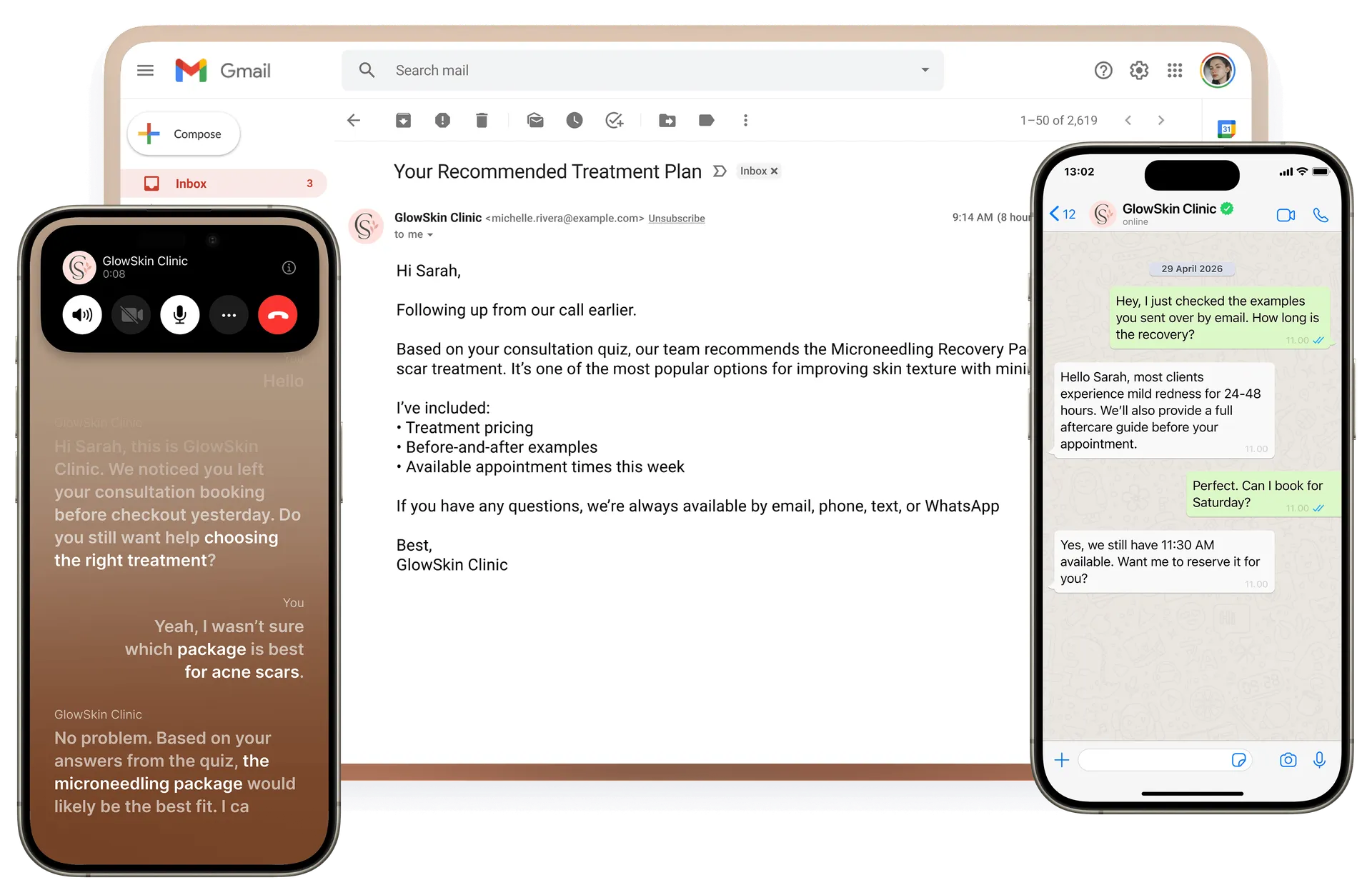
Callers runs one agent across voice, SMS, WhatsApp, email, and chat, and it handles inbound and outbound with the same shared context, so a customer picks up wherever they left off. It is built for the full conversation lifecycle, not chat deflection alone.
The team that runs the campaigns can also build them, without waiting on engineers. That is why growth, lifecycle, and CX teams tend to get going with it quickly.
Key features
Omnichannel one brain: one agent across voice, SMS, WhatsApp, email, and chat, with a single shared context layer and mid-call language switching across 26+ languages
Script Builder: no-code, AI-assisted scripting so operators design and edit agents without developers
Workflow Orchestration: multi-step sequences, conditional retries, and pre-call, mid-call, and post-call actioning across inbound and outbound
Model-agnostic LLM optimization: matches the right model to each task rather than locking you to one
Step-level analytics: pinpoint the exact moment a conversation converts or stalls
AI and human routing: routine conversations run on their own, high-stakes ones warm-transfer to a person
Built-in compliance: SOC 2, HIPAA, GDPR, CCPA, and PCI DSS
Pricing
Usage-based and billed per minute, scoped to your volume, with a dedicated CSM on every plan.
Pros
Voice and outbound are core, not bolted on
Operators own the build without developer support
Live in weeks, with results visible in the first pilot
Cons
No free self-serve tier, so you begin with a demo
Chat-only teams may not need the voice depth
Best for
CX, growth, and contact-center teams whose revenue runs through phone and messaging, especially where voice and outbound matter.
Why choose Callers over Decagon
Decagon handles inbound support well, but it started as a chat concierge and prices by quote. Callers runs the full lifecycle, inbound and outbound, in one omnichannel agent, and shows you a per-minute rate upfront.
You also get step-level analytics that show exactly where a conversation converts or stalls, and a setup your own team can launch in weeks instead of a long enterprise onboarding.
2. Sierra
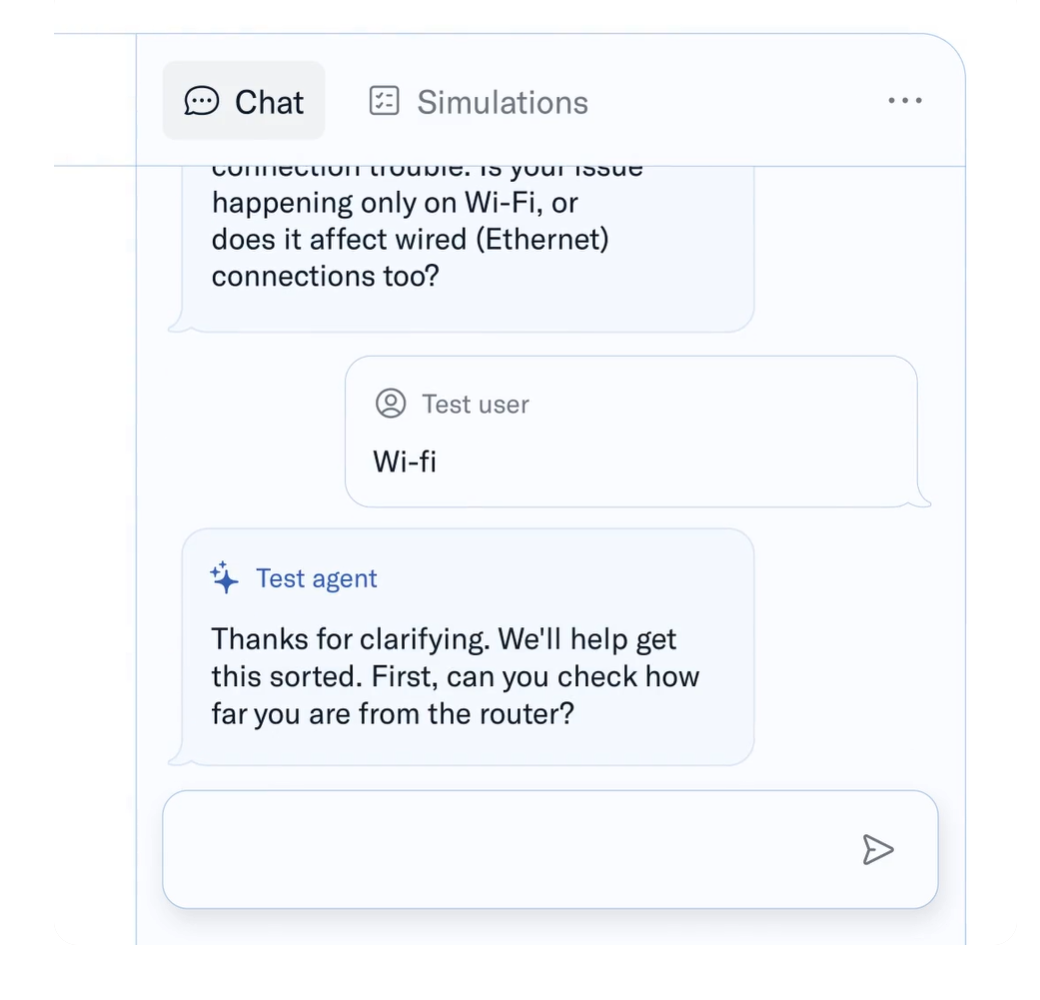
Sierra is a close competitor to Decagon. Founded by Bret Taylor, it builds branded, autonomous agents that resolve issues across every channel a company uses.
It gives you several ways to build. Non-technical teams work in a no-code studio, engineers can write customer journeys as code, and Ghostwriter turns a plain-English goal or a set of documents into a working agent.
Key features
Agent OS: the platform layer that runs, governs, and observes agents
Ghostwriter: generates a production-ready, multichannel agent from docs or a description
Omnichannel reach: one agent across chat, SMS, WhatsApp, email, voice, and ChatGPT
Insights: observability for behavior, performance, and business impact
Agent Data Platform: secure actions and customer memory tied to your systems
Pricing
Outcome-based and quote-only. You pay when the agent achieves a defined result, such as a resolved conversation or a saved cancellation, and escalations usually carry no charge. Sierra publishes no rates, and third-party estimates put annual contracts well into six figures.
Pros
Both no-code and code paths in one platform
Strong customer-memory and relationship angle
Serious enterprise pedigree and reference base
Cons
No public pricing to size a budget against
Enterprise deployments still involve real implementation effort
Best for
Large CX organizations that want a heavily branded agent across every channel and are comfortable with an outcome-priced enterprise engagement.
Why choose Sierra over Decagon
Sierra and Decagon compete for the same accounts, so the choice comes down to emphasis. Sierra puts more weight on its Agent OS, its customer-memory layer, and giving you both no-code and code-first ways to build through Ghostwriter and its SDK.
If you want a branded concierge with more than one way to build it, and keeping the customer relationship matters as much as deflecting tickets, Sierra is worth a close look.
3. Intercom Fin
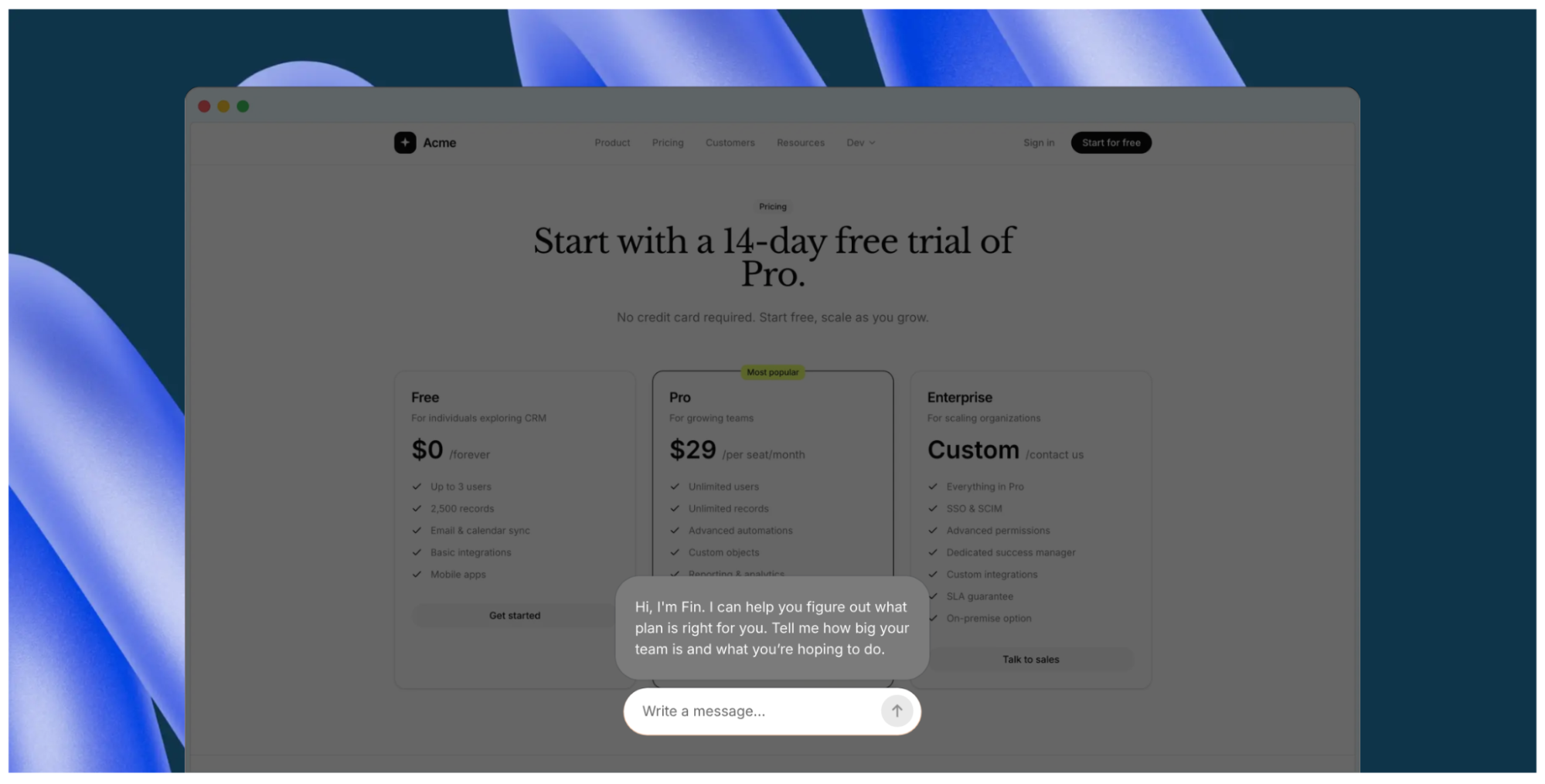
Fin is Intercom's AI agent, and it is one of the most widely deployed support agents on the market. It resolves conversations end to end, and you do not have to move onto Intercom to use it.
Fin runs on top of your existing helpdesk, whether that is Zendesk, Salesforce, HubSpot, or Freshdesk. You can add an autonomous agent without replacing the tools your team already uses.
Key features
Fin AI Engine: purpose-built architecture that grounds answers in your knowledge and content
Works on any helpdesk: bolt Fin onto Zendesk, Salesforce, and more, or use Intercom's suite
Omnichannel resolution: chat, email, phone, and social in one agent
Procedures: teach behavior in natural language, then let Fin act and hand off
Pre-deploy testing: simulate conversations before the agent goes live
Pricing
This is where Fin separates itself. It charges $0.99 per outcome, published openly on its own site, where an outcome is a resolution, a procedure handoff, or a disqualification. Lead qualifications bill at $9.99. Used standalone on another helpdesk, it starts around a 50-outcome monthly minimum, and there is a 14-day free trial.
Pros
Transparent, self-serve pricing you can model in advance
No rip-and-replace, since it runs on your current helpdesk
Proven resolution rates and broad compliance coverage
Cons
Costs climb with volume, since you pay per outcome
Deepest analytics sit behind a paid add-on
Best for
Teams from SMB to enterprise that want a proven support agent with pricing they can see, on top of the helpdesk they already run.
Why choose Intercom Fin over Decagon
Fin removes two things that can slow a Decagon evaluation: pricing you cannot see, and a big migration. Its $0.99-per-outcome rate is public and self-serve, and it runs on your existing helpdesk instead of asking you to adopt a new platform.
For a support team that wants autonomous resolution without a long procurement process, Fin is the easier path, and it works for small and large teams alike.
4. Ada
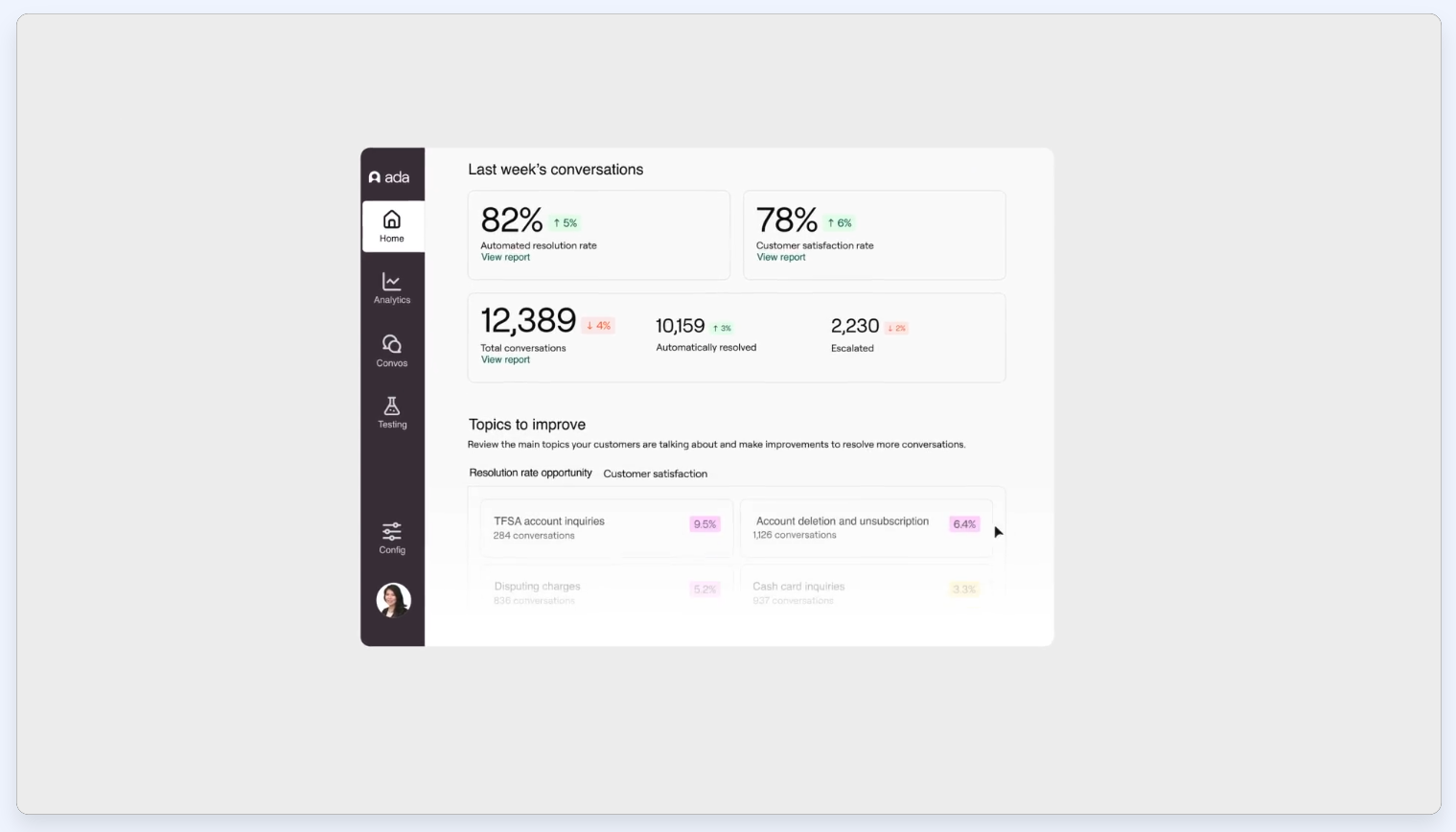
Ada is one of the more established names in AI customer service, and it has grown into a full agentic CX platform. Its agents resolve issues and act on them, and Ada focuses on measurable outcomes like automated resolution rate and CSAT.
It is built for scale. Ada targets brands with at least 300,000 support conversations a year, which puts it firmly in enterprise territory.
Key features
Multi-LLM reasoning: orchestrates several models to resolve complex questions
Playbooks: automate detailed standard operating procedures without code
Omnichannel agents: voice, messaging, and email under one identity
Coaching loop: test, analyze, and tune agent performance over time
Open integrations: APIs and SDKs to fit an existing stack
Pricing
Quote-only, with no numbers published on Ada's site. The company has a resolution-based pricing heritage and argues publicly for conversation-based models. Third-party estimates suggest a platform-fee floor and a per-resolution range, but treat those as external figures rather than Ada's own.
Pros
Mature, security-heavy enterprise platform
Multi-model reasoning for tougher queries
Very broad compliance, including HIPAA and PCI
Cons
Priced by quote, so no quick budget check
The 300k-conversation fit rules out smaller teams
Best for
High-volume enterprise support organizations that want omnichannel automation with strong governance and a continuous tuning loop.
Why choose Ada over Decagon
Ada and Decagon overlap a lot, so track record and breadth are the deciding factors. Ada has a longer enterprise history, multi-LLM orchestration, a built-in coaching loop, and one of the deepest compliance stacks in the category.
If you are a large, regulated brand that prefers an established vendor over a newer one, Ada covers the same autonomous-support ground and feels like the safer choice.
5. Cognigy
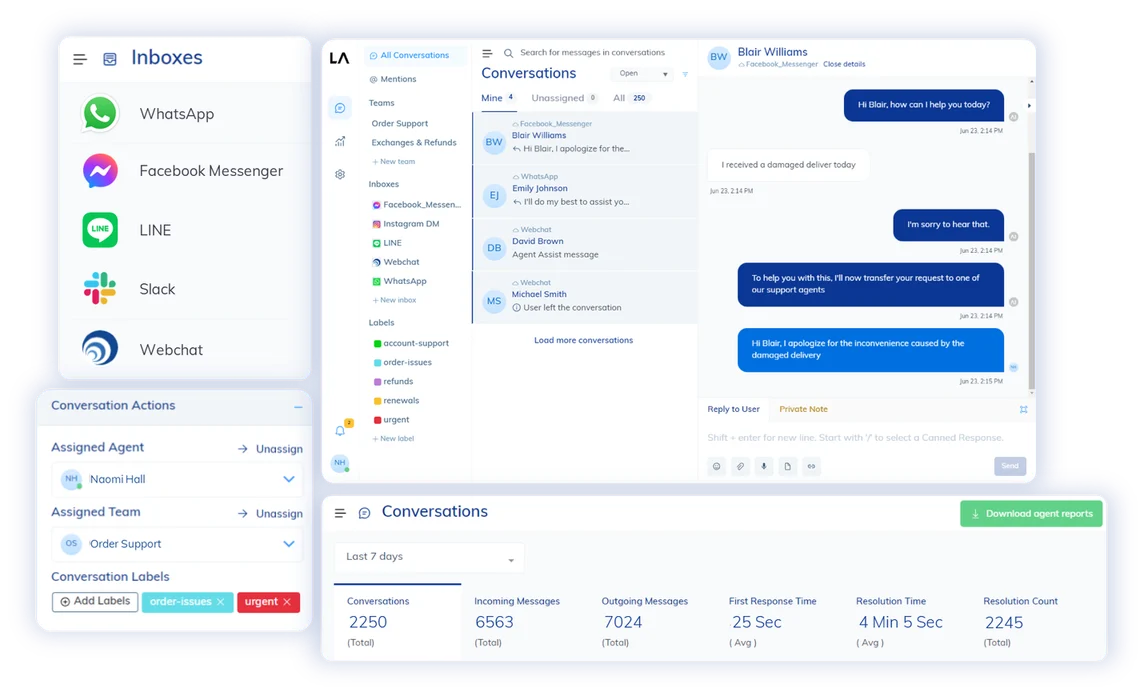
Cognigy is an enterprise platform for customer service automation, and analysts consistently rank it among the leaders. It runs autonomous agents across voice and digital channels, and it connects deeply to the contact-center systems large companies already use.
Its main strength is that reach into telephony and CCaaS. For a company with a large, complex contact-center setup, that depth of integration matters a lot.
Key features
100+ integrations: broad connectivity into CCaaS and CRM systems
Voice gateway: turnkey links to contact-center telephony
Agentic platform: autonomous agents plus real-time agent assist
Analytics suite: omnichannel conversation insights and monitoring
Pricing
Quote-only. Cognigy publishes no pricing, and contracts are scoped to volume and the modules you switch on. Expect an enterprise procurement process rather than a self-serve signup.
Pros
Analyst-recognized enterprise platform
Exceptionally deep integration ecosystem
Handles both autonomous agents and human assist
Cons
No public pricing to work from
Rollouts commonly run two to four months
Modules are licensed separately
Best for
Large enterprises that need an AI layer wired tightly into an existing, complex contact-center stack.
Why choose Cognigy over Decagon
Decagon gives you a self-contained concierge. Cognigy's strength is integration. It brings turnkey telephony, 100+ connectors, formal governance, and both autonomous and assisted modes.
If your main challenge is fitting AI into a lot of existing contact-center and CRM systems, Cognigy's integration depth and analyst standing count for more than a standalone concierge can offer.
6. PolyAI
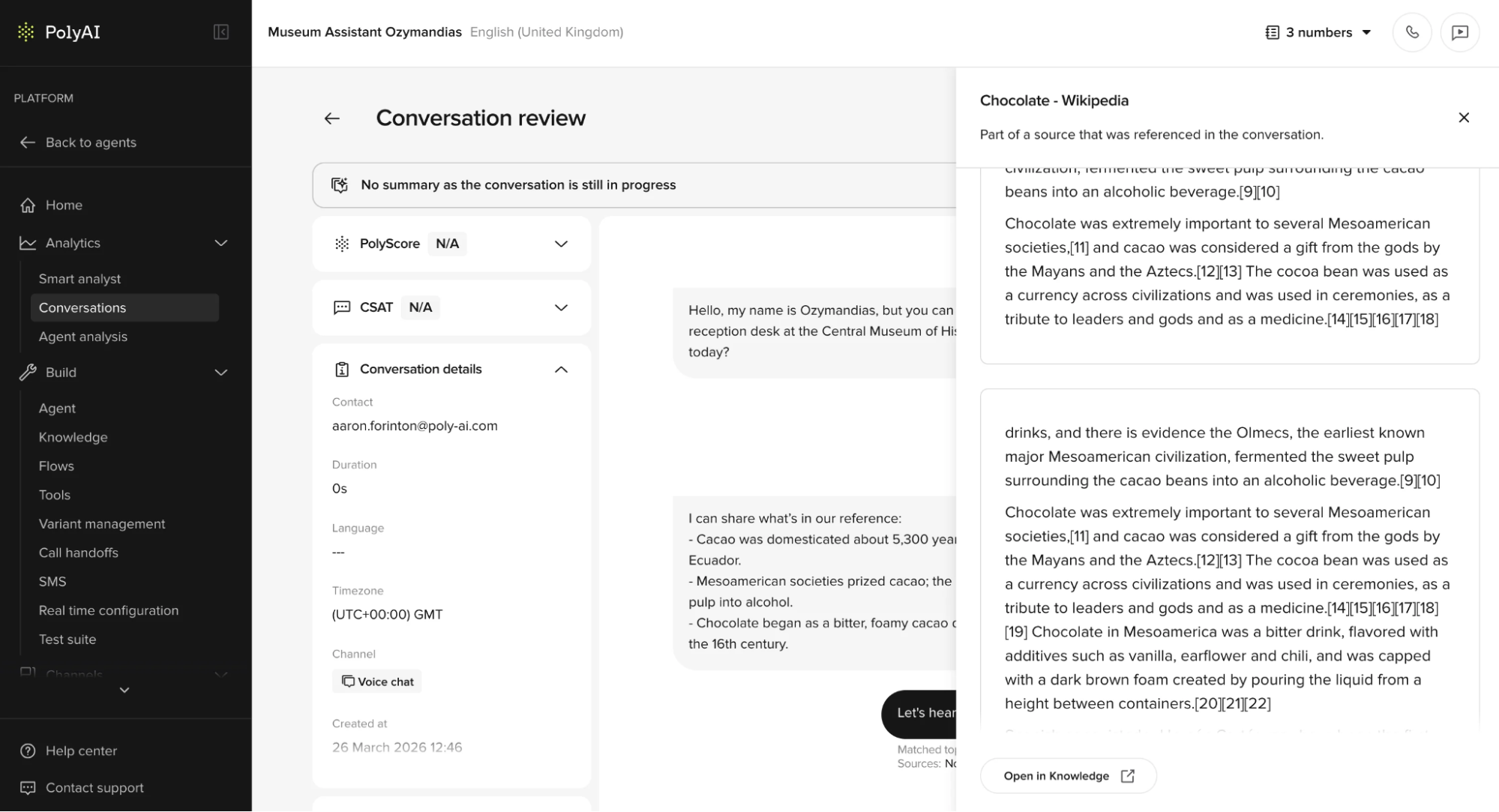
PolyAI focuses on one thing: voice for enterprise inbound. Its agents handle complex phone conversations end to end, and they cope well with accents, interruptions, and noisy lines.
Delivery has traditionally been hands-on, with PolyAI's own team building and tuning the deployment. That suits enterprises that want a managed service rather than a self-serve tool.
Key features
Voice-native models: built specifically for spoken customer service
Containment: resolve more calls without transferring to a human
Contact-center integrations: connectors for major CX platforms
Expert-led optimization: PolyAI tunes performance with you
Pricing
Quote-only. PolyAI confirms it bills the voice agent per minute but publishes no rate. Independent analyses put base contracts in the low six figures per year plus usage, which is an external estimate rather than an official figure.
Pros
Excellent inbound voice quality in hard conditions
Deep contact-center integrations
Strong references in regulated industries
Cons
No public pricing and a higher entry point
Historically managed rather than self-serve
Outbound needs the account team to enable it
Best for
Enterprises focused on high-quality inbound voice containment in the contact center.
Why choose PolyAI over Decagon
If your priority is inbound voice rather than broad chat deflection, PolyAI is built for it. Its voice models are tuned for real phone calls, and its team tunes the deployment with you.
Decagon covers voice as part of a wider concierge. PolyAI focuses on inbound voice quality above everything else, which is what a voice-heavy contact center needs.
7. Cresta
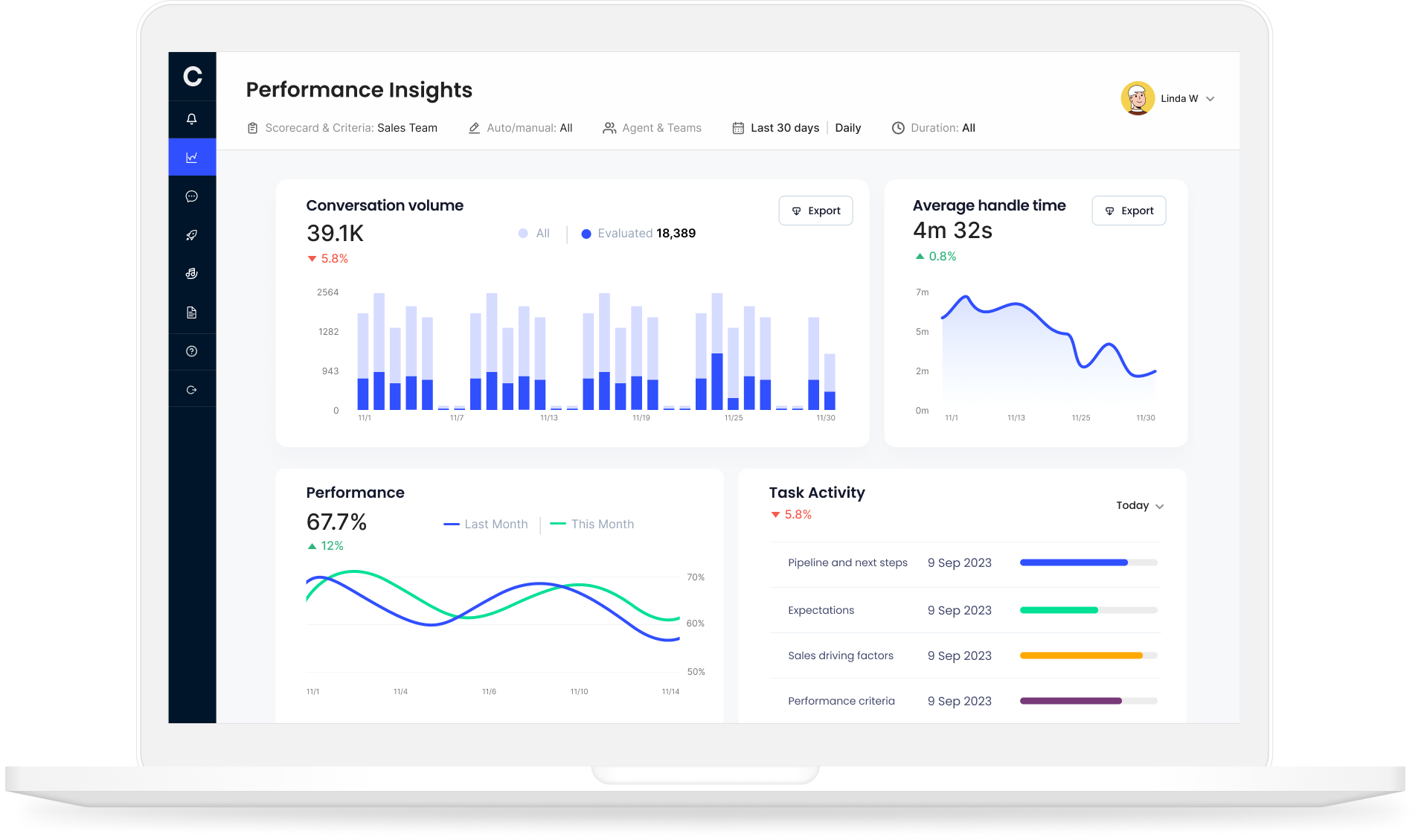
Cresta takes a different approach from most concierge tools. Alongside autonomous agents, it puts a lot of weight on making human agents better, with real-time coaching, quality management, and conversation intelligence.
It runs on Ocean-1, a model trained on contact-center conversations.
Key features
Human agent assist: live, in-call coaching for reps
Ocean-1 model: a model trained on contact-center data
Autonomous agents: automation for the conversations that suit it
Quality management: scoring and coaching across interactions
Pricing
Quote-only. Cresta publishes no rates and licenses per seat, plus volume and feature tiers, on annual contracts. Independent estimates land in the tens to low hundreds of thousands per year, offered here only as external context.
Pros
Blends autonomous AI with human augmentation
A purpose-trained domain model
One of the deepest compliance stacks in the field
Cons
Implementation is professional-services led
Quote-only pricing with a high floor
Weighted toward assisting people, not full automation
Best for
Enterprise contact centers that want to lift live-agent performance while automating suitable conversations.
Why choose Cresta over Decagon
Decagon aims to resolve conversations without a human. Cresta does that too, but it also invests in the human agents, coaching them mid-call and scoring quality across the team.
For a contact center that still runs a large agent workforce and wants AI to improve their performance as well as deflect volume, Cresta does something Decagon does not set out to do.
8. Parloa
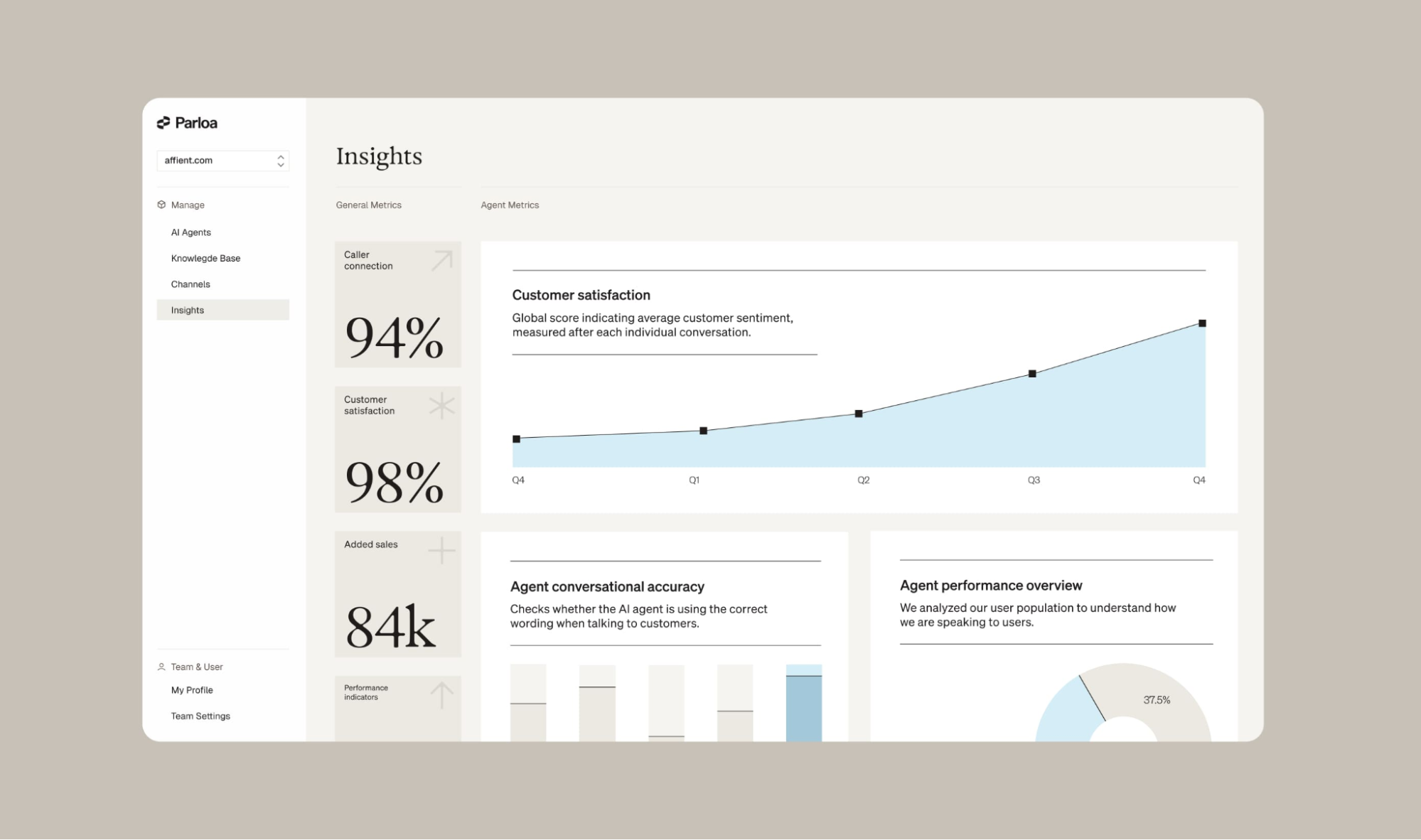
Parloa calls itself an AI Agent Management Platform. The focus is on managing agents across their whole lifecycle at enterprise scale, from launch through day-to-day operation. It is voice-forward, and it targets large, often regulated organizations.
The platform gives teams a clear path from design and testing through deployment, monitoring, and improvement. That fits companies that plan to run AI agents for the long term.
Key features
Agent lifecycle management: design, test, deploy, and monitor in Parloa Studio
Voice-forward channels: phone, chat, and messaging with strong telephony
Multilingual scale: agents across many languages with real-time translation
Enterprise integrations: Salesforce, SAP, ServiceNow, Genesys, and more
Pricing
Quote-only, with nothing published on the site. The go-to-market is enterprise and integrator-led, and third-party write-ups report entry deployments starting around $300,000 a year, which is an external estimate rather than a Parloa figure.
Pros
Strong voice and telephony foundation
A genuine lifecycle-management approach
Broad compliance, including PCI, HIPAA, and DORA
Cons
Enterprise-only, with a high reported entry cost
Deployments tend to be SI-led and involved
No self-serve path
Best for
Global enterprises that need voice-native, multilingual agents managed at scale with heavy integration support.
Why choose Parloa over Decagon
Parloa focuses on managing agents, not only deploying them. Its Studio lifecycle, voice-forward design, and multilingual support suit a company running many agents across regions and languages.
Decagon centers on the concierge experience and outcome pricing. Parloa centers on managing a large set of agents inside a big enterprise, which is a better fit for global contact-center operations.
9. Wonderful
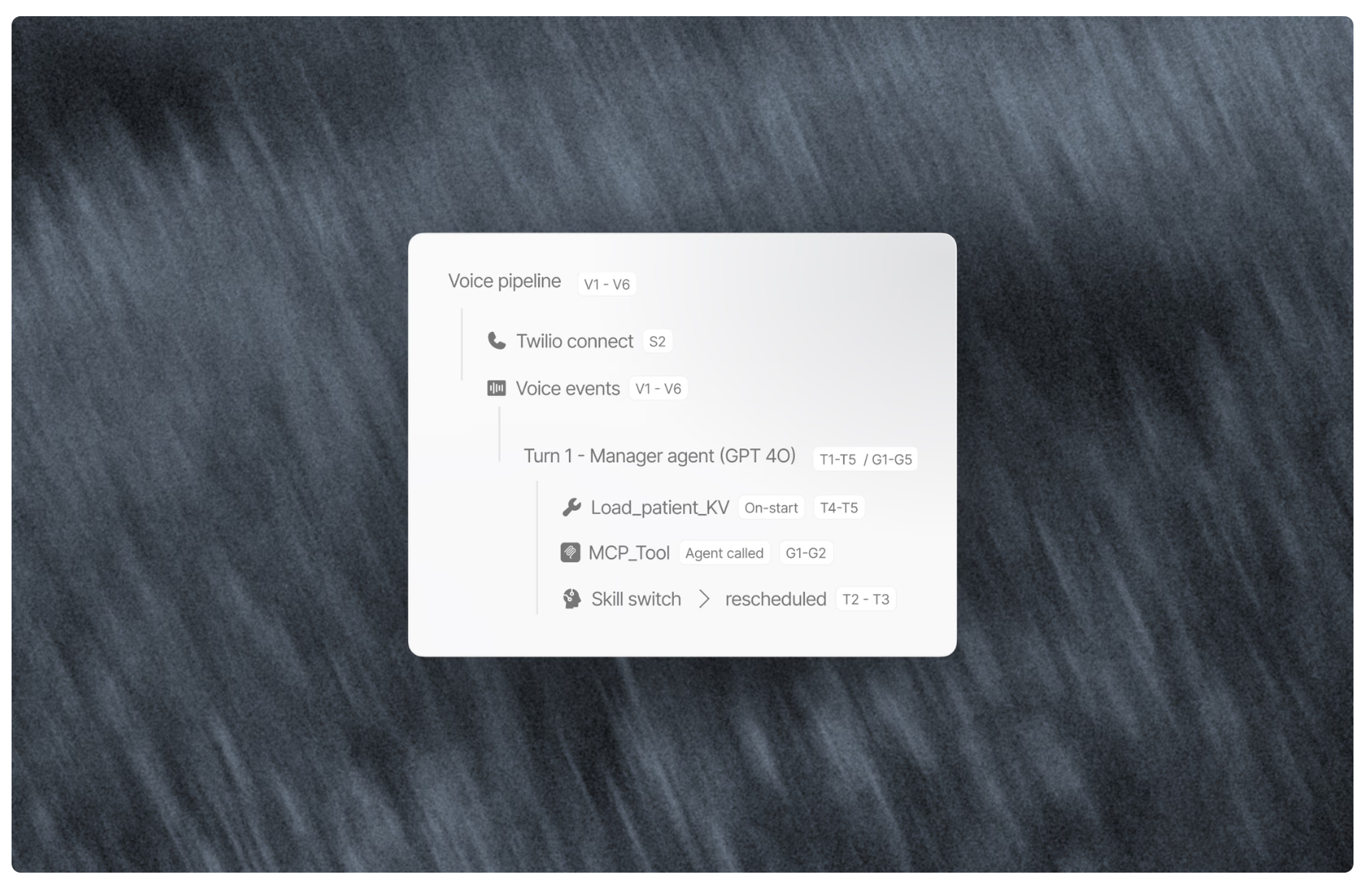
Wonderful does something none of the others on this list do. It builds enterprise agents specifically for non-English-speaking markets, and it designs for local language, dialect, and cultural norms rather than translating an English-first product.
Its approach to sales matches that focus. Wonderful hires local teams market by market and deploys with hands-on support, which suits companies that need native-quality interactions in each region.
Key features
Non-English-first design: architecture tuned for local languages and dialects
Culturally aware voice: a pipeline attuned to pauses, interruptions, and local norms
Omnichannel agents: voice, chat, and email for customer and employee use cases
Local deployment teams: embedded support in each market
Pricing
Quote-only, with no figures published. The services-led, local-team model points to enterprise custom contracts, and any dollar amount you find online is a third-party estimate rather than a Wonderful price.
Pros
Genuine depth in non-English languages and dialects
Hands-on, region-by-region deployment
Strong ISO and GDPR compliance coverage
Cons
Overkill for an English-only customer base
No public pricing and a services-heavy rollout
HIPAA is not listed among its certifications
Best for
Enterprises serving non-English-speaking customers that need native-quality agents with local deployment support.
Why choose Wonderful over Decagon
If your customers speak languages other than English, Wonderful is built for exactly that. Its models and voice pipeline are designed around local dialects and cultural norms, with teams on the ground in each market.
Decagon is strongest in English-first, digital-native enterprise support. If your growth depends on non-English markets, Wonderful is the better match.
10. Five9
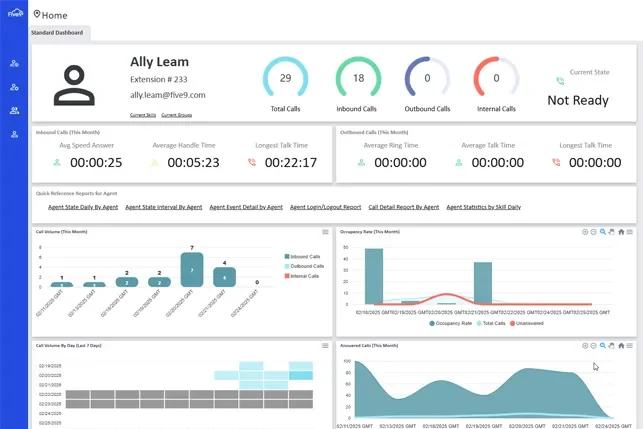
Five9 is different from most tools on this list. It is a full cloud contact center, and its agentic AI sits on top of a platform that already handles routing, workforce management, and every channel your agents use.
That breadth is the main draw. A team setting up or replacing a contact center can get omnichannel operations and AI in one suite, instead of adding an AI concierge next to separate systems.
Key features
Omnichannel CCaaS: voice, SMS, chat, email, and social on one platform
Agentic CX: AI agents that reason, plan, and hand off with full context
Workforce engagement: management, quality, and routing built in
Trust and governance: guardrails, monitoring, and data redaction
Pricing
Partly public. Five9 lists a Digital plan at $119 per seat a month and a Core plan at $159, with higher tiers quote-based and a 50-seat minimum. AI usage minutes and add-ons sit on top, so real all-in costs run higher.
Pros
A complete contact-center suite in one place
Published entry pricing for the lower tiers
Solid compliance, including PCI Level 1 and HIPAA
Cons
Adopting it for AI can mean a platform migration
Per-seat pricing plus AI usage adds up
The 50-seat minimum rules out small teams
Best for
Mid-market and enterprise teams that want a full contact center with AI layered on, not a standalone agent.
Why choose Five9 over Decagon
The two solve different problems. Decagon is a standalone concierge that resolves conversations on its own, while Five9 is the whole contact center with AI added to it.
If you need routing, workforce management, and every channel in one suite, and want AI to sit inside that operation rather than beside it, Five9 is the fuller platform. It also publishes entry pricing, which Decagon does not.
11. Voiceflow
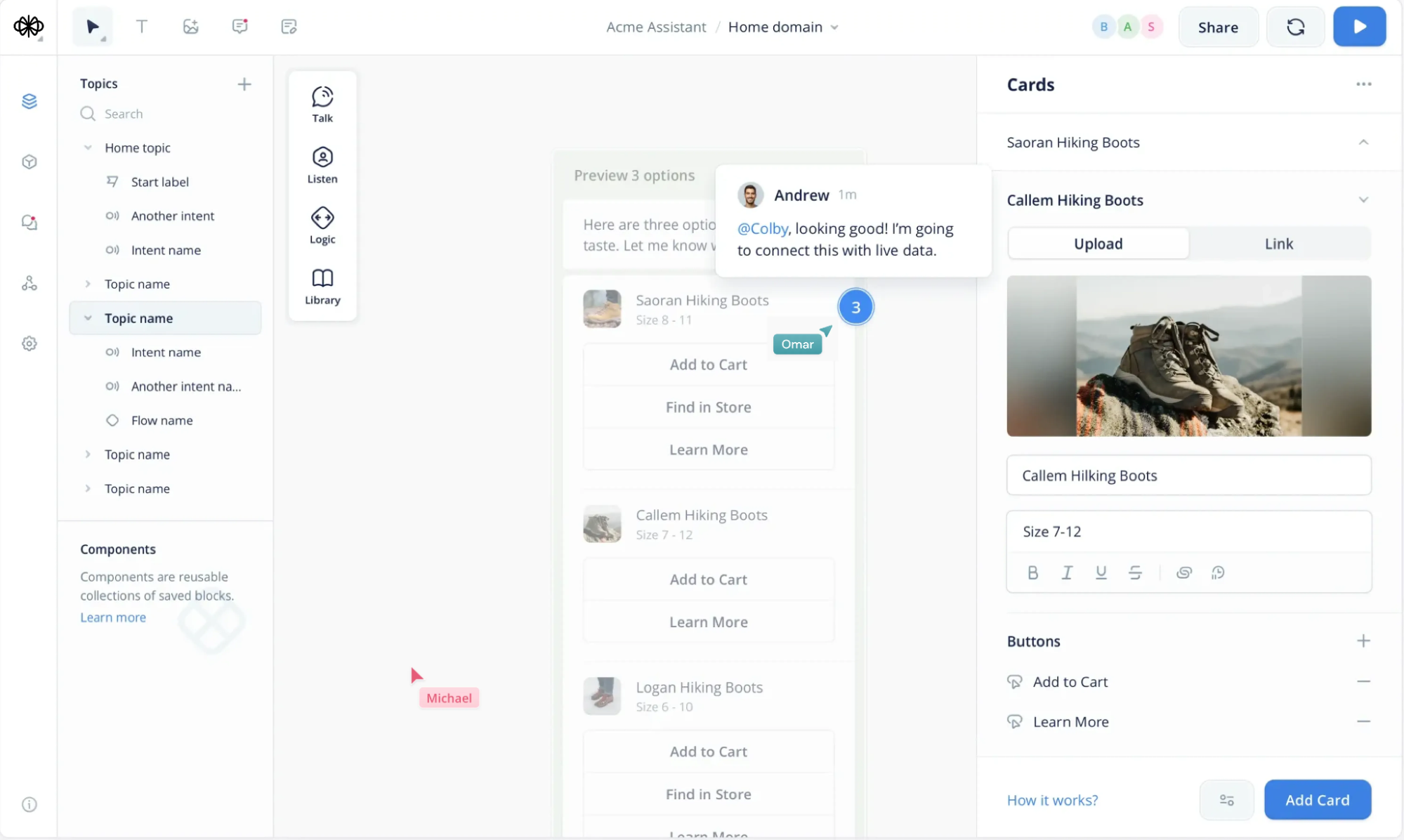
Voiceflow is for teams that would rather build their own agent than buy a finished one. It pairs a visual canvas with a developer SDK, and it stays neutral about which models and channels you use.
It is built around collaboration. Product, design, and engineering can work on an agent together, with the roles, comments, and versioning you would expect from a design tool.
Key features
Visual canvas: a designer-friendly way to build conversation flows
Model-agnostic: bring your own language models
Team collaboration: roles, comments, and versioning
Template marketplace: a faster route to a first build
Pricing
Voiceflow no longer publishes prices on its site. Independent trackers point to a free Sandbox tier and paid plans from around $60 a month that scale by usage credits, with Enterprise custom, so confirm the current numbers directly.
Pros
Strong collaboration and design workflow
Flexible across models and channels
A free tier for experimenting
Cons
Built for building, so production CX takes work
Pricing is no longer transparent on-site
Production voice needs integration effort
Best for
Product and design teams that want to prototype and build their own agents rather than adopt a packaged concierge.
Why choose Voiceflow over Decagon
Decagon gives you a finished concierge. Voiceflow gives you the tools to build the agent you want, with your own models and full control over the design.
For a team that wants to build and own its agent, and prefers flexibility over a packaged product, Voiceflow is the more open starting point.
12. Anyreach
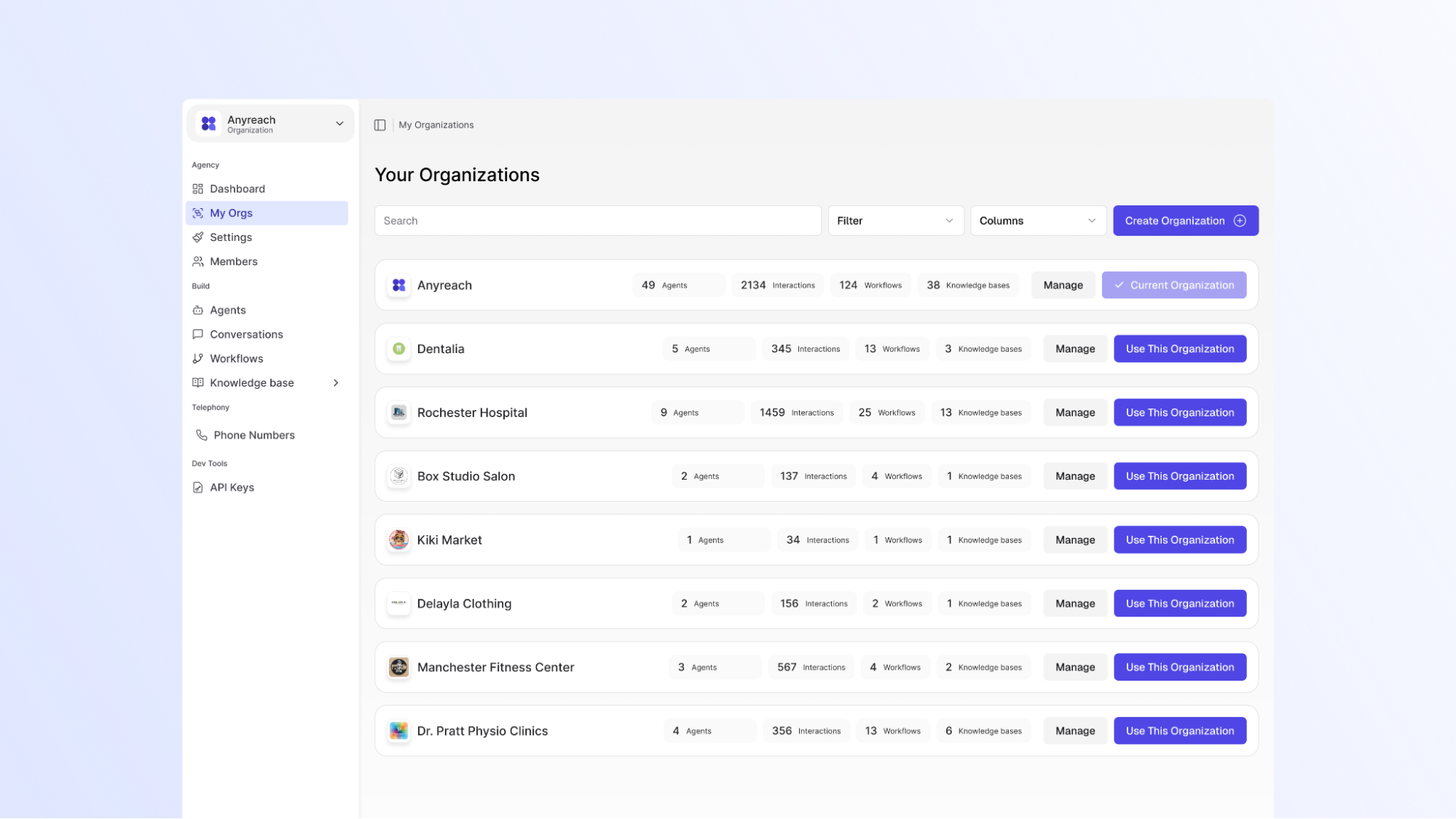
Anyreach sells a single AI employee that handles calls, messages, chats, and emails, and keeps context as it moves between them. It also offers a white-label agency model, which takes it beyond direct enterprise deals.
That reseller option is what sets it apart. Agencies can put their own brand on the platform and sell omnichannel agents to their own clients.
Key features
Omnichannel scope: voice, email, SMS, chat, and WhatsApp
Persistent memory: context follows the customer across channels
White-label model: resell under your own brand
Enterprise framing: SLAs, audit trails, and permissions
Pricing
More transparent than the enterprise names here. The SMB plan is free plus usage, with AI voice from $0.19 a minute, and the Agency plan adds white-label resale at $1,250 a month plus usage. Add-ons are billed on top, and there is a 14-day free trial.
Pros
Broad omnichannel coverage in one workspace
A clear white-label path for agencies
Published entry pricing and a free trial
Cons
Voice starts higher than some rivals
Add-ons stack onto the base price
A younger platform with a shorter track record
Best for
Agencies that want to resell a white-label, memory-driven omnichannel agent to their own clients.
Why choose Anyreach over Decagon
Decagon sells directly to enterprise brands. Anyreach works differently, letting agencies rebrand the platform and serve their own clients.
If you are an agency rather than an end customer, and you want omnichannel agents you can package and resell, Anyreach's white-label model fills a gap Decagon does not.
Choose the Right Decagon Alternative
Decagon is a strong AI concierge for digital-native brands that want autonomous support and are fine with an enterprise buying process. The right alternative depends on what you need that Decagon does not cover.
If you want a proven support agent with public pricing, Intercom Fin and Ada are natural picks. For deep contact-center integration, look at Cognigy, Five9, and PolyAI. For non-English markets, Wonderful is the specialist, and for building your own agent, Voiceflow gives you the most control.
If your business runs on phone and messaging, Callers is the one to try first. It is voice-native, handles both inbound and outbound, goes live in weeks, and prices by the minute. Its step-level analytics show exactly where each conversation converts or stalls.