12 Best Sierra AI Alternatives in 2026: Ranked and Compared
:quality(80))
Quick Summary
Callers leads this list for teams that run inbound and outbound at scale across voice and messaging. Decagon, Ada, and Zowie suit digital support automation. PolyAI, Cognigy, Parloa, and Five9 fit enterprise contact centers. Voiceflow, Retell, and Synthflow are for teams that'd rather build their own.
# | Tool | Key features | Best for | Pricing |
|---|---|---|---|---|
1 | Callers | Omnichannel agents across voice and messaging, Workflow Orchestration, no-code Script Builder, step-level analytics, white-glove CSM on every plan | Voice-first B2C teams running inbound and outbound | Custom, usage-based per minute |
2 | Decagon | AI concierge, natural-language workflows, voice and chat, at-scale testing | Large B2C support automation | Custom (contact sales) |
3 | Ada | Autonomous resolution, 60+ languages, deep helpdesk integrations | High-volume enterprise support | Custom (contact sales) |
4 | Cresta | Human and AI agents, agent assist, QA and coaching, analytics | Large human-staffed contact centers | Custom (contact sales) |
5 | PolyAI | Voice-first agents, telephony routing, CRM connectors | Enterprise phone support | Custom, per-minute (contact sales) |
6 | Cognigy | Voice gateway, agentic AI, 100+ languages, deep CCaaS ties | Large multilingual contact centers | Custom (contact sales) |
7 | Parloa | Agent lifecycle management, voice and chat, strong governance | Regulated enterprise contact centers | Custom (contact sales) |
8 | Zowie | Multichannel support, deterministic action control, QA scoring | Ecommerce and retail support | Custom (contact sales) |
9 | Five9 | Full cloud contact center, AI agents, agent assist, WFM | Teams replacing a whole contact center | $119 to $159 per seat/mo (50-seat min) |
10 | Voiceflow | Visual builder, bring-your-own LLM, voice and chat, team tooling | Teams that want to build their own agent | Custom (contact sales) |
11 | Retell AI | Developer voice API, choice of voices and models, telephony | Technical teams building voice agents | $0.07 to $0.31 per minute |
12 | Synthflow | No-code voice builder, native telephony, white-label | Agencies and no-code phone automation | Enterprise from $30,000/year |
Looking for a Sierra AI Alternative?
Sierra builds polished AI agents for big brands. But its outcome-based pricing stays behind a quote, and standing up a new Agent OS takes time. If that gives you pause, it's worth seeing what else is out there.
Sierra does a lot well. It runs one agent across chat, voice, email, and more, and its Ghostwriter tool spins up agents fast. For large teams standardizing on a single platform, that's appealing. Still, plenty of other omnichannel AI agent platforms solve the same problems in different ways.
The reason people shop around is fit. Some teams want clear pricing they can budget. Some want to keep the contact center they already run. Others care most about outbound calling or step-level analytics. This guide walks through 12 strong options so you can match the tool to the job.
Why Listen to Us?
DoorDash, Einride, and PadSplit run live customer conversations on Callers. It runs one agent across phone, SMS, WhatsApp, email, and chat from a single shared context layer, covering sales, support, and retention for high-volume B2C.

Callers was engineered with Google Cloud, and that partnership shows under load. The platform scaled 30X and now carries hundreds of thousands of AI conversations every day without call quality slipping.
The Callers case studies go deeper.
Why Look for Sierra AI Alternatives?
Sierra is a strong product, so the reasons to compare are about fit and model, not quality.
Pricing is quote-only
Sierra uses outcome-based pricing, and it's not published. You request a quote to see numbers. That works for some buyers, but it makes early budgeting hard. Many teams want a clear per-minute or per-seat rate before they commit.
It's a platform to adopt
Sierra positions its Agent OS as the system of record for customer conversations. That's a big commitment. If you already run a contact center, CRM, and telephony you like, you might prefer a tool that slots in rather than one you build your operation around.
Rollout can take time
Standing up a new agent platform means onboarding, integration, and tuning. A simple use case can move quickly, but complex setups take longer. Teams that need to be live in weeks sometimes want a faster path.
Analytics stay high-level
Sierra reports on resolution and outcomes well. What some teams miss is step-level detail, the view of exactly where a script or call drops off. Without that, it's harder to see which line lost the customer and fix it.
Built for very large brands
Sierra targets the biggest companies in the world, including a large share of the Fortune 50. If you're a mid-market B2C team, that focus can feel like more platform than you need, at a price to match.
The 12 Best Sierra AI Alternatives
1. Callers
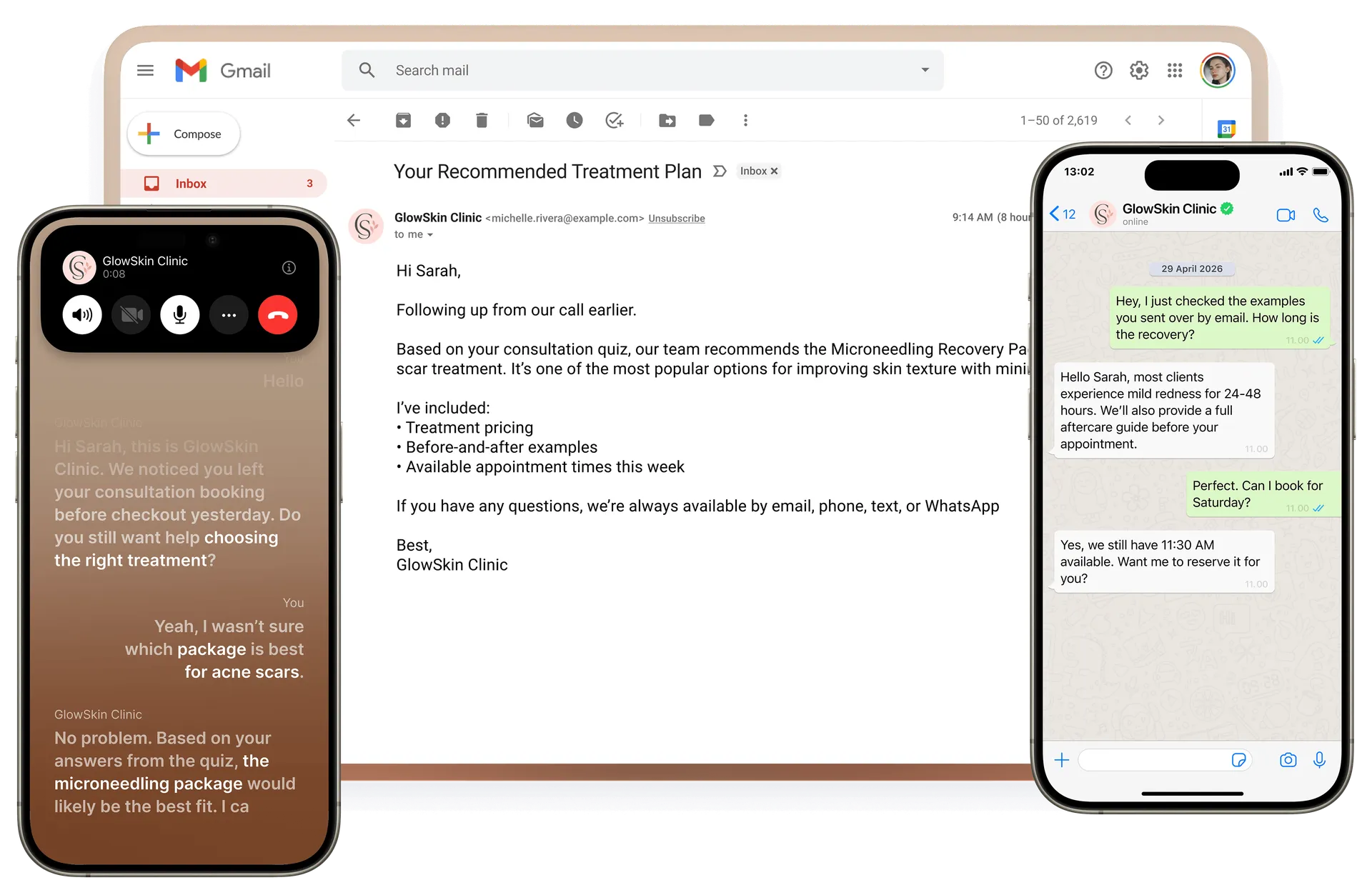
Callers is an omnichannel AI platform for high-volume B2C teams. One agent handles phone, SMS, WhatsApp, email, and chat, carrying context across all of them. Inbound support and outbound campaigns both run as first-class jobs, so a customer picks up wherever they left off.
Where Sierra asks you to adopt a new Agent OS, Callers drops into the stack you already run and goes live in weeks. Your operators build and edit agents in a no-code builder, so you're not waiting on engineering, and step-level analytics show exactly where each call or script wins or loses.
When your team does want help, a dedicated customer success manager is included on every plan, bringing AI optimization and strategic planning advice, not just onboarding.
Key features
Omnichannel one brain: one agent across voice, SMS, WhatsApp, email, and chat with shared context
Workflow Orchestration: sequences, conditional retries, pre-call triggers, and post-call actions across inbound and outbound
No-code Script Builder: drag-and-drop flows with AI-assisted scripting, owned by operators
Step-level analytics: see where conversations break down and what to fix
White-glove customer success: a dedicated CSM on every plan, providing AI optimization recommendations and strategic planning advice
AI and human routing: simple work stays with AI, high-stakes calls warm-transfer to your team
Compliance built in: SOC 2, HIPAA, GDPR, CCPA, and PCI DSS
Pricing
Custom, usage-based per minute. Pricing is set with your team based on volume, so you pay for what you use rather than per seat. Book a demo to get a quote.
Pros
One agent across every channel, strong on inbound and outbound alike
Live in weeks, no long platform migration
Operators build and run agents without developers
White-glove customer success on every plan, not just Enterprise
Step-level analytics you can act on
Fits your existing CCaaS, CRM, and telephony
Cons
Pricing is demo-gated, so you request a quote to see rates
Aimed at high-volume B2C, so very low-volume teams may not need it
Best for
High-volume B2C teams that want omnichannel automation across inbound and outbound without replacing their stack.
Why choose Callers over Sierra
Sierra wants to become your agent platform. Callers makes the operation you already run better and faster. It fits your current CCaaS, CRM, and telephony with no rip-and-replace, and it goes live in weeks.
You also get a dedicated customer success manager on every plan, so your team can lean on Callers' experience for both AI optimization and strategic planning, support that competitors usually reserve for their largest accounts.
2. Decagon
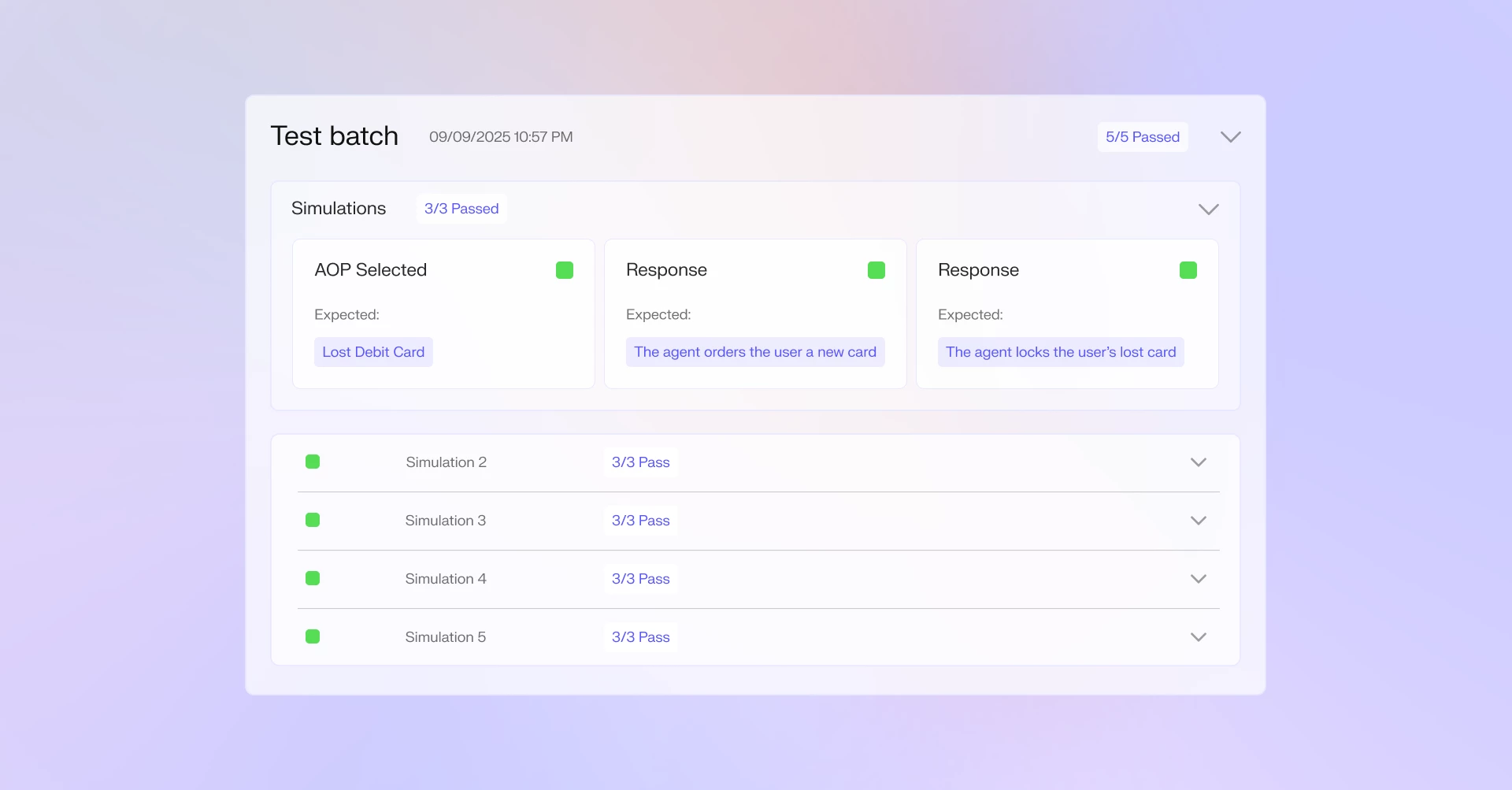
Decagon is an enterprise AI concierge platform that builds autonomous support agents for voice, chat, and email. Its Agent Operating Procedures let teams define workflows in plain language, which makes it one of the closest head-to-head options to Sierra.
Key features
Omnichannel agents: one build deployed across voice, chat, and email
Agent Operating Procedures: workflow logic written in natural language
Voice AI: real-time interruption handling and outbound support
Testing and QA: at-scale simulations and continuous quality monitoring
Analytics: dashboards for deflection, CSAT, and cost
Compliance: SOC 2 Type II and GDPR, with HIPAA eligibility on enterprise plans
Pricing
Custom, contact sales. Decagon doesn't publish pricing on its site, and it runs a usage-based enterprise model. Expect quote-only contracts sized to your volume.
Pros
Strong autonomous resolution across channels
Natural-language workflow design
Deep testing and QA tooling
Built for large consumer brands
Solid compliance posture
Cons
No public pricing
Enterprise focus can be heavy for smaller teams
Best for
Large B2C support teams that want a highly configurable autonomous agent with strong testing tools.
Why choose Decagon over Sierra
If you're comparing concierge platforms directly, Decagon is the closest like-for-like. Its Agent Operating Procedures give you natural-language control, and its testing and QA tooling is a real strength for teams that iterate often. Pick Decagon over Sierra when autonomous digital resolution is your main goal.
3. Ada
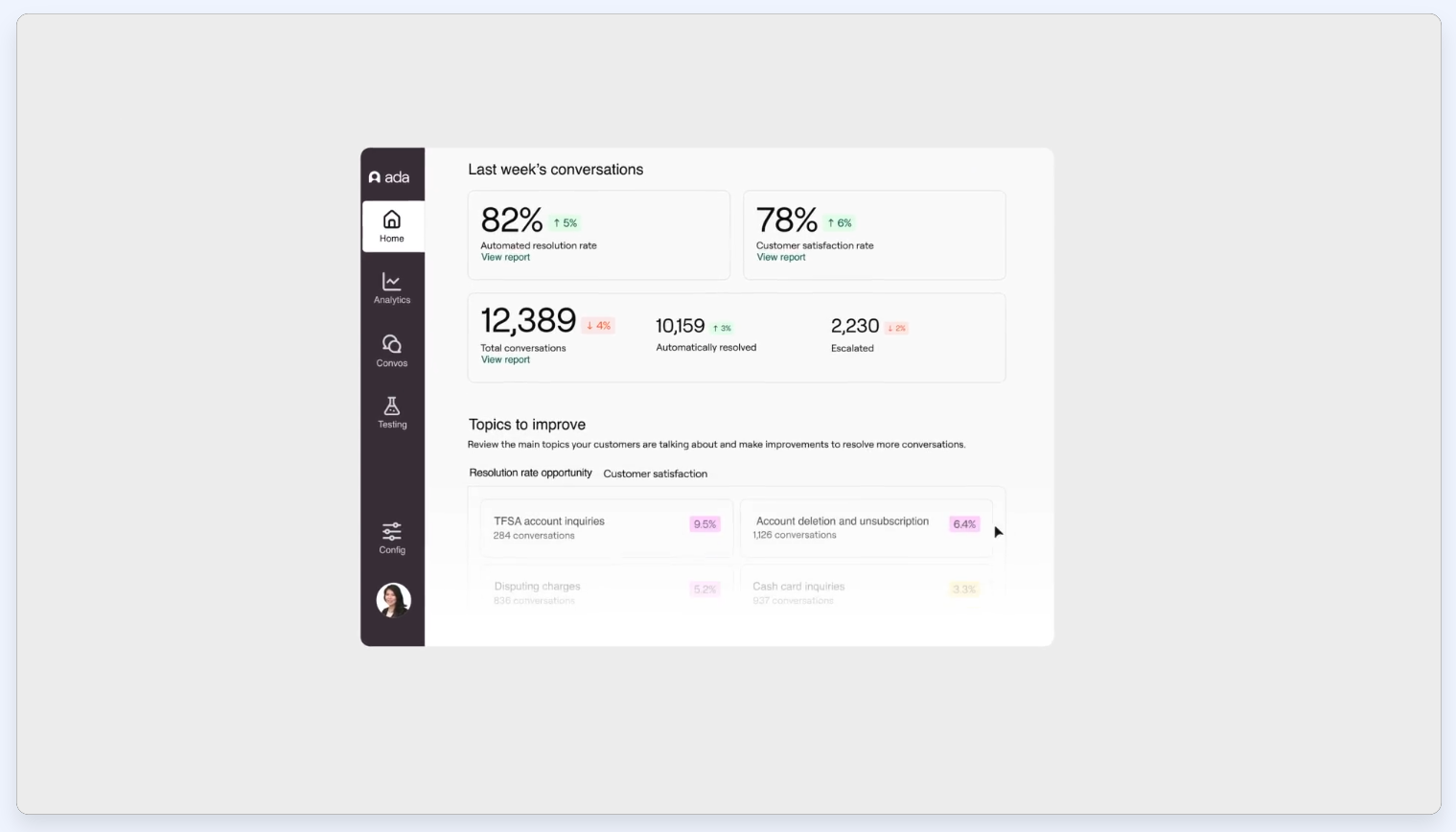
Ada is an enterprise AI customer service platform whose autonomous agents resolve support requests end to end across messaging, voice, and email. Built for large support operations, it comes up often in head-to-head comparisons with Sierra and Decagon.
Key features
Omnichannel agent: one agent across chat, voice, email, and social
Unified Reasoning Engine: shared context, policies, and safeguards across channels
Autonomous resolution: agents act on the customer's behalf and follow multi-step SOPs
Multilingual: 60+ languages from one agent
Integrations: connectors for Zendesk, Salesforce, Genesys, and more
Compliance: SOC 2 Type II, HIPAA, GDPR, CCPA, and PCI
Pricing
Custom, contact sales. Ada publishes no prices and favors a conversation-based commitment model. It suits teams with very high volume, around 300,000 or more service conversations a year.
Pros
High automated resolution rates at scale
Wide language coverage
Broad helpdesk integrations
Strong safeguards against wrong actions
Enterprise-grade compliance
Cons
No public pricing
Built for high volume, so a poor fit for smaller teams
Best for
Large enterprises with high-volume, multichannel support that want to automate a big share of contacts.
Why choose Ada over Sierra
Ada is proven at very high contact volumes, and it leans on a conversation-based commitment rather than charging per resolution. If you've got a huge support operation and want autonomous resolution with a model that scales cleanly with your traffic, Ada is a strong pick over Sierra.
4. Cresta
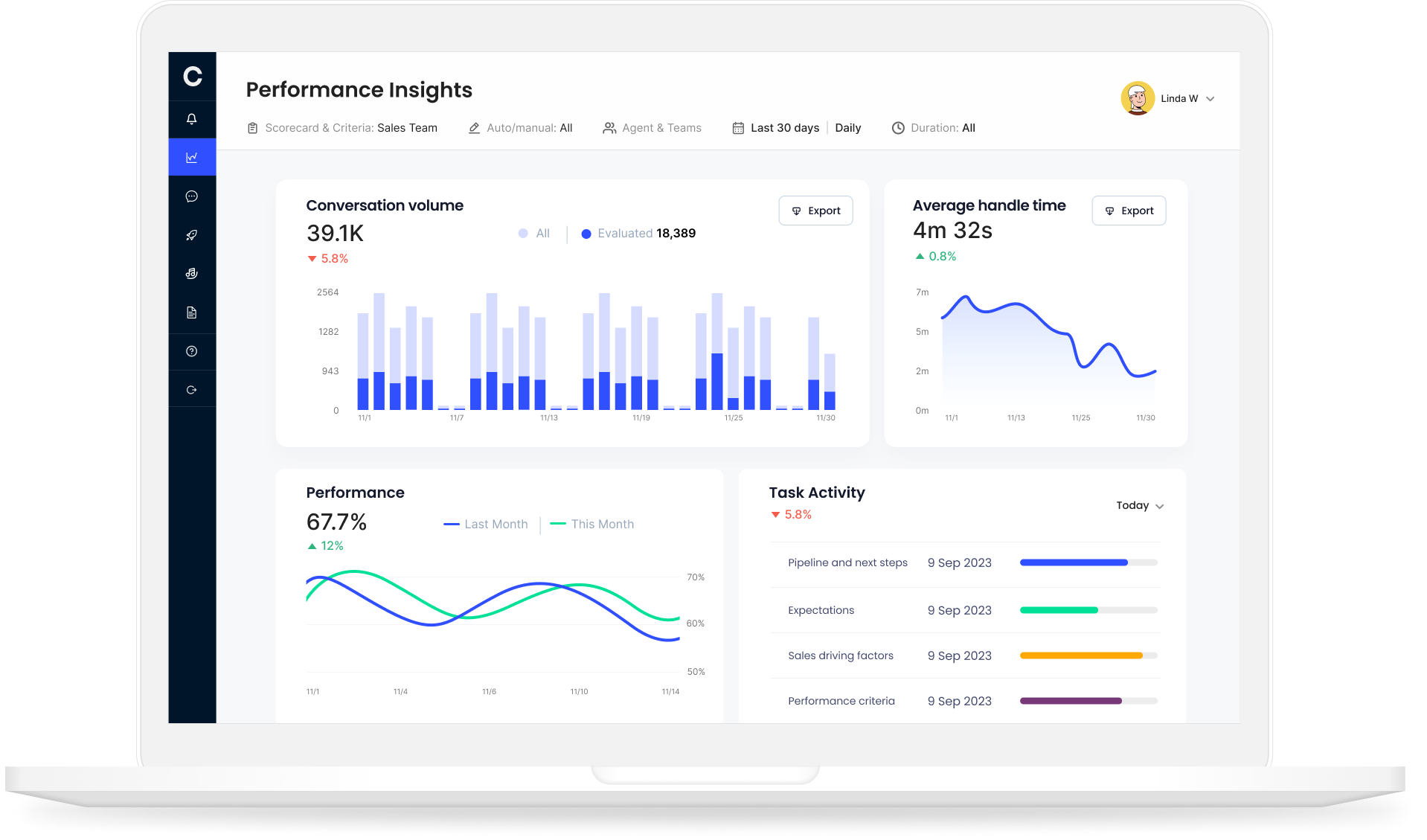
Cresta is a contact-center platform that unifies human and AI agents, combining autonomous agents, real-time agent assist, and conversation intelligence on its own Ocean-1 model. It fits large teams that still run big human contact centers.
Key features
AI agent: autonomous voice and digital resolution
Agent assist: real-time coaching and next-best-action for live agents
Conversation intelligence: full coverage analytics, not sampled
Quality management: AI scoring against custom rubrics
Integrations: NICE, Genesys, Five9, Amazon Connect, Salesforce, and more
Compliance: SOC 2 Type II, HIPAA, ISO 42001, GDPR, and TISAX
Pricing
Custom, contact sales. Cresta uses enterprise module and seat-based pricing that isn't published. Plan for a quote sized to your seats and volume.
Pros
Lifts both human and AI agents
Domain model trained on contact-center data
Deep analytics and QA
Wide CCaaS integrations
Strong compliance depth
Cons
No public pricing
Heaviest fit for large, human-staffed centers
Best for
Large contact centers that want agent assist, QA, and analytics alongside automation.
Why choose Cresta over Sierra
Sierra focuses on autonomous agents. Cresta keeps your human agents in the loop and makes them better with real-time assist, coaching, and QA. If you still run a large human contact center and want to lift both people and automation, Cresta fits that reality better.
5. PolyAI
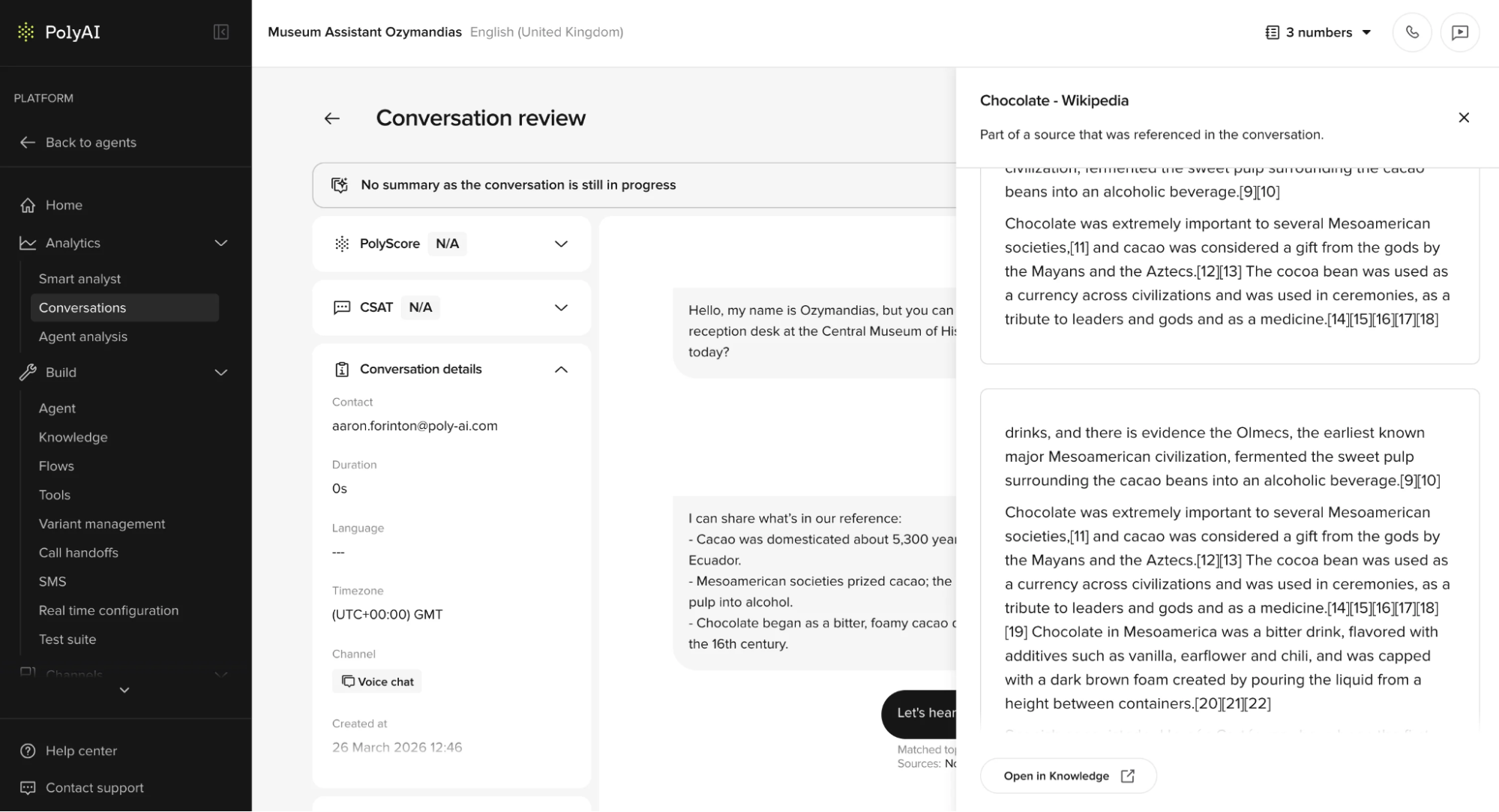
PolyAI is a voice-first customer service platform for enterprise. Its agents handle high-volume phone calls end to end, replacing old IVR menus with natural spoken dialog. Voice sits at the core of the product rather than bolted on the side.
Key features
Voice-native agents: built on a model trained on large volumes of real calls
Telephony workflows: inbound, outbound, overflow, and routing
Build tooling: Agent Studio for non-technical teams plus a developer kit
Analytics: dashboards and plain-language querying
Integrations: CRM, booking, payments, and contact-center systems
Compliance: SOC 2, HIPAA, GDPR, and PCI DSS
Pricing
Custom, per-minute, contact sales. PolyAI lists no tiers and quotes per-minute pricing after a demo.
Pros
Purpose-built for messy phone conversations
Handles interruptions and accents well
Enterprise CX integrations out of the box
Measurement-led deployments
Strong compliance coverage
Cons
No public pricing
Voice-first, so lighter on digital-only use cases
Best for
Enterprises that run high phone volume and want a voice specialist.
Why choose PolyAI over Sierra
If voice is your main channel, PolyAI is tuned for exactly that. Its model handles real phone conditions like interruptions and background noise. Pick PolyAI over Sierra when spoken customer service is the problem you most need to solve.
6. Cognigy
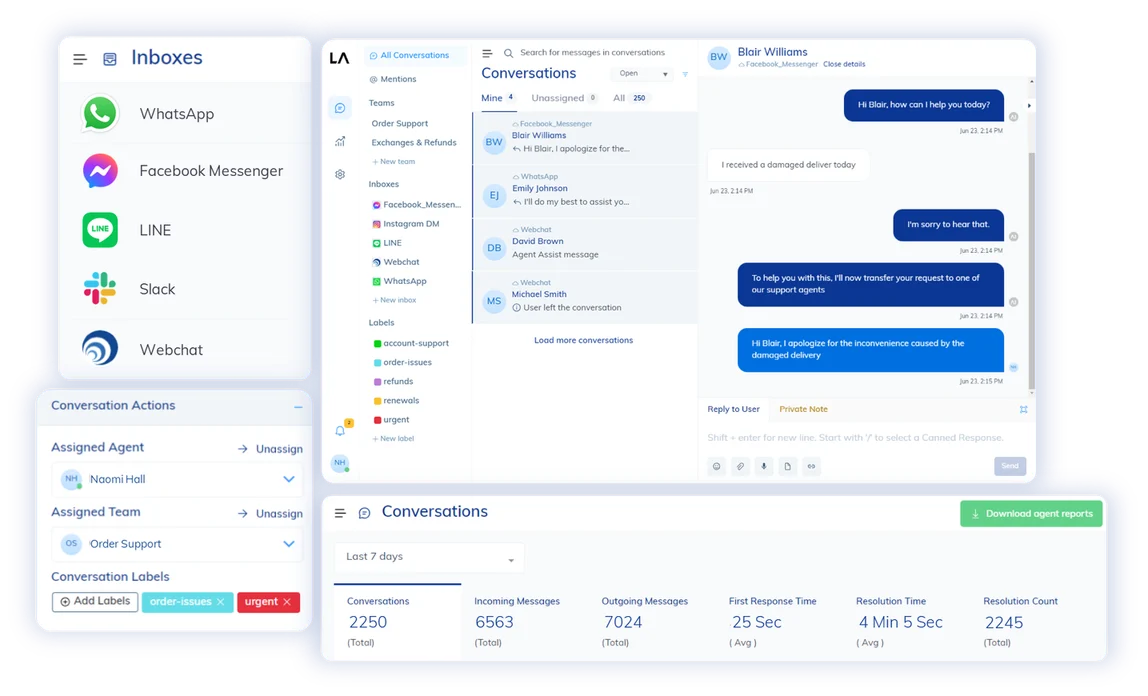
Cognigy, now part of NiCE, is an enterprise agentic AI platform for customer service. It runs autonomous voice and chat agents across the contact center and connects deeply to existing CCaaS systems. The platform is built for large, multilingual operations.
Key features
Voice and chat: turnkey voice gateway plus 30+ omnichannel connectors
Agentic AI: goal-driven agents with progressive reasoning
No-code builder: visual AI Agent Studio for business users
CCaaS integration: works with NICE, Genesys, Avaya, and more
Multilingual: 100+ languages and real-time translation
Compliance: SOC 2 Type II, ISO 27001, HIPAA, and more
Pricing
Custom, contact sales. Cognigy doesn't publish pricing and routes buyers to a demo.
Pros
Deep contact-center integration
Very wide language coverage
Business-user-friendly builder
Enterprise-grade architecture
Broad compliance certs
Cons
No public pricing
Built for large enterprises, not SMBs
Best for
Large multilingual contact centers adding agents onto an existing stack.
Why choose Cognigy over Sierra
Cognigy is built to layer onto the contact center you already run, with turnkey voice connectivity and 100+ languages. If you operate a large multilingual center and want deep CCaaS ties rather than a new platform, Cognigy is the more natural fit.
7. Parloa
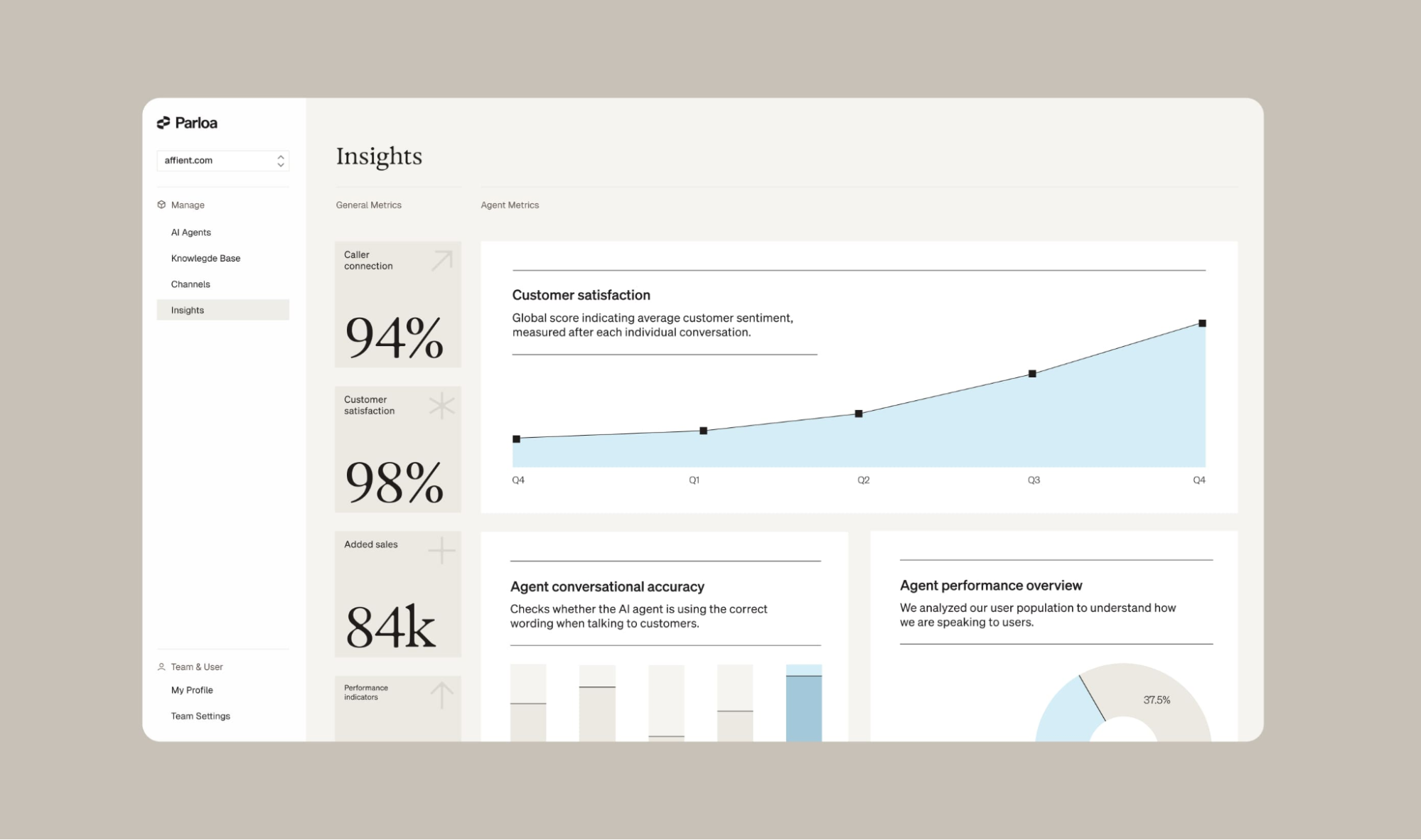
Parloa is an enterprise AI Agent Management Platform that helps contact centers design, test, deploy, and improve autonomous agents across voice and chat. The emphasis is on managing agents over their whole lifecycle, with strong governance built in.
Key features
Multichannel agents: voice, chat, and messaging as one interaction
Agent lifecycle: design, test, scale, and optimize in one place
No-code builder: Parloa Studio for subject-matter experts
Model orchestration: bring your own LLM, STT, and TTS
Testing and analytics: simulations, versioning, and monitoring
Compliance: ISO 27001, SOC 2, PCI DSS, HIPAA, and more
Pricing
Custom, contact sales. Parloa publishes no pricing and sells through a demo and sales process.
Pros
Full agent lifecycle tooling
Strong governance and compliance
Wide language coverage
Flexible model choice
Deep CCaaS integrations
Cons
No public pricing
Enterprise procurement cycle and budget
Best for
Regulated enterprises that need governed agents across voice and chat.
Why choose Parloa over Sierra
Parloa treats agent management as the core job, with testing, versioning, governance, and monitoring built in. For a regulated enterprise that needs tight control and audit trails across voice and chat, that lifecycle focus can matter more than Sierra's build-once model.
8. Zowie
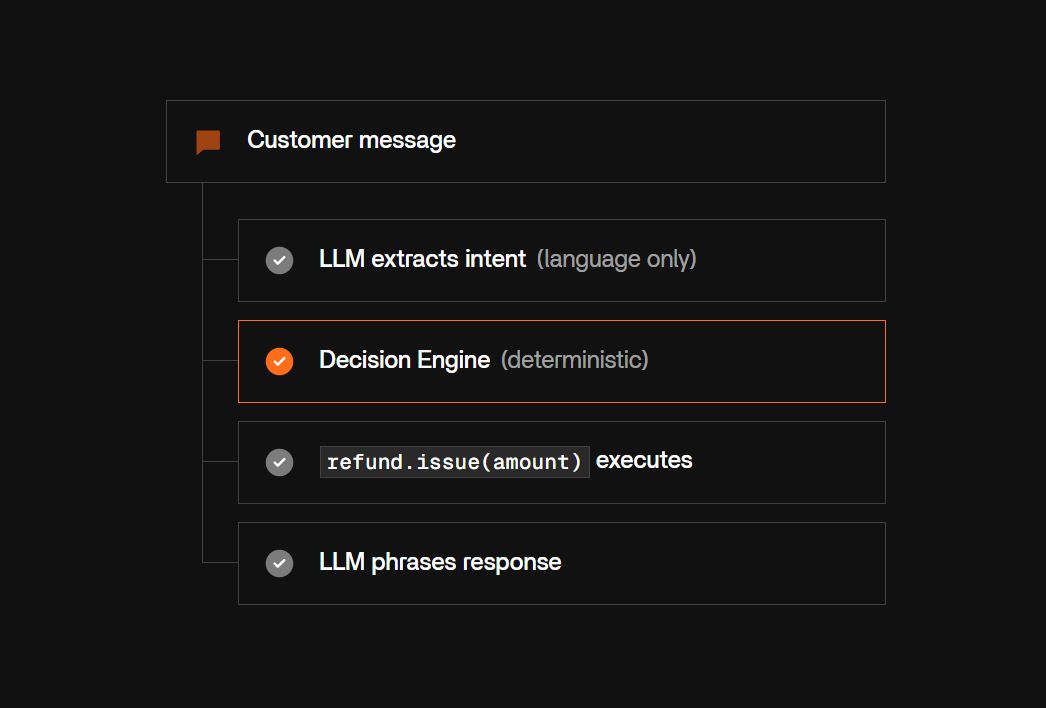
Zowie is an AI customer service platform known for ecommerce and retail. It started chat-first and now covers chat, email, voice, and social. The standout is tight, deterministic control over sensitive actions like refunds and account changes.
Key features
Multichannel support: chat, email, voice, social, and API
Decision Engine: rules-based control for money-touching actions
Platform modules: build, deploy, and supervise agents
QA and monitoring: every conversation scored, with reasoning logs
Multilingual: one build supports 70+ languages
Compliance: GDPR, SOC 2, EU AI Act, DORA, and HIPAA
Pricing
Custom, contact sales. Zowie uses annual, outcome and usage-based contracts sized to your volume. No prices are published.
Pros
Deterministic control over risky actions
Strong ecommerce and retail fit
Full QA and monitoring
Wide language coverage
Flexible model and voice choice
Cons
No public pricing
Retail focus may not suit every industry
Best for
Ecommerce and retail brands that want tight control over refunds and account actions.
Why choose Zowie over Sierra
Zowie's Decision Engine keeps sensitive actions on rails, separate from the language model, so refunds and account changes follow your policy every time. For retail teams worried about wrong actions on money-touching workflows, that control is a clear reason to pick Zowie.
9. Five9
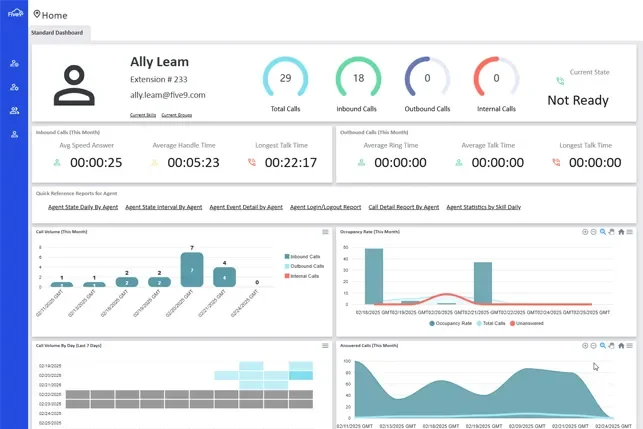
Five9 is a cloud contact center platform, or CCaaS. It runs voice and digital channels with routing, workforce management, and a growing set of AI agents and agent-assist tools. The fit here is teams that want a full contact center rather than just an agent layer.
Key features
Omnichannel CCaaS: voice, chat, email, SMS, and social
AI agents: autonomous self-service agents across channels
Agent assist: real-time help, summaries, and live transcription
No-code automation: IVA and Studio for self-service flows
Analytics and WFM: reporting, quality management, and workforce tools
Compliance: SOC 2 Type II, ISO 27001, PCI DSS Level 1, and HIPAA
Pricing
Published. Digital plans start at $119 per seat per month and Core at $159 per seat per month, with a 50-seat minimum. Higher tiers are quote-only.
Pros
Complete contact center in one platform
Published entry pricing
Broad channel coverage
Strong compliance
Large integration and partner network
Cons
Per-seat model, not per-minute
AI is one part of a bigger, more complex suite
Best for
Mid-market and enterprise teams that want a full AI-driven contact center.
Why choose Five9 over Sierra
Five9 gives you the whole contact center, from routing to workforce management, with AI built across it. It also publishes entry pricing, so you can budget without a quote. If you need a complete platform rather than an agent layer, Five9 covers more ground than Sierra.
10. Voiceflow
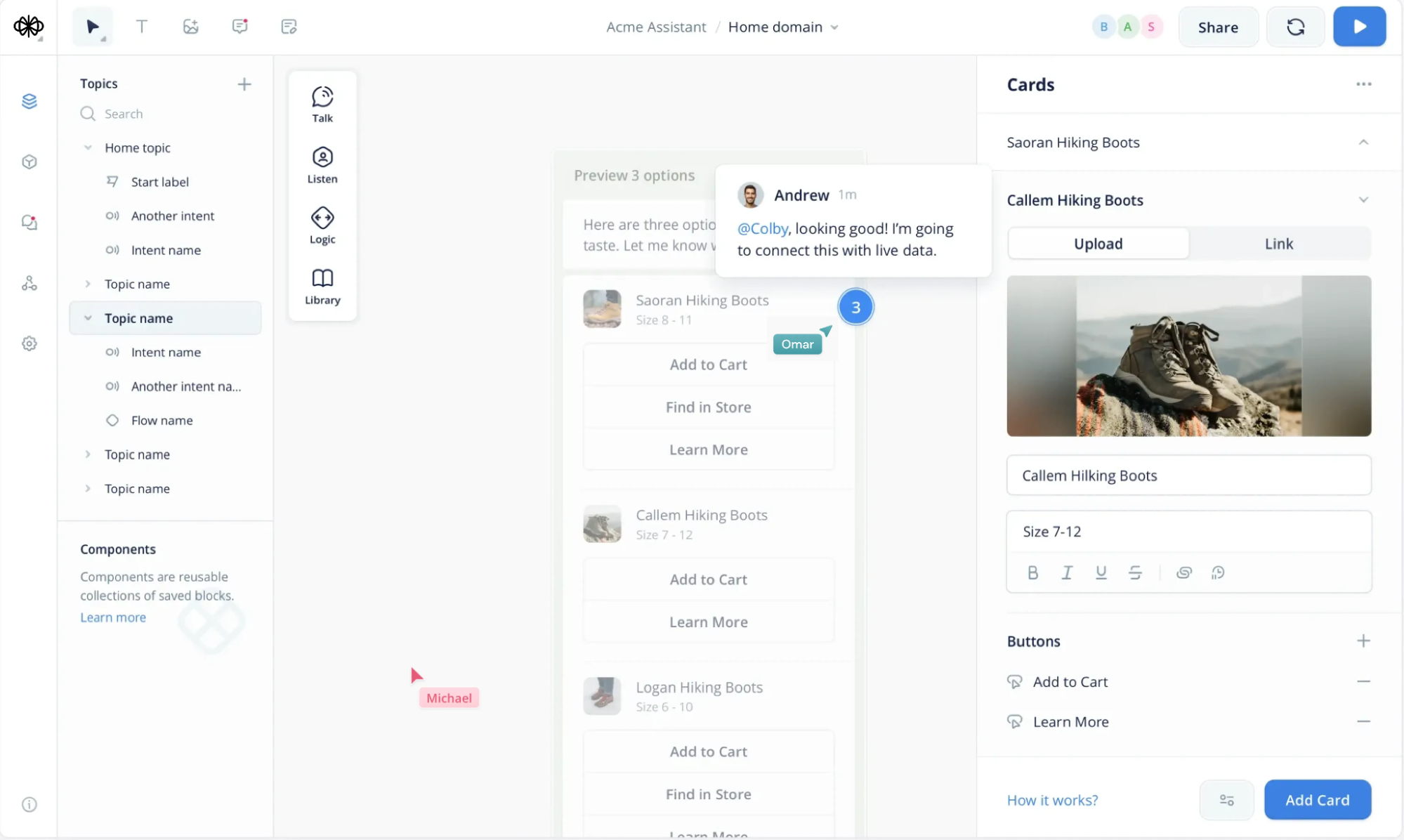
Voiceflow is a build-your-own agent platform. Its visual, low-code canvas lets teams design, test, and ship AI agents across voice and chat. The audience is CX and product teams, and agencies, that want to own the build.
Key features
Visual builder: drag-and-drop design with API and SDK access
Voice and chat: deploy across multiple channels
Bring-your-own LLM: use any major model, no lock-in
Analytics: real-time conversation data
Team tooling: multi-client workspaces and white-labeling
Compliance: SOC 2 referenced on site
Pricing
Custom, contact sales. Voiceflow's own pricing page is now quote-only, with an agency path and a business path, both after a demo.
Pros
Full design control
Model and channel flexibility
Good collaboration features
Strong agency and white-label support
Large community and templates
Cons
You build and maintain the agent yourself
No public self-serve pricing on its own page
Best for
Teams that want to design and own their agent rather than adopt a platform.
Why choose Voiceflow over Sierra
Sierra hands you a managed agent platform. Voiceflow hands you the canvas and lets your team build exactly what you want, with your own models and full control. If in-house ownership and design flexibility matter more than a done-for-you platform, Voiceflow is the better base.
11. Retell AI
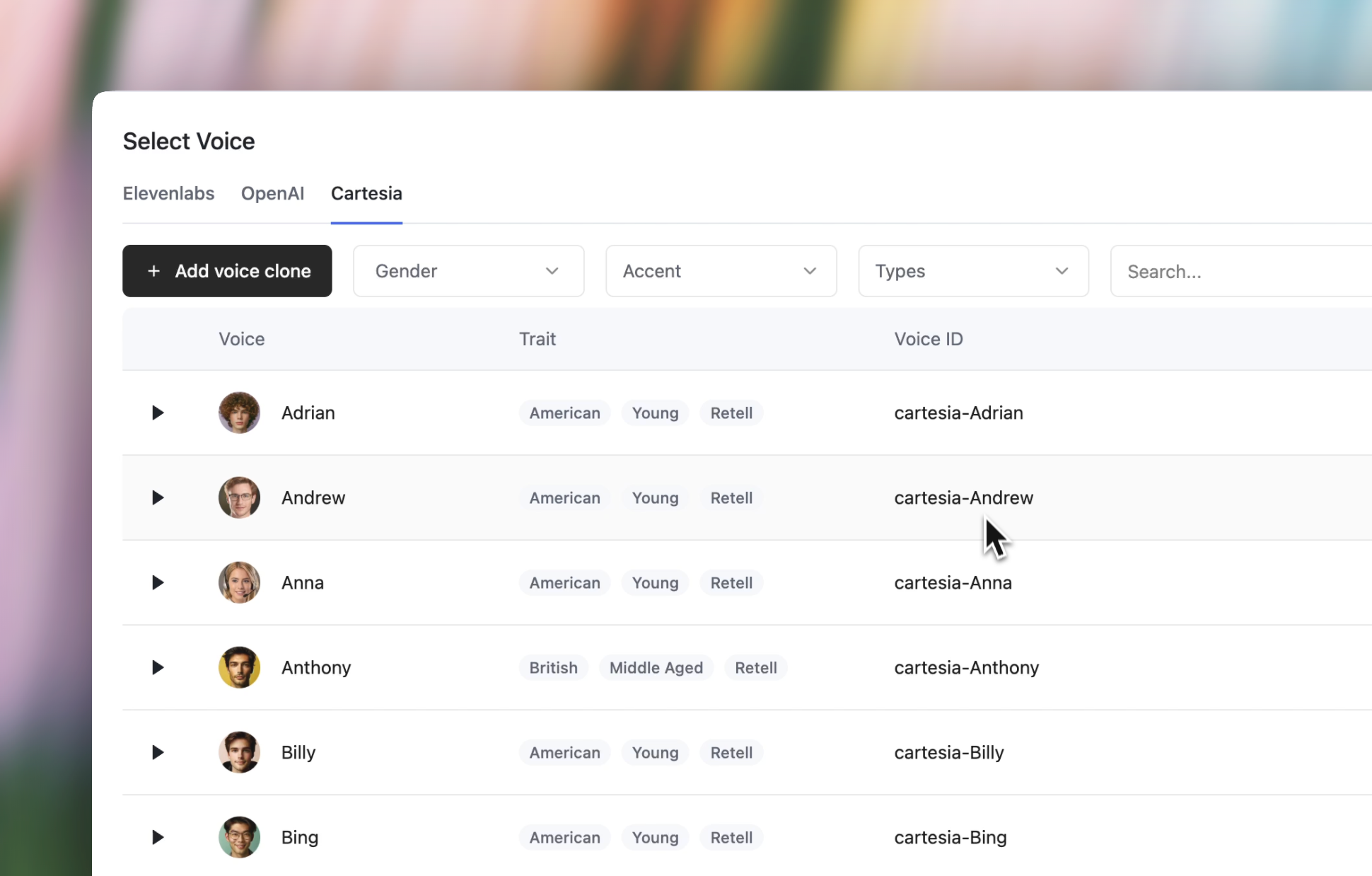
Retell AI is a developer-first platform for building AI phone agents. It gives engineers granular control over voices, models, and telephony through an API, with clear per-minute rates published up front. The product aims squarely at technical teams.
Key features
Voice and chat agents: phone-first, with chat support
Choice of voices: Retell infra plus ElevenLabs, Cartesia, and more
Choice of models: GPT, Claude, and Gemini options
Telephony: Twilio or bring-your-own SIP
Developer tooling: API, webhooks, transcripts, and add-ons like KB and AI QA
Compliance: SOC 2 certified, HIPAA-ready with a BAA
Pricing
Published. Pay-as-you-go voice runs from $0.07 to $0.31 per minute, with $10 in free credits. Enterprise is custom.
Pros
Transparent per-minute pricing
Granular control over the stack
Flexible voices and models
Strong developer experience
Free credits to start
Cons
Assembly and coding required
Less suited to non-technical teams
Best for
Developers who want to build voice agents with fine control and clear costs.
Why choose Retell AI over Sierra
Retell gives you visible per-minute pricing and full control over voices, models, and telephony. If you've got engineers and want to assemble voice agents your way at a price you can see, Retell is a more transparent, hands-on choice than Sierra.
12. Synthflow
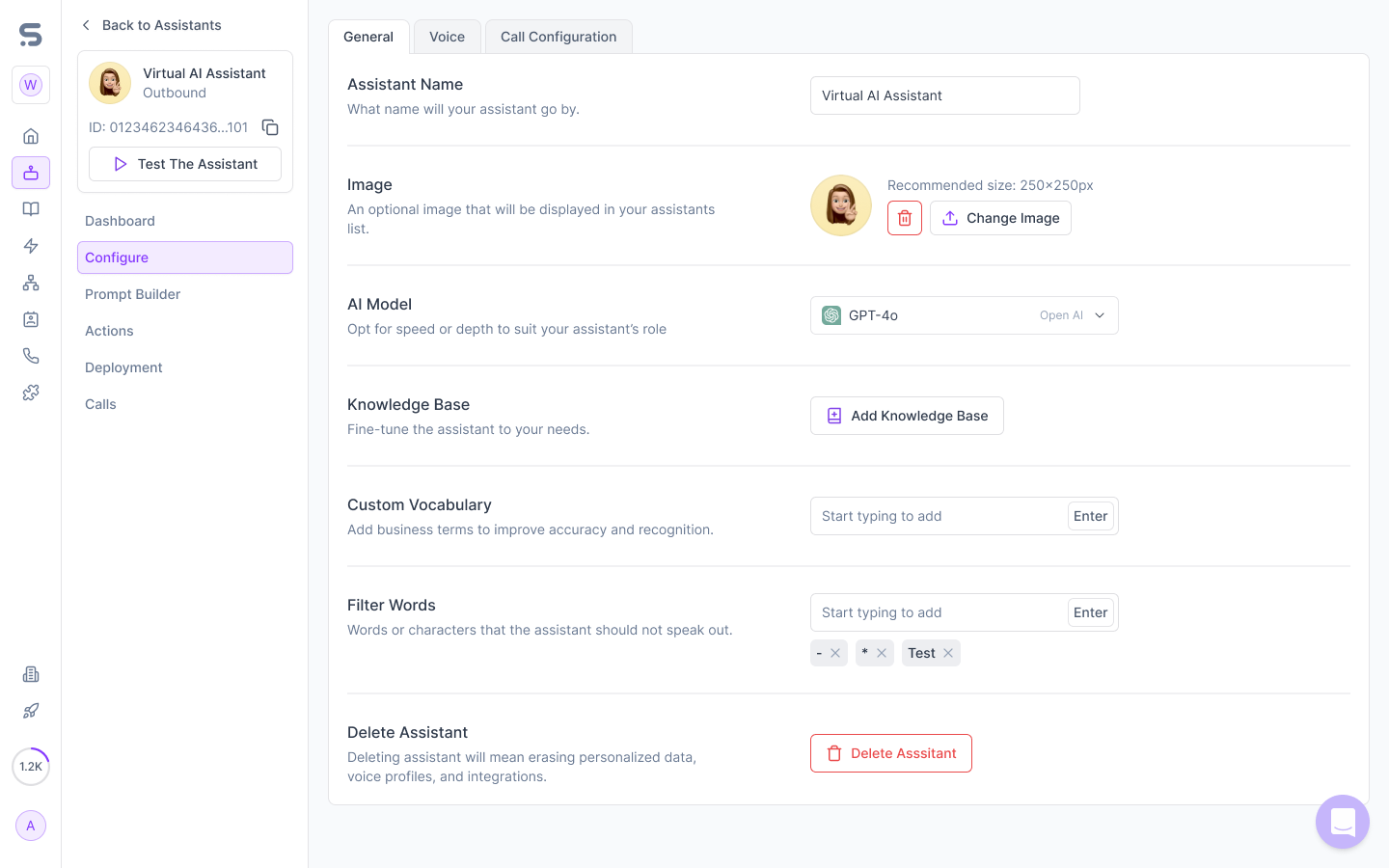
Synthflow is a no-code voice AI platform for automating phone calls. It handles inbound and outbound with native telephony, plus agency and white-label tooling. These days it aims mainly at enterprises and resellers.
Key features
No-code builder: build voice agents without engineering
Telephony: native network, SIP, or approved enterprise telephony
Call handling: routing, escalation, and human handoff
Integrations: CRM, calendar, webhooks, and knowledge sources
Agency tooling: sub-accounts and white-label rebilling
Compliance: SOC 2, GDPR, HIPAA, and ISO 27001
Pricing
Published floor. Synthflow's own page is now enterprise-only, starting at $30,000 per year, scoped to your call volume and setup.
Pros
No-code phone automation
Native telephony included
Strong agency and white-label options
Broad integrations
Solid compliance
Cons
Own-page pricing now starts high
Model and voice provider fees can be separate
Best for
Agencies and enterprises that want no-code phone automation or a reseller model.
Why choose Synthflow over Sierra
Synthflow is a much narrower tool than Sierra, and for some teams that's the point. If all you need is inbound and outbound phone automation you can build yourself or white-label to clients, Synthflow does that job without a full CX platform or an enterprise sales cycle. It suits agencies and teams with a specific calling need, not those standardizing a whole support operation.
Choose the Right Sierra AI Alternative
There's no single best tool here, only the best fit for your needs.
If you run digital support at scale, Decagon and Ada give you strong autonomous resolution, and Zowie adds tight control for retail. If you run a large contact center, Cresta, Cognigy, Parloa, and Five9 cover voice, agent assist, and CCaaS integration. If you'd rather build your own, Voiceflow, Retell, and Synthflow give you the pieces.
If phone and messaging are central, Callers is built for that. It fits your current stack, goes live in weeks, and shows you step-level analytics on every call, all on clear usage-based pricing.