12 Best Vapi Alternatives in 2026: Ranked and Compared
:quality(80))
Quick Summary
Callers leads for teams that want to run inbound and outbound at scale across voice and messaging, without engineering. Retell, Bland, Synthflow, Thoughtly, and Voiceflow suit builders. PolyAI, Cognigy, Sierra, Decagon, and Five9 fit enterprise CX. Anyreach serves agencies that want white-label.
# | Tool | Key features | Best for | Pricing |
|---|---|---|---|---|
1 | Callers | Omnichannel agents (26+ languages, mid-call switching) across phone/SMS/WhatsApp/email/chat, Workflow Orchestration, no-code Script Builder, step-level analytics, warm human transfer | High-volume B2C teams running inbound and outbound, live in weeks | Transparent, usage-based per minute |
2 | Retell AI | Developer voice platform, low latency, BYO LLM with per-step model choice, streaming RAG, SIP and branded calling | Developers building low-latency voice agents | Pay-as-you-go, roughly $0.07 to $0.31/min; $10 free credits |
3 | Bland AI | Own-infrastructure voice, proprietary end-to-end stack, up to 1M concurrent calls, flat all-in per-minute rate, on-script guardrails | Teams that want dedicated infra and one predictable rate | Free start at $0.14/min; Build $299/mo; Scale $499/mo; Enterprise custom |
4 | Synthflow | No-code voice OS, own telephony network plus BYO SIP, AI sandbox and auto-QA, 200+ integrations | Teams wanting a no-code voice OS with built-in telephony | Enterprise from $30,000/yr; self-serve tiers being retired |
5 | Thoughtly | No-code CRM-driven lead follow-up, voice plus SMS/WhatsApp/email, 34+ languages, choice of GPT/Claude/Gemini | Inbound lead conversion teams | Flex from $500/mo; Scale and Enterprise quote-only |
6 | Voiceflow | Build-your-own agent platform, model and channel agnostic, strong RAG, roles and versioning | Product and engineering teams building agents themselves | No public prices; docs reference Pro and Business from ~$60/mo |
7 | PolyAI | Voice-first enterprise, voice-tuned model, sub-300ms latency (vendor), 45 languages, warm handoff | Enterprise inbound voice and CX | Custom, usage-based per minute |
8 | Cognigy | Agentic plus deterministic flows, 100+ languages, 30+ CCaaS connectors, autonomous and agent-assist | Large enterprises needing deep CCaaS integration | Custom (contact sales) |
9 | Sierra | Agent OS, Ghostwriter authoring, voice sims, 59 languages, deep observability and compliance | Enterprises wanting autonomous CX on outcome pricing | Custom, outcome-based |
10 | Decagon | AI concierge, natural-language AOP authoring, bi-directional CRM read and write, inbound, outbound, and Agent Assist | Digital-native brands wanting concierge CX | Custom, per-conversation or per-resolution |
11 | Five9 | Agentic AI on a full CCaaS platform, multi-agent orchestration, governance with LLM blinding, native handoff | Contact centers wanting AI inside a full CCaaS suite | Digital $119/seat/mo, Core $159/seat/mo; higher tiers quote-only |
12 | Anyreach | Omnichannel voice AI with cross-channel memory, no-code workflows, white-label agency tier | Agencies wanting a white-label voice AI platform | SMB $0/mo plus usage (voice from $0.19/min); Agency $1,250/mo |
Looking for a Vapi Alternative?
Vapi lets you stand up a voice agent in minutes. The harder work comes after. You choose providers, wire up speech and language models, tune latency, and keep the whole thing running.
Vapi is a developer platform, so your team assembles the stack and owns the upkeep. Plenty of buyers would rather buy the outcome, launch in weeks, and let a CX team run it without leaning on engineering.
Below are 12 tools worth comparing.
Why Listen to Us?
Callers is an omnichannel AI platform for high-volume B2C, running inbound and outbound through one agent across phone, SMS, WhatsApp, email, and chat with shared context. It powers live customer conversations for DoorDash, Einride, and PadSplit.

The platform was built alongside Google Cloud, scaled 30X, and now runs hundreds of thousands of AI conversations a day, with SOC 2, HIPAA, GDPR, CCPA, and PCI DSS in place.
Customers see the results in their own numbers. One customer cut call-center load by 65% and grew outreach tenfold. Another cut outbound handling time by 46%, then expanded its sales team to keep up with the demand it created.
Why Look for Vapi Alternatives?
Vapi is a strong developer platform, and for teams with engineers who want full control, it does its job well. Here are the main reasons teams look for an alternative.
It's a platform to build on, not a product to use
Vapi hands you the building blocks and expects you to assemble the agent. You choose the speech-to-text, the language model, the text-to-speech, and the telephony, then connect them. That flexibility is great for developers and rough on a CX or growth team that just wants working calls. If nobody on your side writes code, Vapi is hard to own day to day.
The costs stack up and get hard to predict
The headline is a $0.05 per minute platform fee, but that's only the base. You also pay separately for speech-to-text, the language model, text-to-speech, and telephony, all passed through at provider rates.
Real all-in cost usually lands around $0.11 to $0.15 per minute, and it swings with the providers you pick. Add-ons like HIPAA ($2,000/mo) and zero data retention ($1,000/mo) sit on top. Budgeting takes work.
Your team owns the maintenance
Because you assembled the stack, you keep it running. Prompt tuning, latency work, provider swaps, and version upkeep all fall on your side. When a provider changes behavior or a model gets deprecated, that's your ticket to handle. For a lean team, the ongoing load adds up fast.
Hands-on support sits behind the top tiers
Vapi's dedicated engineer and account teams come with the Scale plan and enterprise contracts. On the self-serve Build plan, you mostly lean on docs and community help. If you want a named person who knows your setup while you launch, you're paying up for it or going without.
No built-in campaign engine or step-level analytics
Vapi is built around orchestrating calls and agents, so outbound sequences, retries, and pre-call triggers are things you wire up yourself. Reporting works the same way. You get call data, but the step-level funnel analytics that show where a script drops off are yours to build. Teams running real outbound programs feel this gap quickly.
The 12 Best Vapi Alternatives
1. Callers
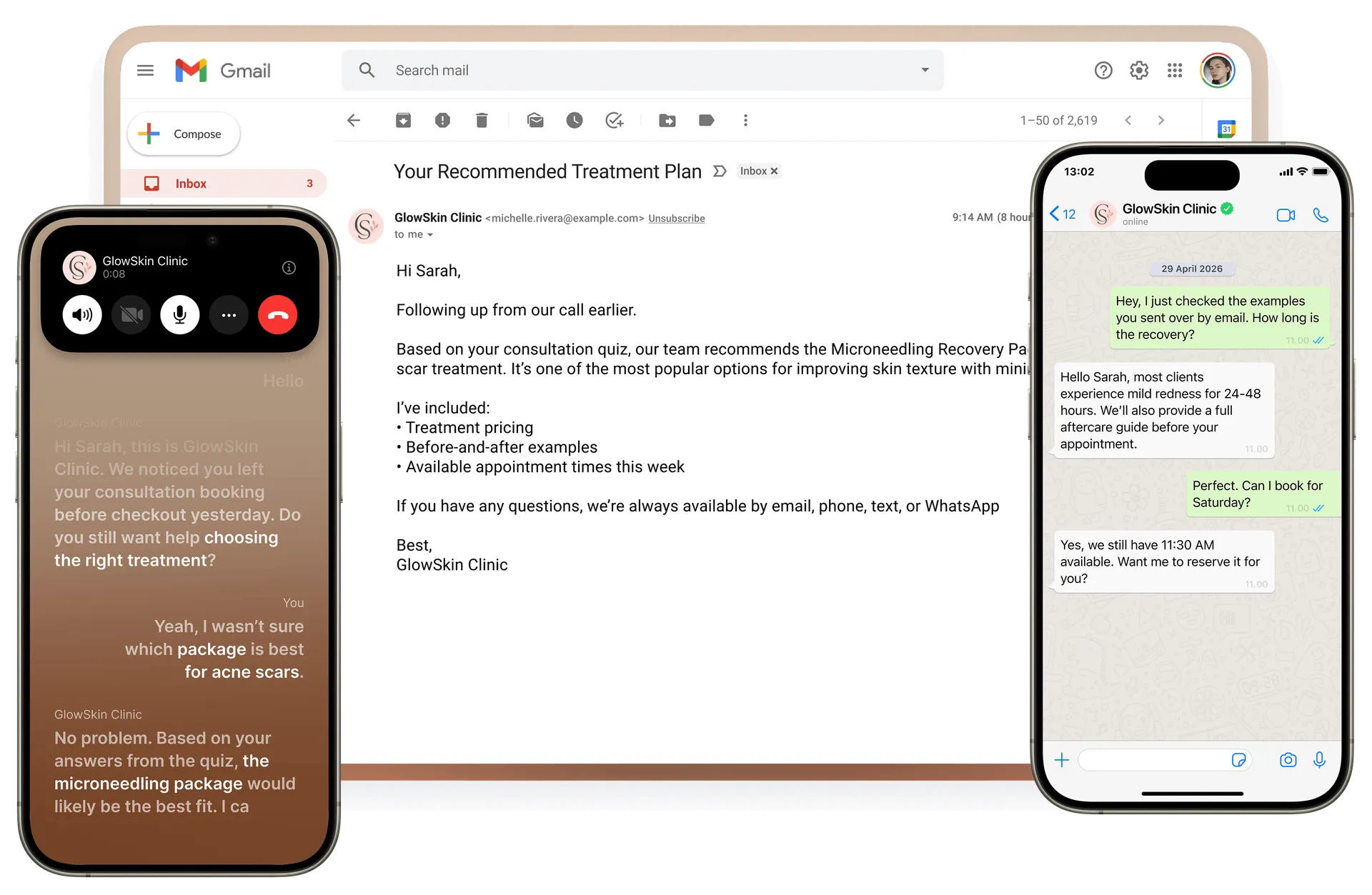
Callers is an omnichannel AI platform built for high-volume B2C, where the conversation drives revenue or the customer outcome. It runs inbound and outbound through one agent that covers phone, SMS, WhatsApp, email, and chat, so sales, retention, and support conversations all share the same context.
CX teams build and run it without engineering, and it goes live in weeks.
Where Vapi hands you the pieces to build a voice agent, Callers gives you the finished agent and the team to run it. You skip the provider wiring and the stack maintenance, so a CX or growth team owns campaigns directly, with step-level analytics that show what to improve after launch.
Key features
Omnichannel one brain: one agent across phone, SMS, WhatsApp, email, and chat with shared context, and natural delivery across 26+ languages with real-time mid-call switching
Workflow Orchestration: multi-step sequences, conditional retries, pre-call triggers, and post-call actioning across inbound and outbound
No-code Script Builder: drag-and-drop with AI-assisted scripting, owned by operators, not developers
Step-level analytics: see exactly where a conversation wins or drops off, with AI suggestions to lift success rate
AI and human routing: routine conversations run on their own, high-stakes ones warm-transfer to your team
Built-in compliance: SOC 2, HIPAA, GDPR, CCPA, and PCI DSS
Pricing
Transparent and usage-based, billed per minute with one clean rate: no stacked provider fees, no separate speech, model, or telephony pass-throughs. Scoped to your volume, with a dedicated CSM included on every plan.
Pros
Voice-first with genuine outbound campaign logic that goes beyond inbound deflection
Live in weeks, with no professional-services contract or forward-deployed engineers
Operators build and edit agents without developer dependency
One agent keeps context across every channel
Proven at scale with DoorDash, Einride, and PadSplit, backed by Google Cloud infrastructure
Cons
Aimed at high-volume B2C, so very low-volume or purely developer use cases are a looser fit
Best for
High-volume B2C teams that want production omnichannel AI, strong on both inbound and outbound, live in weeks without engineering.
Why choose Callers over Vapi
Vapi gives you the parts to build a voice agent, then bills the speech, model, telephony, and add-on fees separately, so real cost is hard to predict. Callers gives you the working agent plus the campaign logic, analytics, and CSM to run it, on one transparent per-minute rate with no stacked pass-throughs.
The bigger difference is who runs it. With Vapi, engineering owns the stack. With Callers, your CX, growth, or sales team builds and edits campaigns directly, and you're live in weeks with results inside the first pilot.
2. Retell AI
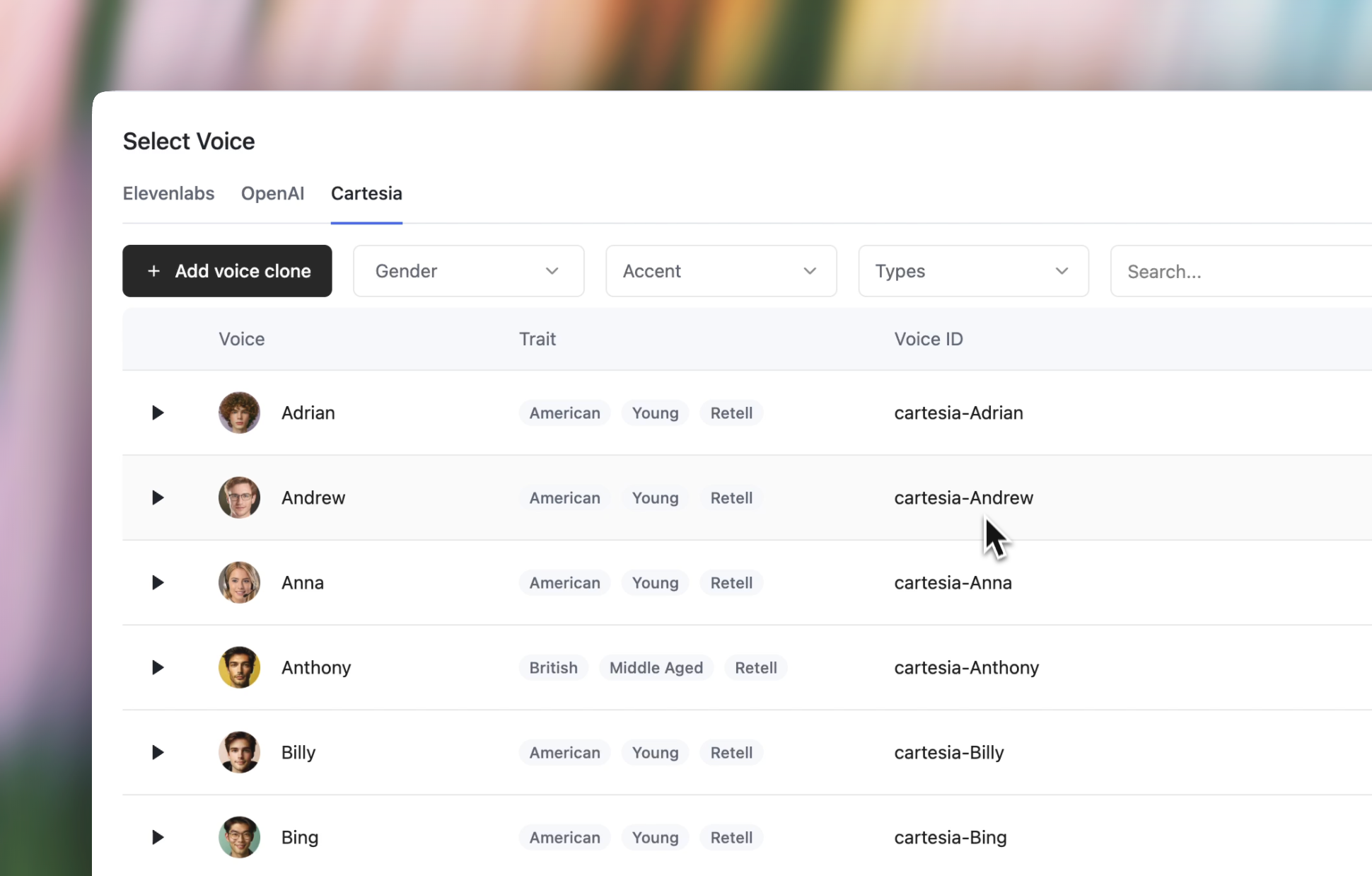
Retell AI is a developer-first voice platform focused on natural, low-latency phone conversations. It sits closest to Vapi in spirit, giving you a provider-based pipeline where you pick your speech and language models per agent. The difference is a friendlier no-code conversation flow on top of the developer tooling.
Key features
Conversation flow builder: no-code branching with decision trees, plus full API and SDK access
Per-step model choice: assign a different language model at different nodes, including your own custom endpoint
Streaming RAG: real-time knowledge base lookups with function calling during the call
Telephony flexibility: inbound and outbound, BYO numbers over SIP or Retell-provisioned numbers
Contact-center integrations: HubSpot, Salesforce, Genesys, Five9, Avaya, and Amazon Connect
QA tooling: post-call analysis and simulation testing, with SOC 2 Type II, HIPAA, and GDPR
Pricing
Pay-as-you-go, with a blended all-in rate of roughly $0.07 to $0.31 per minute depending on your voice, model, and telephony choices. You get $10 in free credits and 20 free concurrent calls to start, and enterprise pricing is custom.
Pros
Strong voice quality and low latency
True bring-your-own-model flexibility, including self-hosted options
No-code flow builder makes it more approachable than raw infrastructure
Broad CRM and contact-center integrations
Transparent, published pay-as-you-go rates
Cons
Stacked per-minute components make total cost harder to predict
Still developer-leaning for advanced setups
No PCI compliance claim listed
Best for
Developers who want Vapi-style flexibility with a more usable builder on top.
Why choose Retell AI over Vapi
Retell covers most of what draws people to Vapi, the same provider choice and per-step model control, but wraps it in a no-code conversation flow that a technical operator can navigate. You keep the flexibility and lose some of the assembly work.
Its published pay-as-you-go pricing also makes it easier to estimate spend before you commit, which is a practical win over piecing together Vapi's separate provider bills.
3. Bland AI
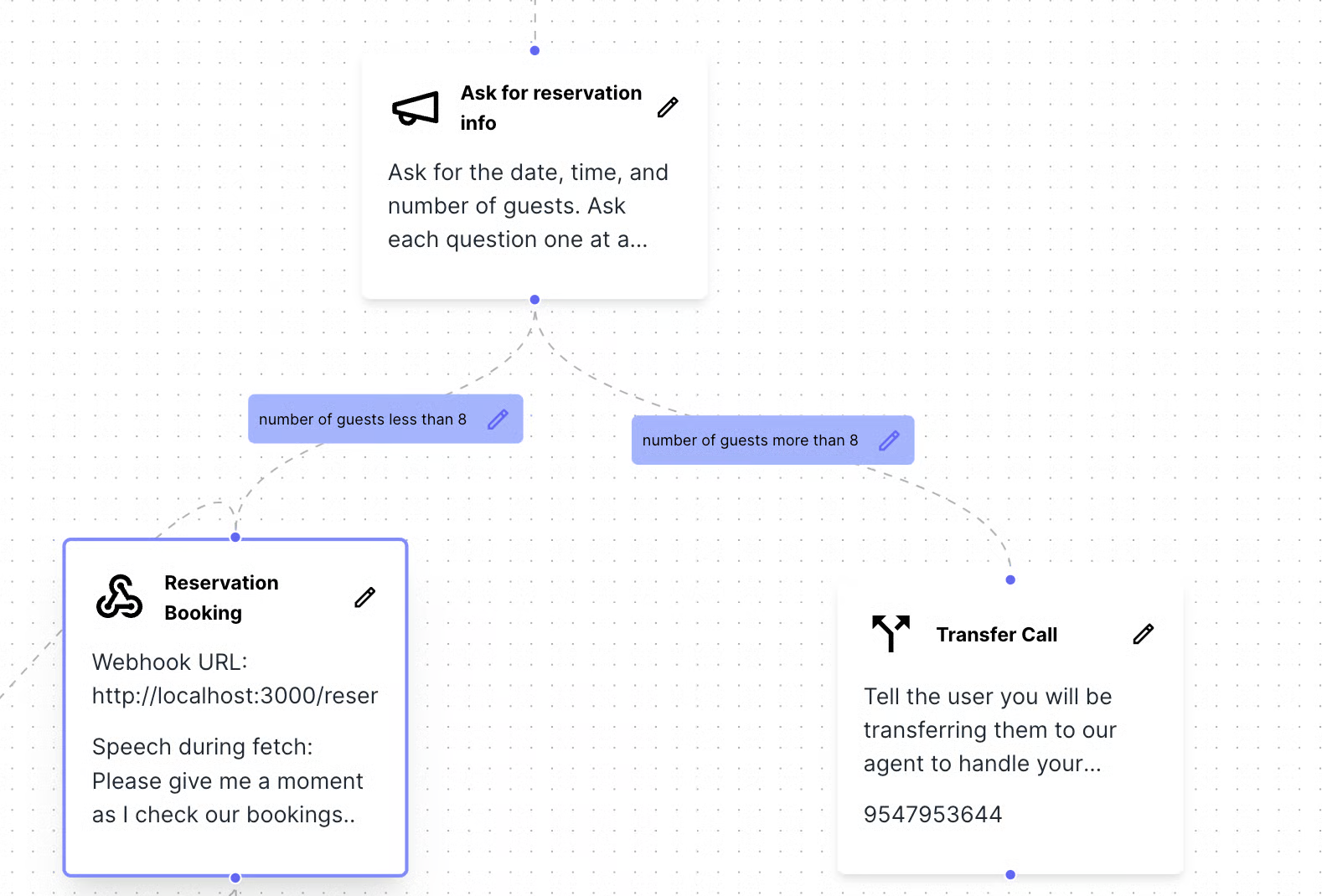
Bland AI takes the opposite approach to Vapi's open orchestration. It runs its own models and runtime end to end, so speech, language, and voice all live on one proprietary stack. That trade buys you a flat per-minute rate and tight latency, at the cost of model choice.
Key features
Conversational Pathways: visual node-based flow builder with typed variables, loops, and global interruption nodes
Proprietary end-to-end stack: language, speech, and voice run on Bland's own infrastructure
Scale and residency: up to 1M concurrent calls, with self-hosted, on-prem, and VPC options on Enterprise
Multilingual: 40+ languages, real-time translation in 23, and mid-call switching
Flat per-minute rate: one price covers the model, speech, and telephony, no pass-throughs
Compliance depth: SOC 2 Type II, HIPAA, GDPR, and PCI DSS v4.0
Pricing
A free Start tier runs at $0.14 per minute. Build is $299/mo at $0.12 per minute, Scale is $499/mo at $0.11 per minute, and Enterprise is custom and contracted to volume. Warm human transfer, SSO, and on-prem are Enterprise-only.
Pros
One flat, predictable per-minute rate
Strong latency and very high concurrency
Deep compliance stack, including PCI DSS
Dedicated infrastructure and data residency options
Published self-serve pricing
Cons
No bring-your-own-model choice, since the stack is fixed
Live human transfer and SSO are gated to Enterprise
Steeper learning curve for the Pathways builder
Best for
Teams that want predictable pricing and dedicated infrastructure over provider flexibility.
Why choose Bland AI over Vapi
If Vapi's stacked, variable billing is the pain, Bland's single all-in per-minute rate fixes it. You trade the freedom to pick providers for a stack that's tuned to work together and priced as one number.
It also lands compliance that regulated calling operations need, including PCI DSS, without you sourcing and vetting each provider yourself the way a Vapi build requires.
4. Synthflow
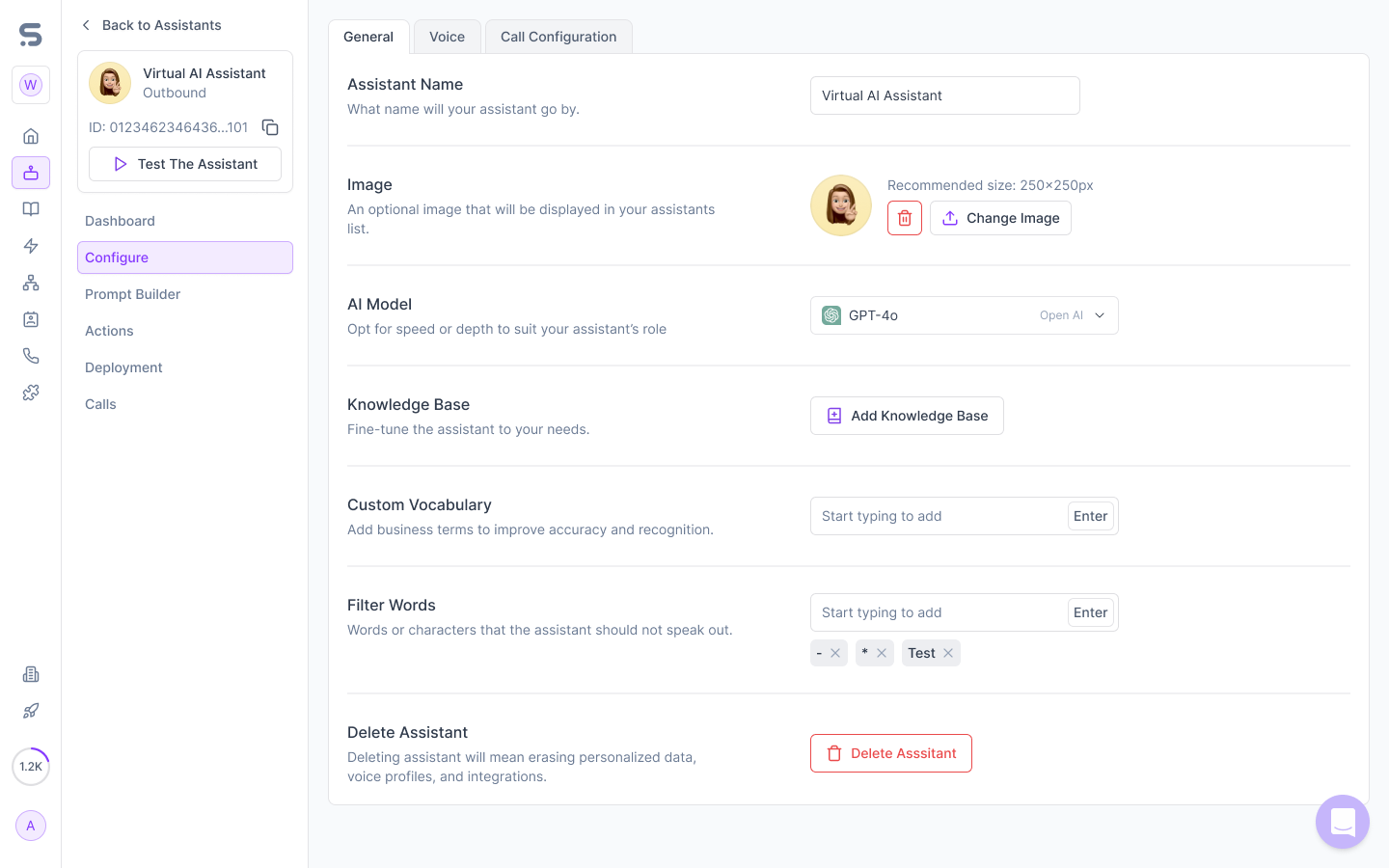
Synthflow positions itself as a complete voice AI operating system with a no-code builder and its own telephony network. It aims to cover build, test, launch, and improve in one place, which is a broader promise than Vapi's orchestration layer. It has moved firmly upmarket on pricing.
Key features
No-code Flow Designer: visual builder with multi-agent subflows, webhooks, and a Claude MCP integration
Own telephony network: in-house carrier network plus support for purchased numbers, Twilio, and SIP
Testing and QA: AI sandbox, custom evaluations, auto-QA, and versioning
Model flexibility: OpenAI, Azure OpenAI via your own keys, Synthflow-optimized models, and Claude via MCP
200+ integrations: HubSpot, GoHighLevel, Salesforce, Zapier, Make, and WhatsApp
Compliance and white-label: SOC 2 Type II, HIPAA, GDPR, PCI DSS, ISO 27001, with Stripe rebilling
Pricing
Synthflow now leads with Enterprise contracts starting around $30,000/yr, customized to volume, concurrency, and telephony. The older self-serve monthly tiers are being retired for new signups, so treat the previously advertised lower plans as legacy.
Pros
Broad, all-in-one voice OS with strong testing tooling
Owned telephony plus BYO carrier options
Good CRM and agency integration breadth
Solid compliance stack, including PCI DSS and ISO 27001
White-label with built-in rebilling
Cons
New pricing effectively starts at a high enterprise floor
Self-serve entry tiers are being phased out
Some non-English accuracy depends on choosing the right speech engine
Best for
Teams wanting a full no-code voice OS with built-in telephony and testing.
Why choose Synthflow over Vapi
Synthflow bundles the pieces you'd assemble in Vapi, including telephony, testing, and QA, into one no-code environment. For a team that wants the workflow handled rather than wired together, that's a real time saver.
The catch is cost. Synthflow's shift to enterprise contracts means it competes with Vapi on capability, not on a low entry price, so it fits teams ready for a committed platform rather than a cheap starting point.
5. Thoughtly
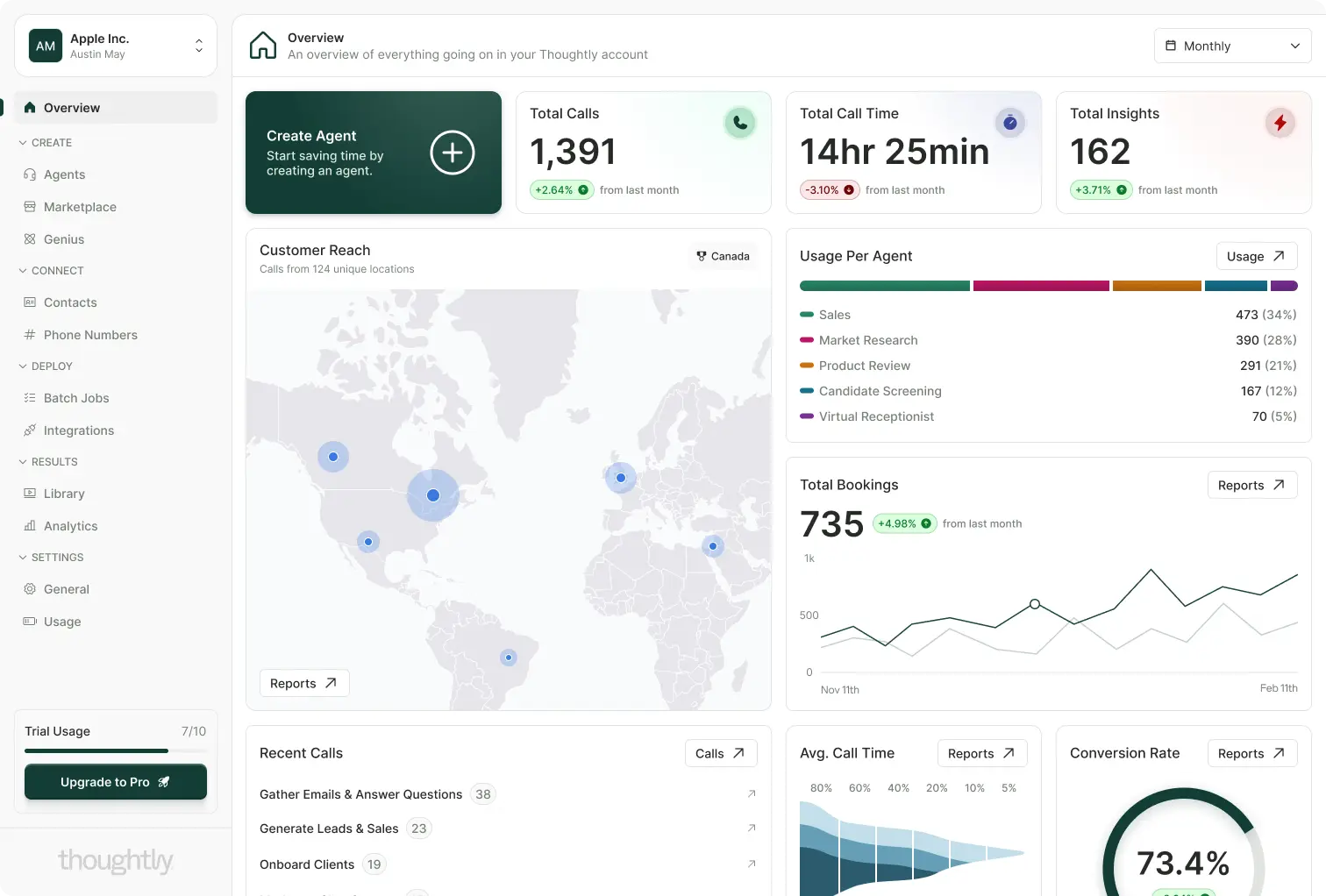
Thoughtly focuses on inbound lead conversion, with CRM-driven agents that call, text, and follow up until a lead responds. It's more of a finished product for revenue teams than a developer toolkit, which sets it apart from Vapi's build-it-yourself model.
Key features
No-code Agent Builder: node-based visual flows plus a "Vibes" assistant to build agents conversationally
Model choice: GPT, Claude, or Gemini on all tiers, with custom models on Enterprise
Omnichannel follow-up: voice, SMS and iMessage, WhatsApp, and email in one workflow
CRM sync: two-way sync with 200+ integrations, keeping outcomes in your system of record
Multilingual: 34+ languages with auto language detection and switching
Telephony options: built-in numbers or bring your own Twilio or Telnyx account
Pricing
The Flex plan starts at $500/mo with unlimited voice, SMS, and email, and usage overages billed after. Scale and Enterprise are quote-only, and Thoughtly does not publish a per-minute rate.
Pros
Product-grade experience aimed at revenue teams
Flexible model choice across all plans
Strong omnichannel follow-up tied to the CRM
Built-in and BYO telephony
Voice cloning included on every plan
Cons
Compliance is tier-gated, so regulated use effectively needs Enterprise
No published per-minute pricing
No native A/B testing found
Best for
Inbound lead conversion teams that live inside a CRM.
Why choose Thoughtly over Vapi
Thoughtly is closer to a working revenue tool than a platform to build on. If your goal is to catch and convert inbound leads across voice and messaging, it ships that workflow rather than asking you to assemble it.
For teams without engineers, that's the appeal. You configure agents in a visual builder and sync outcomes to your CRM, where a Vapi setup would need custom development to reach the same place.
6. Voiceflow
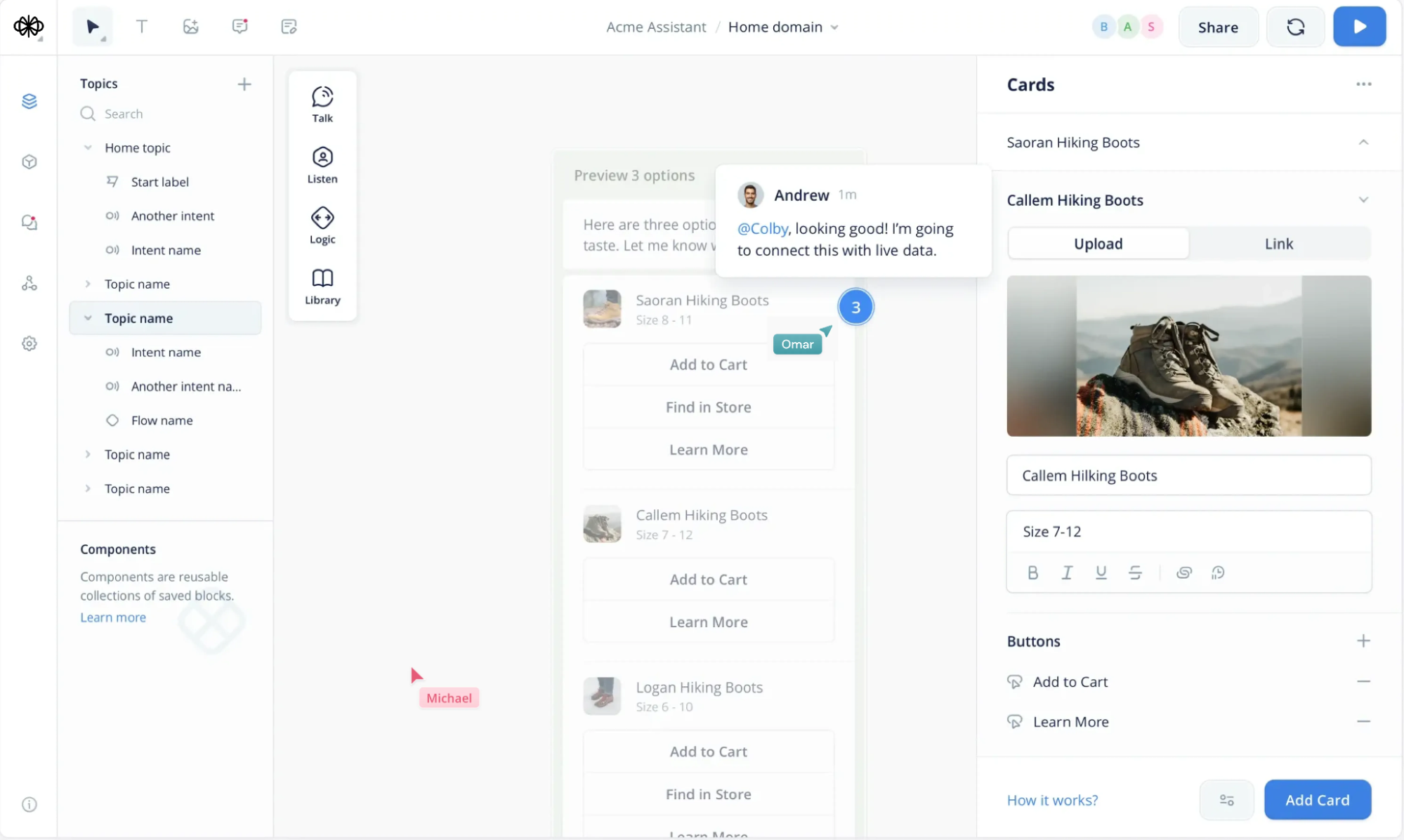
Voiceflow is the closest philosophical match to Vapi as a build-your-own platform, though it has repositioned toward chat-first CX agents. It's model and channel agnostic, with a strong visual canvas and developer SDK for teams that want to design and ship agents themselves.
Key features
Agent platform: build one agent and deploy to web chat, phone, and API, with chat and voice both first-class
Model agnostic: Claude, GPT, Gemini, or your own models, with failover routing and per-playbook overrides
Strong RAG: scalable vector knowledge base with tunable chunking and a Knowledge Base API
Visual canvas plus SDK: no-code design mixed with deterministic workflows and guardrails
Collaboration: roles, comments, versioning, and dev, staging, and prod environments
100+ integrations: Salesforce, Zendesk, and Shopify, with structured human handoff
Pricing
Voiceflow's current pricing page is demo-oriented and shows no tier table. Its own docs reference Pro and Business plans starting around $60/mo, with Business bases higher and Enterprise custom, so exact numbers now live behind the app.
Pros
Genuinely model and channel agnostic
Excellent knowledge base and RAG tooling
Strong team collaboration features
Deterministic workflows plus agentic playbooks in one builder
Large self-serve community and template marketplace
Cons
Outbound is API-only, with no campaign or dialer manager
No public pricing on the current page
HIPAA is not clearly confirmed for Voiceflow itself
Best for
Product and engineering teams that want to build and own their agents.
Why choose Voiceflow over Vapi
If you like Vapi's build-your-own control but want a more designed authoring experience, Voiceflow delivers that with a mature visual canvas, real collaboration, and best-in-class RAG. It's a better home for teams shipping chat and voice agents together.
Just be clear on the outbound limits. Voiceflow's outbound calling is programmatic only, so high-volume outbound campaigns still need building, much as they would on Vapi.
7. PolyAI
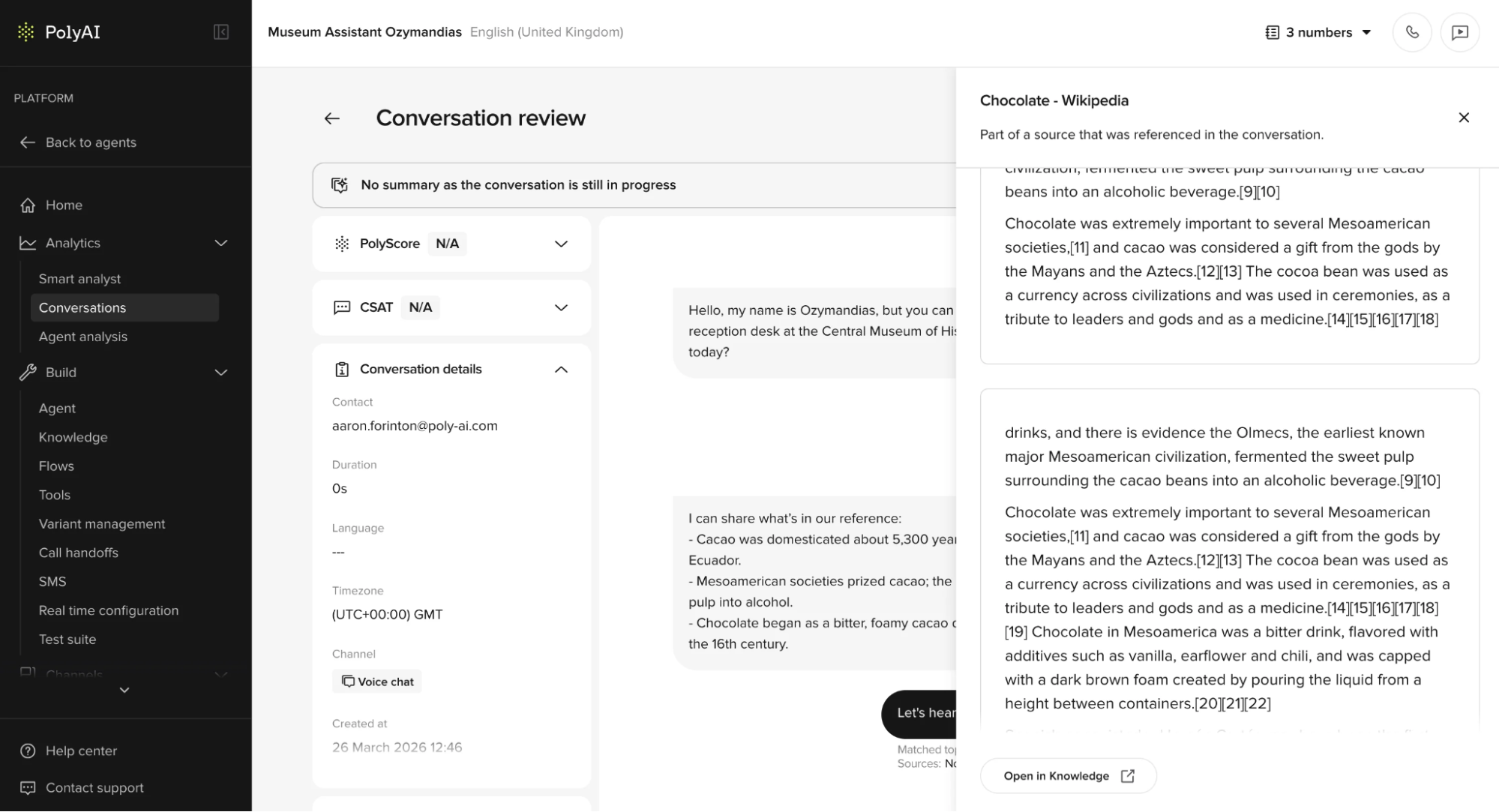
PolyAI is a voice-first enterprise platform built specifically for spoken customer service. It runs a proprietary model tuned for voice and an in-house speech stack, aiming for natural, low-latency inbound calls that resolve issues end to end.
Key features
Voice-tuned model: a proprietary model built for customer-service conversations across voice and text
Low latency: sub-300ms on live calls (vendor claim) for natural turn-taking
In-house speech stack: ASR tuned for accents and noise, paired with blended TTS
45 languages: broad language coverage as standard
Two builder paths: a no-code agent builder plus a developer SDK
Enterprise compliance: SOC 2, HIPAA, GDPR, and PCI DSS, with warm human handoff
Pricing
PolyAI is custom and usage-based per minute, quoted after a demo. It does not publish rates, so any figure you see elsewhere is a third-party estimate rather than PolyAI's stated price.
Pros
Purpose-built for voice, with well-regarded call quality
Strong accent and noise handling
Broad language coverage
Enterprise-grade compliance
Both no-code and developer paths
Cons
Inbound-first, so outbound is not a headline capability
Quote-only pricing
Enterprise focus can be heavy for smaller teams
Best for
Enterprises that need polished inbound voice self-service.
Why choose PolyAI over Vapi
PolyAI is a finished enterprise voice product where Vapi is infrastructure. If your priority is inbound call quality that handles accents and noise well, PolyAI's purpose-built stack gets you there without assembling and tuning providers.
It's the stronger pick when voice quality on complex inbound calls is the whole job, and you'd rather buy that than build it.
8. Cognigy
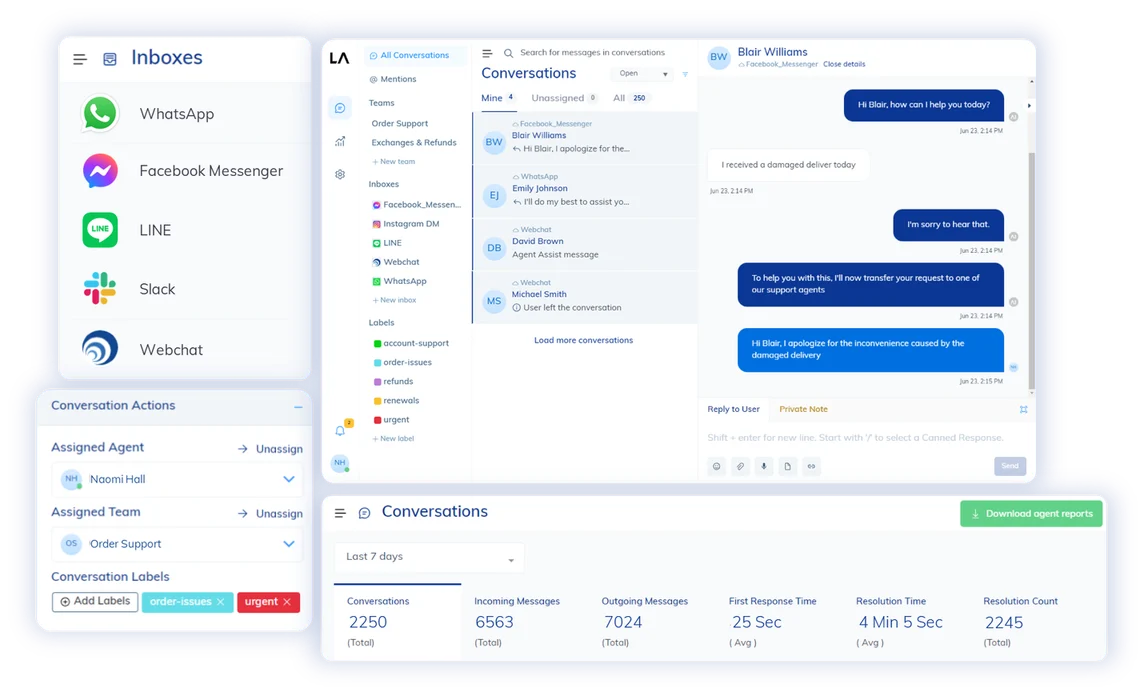
Cognigy (now part of NiCE) is a mature enterprise platform for agentic customer service with deep contact-center integration. It blends deterministic flows with autonomous agents and connects into the major CCaaS stacks, which makes it a heavyweight option next to Vapi's lighter developer layer.
Key features
Composite AI: deterministic intent flows plus autonomous agentic reasoning for hybrid control
Model agnostic: multiple language models with RAG grounding and MCP tool access
100+ languages: broad multilingual coverage
30+ CCaaS connectors: Genesys, Avaya, Amazon Connect, and NiCE CXone, plus 110+ marketplace tools
Autonomous and agent-assist: full agents plus an Agent Copilot and Live Agent workspace
Enterprise scale: Insights analytics, with GDPR, SOC 2, HIPAA, and ISO 27001
Pricing
Cognigy is quote-only. Billing is conversation-based, counted in blocks of user inputs per its docs, but no dollar figures appear on the site, so any circulating numbers are external estimates.
Pros
Deep contact-center integration
Both autonomous and agent-assist in one platform
Very broad language support
Strong analytics and enterprise scale
Analyst-recognized and widely deployed
Cons
Enterprise deployments take longer to stand up
Quote-only pricing
Heavier than many teams need
Best for
Large enterprises that need voice AI wired deeply into an existing contact center.
Why choose Cognigy over Vapi
For a large contact center, Cognigy brings prebuilt CCaaS connectors and both autonomous and agent-assist modes that a Vapi build would have to recreate from scratch. It slots into Genesys, Avaya, or Amazon Connect rather than asking you to integrate them yourself.
It's the enterprise-integration option, best when the requirement is depth across an existing stack rather than a quick, lightweight build.
9. Sierra
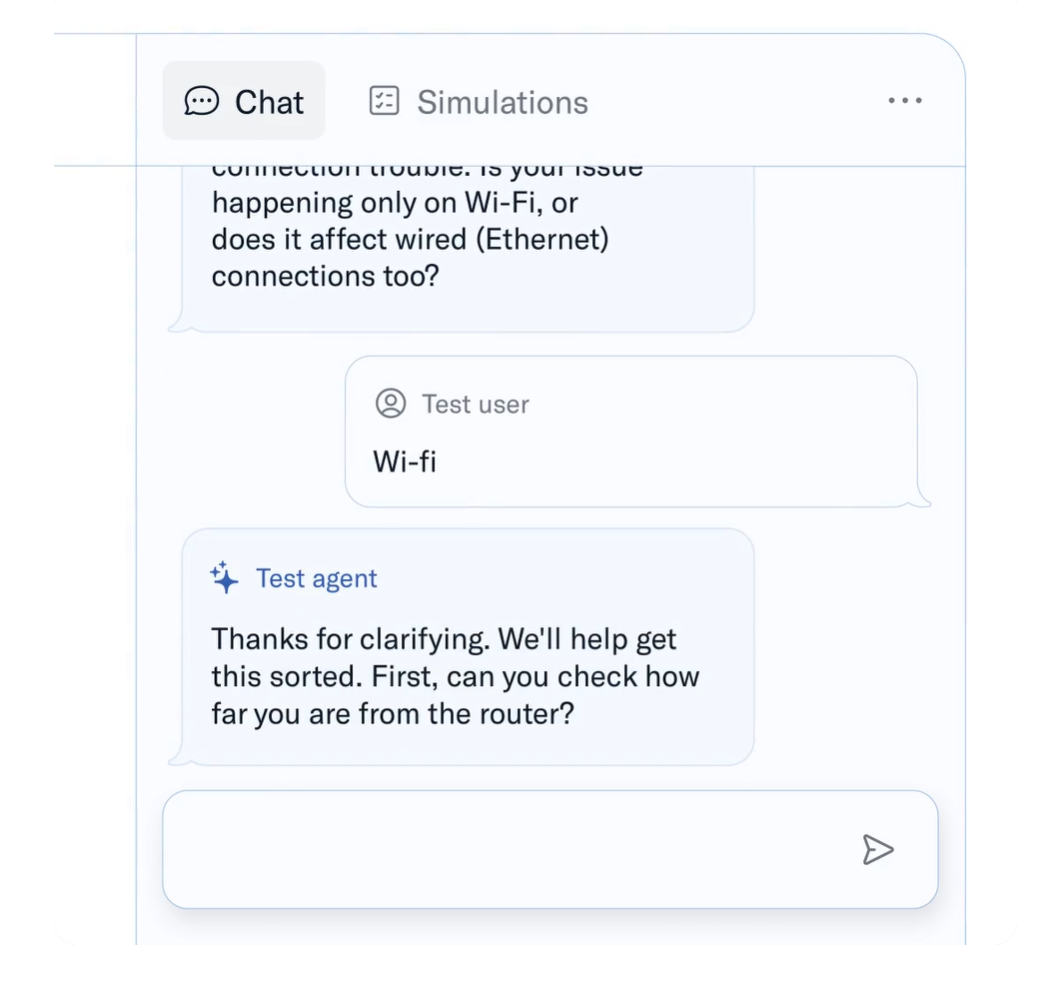
Sierra is an Agent OS built by a high-profile founding team, with strong natural-language authoring and rigorous voice testing. It leans on outcome-based pricing and a deep compliance stack, positioning itself as a full platform rather than a toolkit.
Key features
Ghostwriter authoring: an agent-building agent that generates production-ready agents from SOPs, transcripts, or plain English
Voice testing: Voice Sims stress-test agents with noise and interruptions before launch
59 languages: with seamless mid-conversation switching
Multichannel: chat, SMS, WhatsApp, email, voice, and ChatGPT
Observability suite: Explorer, Monitors, Experiments, plus an agent data platform
Deep compliance: SOC 2, ISO 27001, ISO 42001, HIPAA, GDPR, PCI DSS, and FedRAMP
Pricing
Sierra uses outcome-based pricing, where you pay when the agent achieves a defined result. It publishes no dollar amounts, so any per-resolution or annual figure you find is an external estimate.
Pros
Fast, natural-language agent authoring
Rigorous pre-launch voice testing
Strong observability and experimentation tools
Unusually broad compliance, including FedRAMP
Outcome-aligned commercial model
Cons
Quote-only, outcome-based pricing takes modeling to predict
Positioned as autonomous-first, with no clear agent-assist product
Its underlying model approach is undisclosed
Best for
Enterprises that want autonomous CX agents with pricing tied to results.
Why choose Sierra over Vapi
Sierra automates the whole authoring and testing loop that you'd handle manually on Vapi, generating agents from your existing material and stress-testing them before they go live. That's a meaningful shortcut for teams without a voice-engineering bench.
Its outcome-based model also shifts risk in a way Vapi's usage billing can't, since you're paying for resolved conversations rather than raw minutes.
10. Decagon
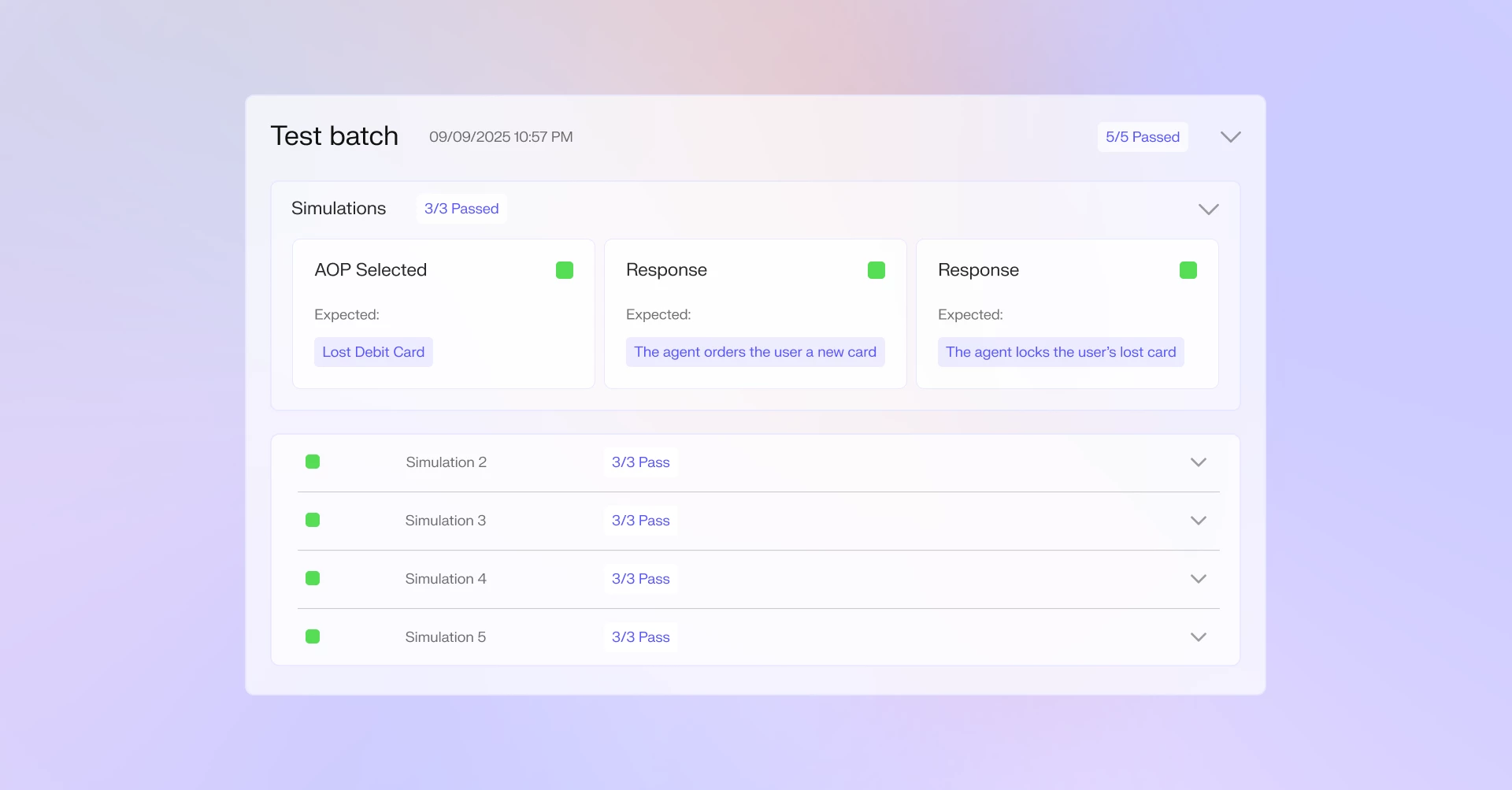
Decagon is an AI concierge platform for autonomous customer support, known for defining agent behavior in plain natural language. It focuses on action-taking agents that complete tasks end to end, with deep read and write access to your business systems.
Key features
Agent Operating Procedures: define agent behavior in natural language rather than a config language
Action-taking agents: complete tasks end to end, like rescheduling a delivery and updating the order
Omnichannel build-once: voice, chat, and email with cross-channel memory
Bi-directional CRM: read and write with Salesforce, Zendesk, and Stripe
QA and testing: A/B testing, at-scale simulation, and Watchtower monitoring
Handoff and outbound: seamless human escalation, outbound reminders, and a dedicated Agent Assist
Pricing
Decagon is quote-only, with two work-based models: per-conversation or per-resolution. It publishes no rates, so any platform fee or per-conversation figure you see is a third-party estimate.
Pros
Plain-language authoring that's fast to iterate
Takes real actions in your systems, going beyond answering questions
Deep, bi-directional CRM integration
Solid testing and monitoring tooling
Offers both autonomous agents and Agent Assist
Cons
Quote-only pricing
Voice is newer than its chat and email roots
Only SOC 2 Type II is publicly disclosed
Best for
Digital-native brands that want concierge-grade autonomous support.
Why choose Decagon over Vapi
Decagon ships autonomous agents that take real actions in your systems, the kind of end-to-end resolution you'd have to engineer yourself on Vapi. Its natural-language authoring means a CX team can shape behavior without writing code.
If the goal is resolved outcomes with deep CRM read and write, Decagon delivers that as a product, where Vapi gives you the runtime to build toward it.
11. Five9
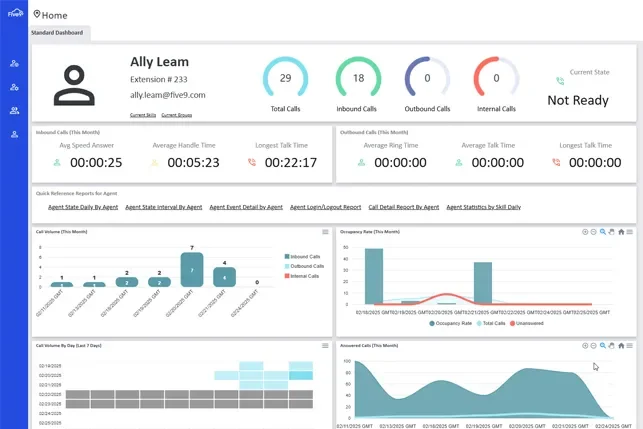
Five9 is an established CCaaS provider layering agentic AI onto a full contact-center platform. Its AI Agents bring multi-agent orchestration and strong governance, which suits buyers who want AI inside a complete suite rather than a standalone voice layer.
Key features
Multi-agent orchestration: an orchestrator plans the path to resolution while sub-agents execute steps
Human-like voice self-service: low-latency streaming, interruption detection, and noise management
Natural-language design: define goals in plain language, or pair with deterministic IVA flows
Governance: custom guardrails, data redaction, and LLM blinding so sensitive data stays protected
Native CCaaS and handoff: runs on the full Five9 platform with instant context transfer to live agents
Analytics: OneVUE unified reporting with customizable dashboards
Pricing
Five9 publishes two entry tiers: Digital at $119/seat/mo and Core at $159/seat/mo, both per concurrent user with a 50-seat minimum. Plus, Pro, and Enterprise are quote-only, and usage-based charges may apply.
Pros
AI built into a mature, full-featured CCaaS
Strong orchestration for complex, multi-step requests
Enterprise governance and data protection
Native human handoff with full context
Two entry tiers with published prices
Cons
Per-seat model, best for existing or adjacent Five9 customers
Higher tiers are quote-only, with a 50-seat floor
More than teams wanting a lightweight voice layer need
Best for
Contact centers that want agentic AI inside a full CCaaS platform.
Why choose Five9 over Vapi
Five9 gives you AI agents on top of a complete contact center, with routing, governance, and human handoff already built in. A Vapi setup would need all of that assembled and integrated around it.
For an organization standardizing on a CCaaS suite, Five9's per-seat model and native platform make more sense than maintaining a separate voice build.
12. Anyreach
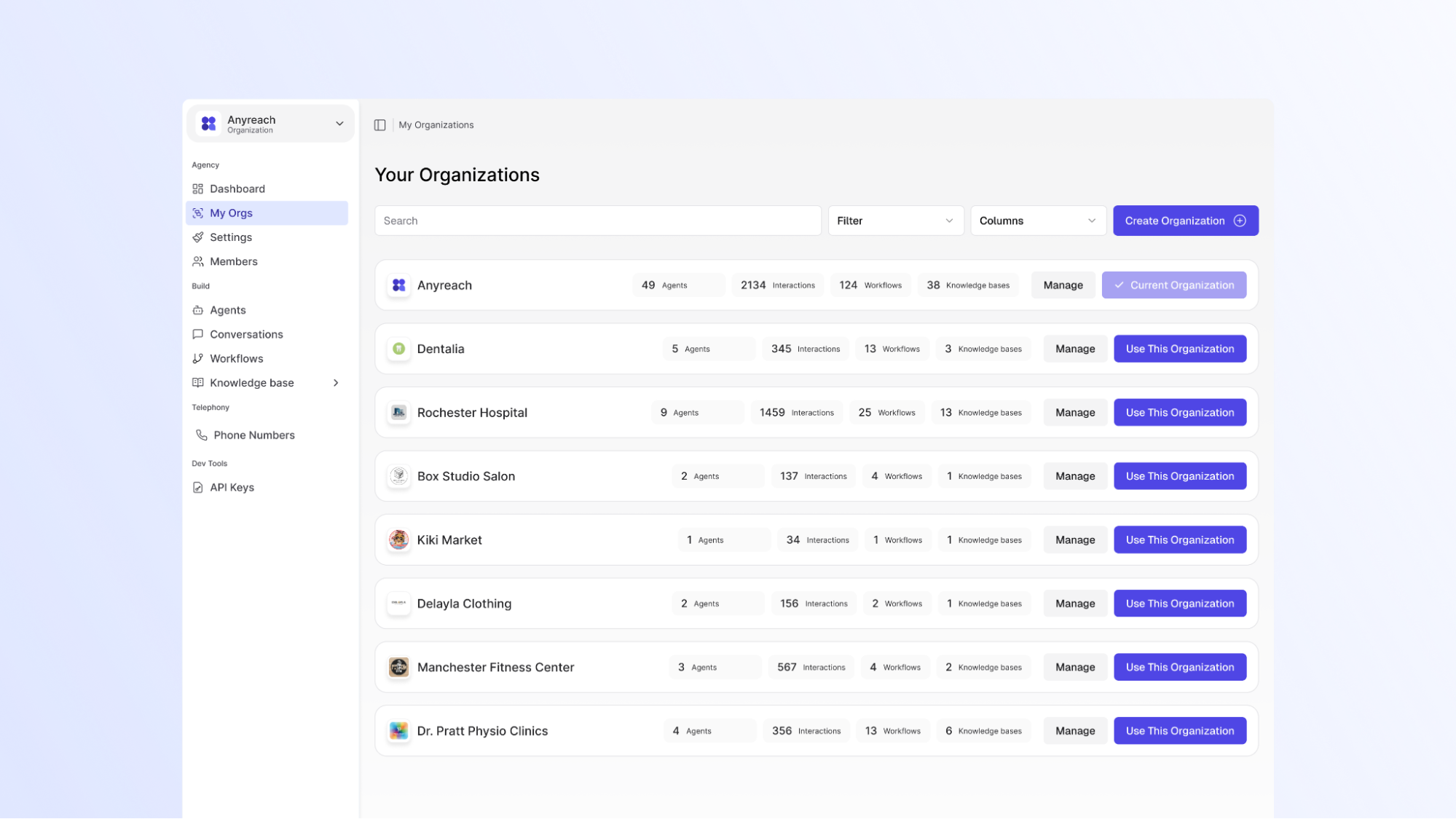
Anyreach is an omnichannel voice AI platform with cross-channel memory and a strong white-label agency model. It answers calls, messages, chats, and emails with an agent that remembers context across channels, and it's aimed partly at agencies reselling under their own brand.
Key features
Omnichannel with memory: voice, SMS, chat, email, and WhatsApp with persistent cross-channel context
No-code workflows: visual automation on all tiers, billed per run
Voicemail detection: a "Beep Detector" the vendor cites at high accuracy for lifting call success
Integrations: Salesforce, HubSpot, Zendesk, Shopify, Stripe, Zapier, and Calendly
White-label agency tier: unlimited client accounts for reselling under your brand
Compliance: SOC 2, HIPAA, and GDPR, with a 99.9% SLA on Enterprise
Pricing
An SMB tier starts at $0/mo plus usage, with AI voice from $0.19 per minute. The Agency tier is $1,250/mo and doubles as the white-label platform fee, while Enterprise is custom.
Pros
Strong cross-channel memory
Clear white-label agency model
Published entry pricing
Broad CRM and scheduling integrations
No-code workflow automation
Cons
Outbound at volume is described as custom-built, not self-serve
No confirmed bring-your-own-model option or SIP beyond Twilio
PCI and a full language list are not confirmed
Best for
Agencies that want to resell voice AI under their own brand.
Why choose Anyreach over Vapi
Anyreach hands agencies a white-label product with published entry pricing, where Vapi would mean building and maintaining a platform to resell. The persistent cross-channel memory also comes built in rather than assembled.
For a services business that wants to offer voice AI to clients quickly, Anyreach is a faster route to market than standing up a Vapi build.
Choose the Right Vapi Alternative
The right pick comes down to who runs it and what you're trying to do. Retell and Voiceflow suit developers who still want to build, with Bland a good fit when you want a proprietary stack and one flat rate. Synthflow and Thoughtly work for teams wanting a fuller product, and PolyAI, Cognigy, Sierra, Decagon, and Five9 fit enterprise CX with deep integration or autonomous support. Anyreach is the agency and white-label play.
If your buyers reach you by phone and messaging, Callers is the one to shortlist. It runs inbound and outbound in one omnichannel agent, owned by your CX team, live in weeks, on transparent usage-based pricing, with the analytics to keep improving after launch.