
12 Best AI Sales Agents in 2026: Features, Pricing, and Fit Compared
:quality(80))
:quality(80))
Quick Summary
AI sales agents now execute real sales work. Callers leads for teams selling over phone and messaging, calling new leads in minutes. Artisan, 11x, and AiSDR run email prospecting. Apollo, Instantly, Regie.ai, and Nooks power engagement. Qualified, SalesCloser, Agentforce, and Breeze cover inbound, demos, and CRM.
# | Tool | Key features | Best for | Pricing (2026) |
|---|---|---|---|---|
1 | Callers | Speed-to-lead calling, omnichannel campaigns, warm transfer to reps | High-volume B2C sales on phone and messaging | Custom, usage-based per minute |
2 | Apollo | B2B database, AI Assistant, multichannel sequences | SMB and mid-market outbound teams | Free plan; paid from $49/user/month (annual) |
3 | Artisan (Ava) | AI BDR, lead sourcing, email and LinkedIn outreach | B2B teams automating outbound email end to end | Custom (contact sales), scoped by lead volume |
4 | Qualified (Piper) | AI SDR for website chat, voice, video, and email nurture | Traffic-rich B2B sites on Salesforce | Custom (contact sales) |
5 | Salesforce Agentforce | Autonomous lead nurture, meeting booking, sales coaching | Enterprises standardized on Salesforce | Flex Credits at $500 per 100,000; add-on $125/user/month |
6 | HubSpot Breeze | Signal-based prospecting, autonomous outreach in HubSpot | Teams already on Sales Hub | Included in Sales Hub; about $1 per qualified lead |
7 | Regie.ai | Sales engagement platform with built-in prospecting agents | Mid-market orgs blending reps and agents | From $180/user/month (annual, 10 seats) |
8 | Nooks | AI parallel dialer, coaching, prospecting agents | B2B teams running high-volume cold calls | Custom (contact sales) |
9 | AiSDR | AI-researched contacts, email and LinkedIn sequences, reply handling | Lean teams wanting a predictable AI SDR | From $250/month (Solo, 200 contacts) |
10 | Instantly | Unlimited email accounts, warmup, AI reply agents | High-volume cold email on a budget | From $47/month; bundles from $94/month |
11 | SalesCloser.ai | AI phone and video calls, screen-share demos, 32+ languages | Demo-led SaaS and service sales | Custom (contact sales) |
12 | 11x | Digital workers for outbound sequences and inbound calls | Teams wanting maximum autonomy across channels | Custom (contact sales) |
Looking for an AI Sales Agent?
Pipelines stall where manual work piles up. Reps burn hours on research, follow-ups, and dials that go nowhere, and leads cool off while they wait. AI sales agents take that volume off your team. This guide compares 12 of them, from email prospectors to omnichannel voice and chat platforms.
Every tool here does sales work on its own instead of just assisting with it. For each one, you'll find what it actually does, pricing checked against the vendor's own site, honest pros and cons, and the kind of team it fits.
Why Listen to Us?
DoorDash, Einride, and PadSplit run live AI conversations on Callers every day. Behind those conversations sits a platform built alongside Google Cloud that has scaled 30X and now handles hundreds of thousands of AI conversations daily.
Our customer results are specific. One customer cut outbound handling time by 46%, then expanded its sales team to keep pace with the demand that followed. Another grew its outreach tenfold.
We applied the same standard to this guide. Every price below comes from the vendor's own site, and where a vendor publishes nothing, we say so plainly.
What Is an AI Sales Agent?
An AI sales agent executes sales work on its own. It prospects, sends outreach, qualifies leads, books meetings, or holds live sales conversations. The test is simple. If the software finishes the task without a rep driving it, it's an agent.
That test rules out a lot of tools that borrow the label. Clay, Cognism, and 6sense supply data and intent signals, and a rep still does the selling. Gong records and analyzes calls after they happen. Rep copilots draft emails and summarize meetings. All useful, none of them agents.
One reality check before you buy. Fully autonomous AI SDRs underdelivered over the past two years, with flooded inboxes, falling reply rates, and public churn stories. Most teams have since moved to a hybrid model. AI handles volume and repetition, and humans take the live, high-intent moments. That's why handoff design should sit near the top of your evaluation criteria.
The market splits into five types:
Type | What these agents do | Tools in this guide |
|---|---|---|
AI SDR agents (email-first prospectors) | Find prospects, write and send outreach, book meetings | Artisan, 11x, AiSDR |
Sales engagement platforms with AI agents | Add agents and automation to rep-led outbound | Regie.ai, Apollo, Instantly, Nooks |
AI voice sales agents and omnichannel platforms | Hold live sales conversations, qualify, book, and hand off | Callers, SalesCloser.ai |
CRM-native sales agents | Work leads inside your CRM data and workflows | Salesforce Agentforce, HubSpot Breeze |
Inbound website sales agents | Engage site visitors, qualify them, and route to reps | Qualified (Piper) |
The 12 Best AI Sales Agents
1. Callers
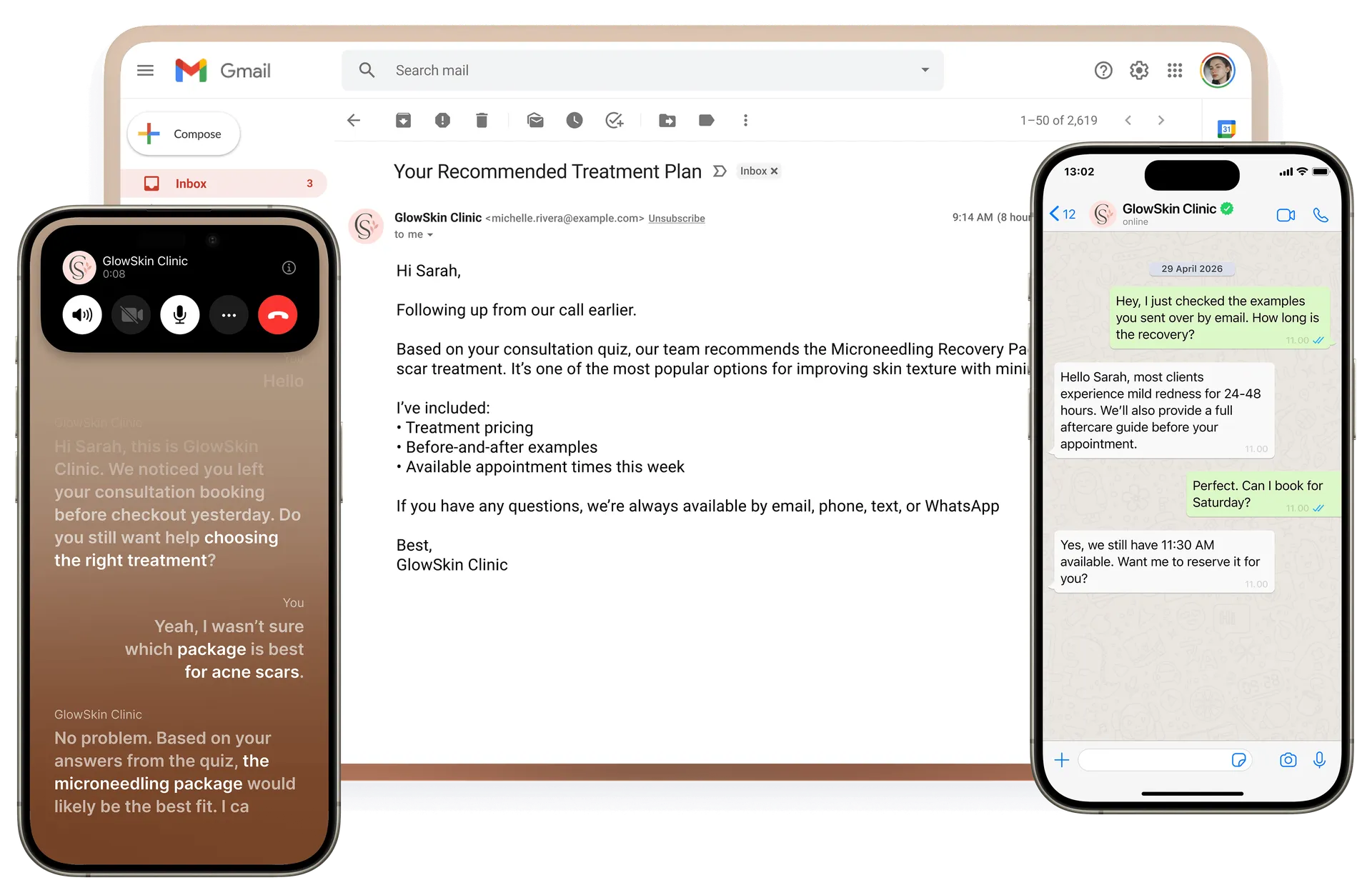
A new lead's odds of picking up collapse within minutes of the form fill. Callers is built around that window.
It calls the lead while your competitors' emails sit unread, handles lead qualification in a natural conversation, and books the meeting or passes the call to a rep while interest is at its peak.
Behind that first call sits an omnichannel platform for high-volume B2C sales. The same agent follows up over SMS, WhatsApp, email, and chat without losing context, and your operators run the whole cadence as a campaign, from AI cold calling lists to warm signup follow-up, with no engineering required.
Key features
Pre-call triggers: a form fill, an abandoned cart, or a CRM update starts the sequence automatically
Conditional retries: a no-answer becomes a text or a better-timed follow-up call instead of a dead lead
Mid-call actions: the agent books meetings and updates records while the conversation is still running
Post-call actioning: outcomes sync to your CRM and the next touch queues itself
Warm transfer: hot conversations move to a rep mid-call with full context
Pricing
Custom and usage-based, billed per minute and quoted to your call volume. Every plan includes white-glove onboarding, meaning a dedicated CSM builds your first campaigns with you, plus SOC 2, HIPAA, GDPR, CCPA, and PCI DSS compliance. There's no professional-services contract at any tier.
Pros
Step-level analytics show the exact script step where leads drop, so campaigns sharpen week over week
Speaks 26+ languages and switches mid-call for mixed lead lists
610+ native integrations, including Salesforce and HubSpot
One customer cut outbound handling time by 46% and another grew outreach tenfold
Runs win-back campaigns on dormant lists with the same agent
Cons
No public rate card, so budgeting starts with a demo call
Built for consumer sales motions rather than email-led B2B prospecting
Best for
High-volume B2C sales teams that win or lose on how fast a real conversation reaches each lead.
Why choose Callers
Speed-to-lead is the cheapest conversion lever most teams never pull, and Callers automates it end to end. The AI works every lead the moment it lands, keeps working the no-answers across channels, and saves your reps for conversations that are already warm. You get the hybrid model that's winning in 2026 without having to assemble it yourself.
2. Apollo
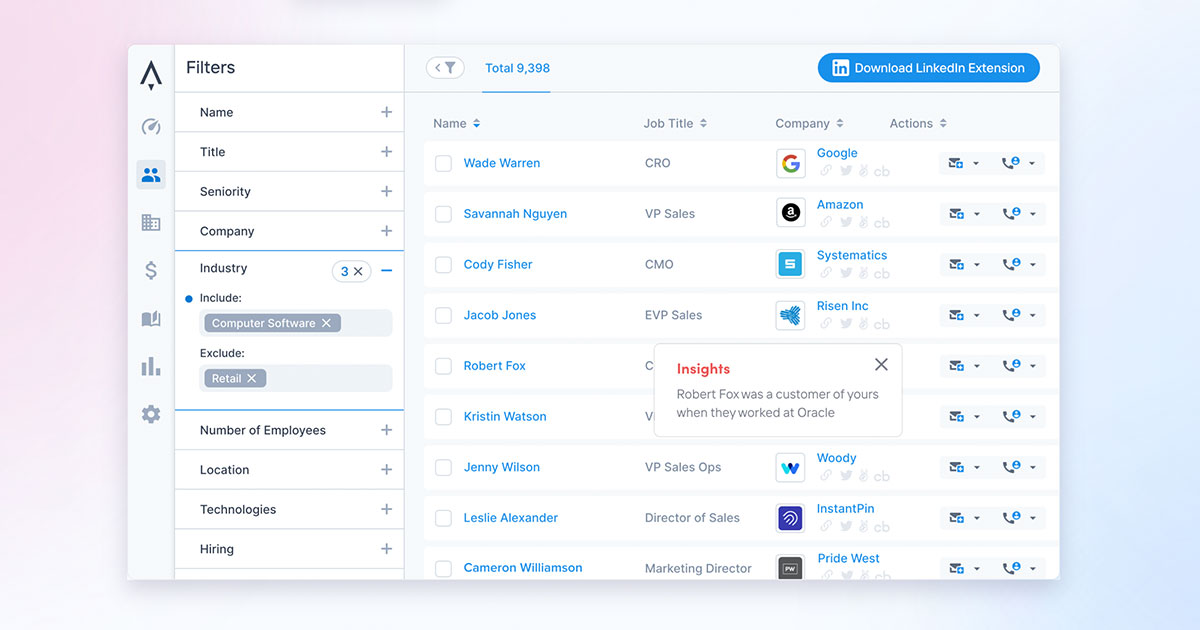
Apollo combines a B2B contact database it says covers 240M+ people with sequencing, enrichment, and a dialer. In late 2025 it added an AI Assistant that targets prospects, builds sequences, and runs campaigns end to end, repositioning the platform around agentic workflows.
Key features
B2B database with waterfall enrichment: verified emails, mobile numbers, and intent filters
AI Assistant: agentic workflows that research accounts and launch campaigns
AI Research: prompt-based scoring and summaries across whole account lists
Multichannel sequences: email, calls, and LinkedIn tasks with A/Z testing
Conversation intelligence: call recordings with AI insights on higher tiers
Workflow automation: trigger-based lead routing and follow-up creation
Pricing
Published on Apollo's site (2026). A functional free plan, then Basic at $49 per user per month billed annually ($69 monthly), Professional at $79 annually ($99 monthly), and Organization at $119 annually with a three-seat minimum. Credits meter data and AI usage on every tier.
Pros
Replaces three or four point tools with one platform
Very large database with strong US email coverage
AI agent features ship on mainstream tiers at no extra product fee
Free tier lets you test before spending anything
Broad integrations across Salesforce, HubSpot, Outreach, and SalesLoft
Cons
Reviewers report patchy data accuracy outside the US and bounces on stale contacts
Credit consumption is hard to forecast, and running out mid-campaign stalls outreach
Support is slower below the Organization tier
Best for
SMB and mid-market B2B outbound teams that want data, AI research, and engagement in one affordable platform.
Why choose Apollo
Apollo is the value pick. You get the database, the sequencer, and the AI layer for less than most competitors charge for one of the three. If your team can verify data quality as it goes, the economics are hard to beat.
3. Artisan (Ava)
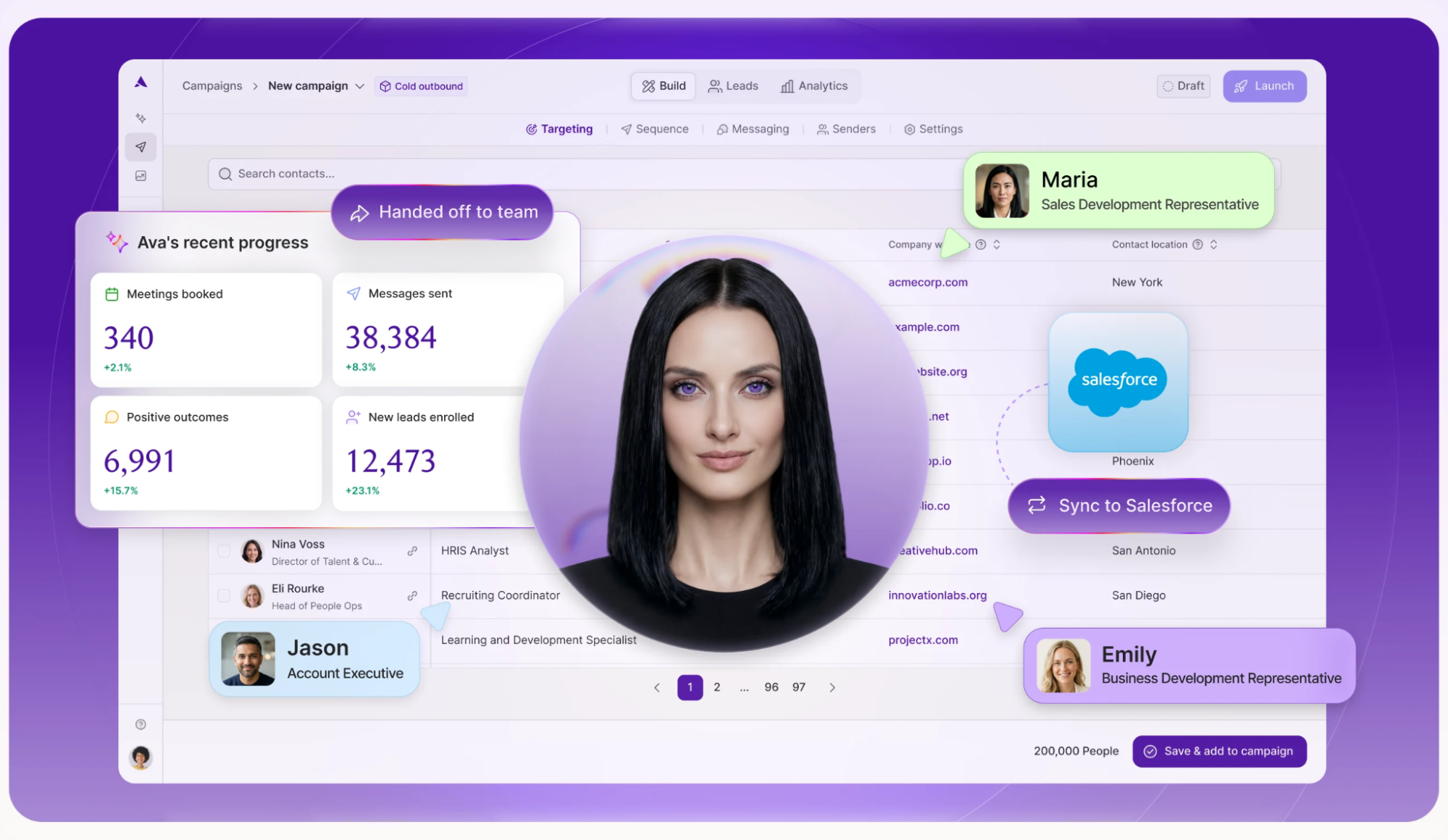
Artisan builds Ava, an AI BDR that finds leads, writes outreach, handles replies, and books meetings so reps can stay on live conversations. It wraps a B2B database, deliverability tooling, and LinkedIn outreach into one workflow, and shipped a rebuilt Ava 2.0 in 2026.
Key features
Built-in lead database: Ava sources prospects without a separate data subscription
Personalized outreach: email and LinkedIn touches researched per prospect
Reply handling: Ava answers responses and moves interested buyers to meetings
Deliverability tooling: warmup and mailbox health managed inside the platform
Oversight modes: review Ava's work or let her run on autopilot
Pricing
They don't publish dollar figures. Plans scale by leads contacted per month (Team at roughly 2,500, Scale at roughly 6,000, Enterprise custom), and each is quoted through sales.
Pros
Covers the whole outbound email motion in one product
Deliverability is treated as a core feature, which protects reply rates
Ava 2.0 sharpened research quality and autonomy
Well funded and shipping fast, with a $25M Series A in 2025
Meetings appear on rep calendars without SDR hours behind them
Cons
They don't publish pricing, so comparing quotes takes legwork
Email and LinkedIn first, so phone-led motions need another tool
Autonomous replies still deserve human spot-checks
Best for
B2B teams that want the outbound email motion run end to end without hiring SDRs.
Why choose Artisan
Artisan is the most complete package among the email-first AI BDRs. Data, outreach, deliverability, and reply handling live in one product, so there is nothing to stitch together and one vendor owns the result.
4. Qualified (Piper)
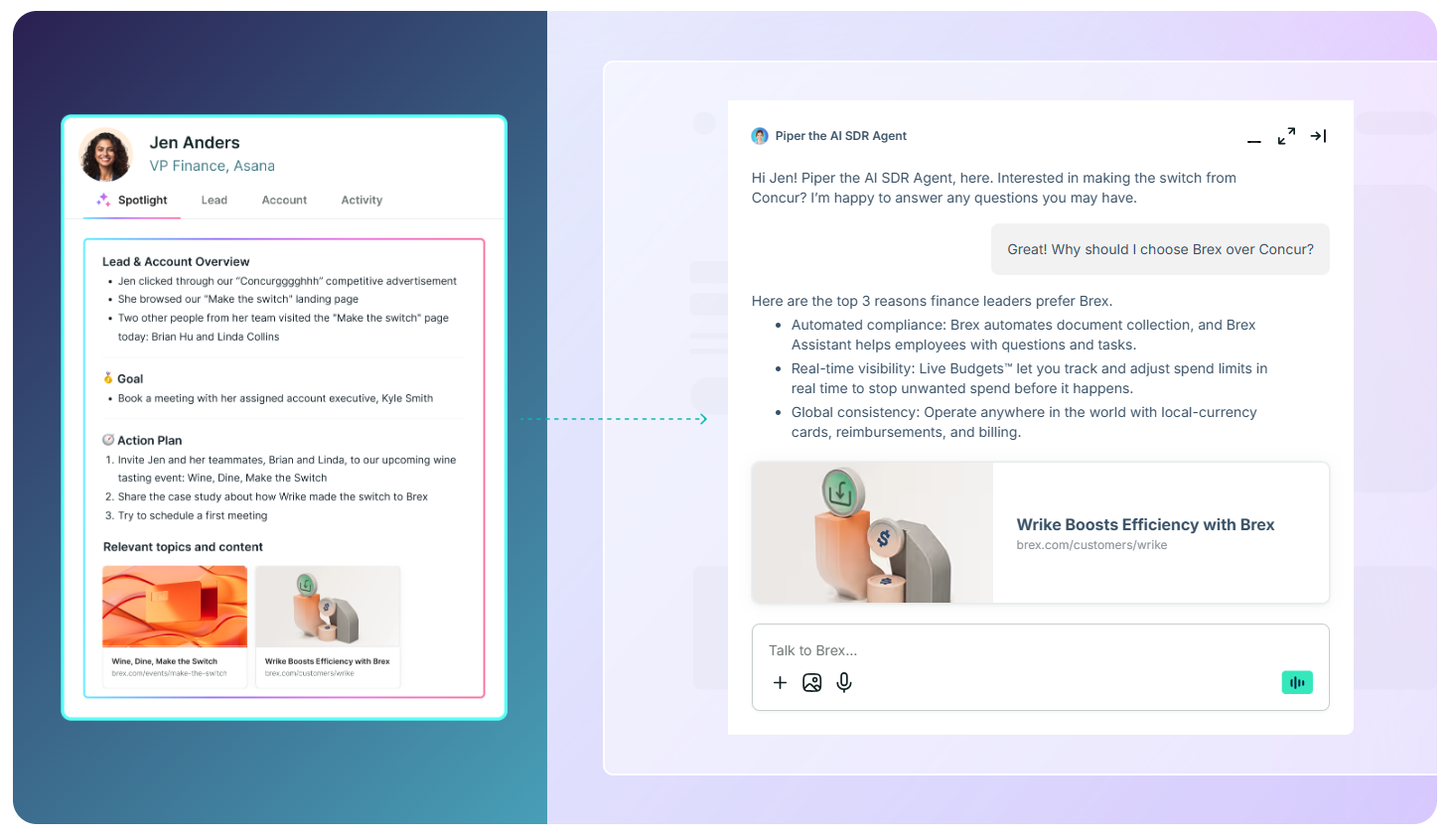
Qualified turns your website into a pipeline channel. Piper, its AI SDR, greets high-intent visitors and qualifies them in real time over text, voice, and video, books meetings, and since 2025 nurtures leads by email too. The platform is built around Salesforce.
Key features
Real-time website conversations: text, voice, and video engagement with live visitors
PiperX: a 2025 release extending Piper across the whole marketing funnel
Agentic email nurture: automated follow-up on leads that leave the site
Instant meeting booking: calendars offered inside the conversation
Salesforce-native: deep CRM alignment plus 20+ integrations
Advanced routing: account segmentation that matches buyers to the right reps
Pricing
They don't publish pricing. Three tiers exist (Premier, Enterprise, Ultimate), each quoted after a consultation.
Pros
Catches buyers at their moment of highest intent, on your own site
Goes beyond chat with voice and video conversations
Strong fit for ABM motions run out of Salesforce
Rapid product cadence, with major releases through 2025
Meetings get booked while competitors are still emailing back
Cons
Needs meaningful website traffic before it pays for itself
They don't publish pricing, and it's positioned for enterprise budgets
Less natural fit outside the Salesforce ecosystem
Best for
B2B companies with strong website traffic and a Salesforce stack that want inbound pipeline worked automatically.
Why choose Qualified
Nobody else on this list works your website like Piper does. If your demand generation already drives serious traffic, Qualified converts intent you're currently letting bounce, and it does so in the first minute rather than the next morning.
5. Salesforce Agentforce
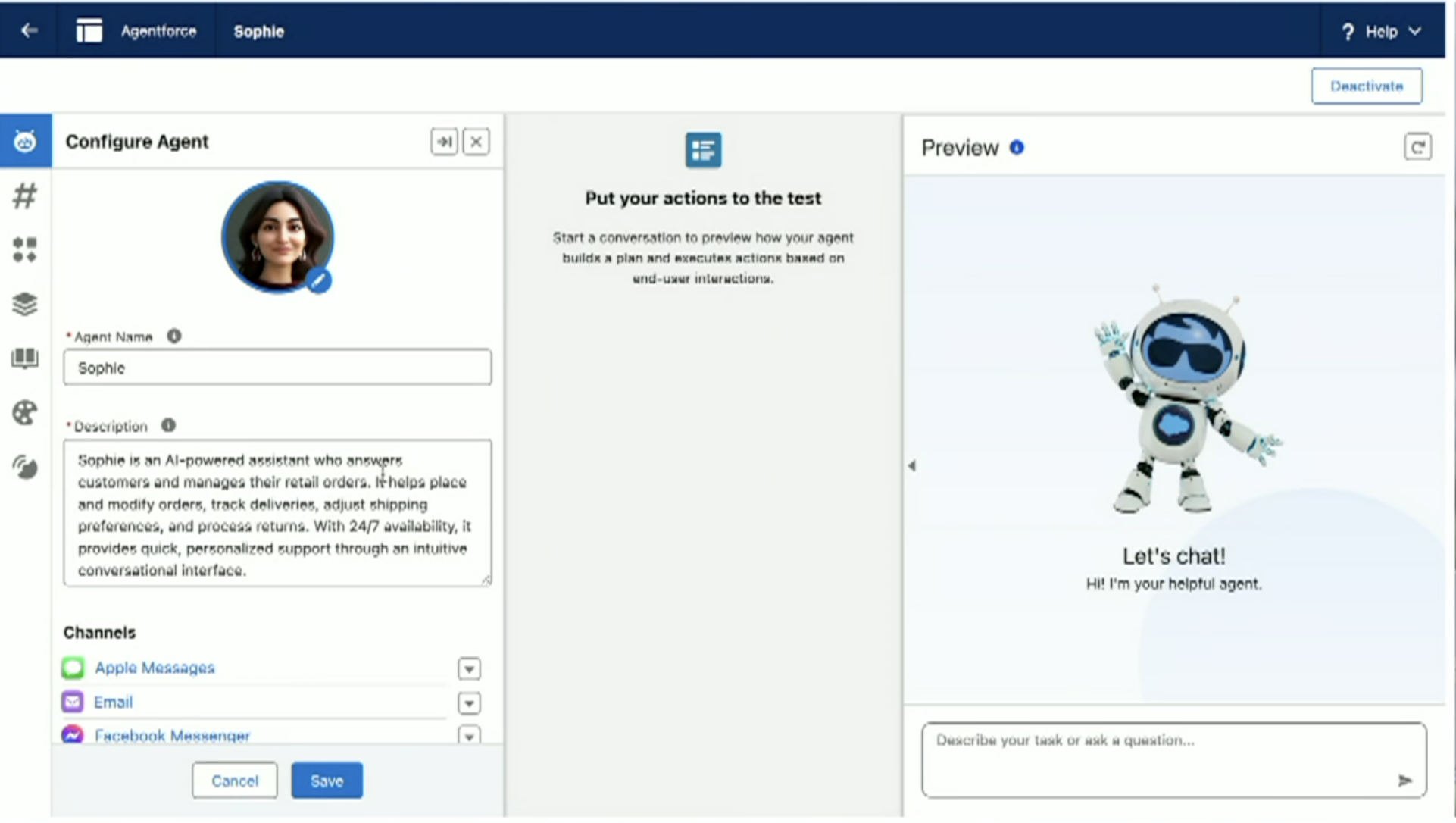
Agentforce puts autonomous sales agents inside Sales Cloud. The Lead Nurturing agent (formerly the Agentforce SDR) emails inbound leads, answers questions, handles objections, and books meetings on rep calendars. A separate Sales Coach agent runs role-play practice grounded in real deal data.
Key features
Autonomous lead nurture: personalized outreach and follow-up drawn straight from CRM records
Qualification and objection handling: answers prospect questions and hands off when interest spikes
Meeting booking: schedules against rep calendars without human touches
Sales Coach: pitch practice and buyer role-play scored against live deals
Enterprise guardrails: permissions, audit trails, and Command Center observability
Native Salesforce integration: agents read and write leads, opportunities, and timelines directly
Pricing
Published on Salesforce's site (2026). Consumption bills in Flex Credits at $500 per 100,000, with a standard agent action costing 20 credits, about $0.10. An Agentforce add-on runs $125 per user per month, and the all-in Agentforce 1 Sales edition costs $550 per user per month billed annually. The sales agents are purchasable on Sales Cloud Enterprise ($175) and Unlimited ($350) editions.
Pros
Agents work your actual CRM data with no integration layer
Around-the-clock follow-up closes the inbound speed-to-lead gap
Coaching draws on real opportunities rather than generic scripts
Enterprise-grade governance, audit, and observability
Commercial models range from pay-per-action to unmetered per-user
Cons
Per-action billing is hard to forecast, and real-world costs can climb fast
Requires Enterprise editions and above, plus Data 360 and clean, mature CRM data
The sales agent's outreach is email only, with no autonomous calling or SMS
Best for
Mid-market and enterprise teams standardized on Salesforce with mature CRM data.
Why choose Agentforce
If Salesforce is your system of record, Agentforce is the shortest path to agents that act on it. There is no sync layer to build, and every agent action lands in the same pipeline reports your leadership already reads.
6. HubSpot Breeze
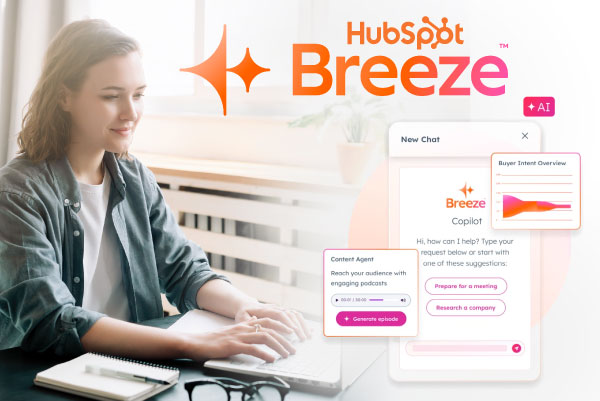
Breeze is HubSpot's AI layer, and its Prospecting Agent is the sales-side workhorse. It watches buying signals like funding rounds and site visits, researches accounts, and drafts or sends personalized outreach in each rep's voice, all inside the HubSpot Smart CRM.
Key features
Buying-signal monitoring: flags when to reach out based on funding, hiring, and site activity
Account research and buying-group sourcing: identifies full buying committees via data partners
Personalized outreach: emails grounded in real signals, written in the rep's voice
Review or autonomous modes: approve every email or let the agent send on its own
Selling profiles: up to 85 distinct tones and value props with guardrails, no code needed
Outcome-based billing: charges apply only when the agent produces a qualified lead
Pricing
Published on HubSpot's site (2026). The agent comes with Sales Hub Starter ($20 per seat per month), Professional ($90 per seat per month billed annually), and Enterprise ($150). Usage runs on HubSpot Credits at 100 credits, about $1, per qualified lead, with monthly allowances of 500 to 5,000 credits by tier and extra credits at $10 per 1,000.
Pros
Native to the CRM, so research and outreach attach to existing records
You pay per qualified lead rather than per contact enrolled
Human review mode by default, with a gradual path to autonomy
Deep customization without code
Available even on Starter, so the entry cost is low
Cons
Only works on HubSpot data, and outreach stays inside HubSpot tooling
Credit costs stack on top of seat fees as volume grows
Meaningful allowances and features sit behind Professional and Enterprise tiers
Best for
Teams already running Sales Hub that want signal-based prospecting inside their existing CRM.
Why choose Breeze
Breeze is the lowest-friction agent for HubSpot shops. It moved to outcome pricing in April 2026, so a dollar spent maps to a qualified lead produced, which makes it one of the easiest tools here to justify to finance.
7. Regie.ai
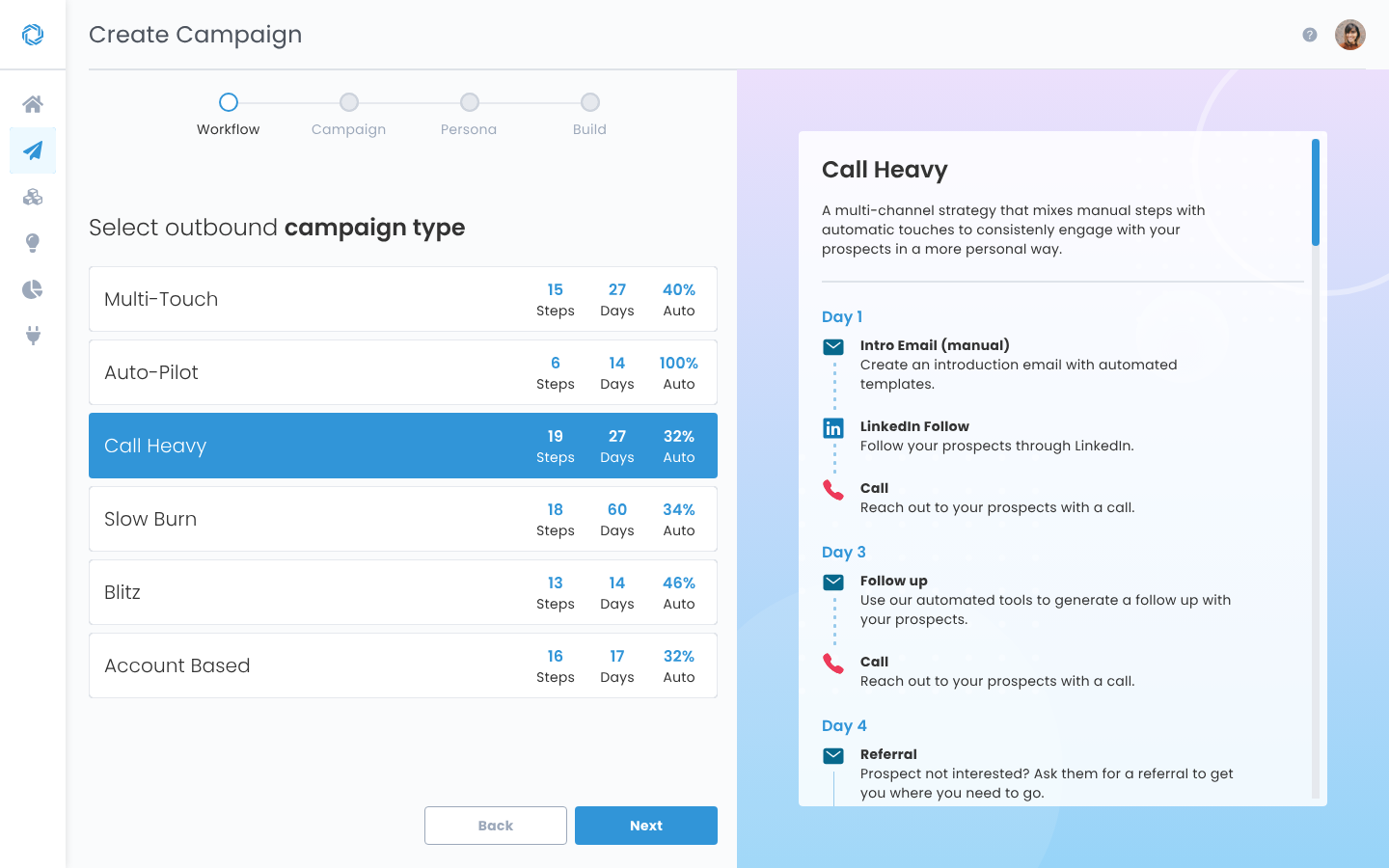
Regie.ai builds RegieOne, a sales engagement platform with AI agents inside it. Prospecting agents source, personalize, and nurture lower-priority leads automatically, while reps work calls and high-value accounts from the same queue. The hybrid split is the whole design.
Key features
One platform price: sequencer, dialer, and agents bundled per seat
Prospecting agents: autonomous sourcing and nurture running alongside reps
Intent prioritization: signals decide which leads earn a human touch
Parallel dialer: up to nine lines for rep calling blocks
Bundled enrichment credits: data spend folded into the higher tier
Pricing
Published on Regie.ai's site (2026). AI SEP costs $180 per user per month on annual contracts with a 10-seat minimum. Force Multiplier Rep runs $499 per user per month with a 5-seat minimum and 120,000 AI and enrichment credits included. Enterprise is custom, and add-ons like the parallel dialer ($1,800 per user per year) price separately.
Pros
Hybrid by design, with agents on volume and reps on priority accounts
Consolidates sequencer, dialer, and enrichment line items
Public per-seat pricing is rare at this depth of platform
Credits come bundled rather than metered surprise by surprise
Long track record in AI sales engagement before agents were fashionable
Cons
The 10-seat minimum puts entry cost near $22K a year
The jump between tiers is steep
Useful add-ons stack onto the seat price
Best for
Mid-market sales orgs replacing a legacy sales engagement platform with a combined rep-and-agent model.
Why choose Regie.ai
Regie.ai productizes the hybrid model rather than treating it as a workaround. If you're keeping your SDR team and want agents absorbing the repetitive tail of the lead list, this is the most deliberate version of that setup.
8. Nooks
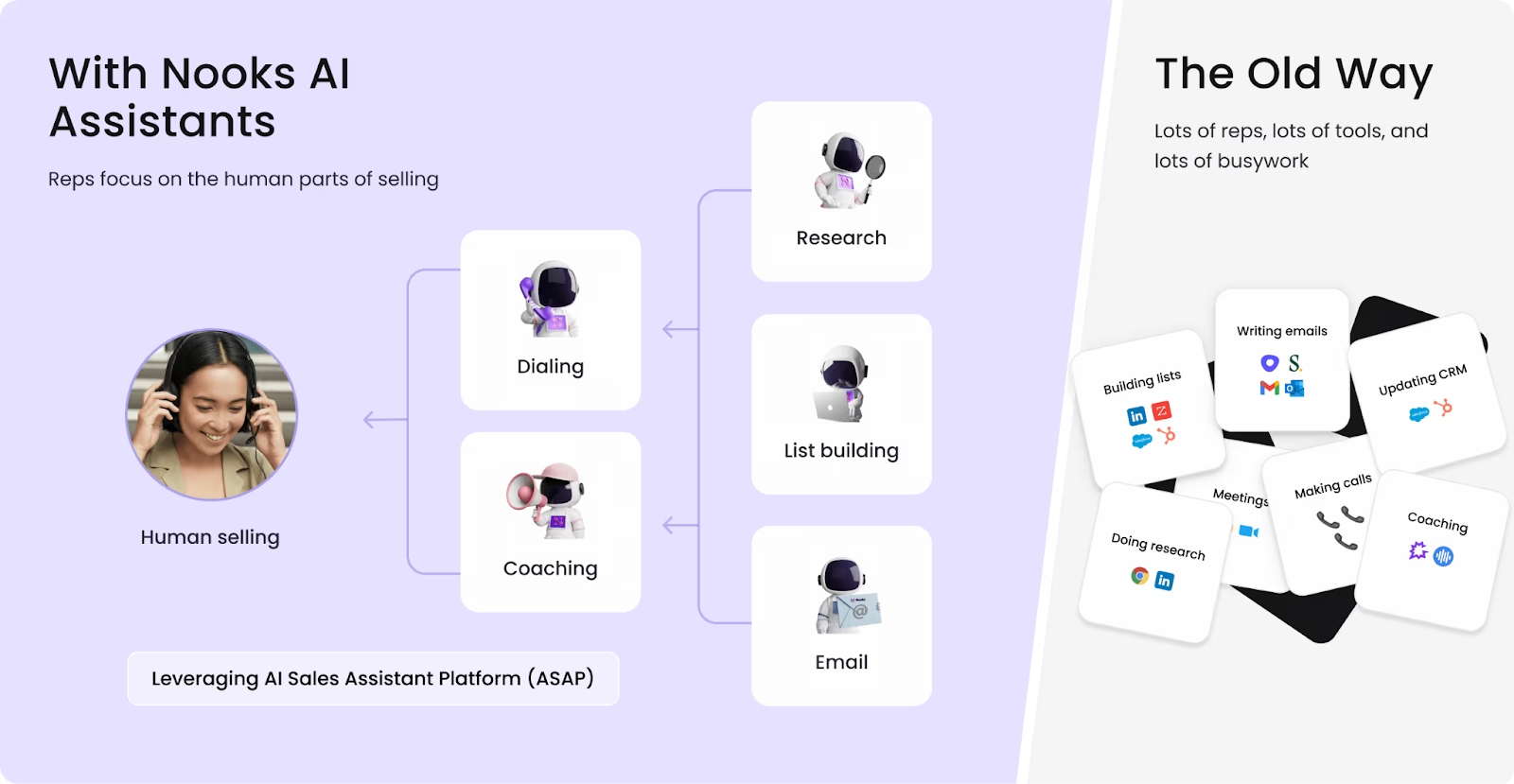
Nooks is an AI assistant platform for outbound calling teams, and its position is deliberately hybrid. The AI handles research, dialing mechanics, and admin, and a rep runs every live conversation. It bundles a parallel dialer, prospecting agents, sequencing, and coaching in one workspace.
Key features
AI parallel dialer: calls several numbers at once, skips voicemails, and logs outcomes automatically
Prospecting and research agents: build lists, surface buying signals, and prep accounts continuously
AI coaching: call scoring, transcription, and roleplay practice for reps
AI sequencing: multichannel follow-up with automated personalization
Virtual salesfloor: live rooms where teams dial together and managers coach in real time
Compliance: SOC 2 Type 2 and ISO 27001 certified
Pricing
They don't publish pricing. Nooks sells per-seat annual contracts quoted through sales.
Pros
Multiplies live connects per rep through parallel dialing, per vendor-published customer results
Consolidates dialing, prospecting, sequencing, and coaching in one platform
Managers coach live instead of reviewing recordings after the fact
Agents absorb research and logging, so reps spend more time talking
Well funded and shipping quickly, with an agent workspace added in 2026
Cons
Reviewers report a connection lag on parallel-dialed answers that can read as a spam call
High dial volumes risk carrier spam flagging over time
Annual quote-only contracts sit at the premium end of the dialer market
Best for
Multi-rep B2B SDR teams running high-volume cold calling who want dialing, research, and coaching in one place.
Why choose Nooks
Nooks bets on your reps rather than replacing them. If you believe live human conversations close B2B deals, it multiplies how many of those conversations each rep gets, and coaches them between calls.
9. AiSDR
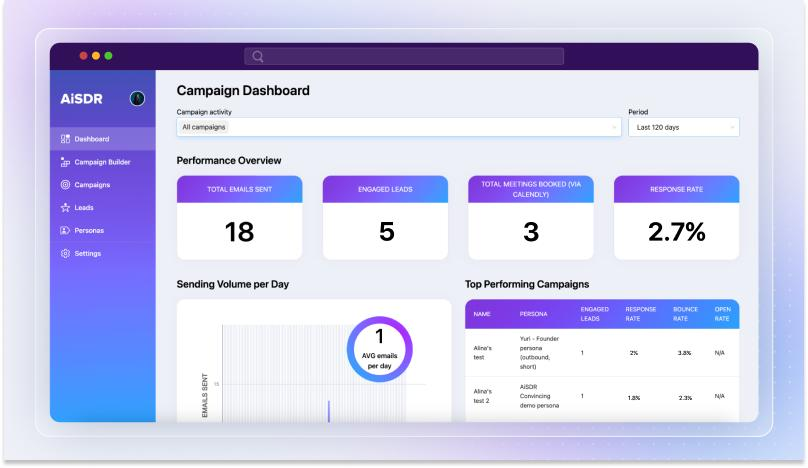
AiSDR researches prospects, writes and sends personalized email and LinkedIn outreach, and manages replies through to booked meetings. It stands out for publishing clear pricing in a category where most vendors gate everything behind a demo.
Key features
AI-researched contacts: a monthly allowance of prospects researched and engaged for you
Two channels, one flow: email and LinkedIn touches in the same sequence
Reply management: conversations nurtured through to a meeting on the calendar
CRM sync: HubSpot and Salesforce integration on every plan
Rollover volume: unused contact allowance carries into the next cycle
Pricing
Published on AiSDR's site (2026). Solo costs $250 per month on month-to-month billing with 200 AI-researched contacts. Explore runs $900 per month with 800 contacts, and Scale $2,500 per month with 2,500 contacts, both on quarterly contracts. Annual billing takes 20% off.
Pros
Transparent pricing with a genuine entry-level plan
Unused contacts roll over, so slow months are not wasted spend
Unlimited users above the Solo tier
Quick to launch, with one clear motion to configure
CRM integration included at every price point
Cons
Costs climb steadily as contact volume grows
Writing channels only, with no calling capability
Plans above Solo require quarterly commitments
Best for
Lean B2B teams that want a predictable, publicly priced AI SDR working email and LinkedIn.
Why choose AiSDR
AiSDR keeps the AI SDR promise simple and budgetable. You know the price, you know the volume, and unused capacity rolls forward. For a first step into agent-run outbound, it carries the least procurement friction here.
10. Instantly
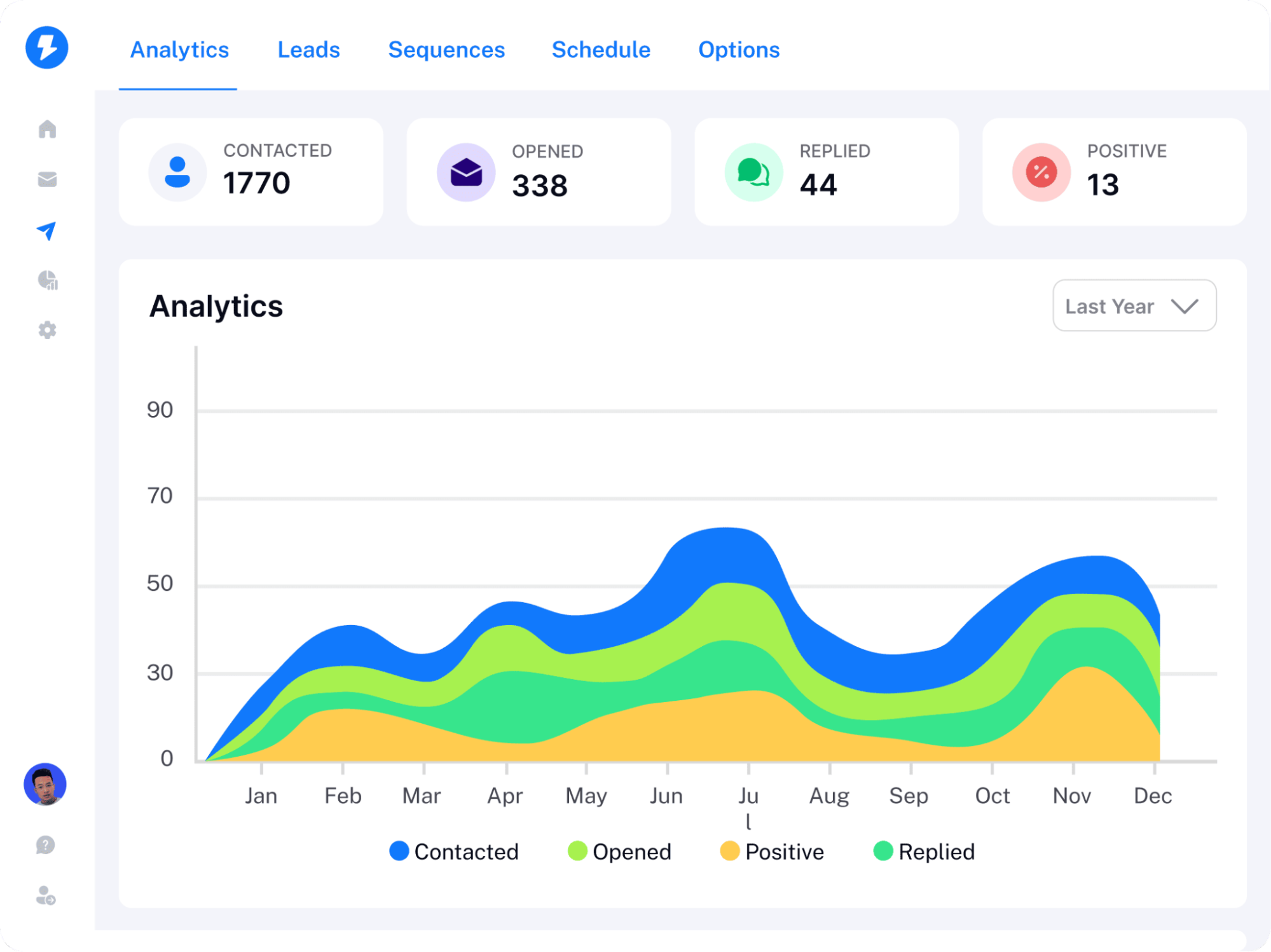
Instantly started as cold-email infrastructure, with unlimited sending accounts and warmup, and grew into a full outreach platform with a 450M+ contact database, a CRM, and AI agents that draft and answer emails. Deliverability at high volume remains its core strength.
Key features
Unlimited email accounts and warmup: included on every plan
AI Sales Agent and AI Reply Agent: automated first touches and response handling on bundle tiers
Lead database: 450M+ B2B contacts with filtering and enrichment
High-volume sending: up to 500,000 emails per month on the Agency bundle
Deliverability tooling: sender reputation systems on top tiers
Pricing
Published on Instantly's site (2026). Standalone outreach starts at $47 per month on Growth. Bundles combining sending, leads, and AI agents run $94 per month on Starter, $194 on Scale, and $555 on Agency. Annual billing saves about 10%.
Pros
The cheapest serious entry point in this guide
Deliverability-first infrastructure protects your domains
Data, sending, CRM, and AI sit on one bill
Scales from solo founder to agency volume
Transparent pricing across every tier
Cons
Email only, with no voice or SMS channel
Volume-led outreach takes discipline to keep out of spam folders
Its database is younger than dedicated data vendors, so verify lists before big sends
Best for
Agencies and lean teams running high-volume cold email on a tight budget.
Why choose Instantly
Instantly wins on cost per email that lands. If your motion is volume email and you want the infrastructure, data, and reply automation without an enterprise contract, nothing here undercuts it.
11. SalesCloser.ai

SalesCloser builds AI agents that hold live sales calls over the phone and on Zoom-style video, including interactive screen-share product demos. The agents run discovery, demo the product, schedule follow-ups, and take notes in 32+ languages, around the clock.
Key features
AI video calls with screen share: the agent presents a live product demo, a rarity in this category
AI phone calls: discovery and qualification over regular telephony
32+ languages: multilingual coverage for international pipelines
Automated scheduling and follow-up: meetings booked and recapped without a rep
200+ integrations: CRM connections plus a Twilio partnership for voice deployment
No-code agent builder: agents configured without engineering
Pricing
They don't publish pricing. You book a call for a quote. Third-party listings suggest a four-figure monthly starting point, though that figure isn't confirmed on their site.
Pros
Automates the demo itself, where most agents stop at booking one
Strong multilingual coverage for global funnels
Users report fast implementation and reliable meeting notes
Works around the clock across time zones
Publicly listed parent company adds financial transparency
Cons
Small company with a limited independent review base
Some users report confused responses on complex calls
Budgeting is guesswork until you get a quote
Best for
Demo-led SaaS and service businesses that want discovery calls and product demos handled automatically across languages.
Why choose SalesCloser
If your bottleneck is demo capacity, this is the only tool in the list that delivers the demo itself. The agent shares its screen, walks the product, and books the next step while your closers stay on late-stage deals.
12. 11x
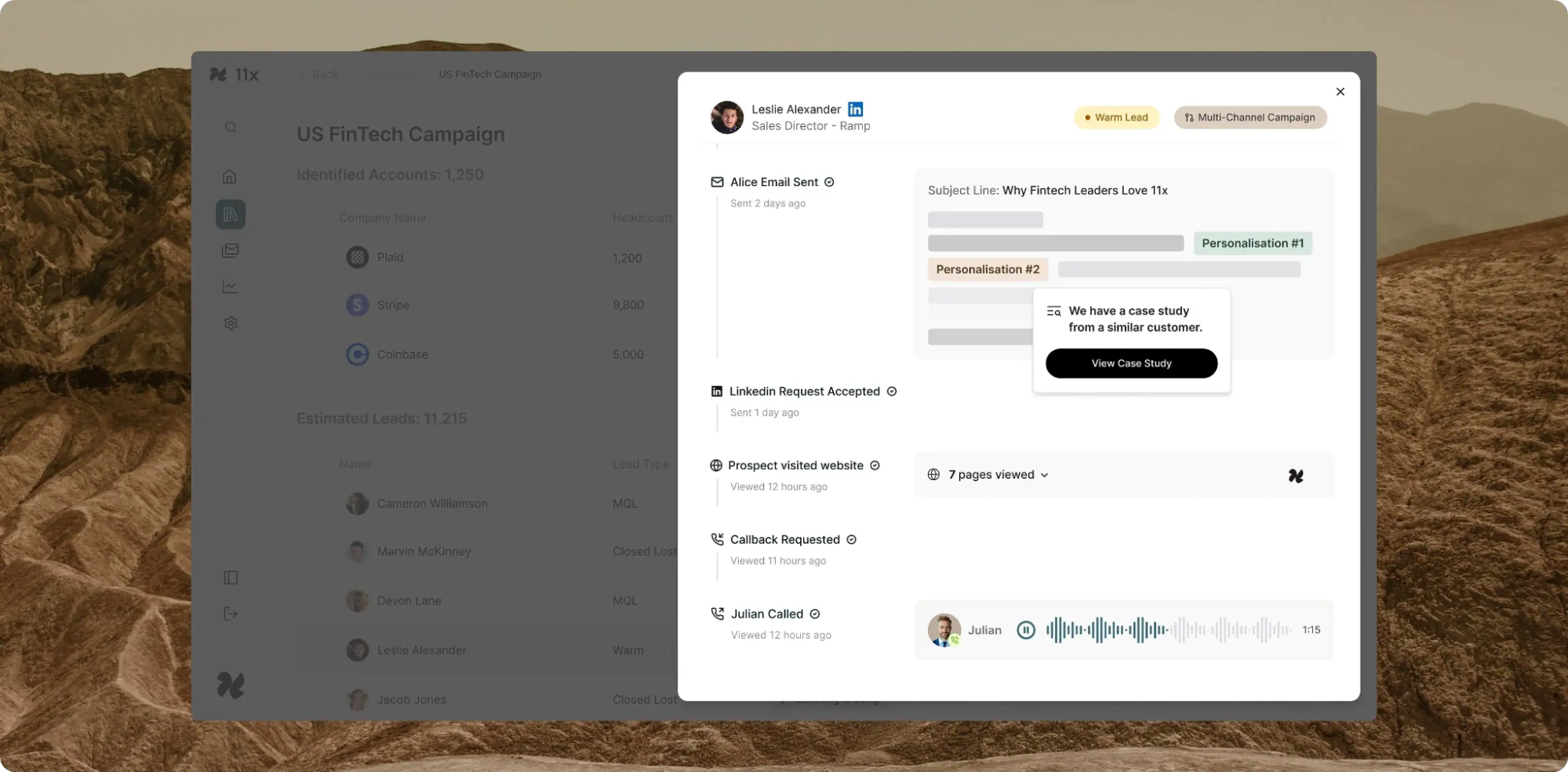
11x sells digital workers. Alice runs outbound across email, phone, social, and SMS, while Julian answers inbound calls, qualifies leads, and routes them. The company raised over $70M from a16z and Benchmark and pitches fully autonomous pipeline generation.
The pitch has had a bumpy run. A March 2025 TechCrunch investigation reported disputed customer logos and high churn estimates, figures the company contested, and the founder handed the CEO seat to the CTO that May.
Key features
Alice, the outbound worker: multichannel sequences with per-prospect personalization
Julian, the phone agent: inbound call answering, qualification, and routing
Research and enrichment: prospect data pulled from 50+ sources
Objection handling: live conversational responses on calls
Always-on operation: outreach and answering around the clock
Pricing
They don't publish pricing. Everything runs through a demo and a custom quote.
Pros
Broader channel mix than most AI SDRs, including voice and SMS
Outbound and inbound automation under one vendor
Rebuilt its agent architecture after early scaling problems
Deep-pocketed investors keep development funded
Vendor-published customer results cite strong reply rates
Cons
The 2025 TechCrunch report cited churn estimates of 70 to 80%, which 11x disputed
Leadership changed mid-2025 after the founder stepped down
They don't publish pricing
Best for
Teams that want the most autonomous multichannel motion available and accept some vendor risk in exchange.
Why choose 11x
11x bets harder on full autonomy than anyone else on this list. If your strategy is one vendor running outbound sequences and inbound calls with minimal human staffing, it remains the most ambitious option. Verify current customer references yourself before signing.
Choose the Right AI Sales Agent
Match the tool to where your revenue actually happens.
Email-led B2B teams should shortlist Artisan, AiSDR, or Apollo, with Instantly covering volume on a budget and 11x the high-autonomy bet. Rep-led calling teams get the most from Nooks or Regie.ai. Salesforce and HubSpot shops have credible native options in Agentforce and Breeze, Qualified suits traffic-rich inbound sites, and SalesCloser handles automated demos.
If you sell to consumers at volume and deals close on phone and messaging, Callers is the pick. It runs your AI call center motion end to end, calls leads while they're still hot, and hands the best conversations to your reps.