

Support inbox
Routine questions resolved straight from the knowledge base.

Personalized outreach at any volume and every reply answered in your
brand's tone, around the clock. Launched in days, no engineering required.
Email outreach forces a choice nobody likes.
Static sequences or slow humans
Sequence tools fire the same message at everyone and go quiet when a prospect writes back. Reps write better emails, then spend their week buried in threads.
Replies sit unanswered for hours or days
Follow-ups get forgotten once threads pile up
One-size-fits-all blasts burn your sender reputation

Personal emails at scale
An AI email agent writes each message for the person receiving it, then reads and answers what comes back. The thread moves without a rep touching it.
Every reply gets a contextual answer, fast
Follow-ups run to plan and stop when someone responds
Deliverability protected with send limits and mailbox rotation
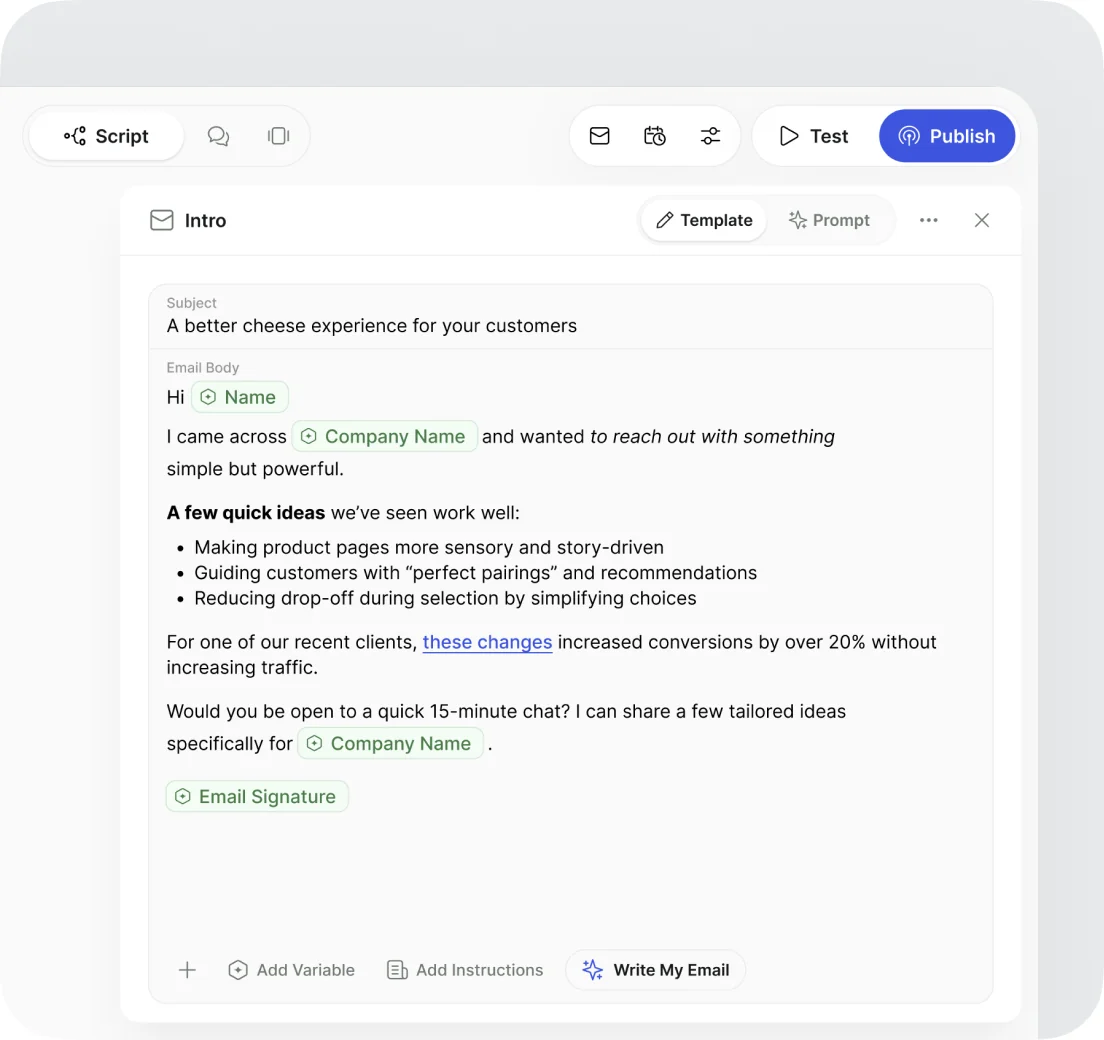
Each first touch is composed for the specific contact, based on your campaign script, your tone instructions, and what your systems know about them.
Subject line and signature stay consistent. The result reads like a rep took their time, even at list scale.
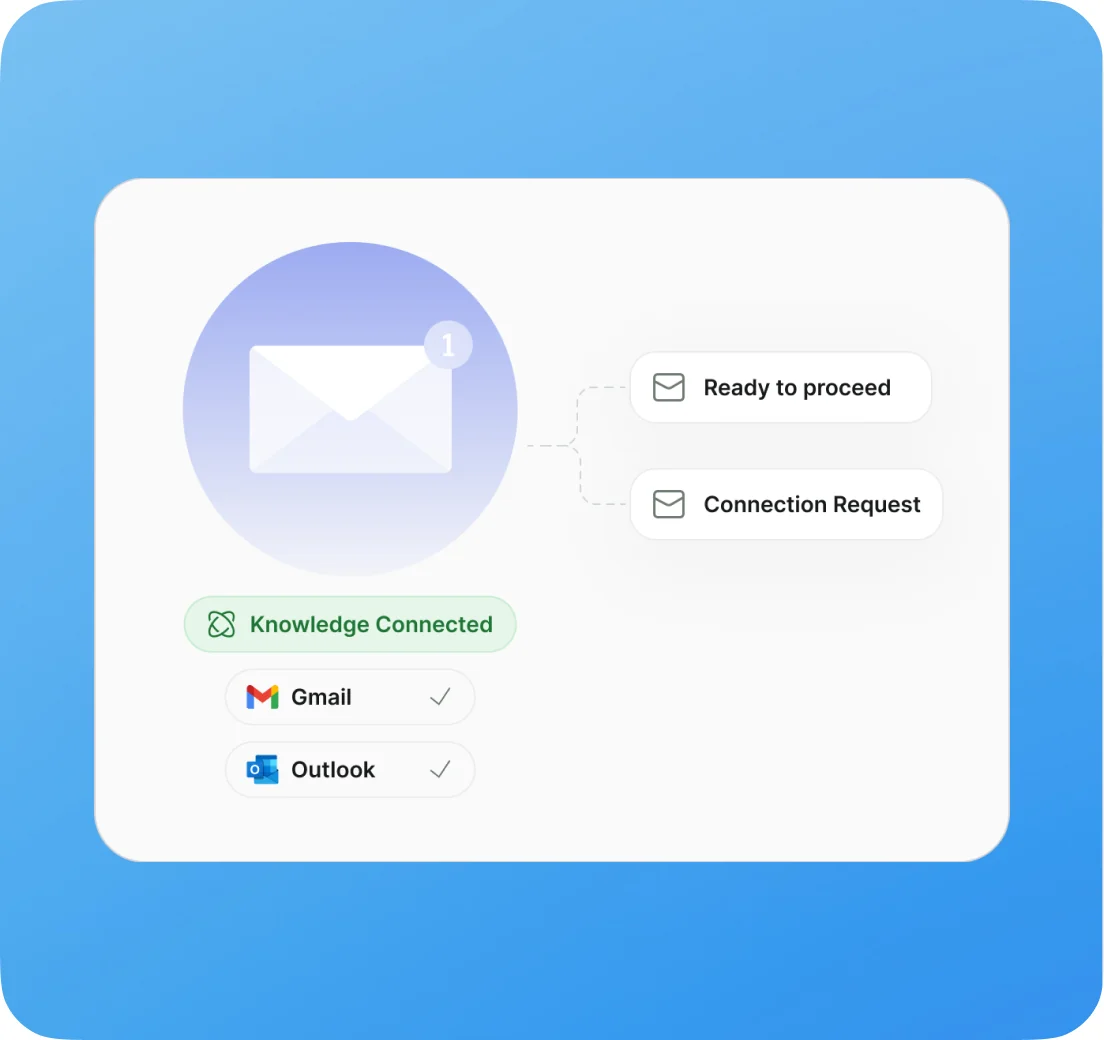
The agent watches its connected inboxes. When a response lands, it reads the full thread, checks your knowledge base for the answer, and replies in context, inside the same thread.
Questions get resolved instead of waiting for whoever checks the shared inbox next.
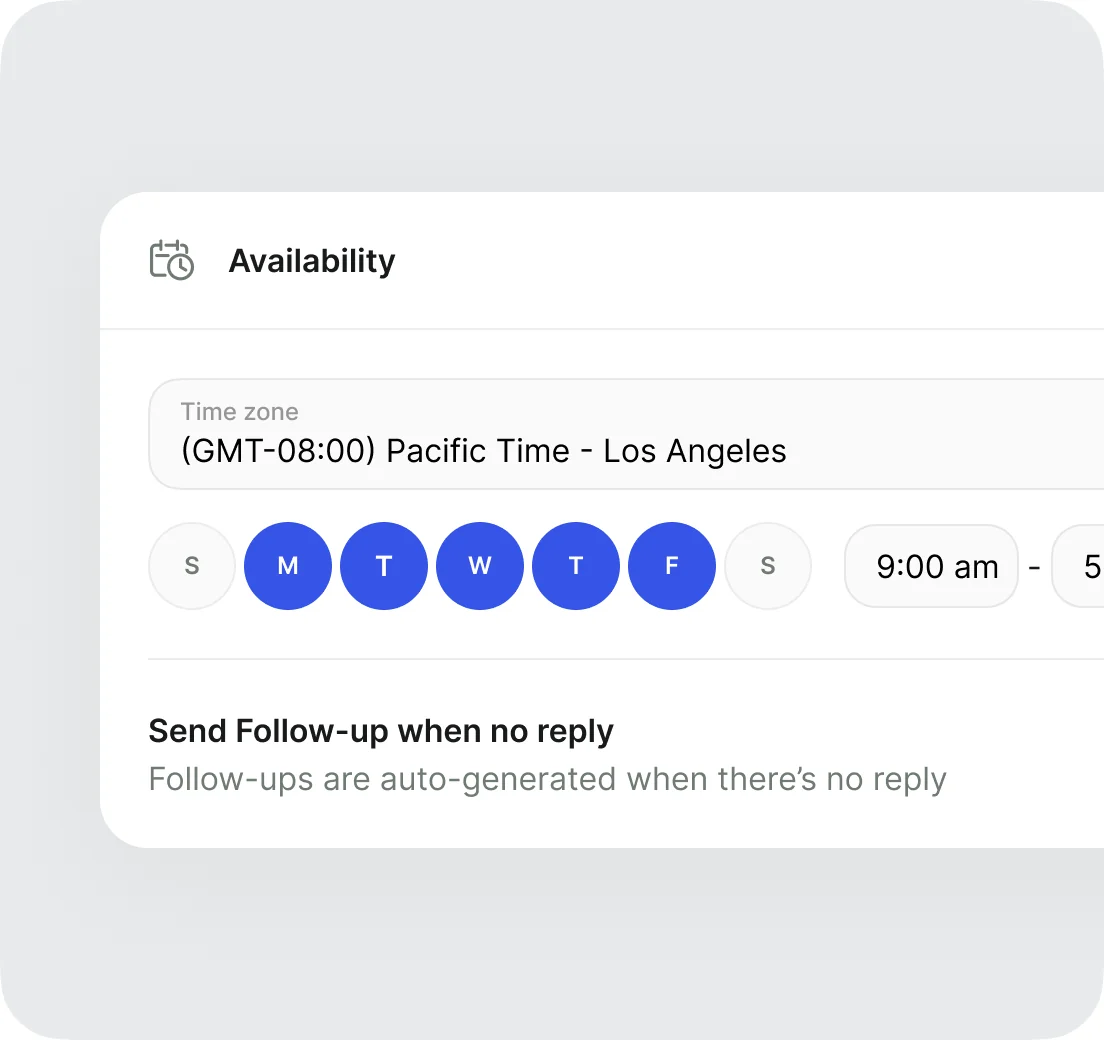
Silence gets a nudge, on the schedule you define: how long to wait, how many attempts, how far apart. The moment a contact writes back, the sequence stops and the conversation takes over.
Nobody gets a "just bumping this" after they've already replied.
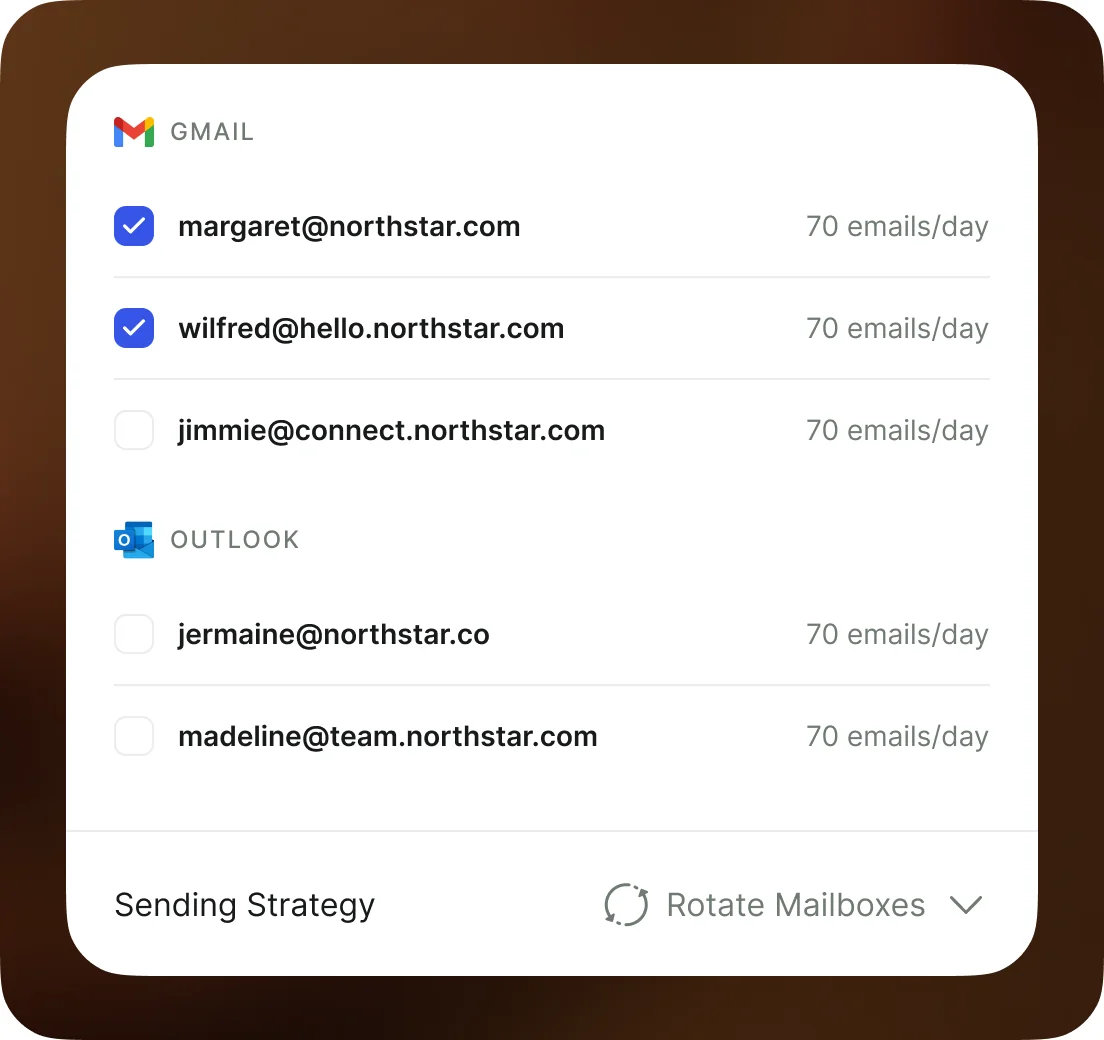
Send limits cap each mailbox's daily volume, and rotation spreads sends across every address you connect, whether that's Gmail, Outlook, Yahoo, or your own SMTP server.
Your domain reputation stays healthy while the campaign scales, and sending windows keep messages inside sensible hours.
Answers draw on your knowledge base and live data from your CRM, orders, and billing, so the agent never guesses.
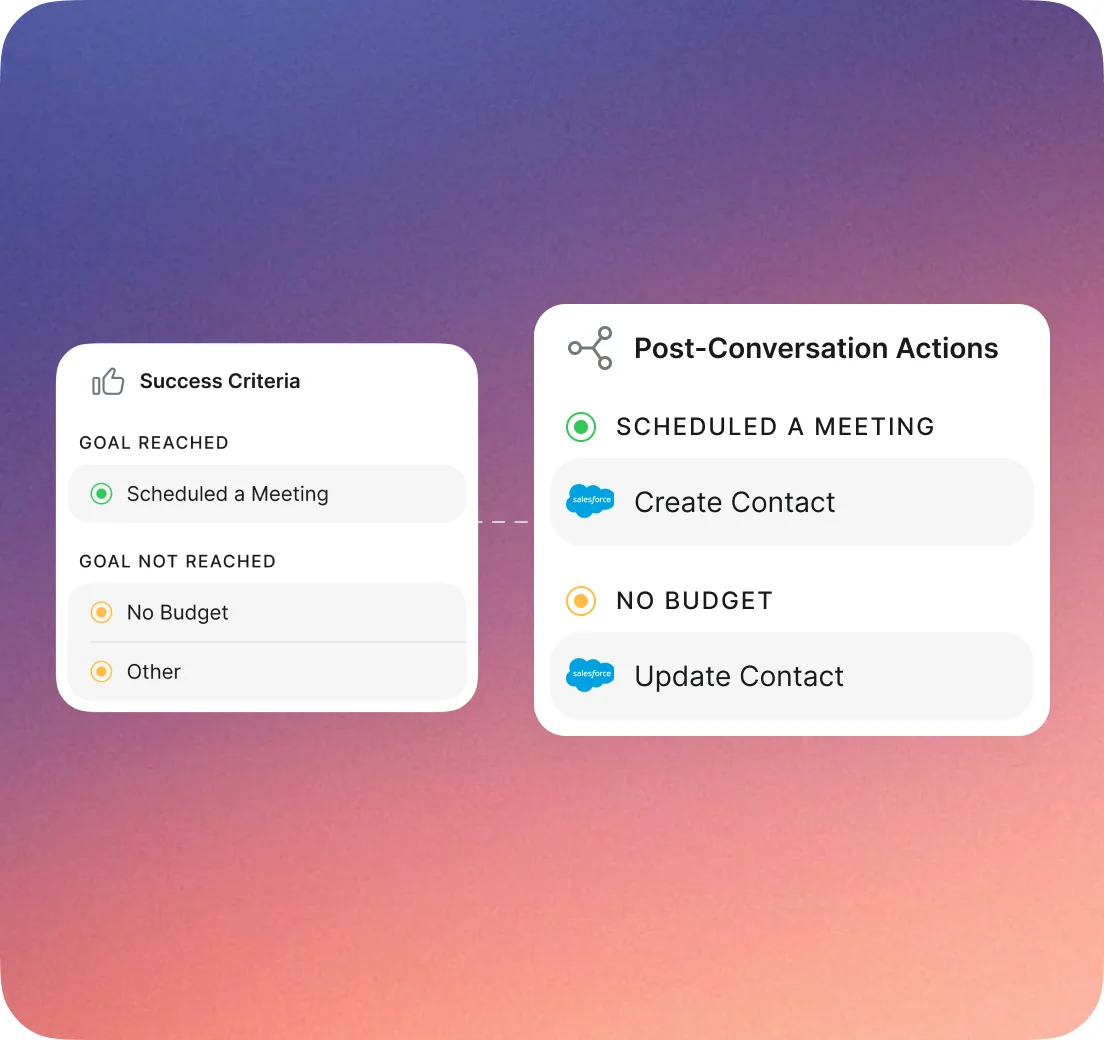
Outcomes flow back into the same contact records and campaign analytics you use for calls and texts, and threads that need a human get flagged to your team.
Cold outreach or customer replies, the agent covers the inbox.
Support inbox
Routine questions resolved straight from the knowledge base.

Order and billing questions
Live order data pulled into every answer.

Scheduling requests
Meeting asks turned into booked calendar slots.

Cold outreach
First touches personalized for every contact on the list.

Lead follow-up
Nurture sequences that adapt when prospects write back.

Reactivation
Dormant customers brought back with context from past orders.
Mailboxes connect in a few clicks, and behind them sit 610+ native integrations. While writing, the agent can check a customer's orders in Shopify, their record in Salesforce or HubSpot, or their ticket in Zendesk, and it logs every outcome back where your team works.





















Email that knows what happened on the phone.
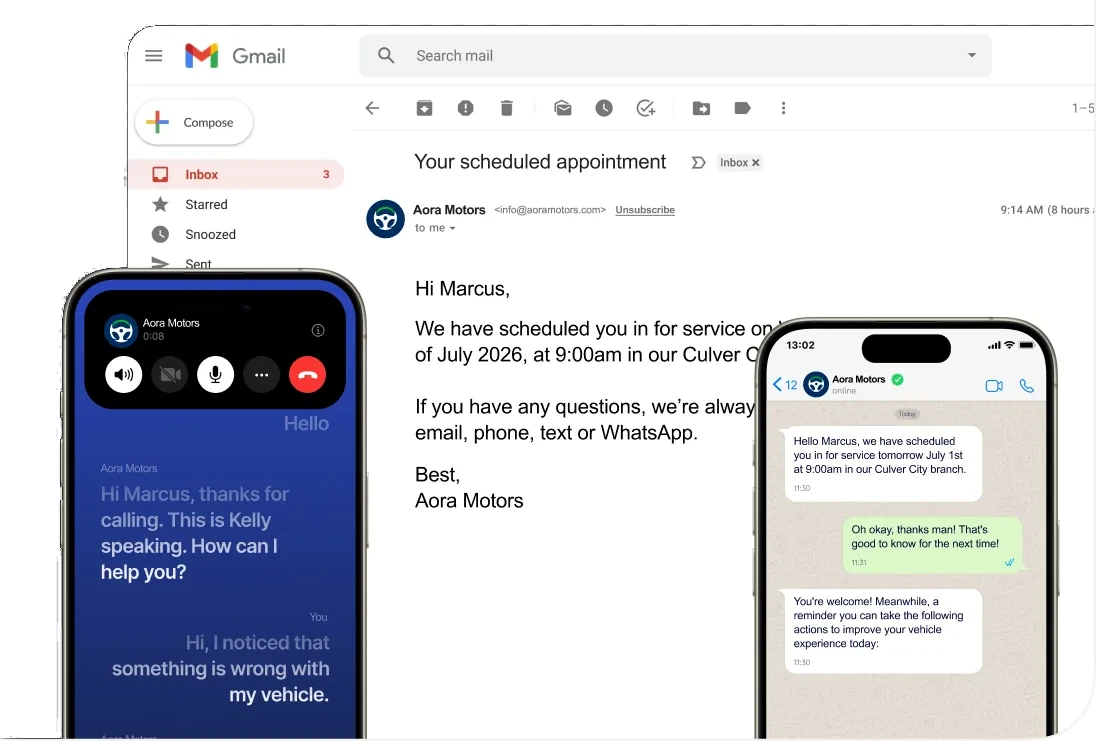
A conversation that starts on a call can finish over email without losing the thread. Callers keeps one memory behind every channel, holding past exchanges, order status, preferences, and consent. Reply to an email a week after a phone call and the agent still knows exactly where things stand.

Compliance handled before the first send.
Every thread carries customer data, so protection comes standard: encryption in transit and at rest, role-based access, and consent tracked on the contact record. Callers maintains SOC 2 Type II, HIPAA, GDPR, CCPA, and PCI DSS compliance, with the full detail published in the Trust Center.





1
Connect your mailboxes
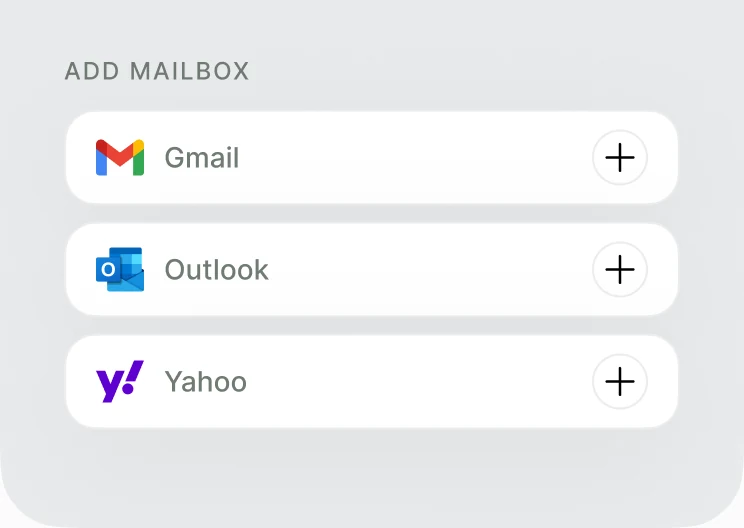
Link the addresses the agent will send from and reply through: Gmail, Outlook, Yahoo, or any mail server over SMTP and IMAP. Set a daily send limit per mailbox and pick a rotation strategy, and deliverability is handled from day one.
2
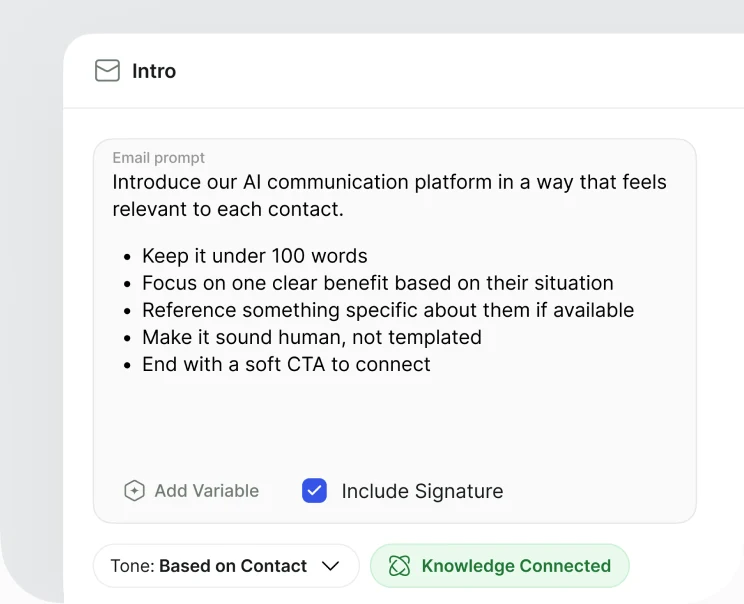
Give the agent its voice
Write the campaign script or let AI draft it, then set the default subject, signature, and tone instructions. Point it at your knowledge base and integrations so replies come with real answers attached.
3
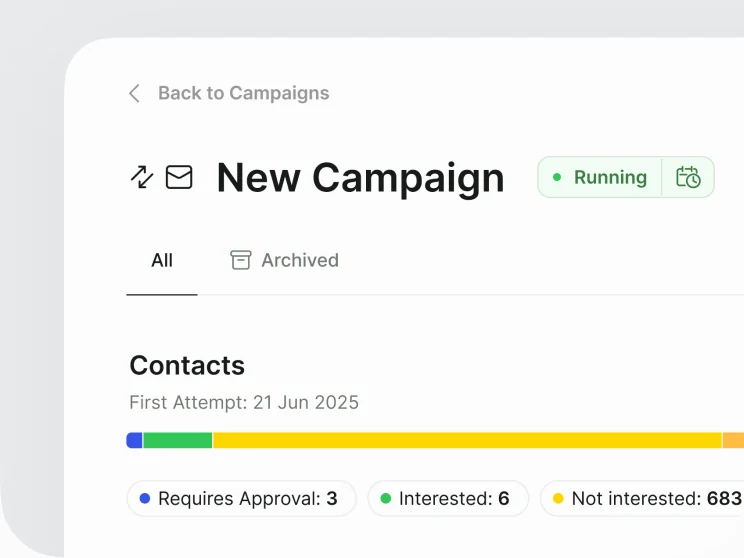
Launch, watch, adjust
Pick your sending windows and follow-up rules, upload contacts, and go. A dedicated CSM stays with you on every plan, and campaign analytics show which messages earn replies so the next batch does better.
70%
cost savings
Replace manual agents and add coverage without growing your team.
65%
lower call center load
Callers takes the repetitive, high-volume calls off your team's plate.
+40%
operational efficiency
Agents spend their time on complex calls, not repetitive ones.
+10
CSAT points
Faster, more consistent answers on every call lift customer satisfaction.
<1s
response time
Every call answered in seconds, so customers never wait in a queue.
Infinite
scalability
Run seven times the qualification calls without adding a single new hire.
“Agents hates outbound. Now they talk to people who want to talk. Morale is up.”
Ben Frasher, Director of Acquisition & Growth




“We were up and running faster than expected and started seeing measurable results within the first week.”
Chelsea Thompson, Director of Operations


“Callers cut our call center load by 65% and 10X our outreach with significantly better results.”
Rob Stevenson, Vice President


”We increased the number of qualified appointments by engaging prospects faster.”
Maria Gomez, System Administrator


”Callers cut our call center load by 65% and 10X our outreach with significantly better results.”
Justin Kahn, Head of Digital Innovation


An AI email agent is software that runs email conversations on its own. Give it a script, a mailbox, and access to your business data, and it writes personalized outreach, sends on schedule, watches for responses, and answers them inside the same thread.
That last part separates it from the email automation you already know. Autoresponders and sequence tools can only send. When a prospect answers with a question, those tools either go silent or fire the next step of the sequence anyway.
An agent actually reads the response, works out what the person needs, and writes back with an answer, escalating to your team when a thread calls for human judgment.
Sequence tools deliver messages. An email agent holds conversations.
A sequence platform fires a fixed series of emails, measures opens and clicks, and hands the thread to a human the moment somebody replies.
A Callers email agent treats the reply as the start of the interesting part. It answers questions using your knowledge base, checks live data in your CRM or order system, books meetings, and keeps the thread moving toward an outcome. Sequences are a subset of what it does, handled by the follow-up engine.
Not if you set it up honestly.
Every message is composed per contact from your script, your tone instructions, and whatever your systems know about the recipient, then sent from a real mailbox with your signature, threading like normal correspondence.
There's no template with a first-name token dropped in. Recipients get emails that address what they actually asked, which is the part automation usually gets wrong.
Follow-ups stop immediately, and the agent shifts from outreach mode into conversation mode. It reads the reply in the context of the whole thread, pulls what it needs from your knowledge base or connected systems, and answers in the same thread.
If the response needs a person, say a complaint or a contract question, the thread routes to your team with the history attached. Contacts never get a scheduled bump after they've already responded.
Gmail, Outlook, and Yahoo connect natively, and anything else works through SMTP for sending and IMAP for receiving, including your own mail server. You can attach several mailboxes to one campaign, give each a daily send limit, and rotate between them. Both sending and receiving need to be connected for the agent to handle replies.
The platform is built to prevent exactly that. Per-mailbox daily limits stop any address from sending more than it safely can, rotation spreads volume across your connected accounts, and sending windows keep messages inside working hours.
Follow-up caps and automatic stops on reply keep contacts from being over-emailed, which protects both your domain and your brand. Warm a new address up gradually rather than pointing a large list at it on day one.
Book a demo and bring a real use case: the list you'd contact or the inbox you'd automate. We'll walk through a live campaign, then set up a pilot on your own mailboxes with a dedicated CSM. Teams typically send their first agent-written emails within days.