
12 Best Conversational AI Platforms in 2026: Features, Pricing, and Fit Compared
:quality(80))
:quality(80))
Quick Summary
Callers tops the 12 best conversational AI platforms in 2026 with one omnichannel agent handling inbound and outbound across calls, chat, and messaging. Sierra, Decagon, Ada, and Fin lead customer service automation. PolyAI and Regal specialize in voice. Cognigy, Kore.ai, and Yellow.ai serve enterprises. Retell and Vapi suit developers.
# | Tool | Key features | Best for | Pricing (2026) |
|---|---|---|---|---|
1 | Callers | Omnichannel one-brain agents, outbound campaigns, white-glove onboarding | High-volume B2C teams | Custom, usage-based per minute |
2 | Sierra | Ghostwriter agent builder, omnichannel agents, observability | Large enterprise CX | Custom (outcome-based) |
3 | Decagon | Natural-language AOPs across voice, chat, and email | Consumer brands with big support volume | Custom (per conversation or per resolution) |
4 | Ada | Multi-LLM agent, 60+ languages, playbooks | Global consumer brands | Custom (contact sales) |
5 | Intercom Fin | Per-resolution AI agent, works on any helpdesk | Chat and email support teams | $0.99 per resolution |
6 | PolyAI | Enterprise voice agents, managed deployments | Large inbound contact centers | Custom (per minute) |
7 | Regal | AI phone, SMS, and chat plus dialer and journeys | High-volume B2C contact centers | Custom (about $0.20/min per vendor blog) |
8 | Cognigy | Agentic AI, voice gateway, Agent Copilot | Enterprise contact centers | Custom (per conversation) |
9 | Kore.ai | Multi-agent platform for service and employee AI | Regulated enterprises | From $0.20 per conversation, enterprise custom |
10 | Yellow.ai | 35+ channels, VoiceX voice, multi-LLM | Global B2C enterprises | Free tier, then $0.99 per resolution |
11 | Retell AI | Developer phone agents, batch calling, SIP | Engineering teams | $0.07 to $0.31 per minute |
12 | Vapi | Bring-your-own-stack voice orchestration | Developer teams at scale | $0.05/min platform fee plus provider costs |
Looking for a Conversational AI Platform?
Every customer service vendor now calls itself a conversational AI platform. The label covers chat widgets, phone automation, and everything between. That makes shopping the category slow and confusing.
This guide compares 12 leading AI voice and chat platforms so you can shortlist faster.
One note before the list. This is business software for automating customer conversations. If you want a personal assistant like ChatGPT, this is a different category. Every platform here builds AI agents that talk to your customers over voice, chat, or messaging, then logs the outcome in your stack.
Why Listen to Us?
DoorDash, Einride, and PadSplit run live customer conversations on Callers. Underneath sits a platform built with Google Cloud that has scaled 30X and now handles hundreds of thousands of AI conversations a day.
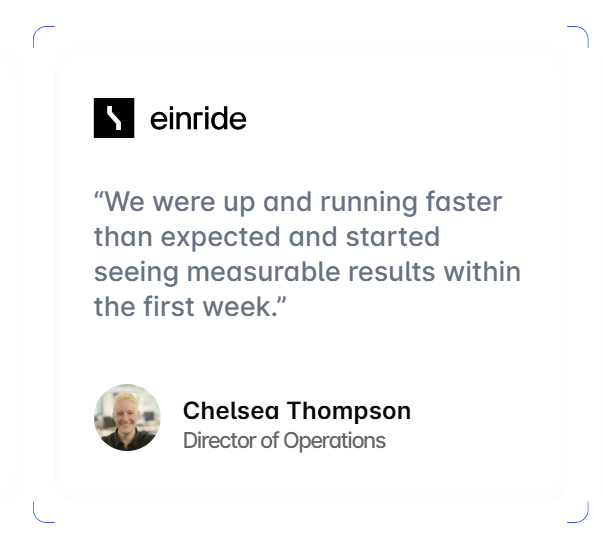
We also watch what those conversations deliver. One customer reduced call-center load 65% while growing outreach tenfold. Another took 46% off outbound handling time and hired more salespeople to keep pace with demand. The full stories are in our case studies.
What Is a Conversational AI Platform?
A conversational AI platform is software that runs customer conversations for your business. It answers and makes phone calls, replies to chats, and handles messages without a human on every interaction. The good ones connect to your CRM, complete real tasks like refunds and bookings, and hand off to your team when a conversation gets sensitive.
The term gets stretched, so it helps to know what sits outside it.
Consumer chatbots like ChatGPT are for individuals. Scripted website widgets and rigid phone menus predate the category and can't hold a real conversation. The platforms below understand natural language, keep context across turns, and act on what customers say.
Within the category, five distinct types have emerged. Knowing which type you're buying matters more than any feature comparison.
Platform type | Tools in this guide | Built for |
|---|---|---|
AI customer service agents | Sierra, Decagon, Ada, Intercom Fin | Chat-led support resolution, increasingly priced per outcome |
Omnichannel conversation platforms | Callers | One agent handling calls, chat, and messaging in both directions |
Voice-first platforms | PolyAI, Regal | Contact centers where the phone call is the core product |
Enterprise conversational AI suites | Cognigy, Kore.ai, Yellow.ai | Fortune 500 governance, language coverage, and sales-led rollouts |
Developer voice AI platforms | Retell AI, Vapi | Engineering teams assembling and maintaining their own agents |
Support-led teams usually start with the CX agents. If calls carry real revenue or volume for you, look at the omnichannel and voice-first rows first, starting with an AI call center approach.
The 12 Best Conversational AI Platforms
1. Callers
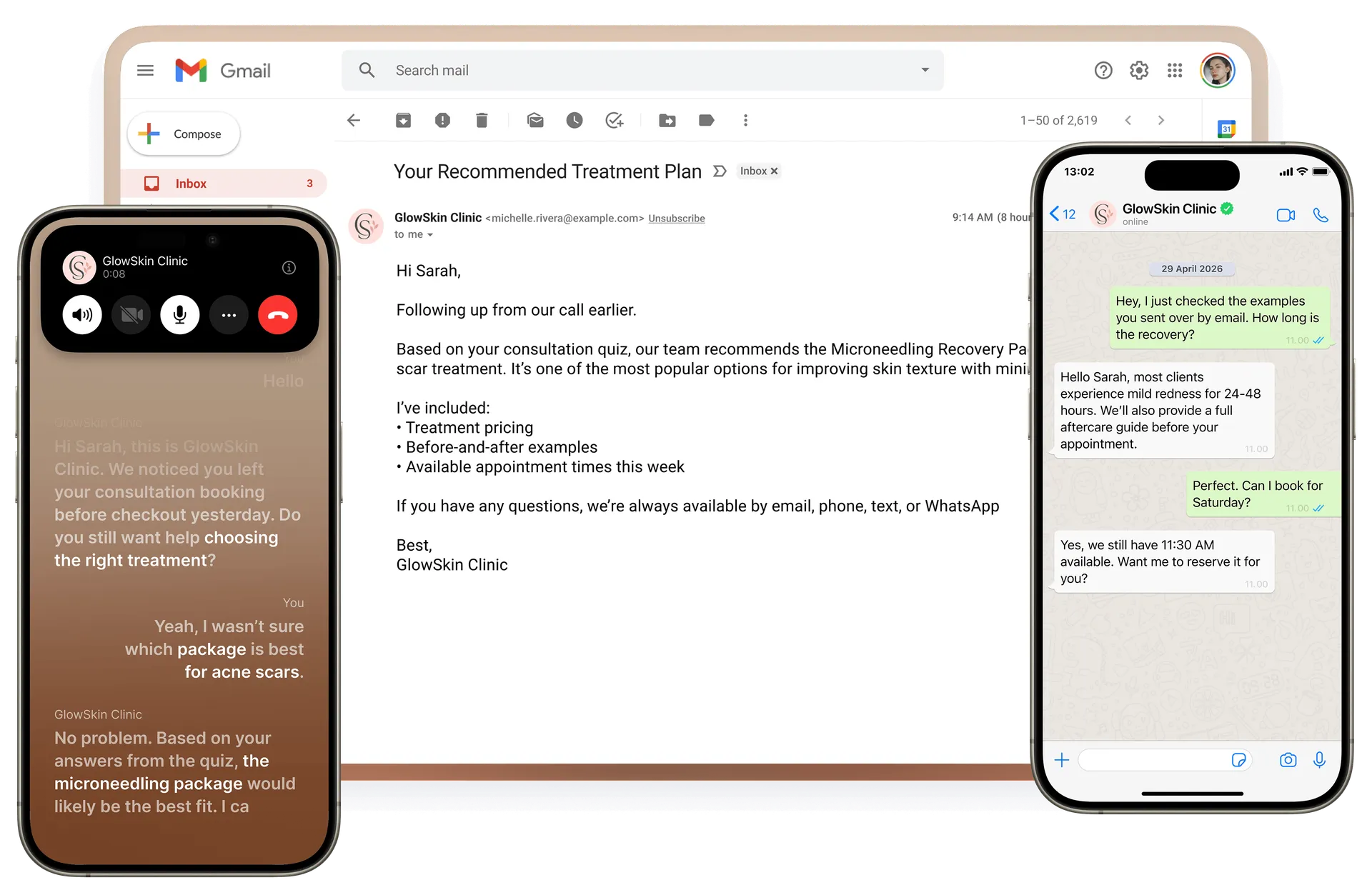
Callers is an omnichannel AI voice and chat platform for high-volume B2C businesses. One agent works across phone, SMS, WhatsApp, email, and chat, and carries the same context through all of them. Outbound calling is a first-class job here, alongside inbound.
That combination is rare in this list. Most platforms here automate one channel deeply and bolt on the rest, or serve one direction of conversation. Callers runs them all from one brain, and pairs the software with white-glove onboarding on every plan. Operators build and launch without engineering, a dedicated CSM handles setup, and teams typically go live in weeks.
Key features
Omnichannel one brain: one agent with shared context across calls, SMS, WhatsApp, email, and chat
Outbound campaign builder: multi-step sequences, conditional retries, and pre-call triggers
No-code flow builder: drag-and-drop scripting with AI assistance, owned by operators
26+ languages: emotionally intelligent voices with mid-call language switching
Step-level analytics: see the exact step where conversations break down
White-glove onboarding: dedicated CSM and managed setup on every plan
Pricing
Custom, usage-based per minute. You pay for conversation time, with onboarding and a dedicated CSM included rather than sold as a services contract. Compliance covers SOC 2, HIPAA, GDPR, CCPA, and PCI DSS.
Pros
Warm transfer routes high-stakes conversations to your team
Live in weeks, with operators running campaigns instead of developers
610+ native integrations, including Salesforce, HubSpot, and Zendesk
Step-level analytics that show exactly where scripts lose people
Proven at scale with DoorDash, Einride, and PadSplit
Cons
Pricing requires a demo rather than self-serve signup
Built for conversation volume, so low-volume teams see less value
Best for
High-volume B2C teams that want one agent across every channel, from lead qualification to support.
Why choose Callers
Pick Callers when customer conversations drive your revenue or your support load. The CX agents on this list are strongest in chat. The enterprise suites take months and a services team to deploy. The developer platforms hand the work to your engineers.
Callers covers every channel in one platform, with campaign logic, native integrations, and a team that sets it up with you and stays involved. Your operators run it from there.
2. Sierra
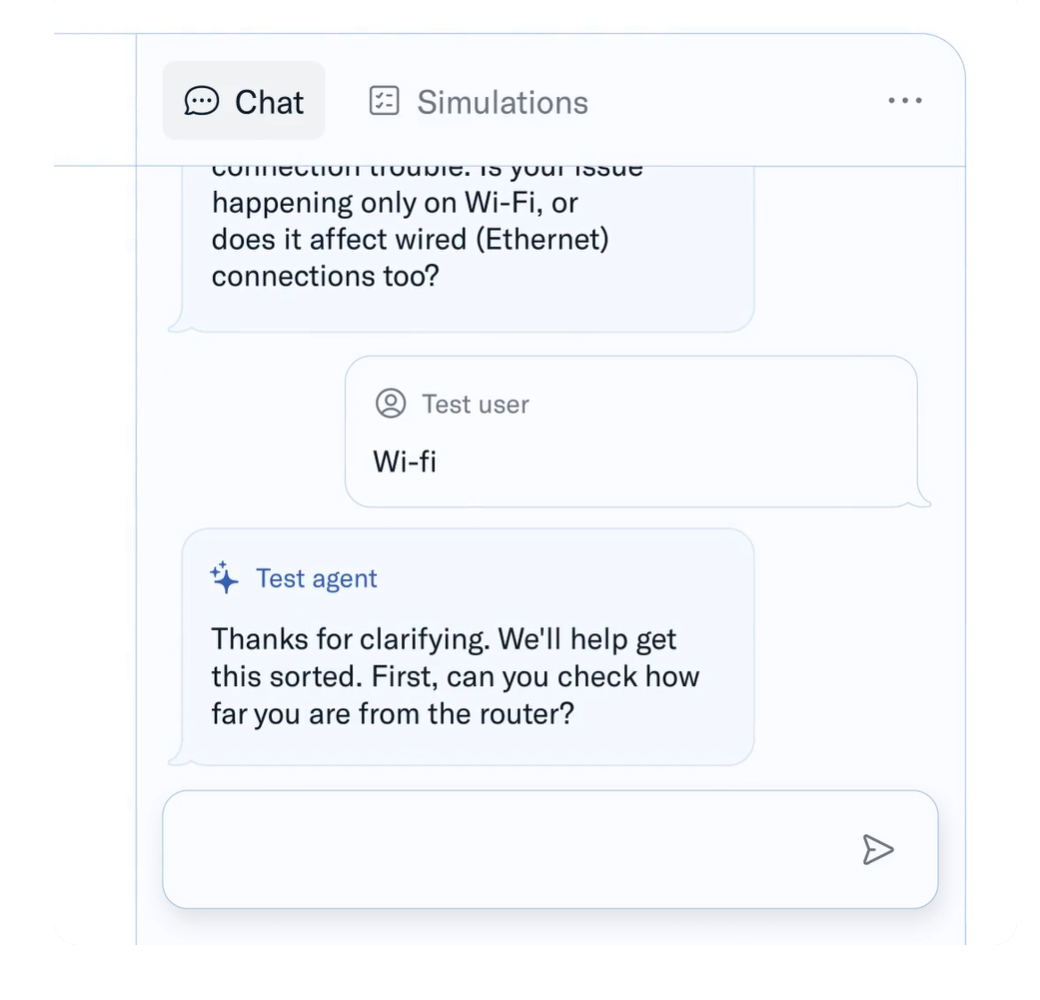
Sierra is the enterprise heavyweight of the AI agent category, founded by former Salesforce co-CEO Bret Taylor. It deploys a single agent across chat, SMS, WhatsApp, email, voice, and even ChatGPT, with customers like Rocket Mortgage, SiriusXM, and ADT.
Key features
Ghostwriter: builds production-ready, multilingual agents from your existing docs
Voice Personas: configurable voice agents with low-latency speech
Insights: deep analytics on agent conversations and performance
Observability: an audit trail of every action the agent takes
Broad channels: chat, SMS, WhatsApp, email, voice, and ChatGPT
Pricing
Sierra doesn't publish pricing. The model is outcome-based. You pay when the agent delivers a defined outcome, like a resolved conversation or a saved cancellation, and unresolved conversations generally cost nothing. Deals are negotiated through sales.
Pros
Outcome-based pricing aligns cost with results
Strongest enterprise logo roster in the category
Mature voice, well beyond a chat bolt-on
Ghostwriter cuts agent build time dramatically
Strong governance story for regulated buyers
Cons
No published pricing, and entry costs sit at enterprise level
Every deal needs careful negotiation of what counts as an outcome
No self-serve option or trial
Best for
Large enterprises with heavy support volume that want a premium, outcome-priced agent platform.
Why choose Sierra
Choose Sierra if you're a large enterprise standardizing customer conversations on one agent platform and you want the vendor's incentives tied to resolutions. Budget for an enterprise sales cycle and a guided rollout.
3. Decagon
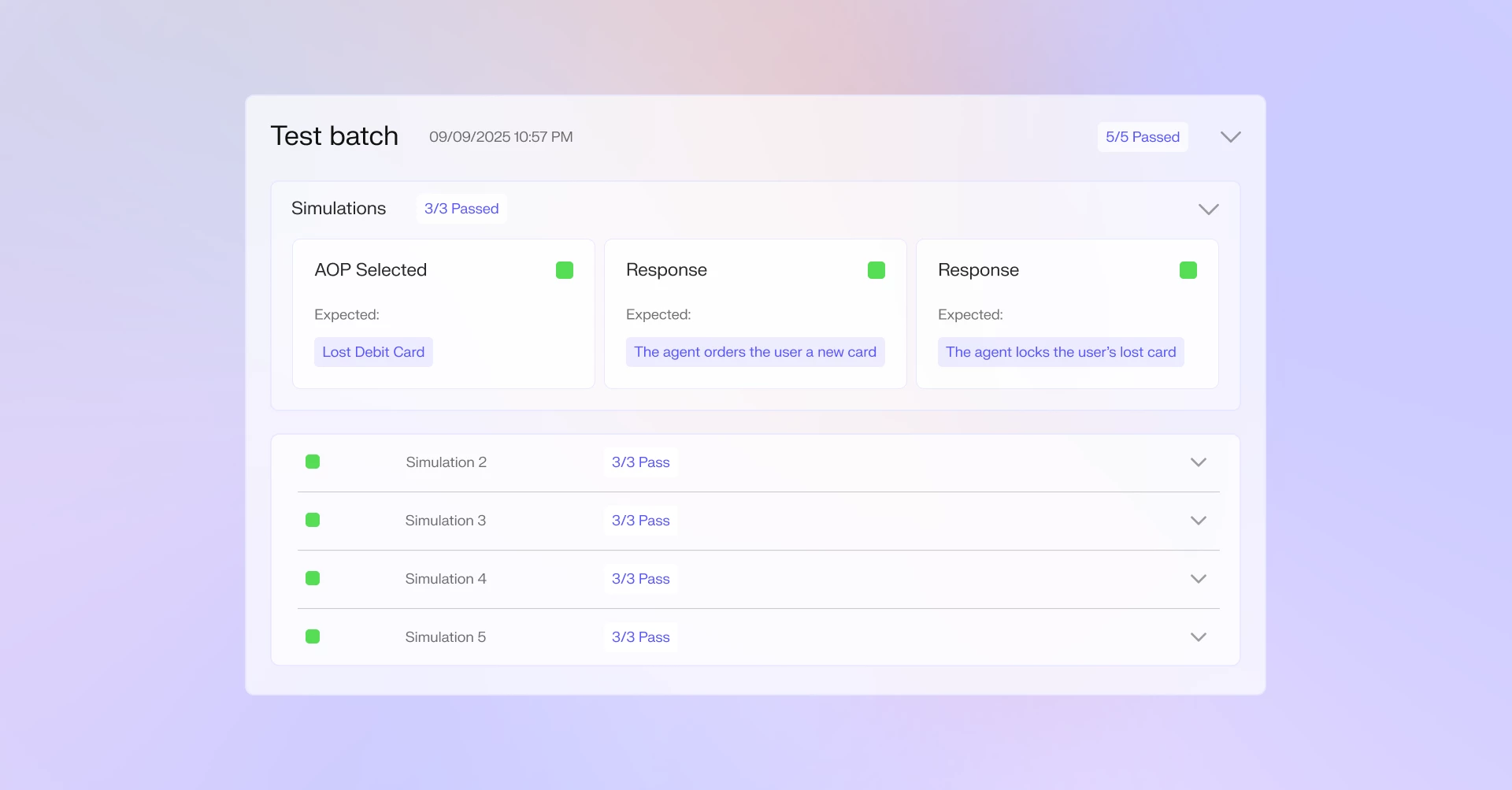
Decagon builds AI support agents that teams steer in plain English. Its Agent Operating Procedures let CX teams write workflows as natural language instead of code or config, across voice, chat, and email. Customers include Duolingo, Chime, and Rippling.
Key features
AOPs: agent workflows written and edited in natural language
Omnichannel agents: voice, chat, and email on shared logic
Simulation and A/B testing: test agent behavior before and after launch
Watchtower: continuous automated QA on live conversations
Insights: deflection tracking and customer intelligence reporting
Pricing
Decagon doesn't publish pricing and has no public pricing page. The company describes two models, per conversation and per resolution, and you settle on one through sales.
Pros
Ops teams iterate on agent behavior without engineering tickets
Choice between usage-based and outcome-based billing
Strong built-in QA loop from simulation to live monitoring
One agent brain across voice, chat, and email
Well referenced among modern consumer and fintech brands
Cons
Enterprise-only, with no trial and no public pricing
Per-conversation billing includes conversations the AI fails to resolve
Younger vendor, which procurement in regulated industries may flag
Best for
Mid-market and enterprise consumer brands that want an agent their ops team can tune in plain English.
Why choose Decagon
Decagon fits teams that expect to adjust their AI agent constantly and want that power inside the CX team. If your support content changes weekly, natural-language AOPs beat filing tickets against a vendor services team.
4. Ada
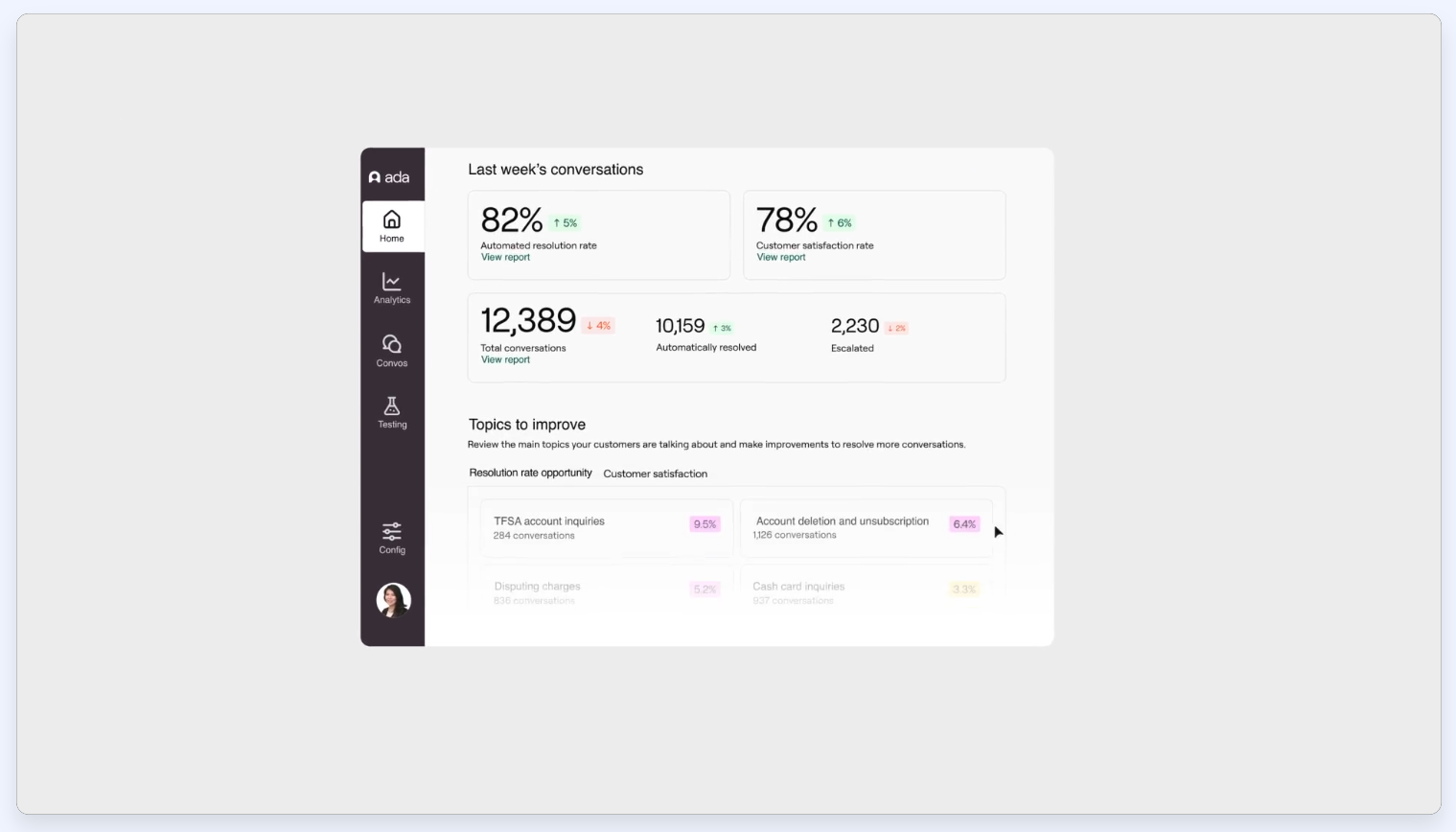
Ada has been automating customer service since 2016, which makes it the veteran of the AI agent group. It runs one agent across messaging, email, and voice in 60+ languages for brands like Pinterest, Monday.com, and Malaysia Airlines.
Key features
Single agent, many channels: messaging, email, and voice from one build
Playbooks: multi-step workflows that take real actions
Multi-LLM orchestration: accuracy controls without single-model lock-in
60+ languages: consistent brand terminology managed via glossaries
Coaching tools: test, measure, and improve the agent over time
Pricing
Ada doesn't publish pricing. Its pricing page routes to a demo booking. Ada's own content argues for conversation-based billing, so expect to pay per conversation handled rather than per resolution.
Pros
Nearly a decade of production deployments
Best-in-class language coverage for global brands
Multi-LLM approach avoids model lock-in
Strong measurement culture with testing and coaching tools
Reportedly a lower entry price than newer enterprise rivals
Cons
Chat heritage, with voice and email newer and less deep
Custom-only pricing with no trial
Its own billing-model shift means contracts need careful reading
Best for
Established global consumer brands that need broad language coverage from a proven vendor.
Why choose Ada
Ada is the safe, mature pick among the CX agents. If your board asks "who else has run this in production for years," Ada has the longest answer, and the language coverage to match a global footprint.
5. Intercom Fin
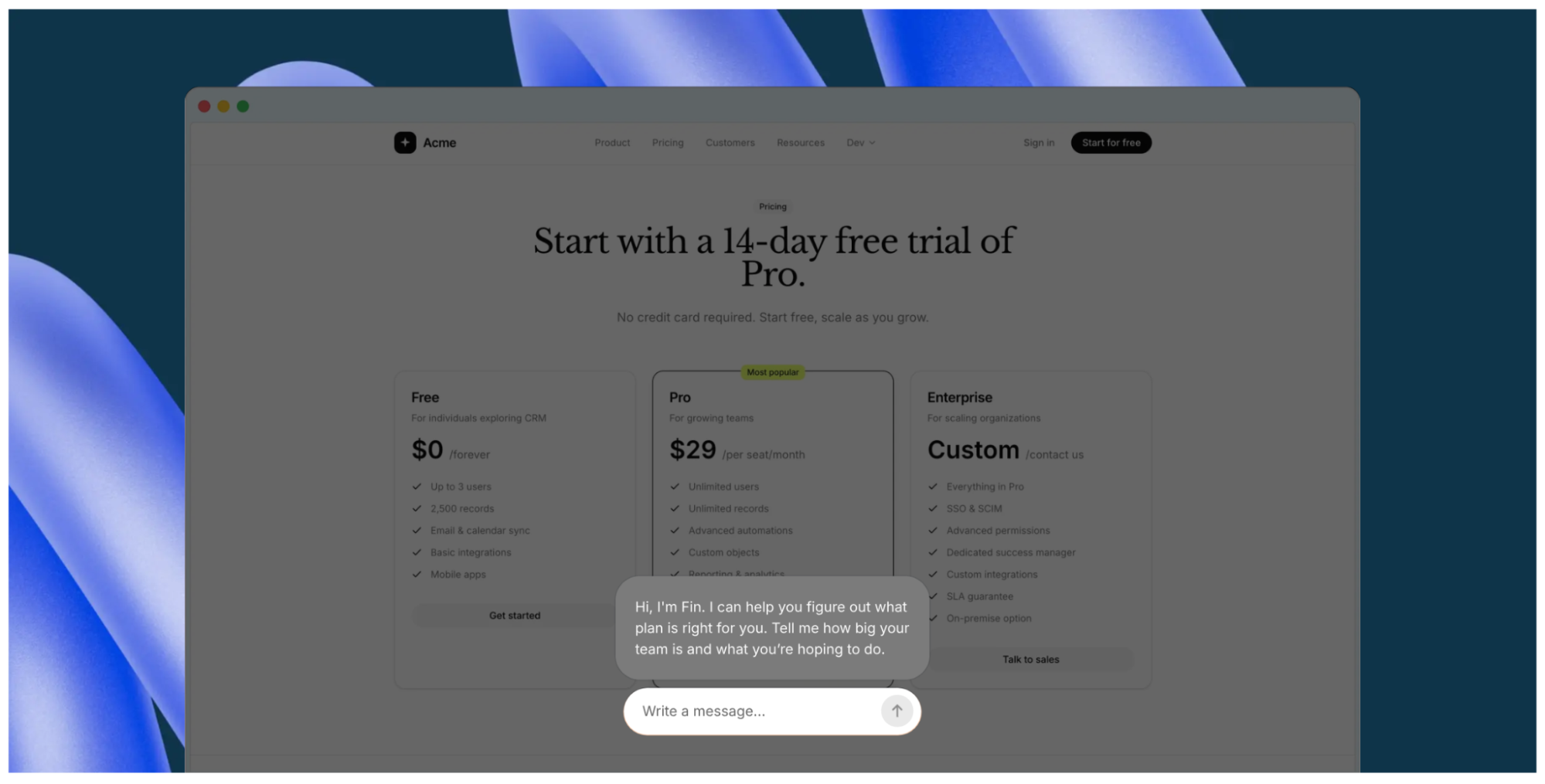
Fin is Intercom's AI agent and the volume leader in published performance claims, citing a 76% average resolution rate across 12,000+ customers. It works inside Intercom or on top of Zendesk, Salesforce, and other helpdesks, with customers like Anthropic and Rocket Money.
Key features
Helpdesk-agnostic: runs on Intercom, Zendesk, Salesforce, and more
Procedures and Tasks: multi-step actions like refunds and order lookups
Train, test, deploy tooling: preview testing and guidance controls
QA dashboards: observability on resolutions and agent behavior
Fin Copilot: an AI assistant for your human agents
Pricing
$0.99 per resolution, published on the vendor's site, with a 50-outcome monthly minimum. Qualification outcomes for sales use cases cost $9.99 each. Using Fin inside Intercom's own helpdesk adds $29 per seat per month. Fin Voice is sold separately through sales.
Pros
Transparent published pricing, paid only on outcomes
Strong published resolution benchmarks at huge scale
No helpdesk migration required
Mature testing and QA tooling
14-day unlimited trial with self-serve start
Cons
Chat and email heritage, with voice new and gated behind sales
Per-outcome costs climb fast at high volume
Deepest experience sits inside Intercom's own ecosystem
Best for
Support teams on chat and email that want a proven agent with pricing they can model in a spreadsheet.
Why choose Fin
Fin is the easiest platform on this list to try. The trial is self-serve, the price is public, and it works on the helpdesk you already run. For digital-first support automation, it's the lowest-friction serious option.
6. PolyAI
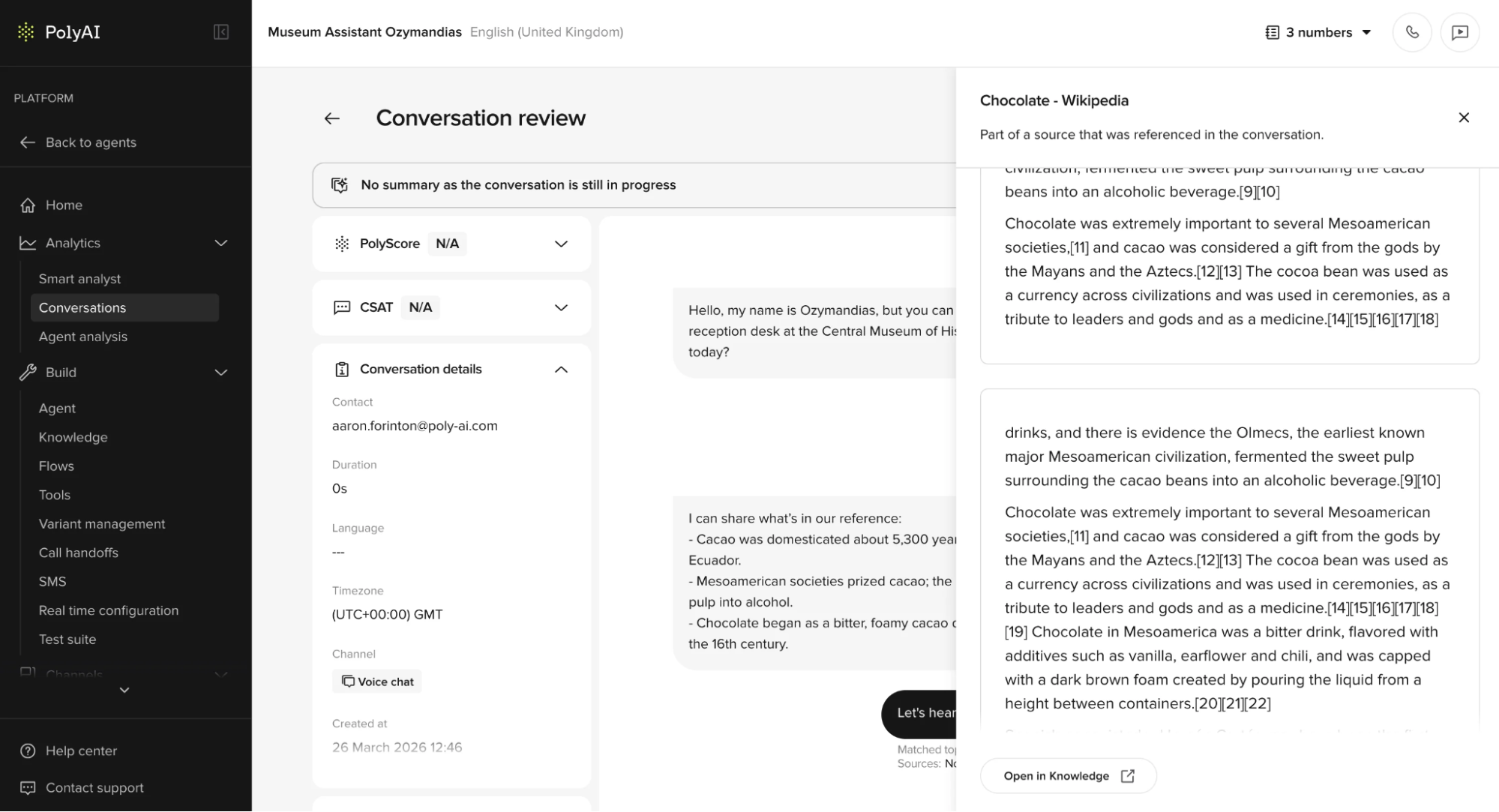
PolyAI builds enterprise voice agents with some of the most natural-sounding conversations in the industry, trained on over a billion enterprise calls. It serves large contact centers in hospitality, banking, and healthcare, with customers like PG&E and Golden Nugget.
Key features
Lifelike voice agents: handle interruptions, accents, and background noise
Raven model: proprietary conversation model built for enterprise calls
Agent Studio: no-code builder, plus an SDK for developers
Pre-trained industry agents: faster starts for common verticals
Enterprise compliance: SOC 2, HIPAA, GDPR, and PCI DSS
Pricing
PolyAI doesn't publish rates. Pricing runs per minute and bundles ongoing tuning, maintenance, and 24/7 support. Getting numbers means an enterprise sales process.
Pros
Widely regarded as a benchmark for natural enterprise voice
Managed model includes continuous optimization by PolyAI experts
Strong regulated-industry credentials
Proven containment results at recognizable brands
Both no-code and developer build tracks
Cons
No published pricing and no self-serve tier
Inbound-first heritage, with outbound requiring account-team activation
Managed deployments mean longer cycles and vendor involvement
Best for
Large contact centers with heavy inbound call volume that want premium managed voice automation.
Why choose PolyAI
PolyAI suits enterprises that want a vendor deeply involved in deployment and tuning. If you'd rather buy a managed outcome than operate a platform, and your volume justifies the contract, it's a strong inbound choice.
7. Regal
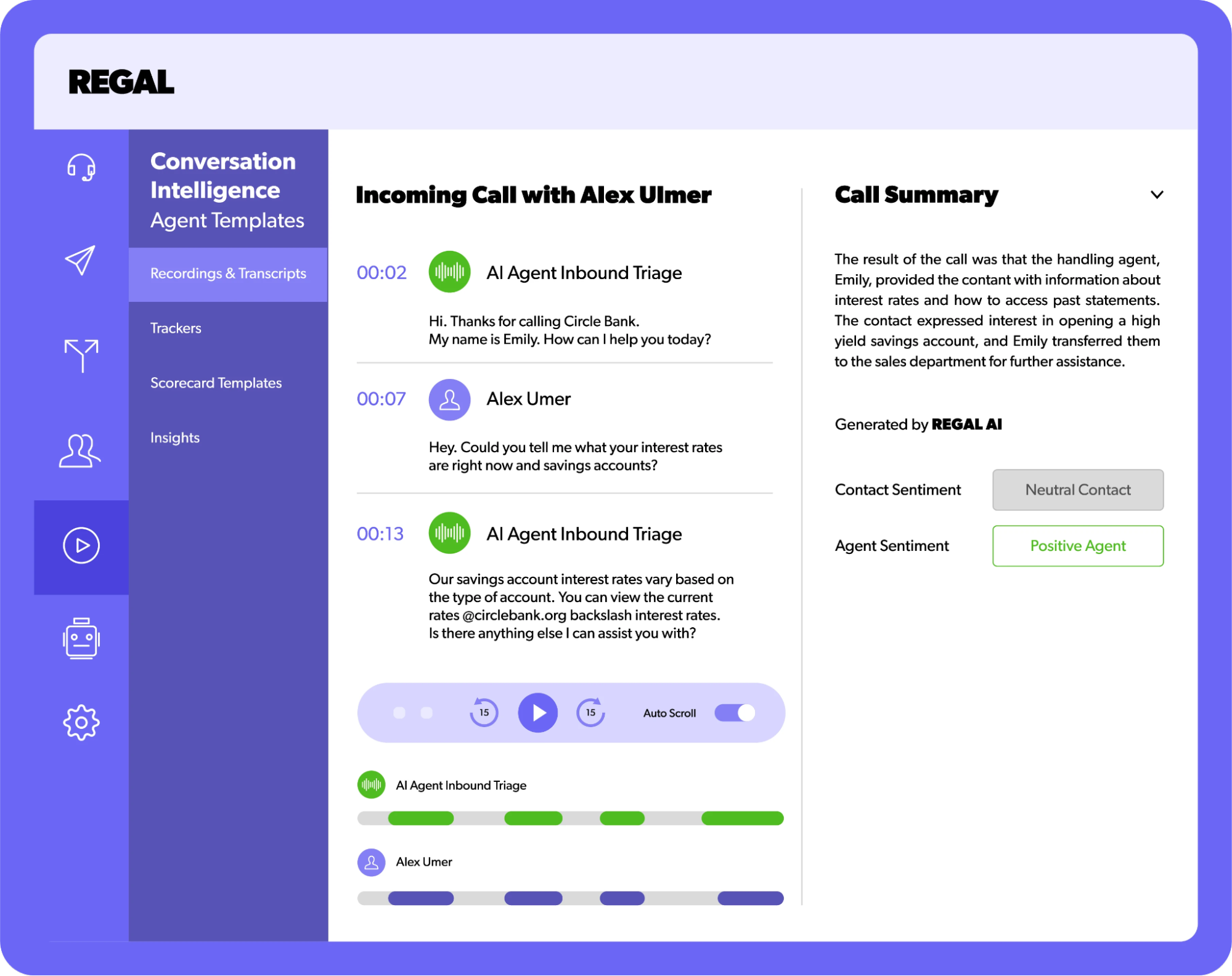
Regal comes from the outbound side of the contact center. It pairs AI phone, SMS, and chat agents with a dialer, IVR, and journey orchestration, aimed squarely at high-volume B2C operations. Customers include Toyota, AAA, and Coursera.
Key features
AI agents on three channels: phone, SMS, and chat in one platform
Journey Builder: multi-step, multi-channel customer journeys
Built-in contact center stack: dialer, IVR, routing, unified profiles
A/B testing: compare agents, scripts, and journeys in production
Conversation intelligence: automated QA and monitoring
Pricing
Regal's pricing page has no rate card and directs you to sales. The company's own blog cites a typical rate of about $0.20 per minute for AI agents, with platform and implementation fees on top.
Pros
Handles outbound and inbound in one system
Journey orchestration can replace parts of a CCaaS stack
Strong claimed results on containment and speed-to-lead
A/B testing supports continuous optimization
Rare vendor-stated cost anchor for the category
Cons
Regal's own guidance targets teams with 25+ agents and 100K+ monthly minutes
Total cost still requires a sales conversation
Broader platform than teams wanting only support automation need
Best for
High-volume B2C contact centers that want AI agents plus dialer and journey infrastructure together.
Why choose Regal
Regal makes sense when you want to consolidate outbound infrastructure and AI agents into one vendor at serious scale. Smaller teams will find the entry bar high.
8. Cognigy
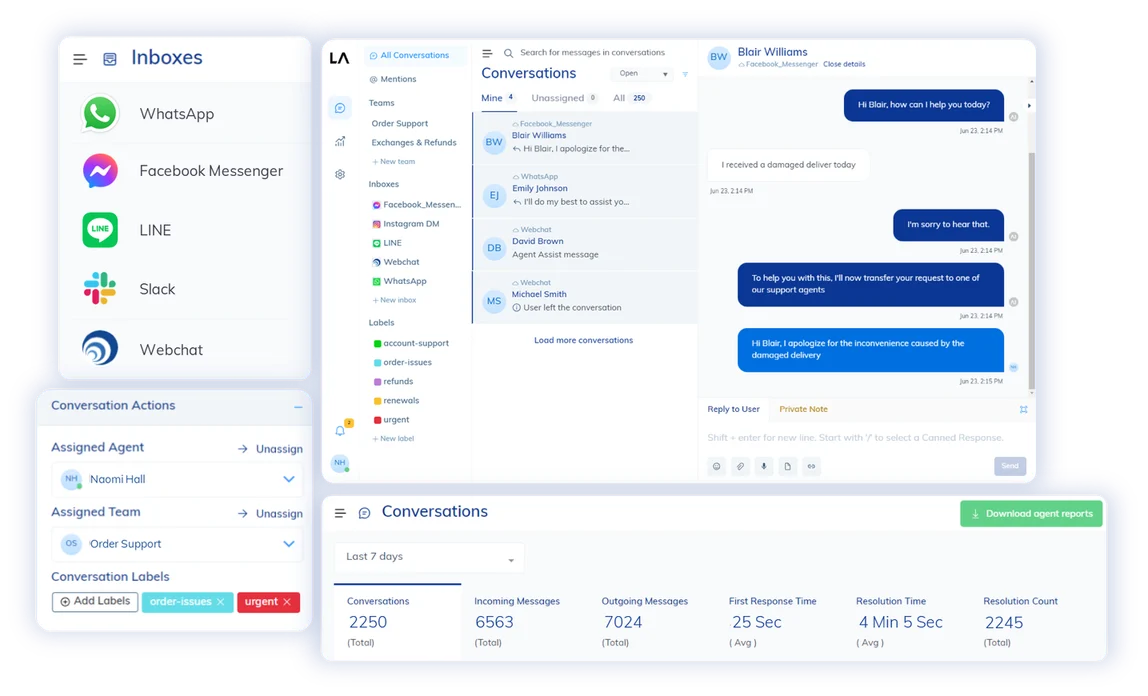
Cognigy, now NiCE Cognigy after its acquisition by NICE, is an analyst-recognized enterprise platform for customer service AI. It's a Gartner Magic Quadrant Leader with deep contact-center connectivity and customers like Lufthansa, Toyota, and DHL.
Key features
AI Agent Studio: low-code builder for agentic AI and flows
Voice Gateway: turnkey connectivity into CCaaS platforms
Knowledge AI: RAG over enterprise content
Agent Copilot: real-time assist for human agents
80+ languages: with real-time translation
Pricing
Cognigy doesn't publish prices. Billing is conversation-based, with a conversation defined in its docs as up to 50 user inputs in 24 hours on digital channels, or up to 10 minutes of voice per call. Numbers come through sales.
Pros
Leader placement in major analyst evaluations
Deep voice and CCaaS integration, strengthened by NICE ownership
Customer-facing agents and agent-assist in one platform
Strong multilingual and translation capability
Proven with major global enterprise brands
Cons
No published pricing at any tier
Rollouts commonly take months and often involve system integrators
Steep learning curve before business users are self-sufficient
Best for
Large enterprise contact centers, especially NICE CXone shops, buying through a formal evaluation.
Why choose Cognigy
Cognigy is the defensible enterprise pick. If your organization requires analyst validation, procurement rigor, and deep contact-center integration, it belongs on the RFP shortlist.
9. Kore.ai
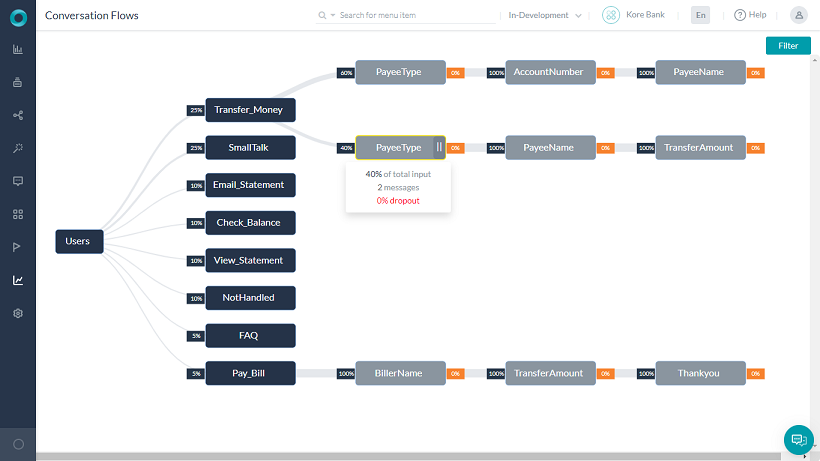
Kore.ai covers more surface area than any other platform here. It spans customer service AI, employee-facing agents for HR and IT, and a general agent-development platform with governance, selling into banks and pharma companies like Morgan Stanley and Pfizer.
Key features
Agent Platform: multi-agent orchestration with governance and model choice
AI for Service: contact center automation, IVR, and agent assist
AI for Work: prebuilt employee agents for HR, IT, and finance
Search AI: enterprise RAG over company knowledge
Marketplace: prebuilt agents and industry templates
Pricing
Kore.ai publishes a self-serve Standard plan in its developer docs at $0.20 per conversation, with $500 in free credits. The main pricing page shows no numbers. Enterprise tiers are custom quoted and billed per session or per seat depending on the product.
Pros
One governed platform for customer, employee, and custom agents
Deep credentials in regulated industries
A published pay-as-you-go entry point, rare at this tier
Real code support alongside low-code building
Large marketplace shortens common builds
Cons
Dense interface with a steep learning curve
Most organizations need technical teams or partners to implement
Enterprise pricing beyond the entry tier is negotiated and opaque
Best for
Regulated enterprises that want customer and employee AI agents under one governance model.
Why choose Kore.ai
Choose Kore.ai when the mandate is bigger than customer service. If one platform must serve CX, employee support, and internal agent development with governance over all of it, few vendors match its breadth.
10. Yellow.ai
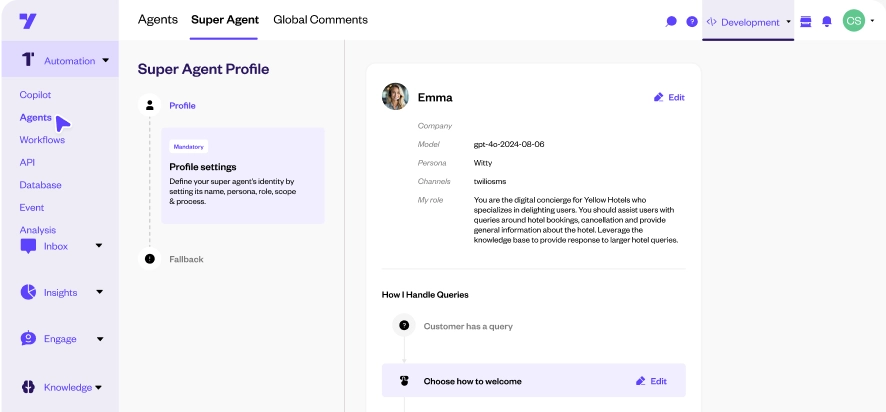
Yellow.ai runs conversational AI for high-volume B2C enterprises across 35+ channels, with a multi-LLM architecture and its VoiceX voice product. It claims 1,300+ brands, with strength in commerce, banking, travel, and logistics across global markets.
Key features
35+ channels: WhatsApp, web, mobile, email, and voice with shared context
VoiceX: low-latency voice AI with broad language claims
AI Agent Builder 2.0: no-code creation with automated testing
Multi-LLM architecture: 15+ models with no single-vendor lock-in
User360 and campaigns: customer data layer plus outbound automation
Pricing
Yellow.ai publishes a free plan with one agent and 500 resolutions a month included, then $0.99 per resolution. Its Basic and Enterprise tiers show no public prices and route through sales.
Pros
Free entry tier with published per-resolution pricing
Context carries across channel switches, useful for WhatsApp-heavy markets
Multi-LLM design lets enterprises swap underlying models
Broad channel and language coverage for global B2C
Usable no-code builder with a large connector catalog
Cons
Reviewers cite intent-matching misses and occasional lost context
Enterprise pricing beyond the free tier is opaque
Prebuilt connectors often need more configuration than the label implies
Best for
Global B2C enterprises, especially in WhatsApp-first markets, that want chat and voice on one platform.
Why choose Yellow.ai
Yellow.ai earns a look when your customers live on messaging apps across multiple countries. The channel breadth and language reach are hard to match at its price point.
11. Retell AI
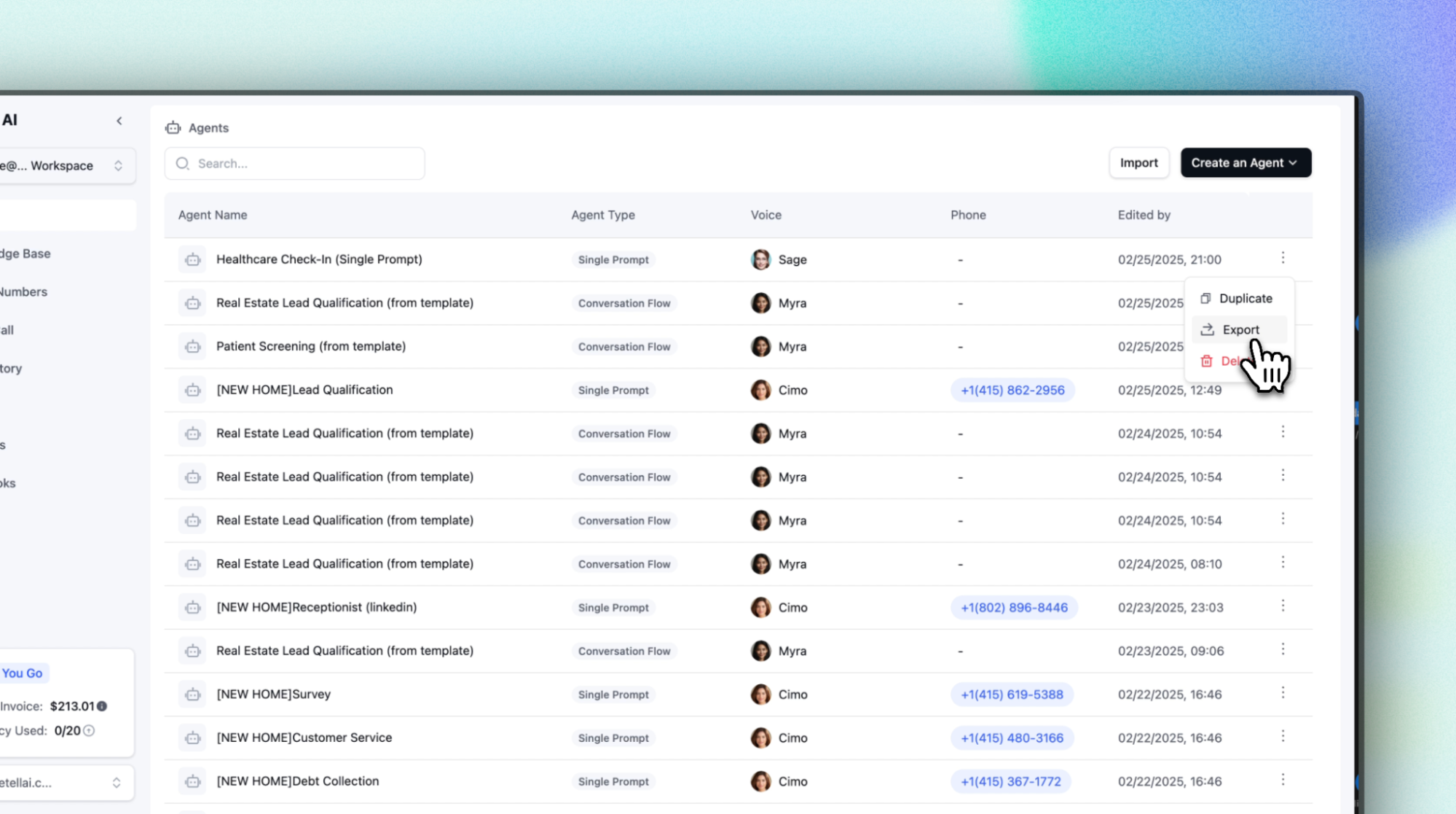
Retell AI gives engineering teams a production-grade platform for AI phone agents. It pairs APIs with a drag-and-drop flow builder and handles the telephony details most platforms leave to you, like batch calling, SIP trunking, and caller ID reputation.
Key features
Agent flow builder: drag-and-drop framework with guardrails and function calling
Telephony depth: batch campaigns, SIP trunking, branded caller ID, IVR navigation
Model choice: OpenAI, Claude, or Gemini, plus multiple voice providers
Streaming knowledge base: RAG with auto-sync from your content
Built-in QA: post-call analysis, transcription, and call scoring
Pricing
Retell publishes component pricing that lands between $0.07 and $0.31 per minute all in, covering voice infrastructure, your chosen LLM, voices, and telephony. Add-ons like knowledge bases, branded caller ID, and PII redaction bill separately. New accounts get $10 in free credits.
Pros
Transparent per-minute pricing with a cheap entry point
Telephony tooling competitors leave to third parties
Built-in QA and analytics reduce bolt-on tooling
SOC 2 Type II, HIPAA, and GDPR available on self-serve tiers
20 free concurrent calls is generous for testing
Cons
The $0.07 headline climbs fast with capable models and premium voices
Still a developer platform despite the visual builder
Phone-first, with chat and SMS secondary
Best for
Engineering teams that want production phone agents with the telephony details handled.
Why choose Retell AI
Retell fits teams with engineers who want control over the agent but no interest in building voice infrastructure. You get the plumbing solved and keep the logic.
12. Vapi
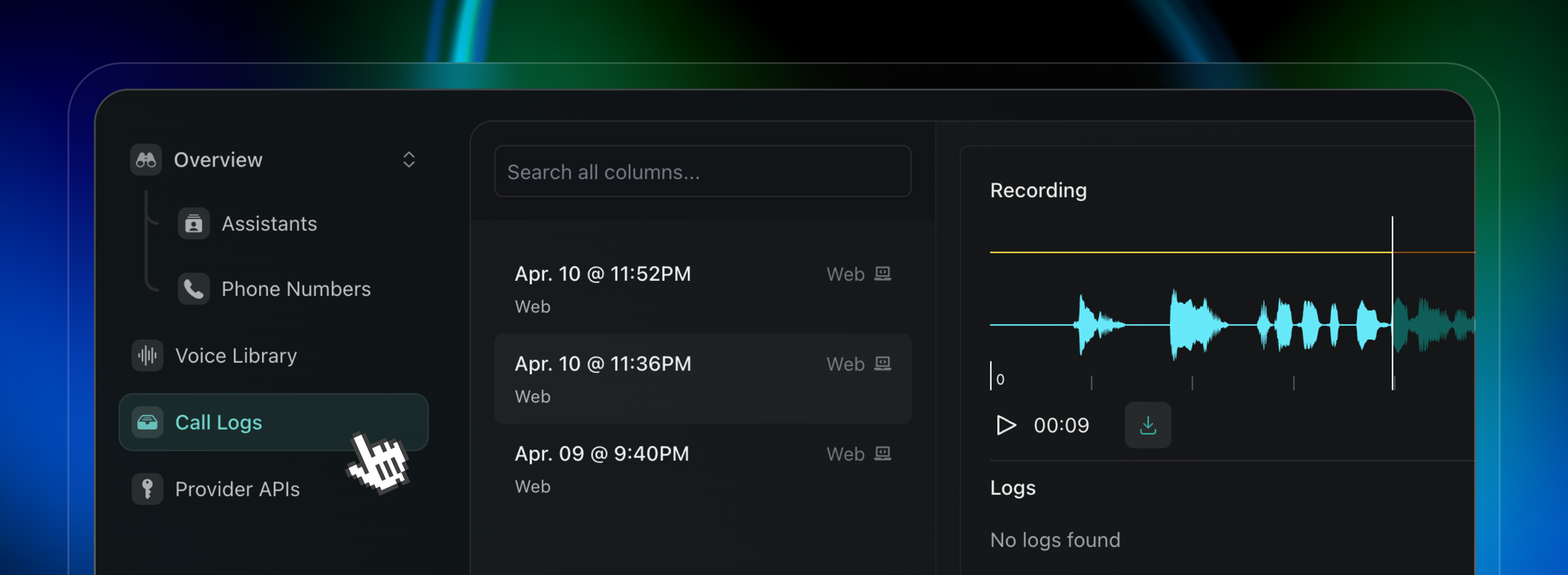
Vapi is an API-first orchestration layer for teams that want to assemble their own voice AI stack. You pick the transcription, LLM, and voice providers, and Vapi runs the real-time orchestration between them, at scale proven by customers like Ring and Intuit.
Key features
Model-agnostic stack: mix any STT, LLM, and TTS, or bring your own keys
Low latency: sub-500ms averages with real-time interruption handling
Workflow builder and test suite: simulate and evaluate agents pre-launch
SDKs and webhooks: deploy to phone, web, and mobile
Enterprise controls: SSO, RBAC, guardrails, and fleet monitoring
Pricing
$0.05 per minute platform fee, billed to the second, published on the vendor's site. Speech-to-text, LLM, and voice costs pass through at cost, or drop to zero with your own provider keys. Telephony bills at your provider's rates. HIPAA compliance is a $2,000 per month add-on.
Pros
Maximum flexibility across every layer of the stack
Low platform fee makes high-volume economics attractive
Strong developer ergonomics with SDKs and eval tooling
Proven at very large scale
New models and voices arrive as fast as providers ship them
Cons
Assembly required, and you own tuning across four separately billed vendors
Total per-minute cost is harder to predict than an all-in rate
Compliance add-ons price out smaller regulated use cases
Best for
Developer teams that want full control of the voice stack and the lowest marginal cost at scale.
Why choose Vapi
Vapi is the right call when engineering control is the priority and you have the team to use it. Nothing on this list is more flexible. Nothing hands you more of the work either.
Choose the Right Conversational AI Platform
The right platform depends on which conversations you're automating. Sierra, Decagon, Ada, and Fin are strong picks for chat-led support resolution. Cognigy, Kore.ai, and Yellow.ai fit Fortune 500 evaluations with long deployment horizons. Retell and Vapi reward teams with engineers to spare. PolyAI and Regal serve big contact centers with managed or infrastructure-heavy needs.
If phone and messaging carry your customer relationships, start with Callers. You get one agent across every channel, outbound campaigns your operators run themselves, white-glove onboarding on every plan, and inbound support automation with human handoff built in. Teams go live in weeks and see results in their own numbers, like 65% less call-center load and 46% faster outbound handling.