
Leaping AI vs Retell: Which AI Voice Platform Actually Fits Your Team?
:quality(80))
:quality(80))
Quick summary
Leaping AI and Retell take different approaches to voice agents. Leaping offers a guided, no-code setup with self-improving agents but custom pricing and longer rollout. Retell gives developers self-serve pricing, faster deployment, and independently benchmarked latency, but requires technical comfort. The right pick depends on team size, budget, and in-house engineering support.
Stuck Choosing Between Leaping AI and Retell for Your Voice Agents?
If you're comparing Leaping AI and Retell, you've probably already run into the first real difference between them. Open Retell, load $10 of credit, and you can see exactly what a call costs you the same day. With Leaping AI, you fill in a form and wait for someone to quote you.
That difference tells you a lot about who each one's built for. Retell is a mature product with real documentation, built for teams who want to set it up themselves. Leaping AI is a newer company selling a more guided, managed experience.
This Callers guide compares them across the seven factors that decide it in practice, from latency and compliance to integrations, pricing, and how hard each is to build.
But first…
Why Listen to Us?
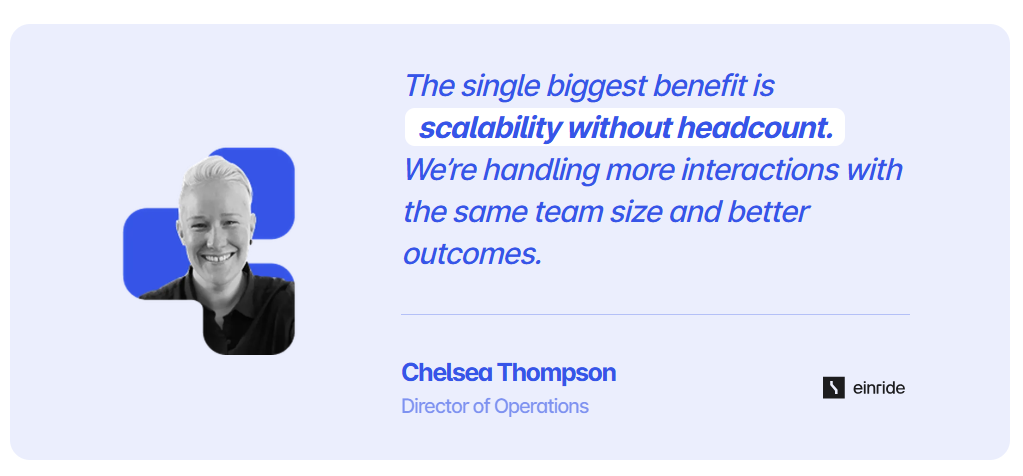
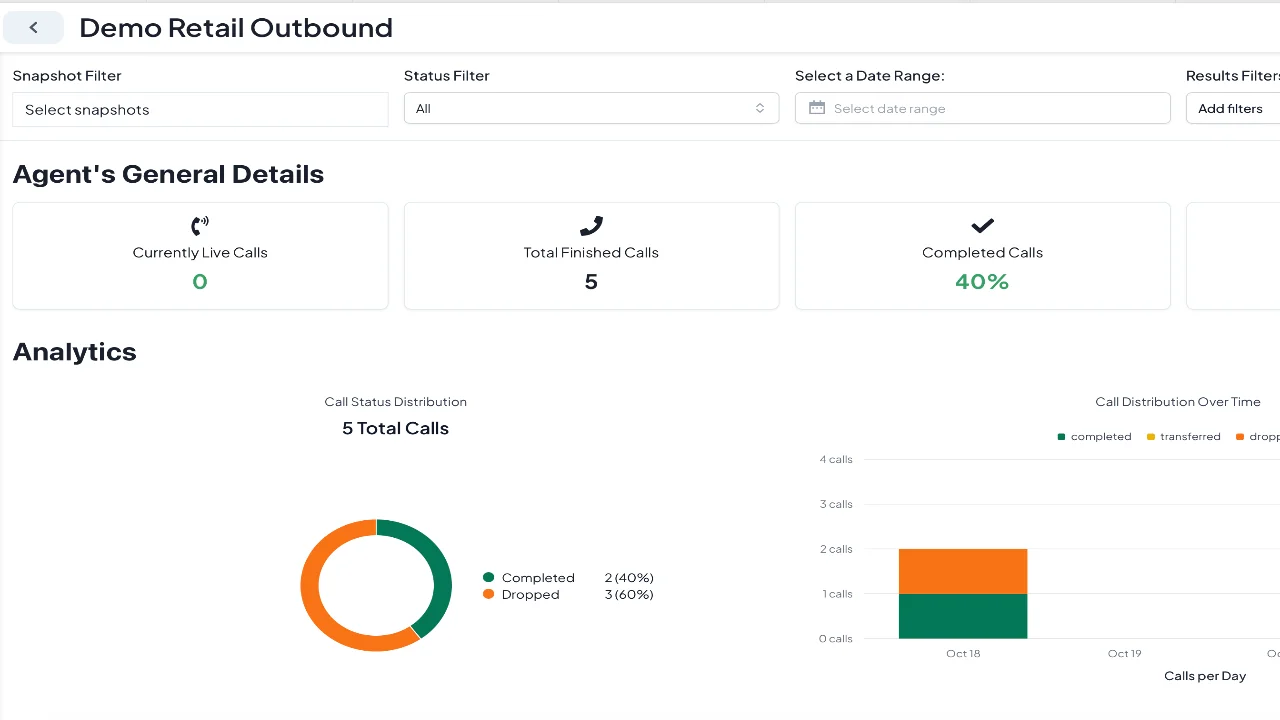
We're the team behind Callers, building AI voice and messaging agents for high-volume B2C teams like DoorDash, Einride, and PadSplit. When Einride needed to reach more drivers without adding headcount, we got them live in three weeks, saving over $65,000 a year at a 99.8% connection rate. That hands-on experience across dozens of deployments informs this comparison on how Leaping AI and Retell stack up.
Leaping AI vs Retell (At a Glance)
Dimension | Leaping AI | Retell AI |
Latency | Sub-500ms claimed, mostly self-reported | ~600ms self-reported, independently benchmarked |
Pricing | No public pricing, demo-led and custom | Pay-as-you-go from $0.07/min, $10 free credits |
Integrations | HubSpot, Lead Perfection, ERP/CRM via API, SIP transfers | 14+ named, including HubSpot, Salesforce, Twilio, GoHighLevel |
Compliance | HIPAA, GDPR, SOC 2, PCI DSS, TCPA | HIPAA, GDPR, SOC 2, per-agent data retention controls |
Ease of build | No-code visual builder, plain-English setup | No-code builder plus full API and docs |
What is Leaping AI?
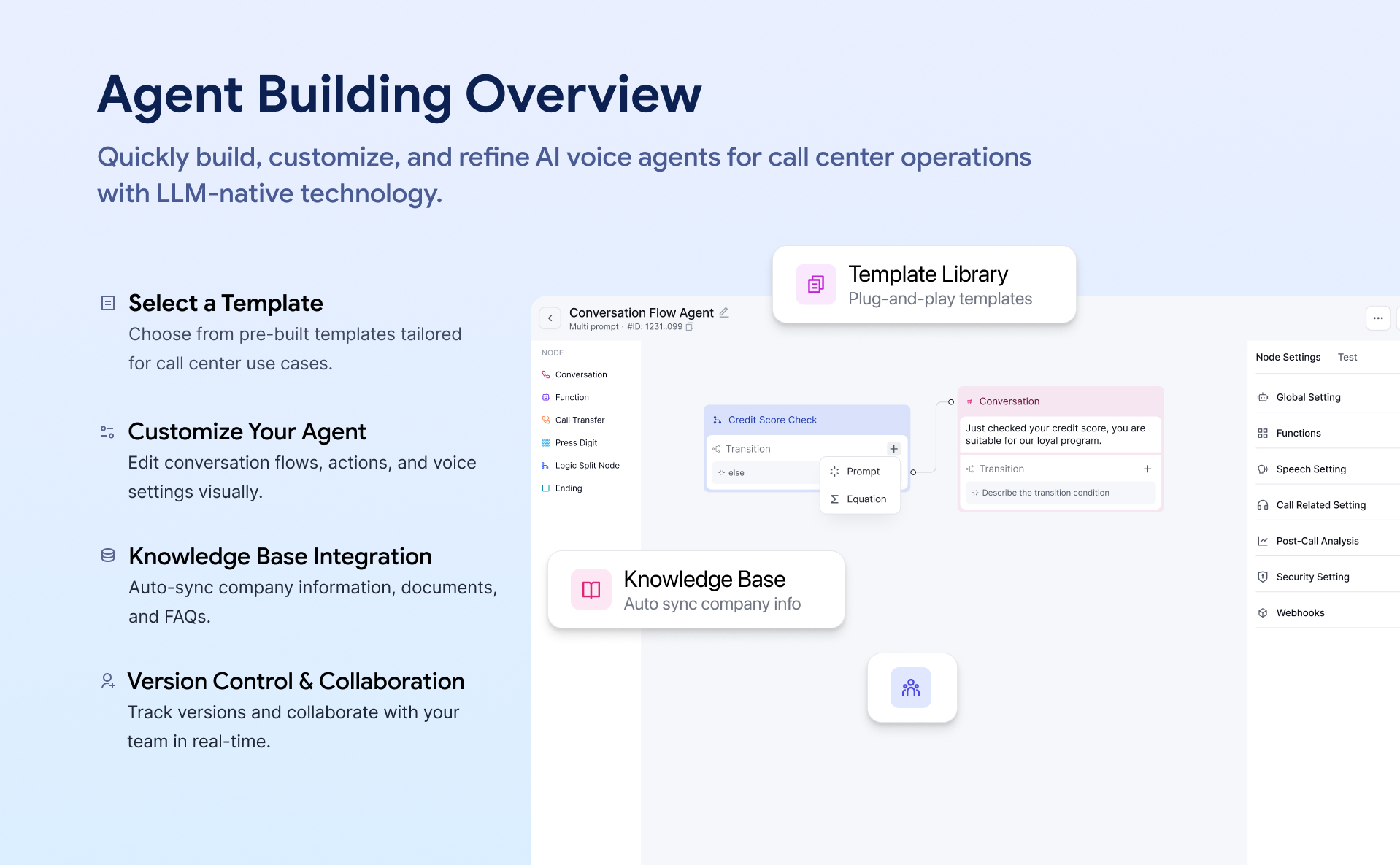
Leaping AI is a Y Combinator startup building no-code AI voice and text agents for customer service, lead qualification, and appointment booking at call-center scale. Setup happens through a visual interface, where teams write multi-stage call logic in plain English instead of code. The platform runs on built-in telephony, handles 15+ languages, and lets you choose the underlying model, whether GPT, Claude, or another.
It's designed for non-technical business users. Customer service leaders, operations teams, and marketing departments can configure and optimize agents without leaning on developers.
What sets Leaping AI apart is that the agents tune themselves. After each call, the system runs its own analysis and A/B tests its prompts, improving performance over time without manual intervention.
What is Retell AI?
Retell AI is a platform for building and running AI phone agents. Teams connect a language model and a voice, plug in telephony, and Retell handles the live conversation, listening, responding, and calling custom functions mid-call to look something up or book something.
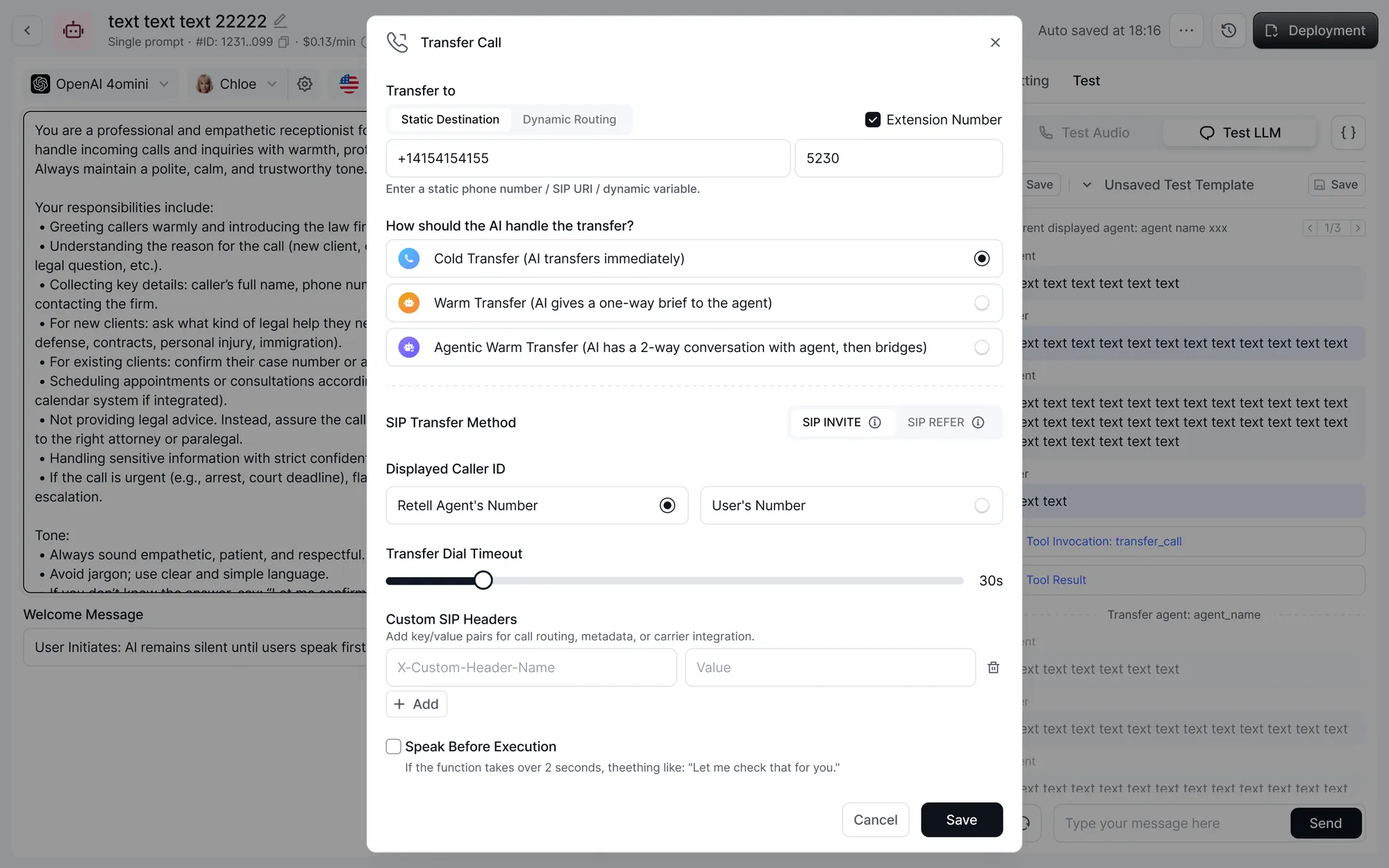
The platform leans developer-friendly, with full API access and documentation, though it also ships a drag-and-drop builder that gives less technical users a way in.
Retell has also moved beyond voice alone. The platform now supports chat, email, and SMS alongside voice from a single system. It recently launched Retell Assure, an automated QA solution that monitors calls and surfaces improvements without human spot-checking.
Leaping AI vs Retell: Side-by-Side Comparison
Latency
Retell's ~600ms figure has been checked against independent benchmarks, landing between roughly 620ms and 780ms depending on the source. Users back this up, praising Retell for lifelike, human-like conversations with extremely low latency.
Leaping's sub-500ms claim comes mostly from its own materials. The company reports a 13.7% reduction in end-to-end latency and 23% more consistency in response times, which points to an emphasis on steady conversational rhythm rather than raw speed. For most real conversations, the gap between the two is unlikely to be something a caller notices.
Automation
Leaping AI markets itself around full automation, and the claim mostly holds up in practice. One client with over 100 human agents now routes 100% of incoming support calls through Leaping. Agents handle 70% of conversations with no human transfer at all, though that figure is use-case specific rather than a blanket number across every call type Leaping handles.
Most Retell deployments lean toward augmentation rather than replacement. A Gartner reviewer described it as "a very valuable addition to our outbound stack, automating cold prospecting so the sales team could focus on higher-value work.” Retell reduces workload. Leaping tends to remove it entirely for defined workflows.
Retell reduces workload. Leaping tends to remove it entirely for defined workflows. But neither platform runs one unified agent logic across channels the way Callers does, with a single shared context layer carrying the same automation from calls into SMS, WhatsApp, email, and chat.
Optimization
This is where the platforms diverge most. Leaping's agents run their own post-call analysis and A/B test prompts without anyone asking them to. One G2 reviewer also noted that Leaping's team acts on customer feedback quickly and keeps refining the underlying model, with visible gains in dialing and appointment scheduling.
Retell doesn't make the same claim, and it shouldn't. Its post-call analysis covers transcripts, latency, and summaries, but improving the agent from there is on the user. Customization runs deep, which some reviewers list as a strength, but it's manual work rather than something the system does on its own overnight.
Pricing
Leaping doesn't publish a flat per-minute rate. Third-party sources put entry pricing around $350/month for 1,000 minutes, roughly $0.35/min, scaling to about $0.30/min at higher tiers.
Retell's advertised $0.07/min rate only covers Voice Infra. Running an actual agent adds TTS, LLM, telephony, and knowledge base costs on top. Below is a rough breakdown.
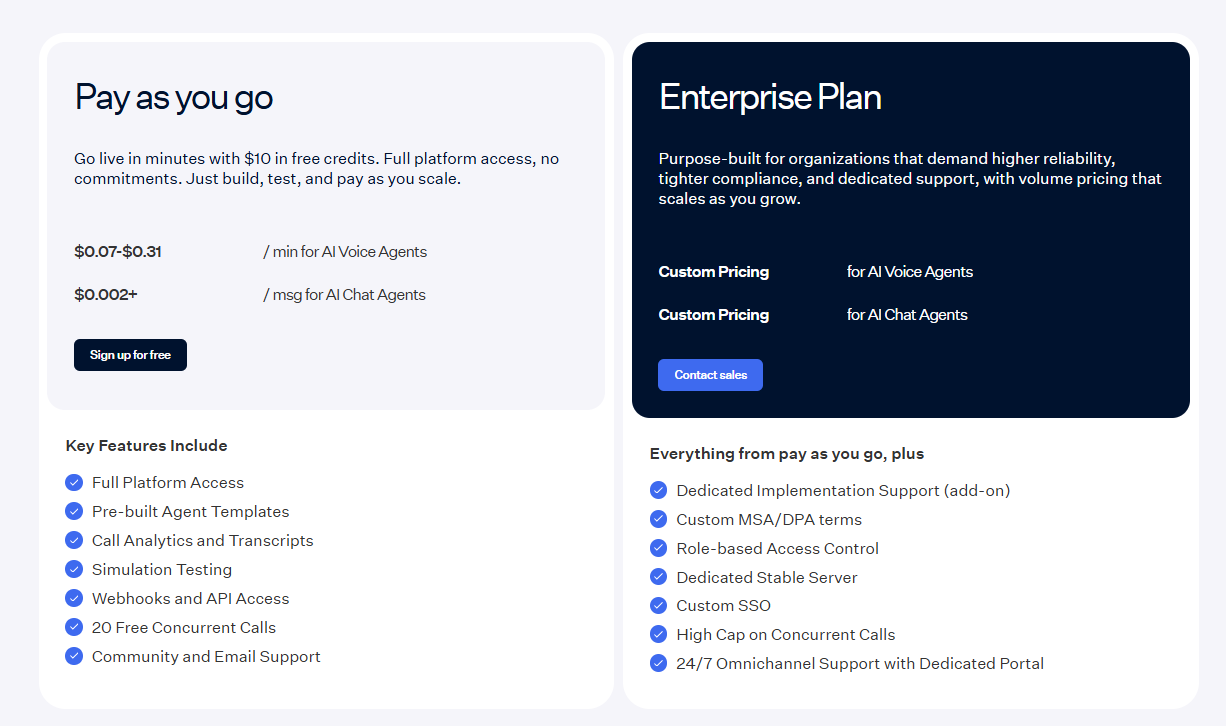
Voice Infra, $0.055/min
TTS (standard), $0.015/min
LLM, $0.003 to $0.160/min depending on model
Telephony, $0.015/min (free with your own SIP/telephony)
Knowledge base, $0.005/min after the first 10 free
Most production setups end up between $0.13 and $0.31/min. Retell does offer real pay-as-you-go access with $10 in free credits and 20 concurrent calls, which makes it far more accessible for testing before committing a budget.
Deployment
Leaping's rollout takes real planning. Simple implementations take 2 to 4 weeks, and complex enterprise setups run 6 to 12 weeks. CRM integration configuration itself is faster than the rest of the rollout, with Leaping stating most setups take under a day and custom integrations can be built within 24 hours. The payoff may show up fast once live, as Thompson Creek's two-day results demonstrate, but the broader setup remains deliberate.
Retell gets teams live faster, often within a week, sometimes within days for straightforward use cases. That speed relies on comfort with an API-first setup. Retell offers a builder, but reviewers describe it as a minimal GUI rather than a full visual flow builder.
Teams without engineering resources report slower iteration and more deployment complexity getting agents production-ready. Callers compresses that timeline further, with no-code setup that ships in days without a pro-services contract.
Integrations and Compliance
Leaping leans into vertical-specific CRMs like MarketSharp, AccuLynx, JobNimbus, and LeadPerfection, alongside Salesforce and HubSpot, making it a strong fit for home services, construction, and real estate teams whose tools are already on that list.
Retell's integration model is broader and more API-driven, with native two-way sync for Salesforce and HubSpot plus connectors for Zoho and GoHighLevel, better suited to teams running custom or less common stacks.
Both cover HIPAA, GDPR, and SOC 2. Leaping adds PCI DSS and TCPA coverage and frames security as built into the architecture from the start. Retell offers more self-service tooling, including self-signed BAAs and DPAs plus per-agent data retention controls, though it lacks ISO 27001 certification.
Best Fit
Leaping AI fits operations and CX teams that need to run and adjust agents without pulling in engineering. Setup and iteration happen inside the interface itself, which is why reviewers from non-technical backgrounds describe it as easy to use and integrate.
Teams in Leaping's target verticals, home services, real estate, insurance, wine retail, etc., get the most value since the platform's pre-built CRM integrations and support model are built around those workflows.
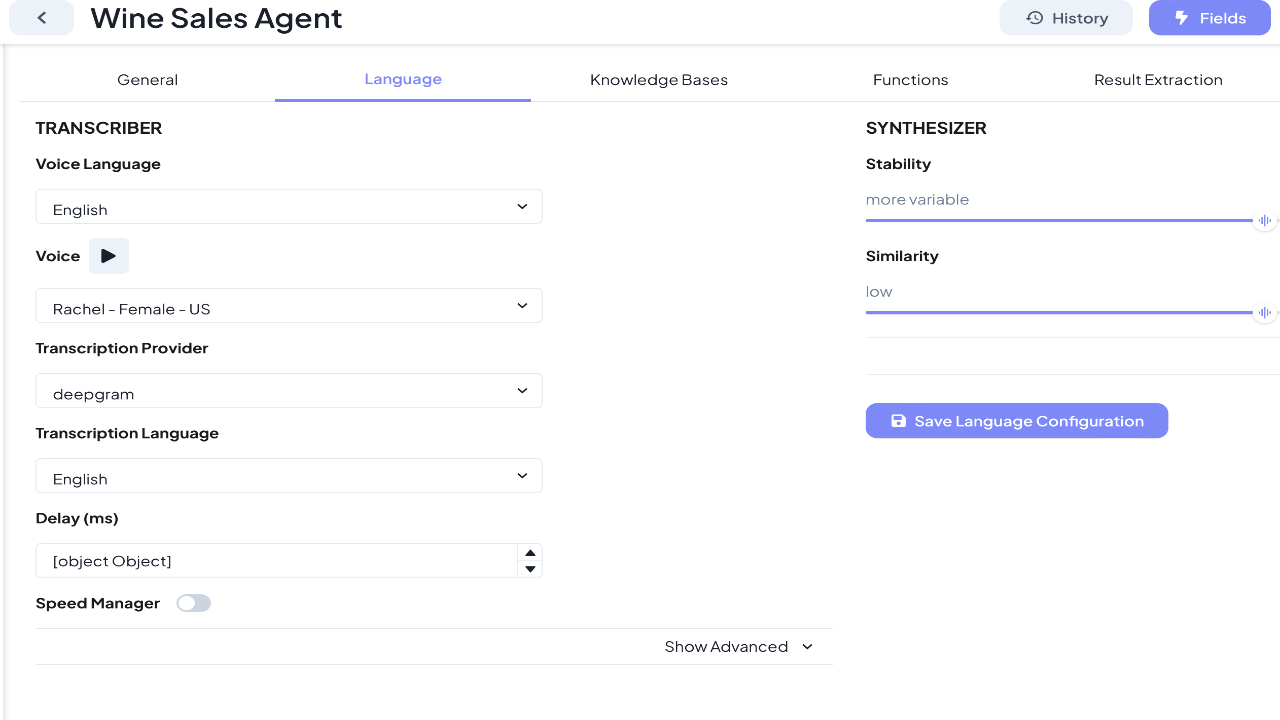
Retell fits teams with developers on staff or access to one, especially those building custom workflows across multiple tools. Its API-first design and minimal GUI reward technical comfort, and this Reddit user pairing Retell with Make.com and a Google Sheet is a good example of what that looks like in practice.
Teams without dedicated engineering resources will run into friction here. Iteration slows down and deployment gets more complex. Retell suits organizations that want granular control and are willing to build toward it, rather than deploy something ready-made.
Meet Callers: The Platform That Doesn't Make You Choose
Leaping AI and Retell each ask teams to trade something away. Leaping's no-code ease comes at the cost of developer-level flexibility. Retell's API control comes at the cost of the hands-off operator experience. Callers is built around not making that tradeoff.
No-Code, Without The Ceiling
Callers is genuinely no-code. Operations and CX teams build and edit agents through a visual flow builder without pulling in engineering, the same accessibility that makes Leaping popular with non-technical reviewers. Callers also extends that ease of use across every channel, not just voice.
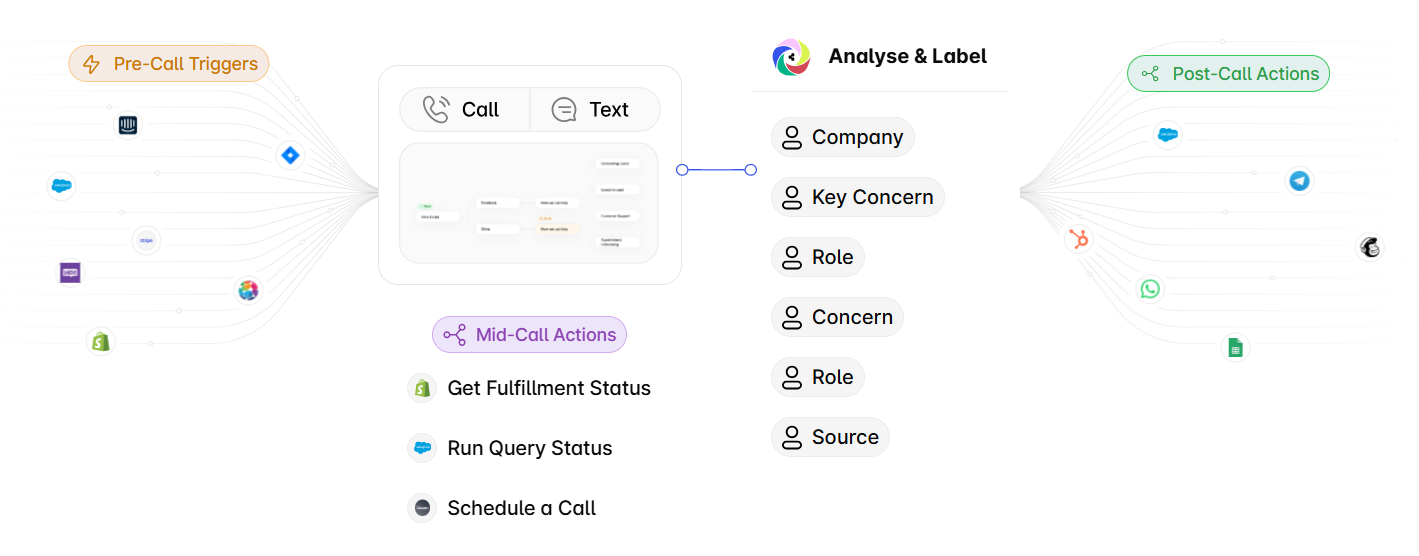
One agent runs calls, SMS, WhatsApp, email, and chatbot from a single shared context layer.
A conversation that starts on the phone and continues over text picks up exactly where it left off.
Retell has recently added chat, email, and SMS, but its API-first architecture still leans on developers to use it fully.
Full Lifecycle, Natively Integrated
Callers runs the complete campaign lifecycle inside the same builder operators already use:
Pre-call triggers, mid-call actions, and post-call actioning, all no-code
610+ native integrations across CRMs like Salesforce, HubSpot, and Zendesk
Compliance built in from the start, covering SOC 2, HIPAA, GDPR, CCPA, and PCI DSS
That native depth matters for teams that don't want a patchwork of Make.com scenarios and spreadsheets just to keep calling and data flow in sync.
Results That Back It Up
PadSplit: 32% increase in conversions against a control group, with 46% of monthly bookings now attributed directly to Callers.
Einride: Automated inbound driver calls at scale without adding headcount, saving over $65K annually.
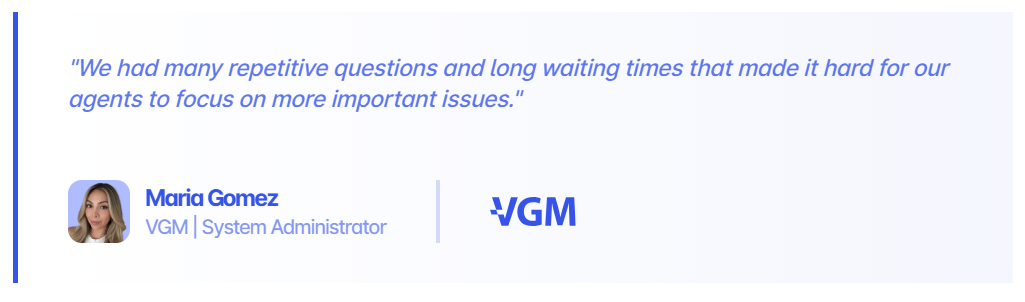
VGM: Automated or triaged 25 to 30% of incoming calls, cutting agent workload by roughly 30% and freeing time for complex cases.
Every plan includes white-glove onboarding with a dedicated CSM, regardless of tier. Pricing is quoted per account after a demo, so teams know upfront that a real setup is being scoped rather than a generic rate card.
Frequently Asked Questions (FAQs)
Which Is Cheaper To Start With, Leaping AI or Retell?
Retell, clearly, at the low end. It's pay-as-you-go from roughly $0.07 per minute with $10 in free credits and no subscription, so you can test the waters for a few dollars. Leaping AI doesn't publish pricing at all and quotes per account after a demo, which means there's no small, self-serve entry point you can try on your own right now.
Is Leaping AI Good Enough for a Serious Deployment?
It can be, with some due diligence first. Leaping AI is a Y Combinator company that's raised $4.7 million and counts Eurowings among its customers, so it's real and funded. That said, it's younger than Retell and has a thinner public track record.
Can I Choose the Underlying AI Model, or Am I Locked Into One?
Leaping AI is model-agnostic, letting teams pick between GPT, Claude, or others directly inside its no-code interface. Retell AI also supports multiple LLMs, including GPT-4o, but model selection sits within its API-first architecture.
What Happens When the AI Can’t Resolve an Issue?
Both support warm transfer, preserving context so a human agent enters with a summary instead of starting cold. Retell documents its escalation triggers, like sentiment drops or failed resolution attempts, more explicitly for developers customizing routing logic.
Leaping offers similar structured handoffs for complex or high-stakes conversations, though with less public documentation. Callers works the same way, handling routine exchanges with AI and passing anything high-stakes to your team along with the full conversation history.
How Do Call Recording and Compliance Work?
Retell offers granular self-service controls: per-agent data retention, signed recording URLs, automatic consent capture, and audit logs. Leaping covers HIPAA, GDPR, SOC 2, PCI DSS, and TCPA but publishes fewer specifics on retention and recording controls.
Streamline Your Voice and Chat Strategy With Callers
Choosing between Leaping AI and Retell comes down to a tradeoff. Leaping gives operations teams a no-code way to build and adjust voice agents, while Retell hands developers the API access and channel range to build something custom. Neither platform lets a team have both without giving something up.
Callers closes that gap. Operators get the same no-code visual builder that makes Leaping approachable, paired with the multi-channel reach and native integrations that usually require Retell's developer-first setup. One agent runs calls, SMS, WhatsApp, email, and chat from a shared context layer, so a conversation that starts on the phone can move to text without losing the thread.
If your team wants that range without hiring engineers to maintain it, book a demo with Callers today!