
Retell vs Vapi: Which AI Voice Stack Should You Build On?
:quality(80))
:quality(80))
Quick Summary
Retell offers a guided, no-code path with built-in voice, native integrations, and included compliance, ideal for fast deployment. Vapi gives full control over the stack but demands engineering time, with pricing and latency varying by provider. Retell suits ops teams wanting speed. Vapi suits developers wanting flexibility and scale.
Trying to Decide Between Retell and Vapi for Your Voice Stack?
Both Retell and Vapi promise fast setup, natural conversations, and production-ready scale. But pick the wrong one and you're either stuck rebuilding six months in or paying an engineering team to maintain something a no-code tool could have handled.
The real difference isn't on either homepage. It shows up in latency under load, what support looks like at 2am, and what a bill actually totals once every provider cost stacks up.
In this Callers article, we break down what each platform actually delivers once real teams put it into production.
But first…
Why Listen to Us?
We build and run AI voice and messaging infrastructure daily, not just write about it. Callers powers conversations for DoorDash, Einride, PadSplit, and VGM, handling 150 million+ customer moments a year across calls, texts, and chat. That hands-on work, deploying, debugging, and scaling voice stacks across industries, gives us a grounded view of where platforms like Retell and Vapi genuinely excel and where they fall short in production.
Retell vs Vapi (At a Glance)
Dimension | Retell AI | Vapi |
Voice quality | Its own "Ultra Realistic" voice, tuned in-house | Historically provider-agnostic, but now also offers a first-party Vapi Voices option, though early user feedback on it is mixed |
Latency | Sub-700ms first response, self-reported "lowest latency," independently measured at 580-780ms | Sub-500ms average, self-reported, though real production numbers run 550-900ms depending on providers |
Integrations | ~12 named native connectors plus SIP trunking | API-first, connect anything in code, bring your own providers |
Pricing | Pay-as-you-go, ~$0.07 to $0.31/min all-in, $10 free credits | $0.05/min platform fee plus model, voice, and telephony at cost |
Ease of build | Guided drag-and-drop builder, more managed | Developer-first, most control, you assemble it |
What is Retell AI?
Retell AI is a developer-first platform for building and running AI phone agents. You design a call flow, connect a language model and a voice provider, and plug in your telephony. From there, it handles the live conversation in real time, listening, responding, and calling your own APIs mid-call to look up records or book appointments.
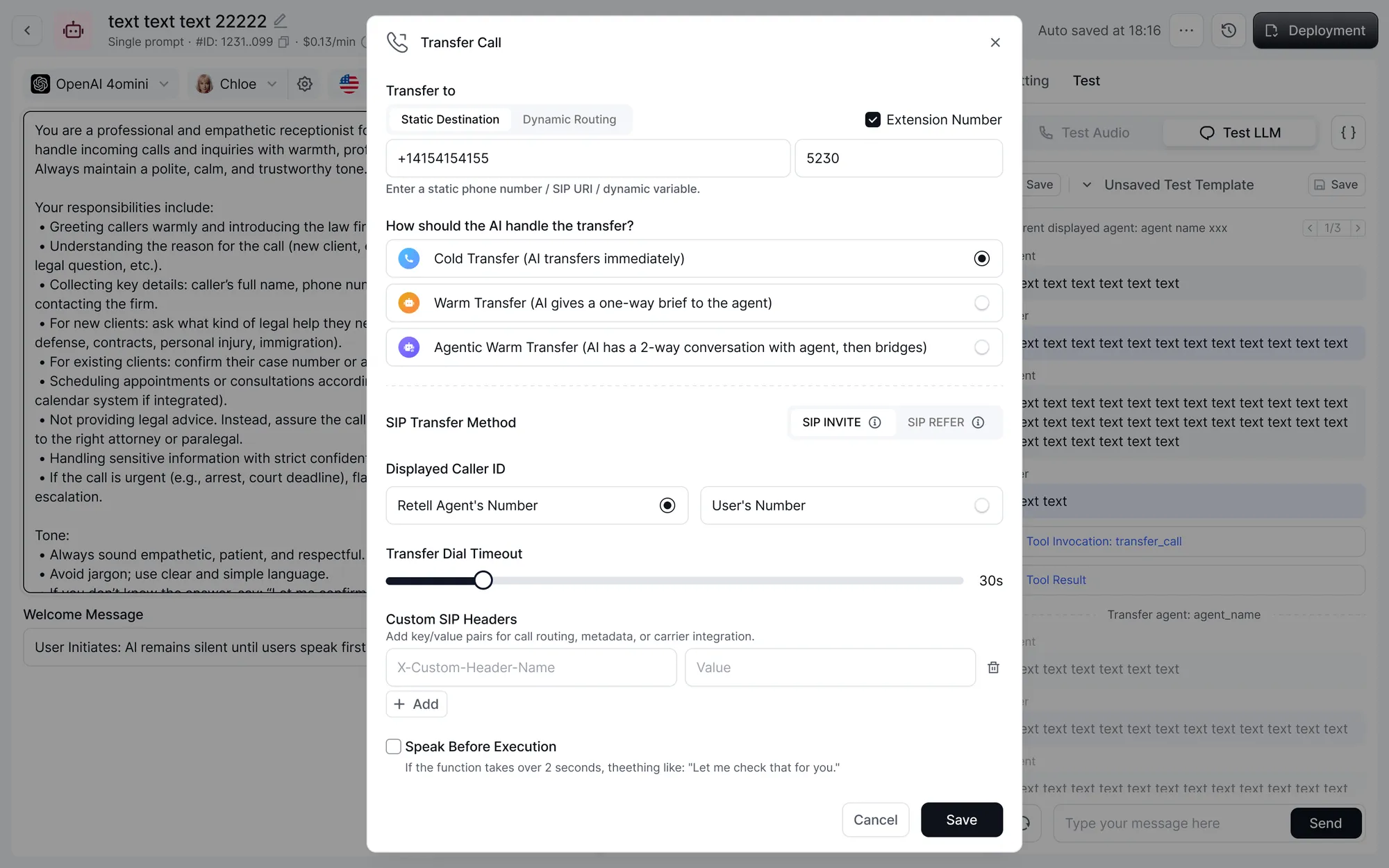
Retell manages most of the stack for you. It bundles speech recognition, language model orchestration, text-to-speech, and telephony into one pipeline. It has since expanded beyond voice to also offer chat, email, and SMS from the same system.
You get a visual builder for prototyping, but the real work happens through the API, where you configure prompts, define functions, and wire up integrations. That means faster setup than building from scratch, though you are still working inside an engineering toolkit rather than a no-code product.
Key Features
Ultra Realistic Voice: Talk with a tuned, in-house voice built from performance data and human-guided training
Drag-and-drop builder: Assemble a call flow visually without writing the core logic in code
Native integrations: Connect HubSpot, Salesforce, GoHighLevel, Genesys, Five9, and more directly
SIP trunking: Bring your existing phone numbers and VoIP provider into the agent
Mid-call functions: Call your own APIs during a conversation to look up or book things
Pricing
Retell is a pay-as-you-go service with no base subscription and $10 in free credits
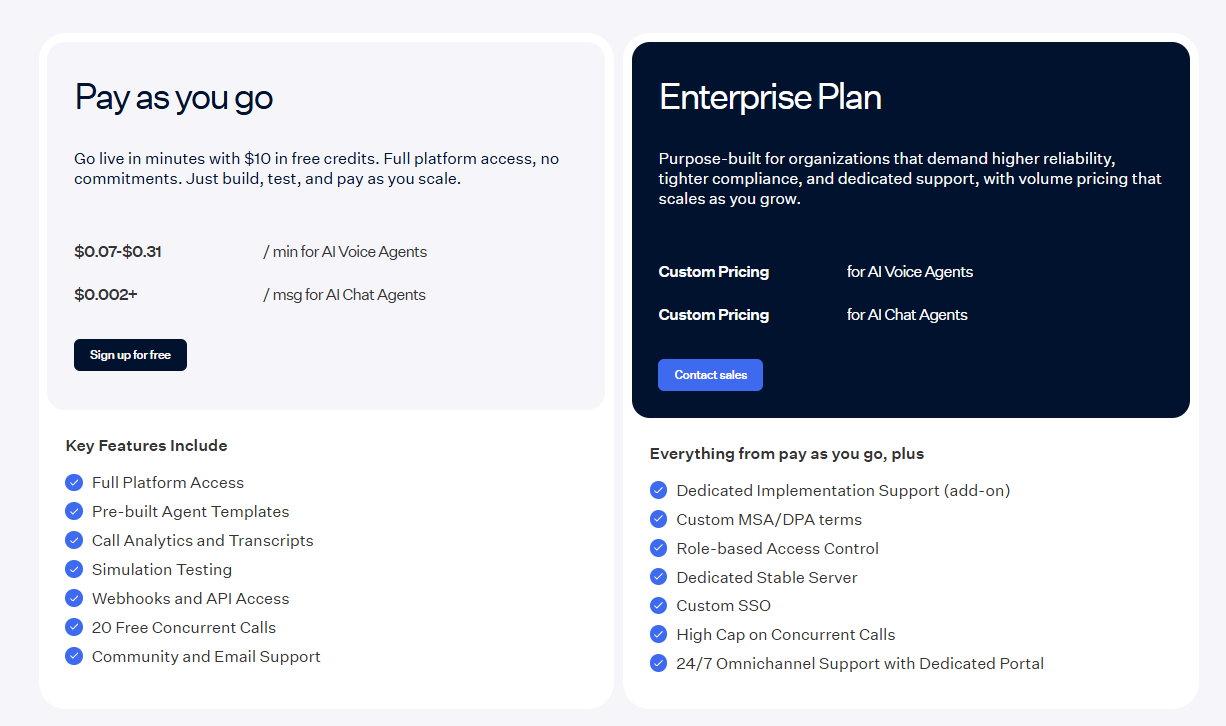
Voice agents run about $0.07 to $0.31 per minute all-in, depending on the model and voice you choose
That per-minute rate stacks Retell's $0.055 infrastructure fee, your text-to-speech ($0.015 to $0.040), your language model (starting at ~$0.003/min), and telephony ($0.000/min if you bring your own SIP trunk)
Concurrency is 20 calls free, then $8 per concurrency a month. Phone numbers are $2 a month
Enterprise pricing is custom
Pros and Cons
Pros
Conversations sound natural enough that customers sometimes don't realize they spoke to an AI
Native integrations plus SIP trunking, so mainstream CRMs and phone systems connect without custom code
Offers granular control over call flows, real-time streaming, and custom model support for engineering teams
Memory handling and reporting give you actual visibility into what conversations are doing
A genuine free start with $10 in credits and no base fee, so you can test for a few dollars
Cons
You still have to assemble the system yourself, pick a voice, choose an AI model, and connect your telephony through SIP
Lacks enterprise controls like role-based access and environment separation, making team workflows harder
No built-in test calling inside the platform, so you have to work around it to validate agents
Non-English voice quality and locale coverage lag noticeably behind English performance
Occasional API breaking changes hit production systems without enough warning
What is Vapi?
Vapi is developer infrastructure for building voice AI agents through an API. It works as an orchestration layer that ties together a model, a voice, and telephony, and it stays provider-agnostic so teams pick each piece themselves. You configure the whole agent in code, from the conversation flow to the phone connection, then deploy when it's ready.
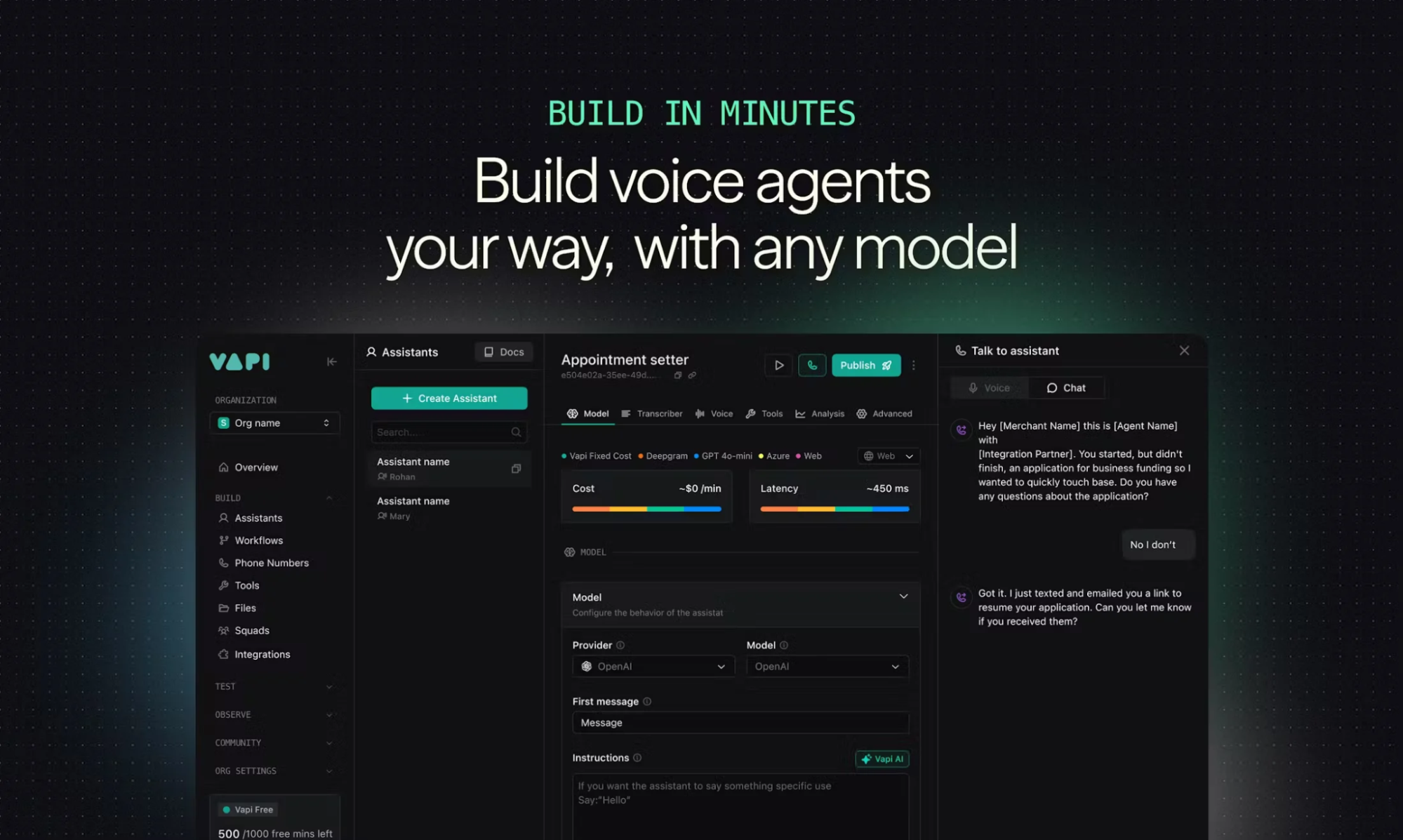
Vapi sits very low in the stack. Rather than shipping an opinionated voice or leading with a no-code builder, it hands developers raw controls and a dashboard to wire everything together on their own terms.
That approach lets it scale to very high call volume for teams with the engineering capacity to run it, though it becomes a heavier lift for teams without that capacity.
Key Features
Advanced tool calling: Define tools that accept complex nested parameters and chain multiple calls together
Telephony flexibility: Connect through Twilio, SIP trunking, or Vapi's own numbers, so calling infrastructure fits whatever a team already has in place
Testing and observability: Simulate calls before launch and review transcripts, latency, and failure points after launch
Compliance add-ons: HIPAA, SOC 2, and PCI options let regulated teams meet requirements without building compliance infrastructure themselves
Pricing
Vapi charges a small platform fee and passes everything else through at cost, so your real bill depends on the providers you bring.
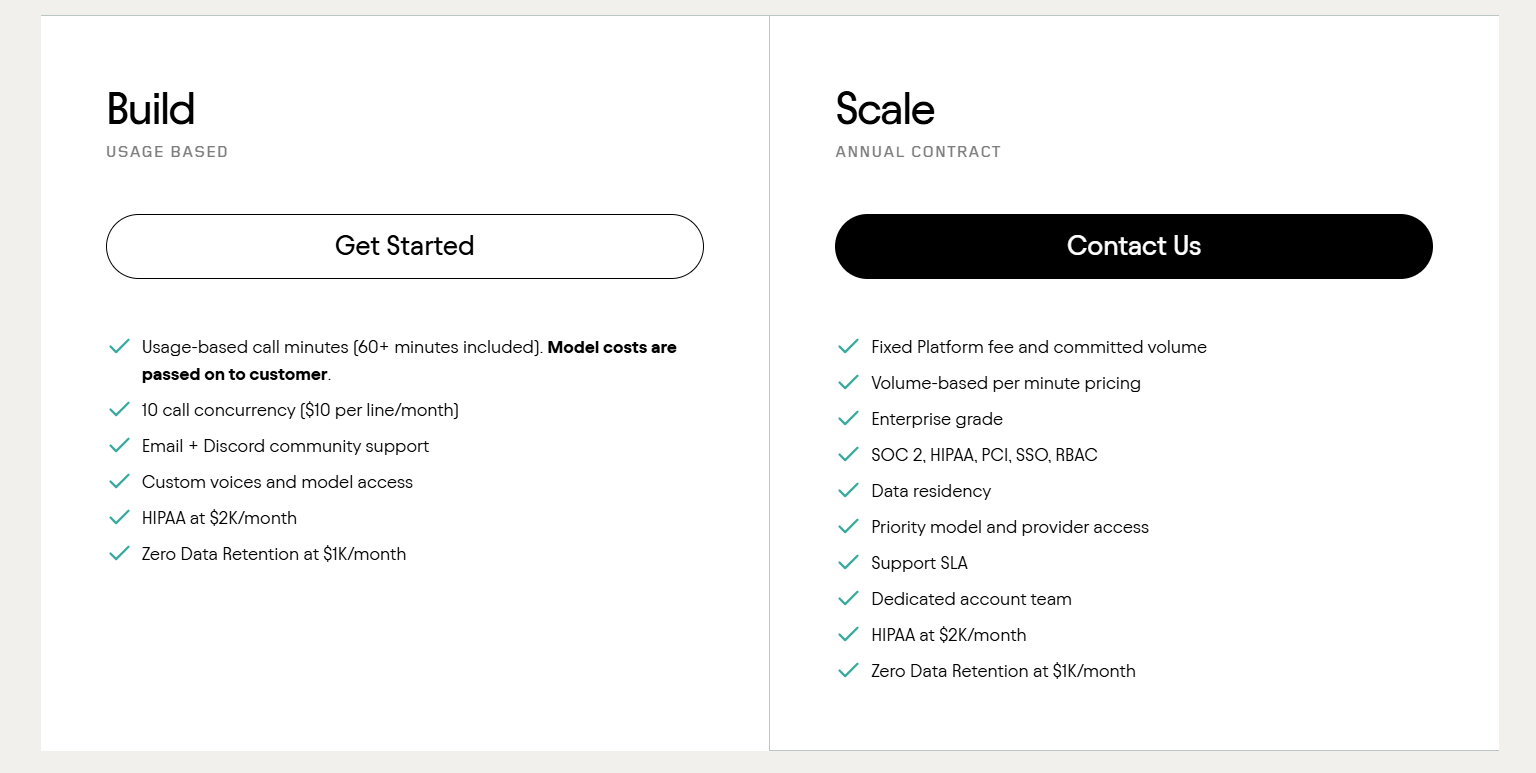
Calls are $0.05 per minute for the platform. Speech-to-text, the language model, and text-to-speech are billed at cost, or free if you bring your own API keys
Messaging is $0.005 per message
The Build plan includes 10 concurrent lines, then $10 per line a month. HIPAA is a $2,000 a month add-on, and Zero Data Retention is $1,000 a month
The Scale plan shifts to a fixed platform fee with committed volume and a dedicated account team, priced on request
Pros and Cons
Pros
Gives you total control over every layer of the voice stack from the model to the telephony provider
Proven at scale, with names like Amazon Ring and Intuit and more than 750,000 developers on the platform
Provides a fast path from prototype to production for teams with engineering resources
Makes it easy to switch between providers like Deepgram, OpenAI, ElevenLabs, and Azure without changing your core code
Clean, well-documented API that developers describe as fast to integrate and easy to reason about
Cons
It's developer-first, so you're effectively the systems integrator and need engineering time to build and maintain it
Works reliably during testing but often breaks or behaves differently in production without any configuration changes
Omnichannel requires manually connecting third parties, unlike Callers, which runs voice, SMS, WhatsApp, and email under one shared agent
First-party Vapi voices have inconsistent quality with weird breaks and unnatural phrasing
HIPAA and Zero Data Retention are paid add-ons at $2,000 and $1,000 a month
Retell vs Vapi: Side-by-Side Comparison
Voice Quality
Retell ships its own Ultra Realistic Voice, tuned with human-guided training, so quality is consistent out of the box. G2 reviewers describe conversations that feel close to human, and interruption handling lets the agent respond mid-sentence rather than waiting for a full pause.
Vapi built its reputation as fully provider-agnostic, leaving you to wire in ElevenLabs or Cartesia yourself. That changed in late 2025 with Vapi Voices, a first-party option priced at $0.0025 per minute for cost-sensitive deployments.
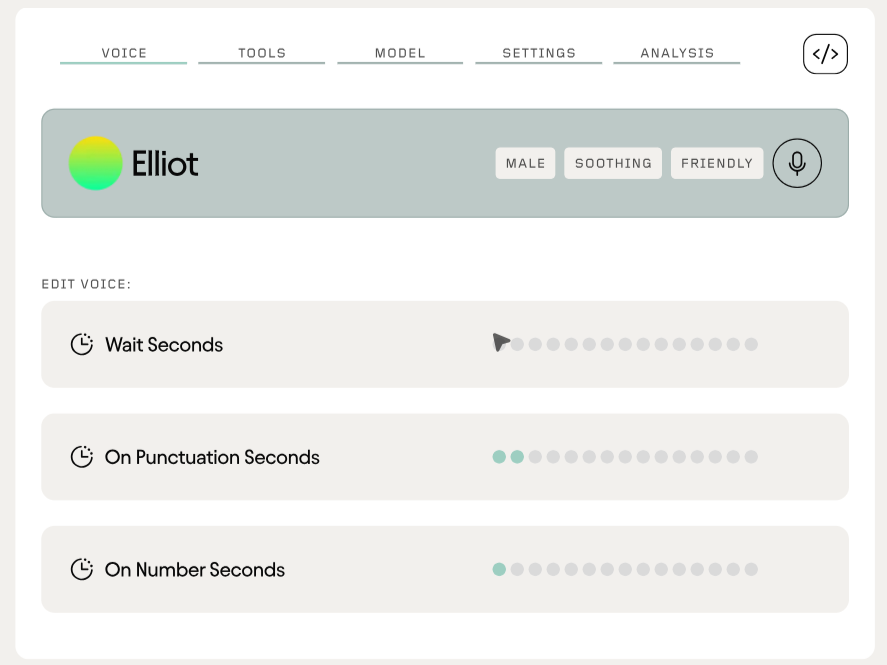
Early feedback has been mixed. Some users report inconsistent delivery and odd pauses, and Vapi itself has said the voices remain in beta while it decides on general availability. For production work, most teams still lean on an external TTS provider rather than Vapi's own voices.
Latency
Retell advertises sub-700ms first response, and independent testing mostly backs that up, with measured results landing between 580 and 780ms across different benchmarks.
Vapi advertises sub-500ms average latency, but that number depends entirely on which STT, LLM, and TTS providers you plug in. Real production numbers run 550 to 900ms, and Vapi's own documentation acknowledges that latency spikes when a provider's infrastructure is under load.
Reaching Vapi's best-case number takes real engineering effort, and some analyses argue the hours spent tuning that stack can outweigh the per-minute savings in year one.
Telephony and Core Features
This is where the platforms diverge most in practice. Retell ships warm transfer, native SIP trunking, branded caller ID, batch calling, and DTMF-based IVR in the base product, so calls route to a human or another system with context intact.
Vapi's toolkit is thinner by default. Warm transfer only works through Twilio, SIP trunking needs extra configuration, and there's no native branded caller ID or batch calling out of the box. Teams running high call volume on Vapi often end up building their own queuing logic with Twilio and Redis, which is a real engineering project, not a settings toggle.
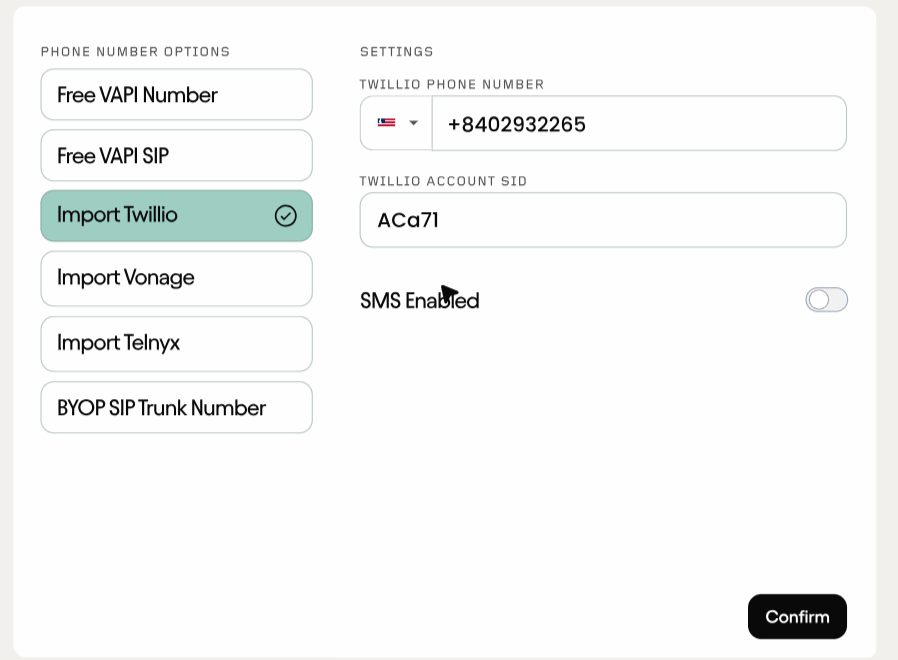
When it comes to omnichannel support, Retell has added chat, email, and SMS alongside voice from the same system, moving past a voice-only setup. Vapi still covers mainly voice and chat, with SMS restricted to US Twilio numbers only, so cross-border texting isn't an option there without extra work.
Integrations
Retell's named connector list covers HubSpot, Salesforce, Twilio, Zapier, Genesys, Five9, Amazon Connect, and Make, and developers report connecting Salesforce and Twilio SIP trunking with no backend code. CRM sync setup still benefits from someone comfortable with prompt engineering, but the no-code path is real for most common CRMs.
Vapi takes an orchestration approach instead of a connector list. It works with more than 200 models and lets you bring your own STT, LLM, and TTS providers through a full REST API. That flexibility means you can swap any single component without rebuilding the agent, but you're also the one writing the agent logic and stitching the pieces together, a process one analysis summed up as four separate invoices instead of one.
Teams that want that same provider flexibility without owning the integration work themselves tend to look at platforms like Callers, which ships with 610+ native connectors already built.
Compliance
Retell includes HIPAA on all paid plans with a same-day BAA and PII redaction around a penny a minute, plus SOC 2 Type II and GDPR across the board.
Vapi gates compliance behind cost. HIPAA runs $2,000 a month as an add-on, Zero Data Retention adds another $1,000, and SOC 2, PCI, SSO, and RBAC are only available on the Scale plan's annual contract. A regulated team on Vapi can end up paying $2,000 to $3,000 a month before a single call is placed.
Pricing
Retell's headline range is $0.07 to $0.31 a minute all-in, but most real deployments land between $0.13 and $0.31 once infrastructure, TTS, and LLM costs stack up. There's no platform fee, unanswered calls aren't billed, and 20 concurrent lines come included.
Vapi's $0.05 platform fee is genuinely just the platform fee. Provider costs get passed through separately, and real-world totals typically run $0.10 to $0.42 a minute, with some teams running 10,000 monthly minutes reporting bills between $1,300 and $3,100 rather than the $500 the base rate implies.
Only 10 concurrent lines come included by default, versus Retell's 20, and Vapi charges for calls that go unanswered.
Support and Concurrency
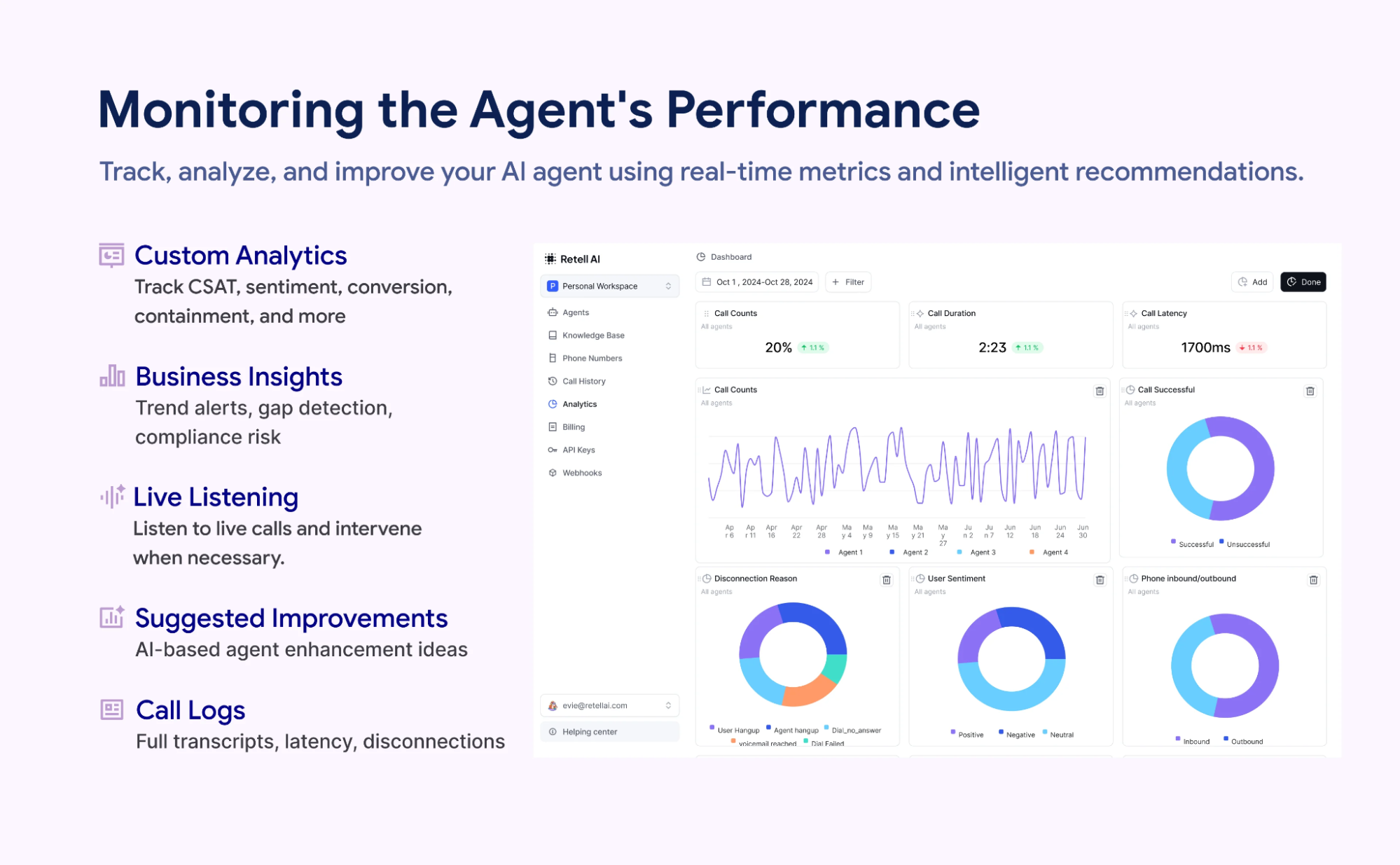
Retell holds a 4.8 G2 rating across more than 2,200 reviews and a 4.9 on Trustpilot, with a dedicated CSM on every plan and structured post-call dashboards built in. Its burst feature lets concurrency scale up to three times the base limit during traffic spikes.
Vapi's support experience draws more complaints. Multiple users report waiting more than 24 hours for a reply, and some report emailing support addresses directly with no response at all. Its main support channel is an active Discord community of over 25,000 members, which works for peer troubleshooting but not for a production outage at 2am.
Observability is DIY, with call transcripts and latency metrics available but no equivalent to Retell's structured dashboard. Teams that have been burned by slow support during a live outage often turn to white-glove onboarding with a dedicated CSM, the kind Callers includes on every plan.
Best Fit
Retell suits operations and sales teams that want a working phone agent fast. It has become a common choice for dental offices, real estate teams, and service businesses that need a receptionist or booking agent live within days, not weeks.
Vapi suits engineering teams that want to own every layer of the stack. Enterprise names like Amazon Ring and Intuit run on it, and Ring has moved all of its inbound support calls to the platform.
That kind of deployment takes real engineering time to set up and maintain, so it fits companies with the resources to treat voice infrastructure as an ongoing build, not a quick configuration.
Introducing Callers: The Full-Stack, No-Code Alternative
Retell and Vapi both solve for voice. What neither solves for is the team that wants one agent running the whole customer relationship across every channel, without becoming the ones who wire it together or babysit the build.
That's the gap Callers is built to close. It's a no-code customer experience platform where an operator describes the outcome and the campaign builder gets an agent live in days, not weeks. One agent covers calls, texts, WhatsApp, and email under a single shared memory.
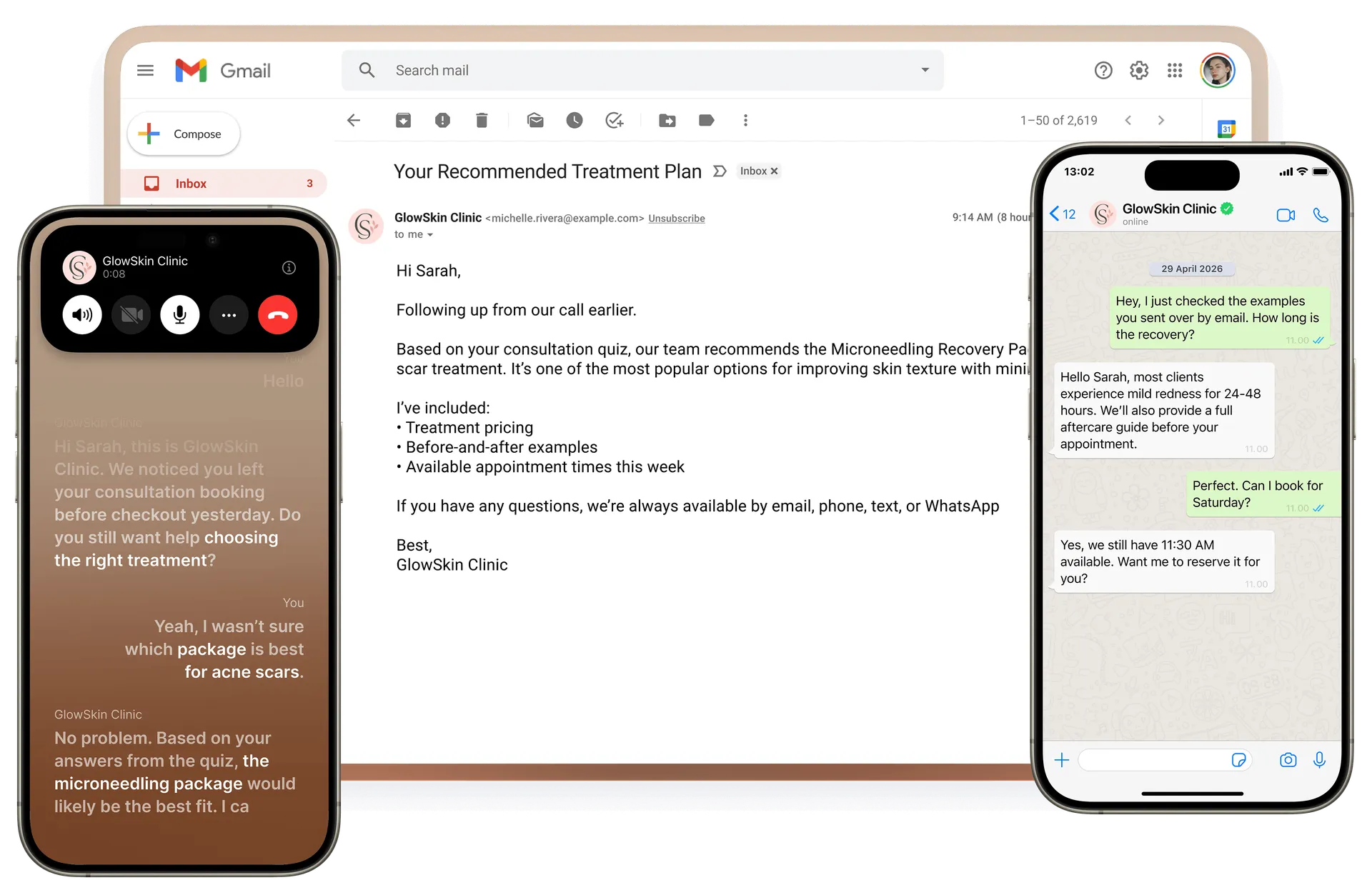
Context is carried with the customer no matter which channel they use next, and your team sees one continuous conversation instead of scattered threads.
The difference comes down to what you end up owning:
With Retell, you get a faster no-code path and added channels like chat and SMS, though messaging is billed as an add-on rather than bundled in.
With Vapi, you get full control over every component, but you write and maintain the orchestration yourself.
With Callers, the platform runs the full campaign for you: qualifying leads, re-engaging the ones who go quiet, and routing through the 610+ integrations already in your stack. This means the operator team owns the agent from day one instead of depending on engineering to keep it running.
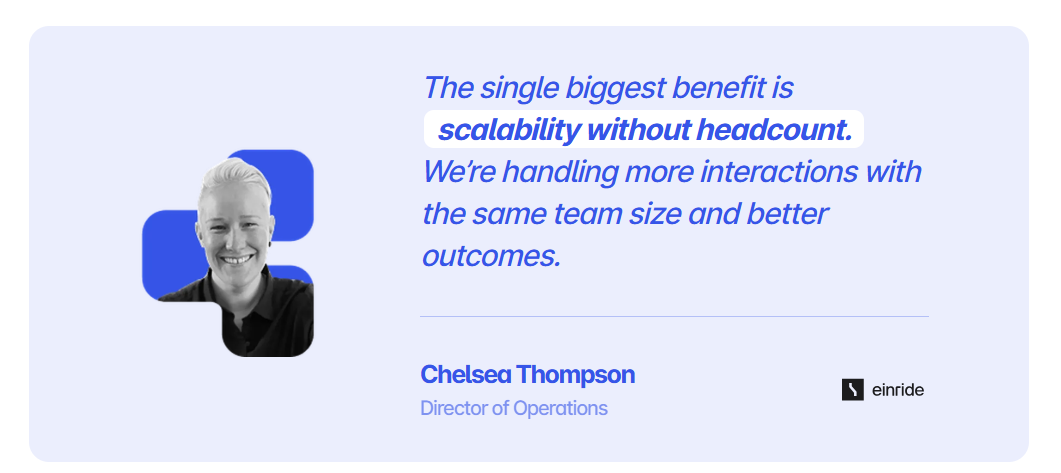
That model is what let Einride, the freight company, scale fleet operations without adding headcount. The company automated inbound driver calls while improving service speed, saving more than $65,000 a year in the process.
A few other differences worth knowing before you compare:
Pricing is quoted per contact rather than published as a flat rate, and buyers tend to compare cost on a per-contact basis instead of the per-minute meters Retell and Vapi use, which makes the real cost of a campaign easier to forecast upfront.
Compliance comes standard rather than gated behind an add-on. SOC 2, HIPAA, GDPR, and PCI DSS coverage are listed on the trust center and included regardless of plan.
None of this makes Retell or Vapi the wrong call for a narrower build. It just means that if you'd rather own the whole conversation across every channel than assemble it piece by piece, Callers is worth a look before you commit engineering time to either one.
Frequently Asked Questions (FAQs)
Is Retell or Vapi Better if You’re Not a Developer?
Retell, in most cases. Its drag-and-drop builder and its own built-in voice let a less technical person get an agent working without much engineering. Vapi is API-first and expects you to configure things in code, so a non-developer will need help. If nobody on your team writes code, a real no-code platform like Callers will fit better than either.
Which Is Cheaper To Run, Retell or Vapi?
It depends on volume and what you bring. Retell is pay-as-you-go from about $0.07 a minute all-in with $10 in free credits, and it comes as one invoice. Vapi charges a $0.05 per minute platform fee and passes the model, voice, and telephony costs through separately, so bringing your own keys can lower it, but you end up managing four different cost lines instead of one.
Do Retell and Vapi Do More Than Phone Calls?
Both started as voice-first platforms, though Retell has since expanded further. Beyond voice, it now offers chat, email, and SMS from the same system. Whether either one carries a single conversation across every channel with full shared memory, the way Callers does, is worth confirming directly with the vendor.
Can You Change the Voice or Language Model on Each?
Yes on both, with different defaults. Vapi is provider-agnostic, so swapping the model or voice is the normal way you work. Retell lets you pick your model and text-to-speech too. But it also ships its own tuned voice, so you can lean on that default instead of sourcing your own.
How Do the Two Handle Call Volume Spikes?
Retell includes 20 concurrent lines by default and offers a burst feature that can temporarily scale up to three times that limit during traffic surges. Vapi includes 10 concurrent lines by default, with no built-in burst option, so teams expecting spikes either pay for more lines upfront or build their own queuing logic to hold excess calls until a slot frees up.
Run Every Customer Conversation on One Stack With Callers
Retell and Vapi both prove that voice agents have moved past novelty and into real production infrastructure, handling calls that used to require a growing headcount. The choice between them comes down to how much of the build you want to own yourself.
If what you actually need is broader than voice alone, that's where Callers fits. It runs calls, texts, WhatsApp, and email through one agent with shared context, so an operator can launch and adjust the whole customer journey without writing code or maintaining a developer stack.
Ready to move past piecing together infrastructure and wants a platform built to run the full conversation from day one? Book a demo with Callers today!