
Cresta AI Review: Features, Pricing, and Who It Actually Fits
:quality(80))
:quality(80))
Quick Summary
Cresta's an enterprise AI platform that combines agent coaching with autonomous virtual agents and Fortune 500 companies use it. However, pricing is quote only, implementations take weeks, and seats start at 50 to 100+. If your team needs to get live in days, there are faster options.
Cresta Is Powerful, but It Isn’t Built for Everyone
Cresta's been around since 2017. It came out of Stanford's AI Lab, co-founded by Sebastian Thrun (the mind behind Google X and Waymo) and Zayd Enam. By 2026, the company crossed $100M in annual recurring revenue. It also landed Forrester's top score for "Current Offering" in the Q2 2025 Conversation Intelligence report.
Cresta was built for large enterprise contact centers with 100+ agents, complex compliance needs, and the patience for a multi-week rollout.
If that sounds like your team, it's worth a serious look. But if your team wants to be live this week without a multi-week services engagement, the fit starts to break down. This review walks through where it works, where it doesn't, and what to consider instead.
Why Listen to Us?
Callers automates customer conversations for high-volume B2C enterprises across insurance, healthcare, logistics, and more. We’ve seen what it takes to build conversational systems that work at scale. This experience drives us to ask one question: what holds up when volume and quality are at stake for your business?
What Is Cresta AI?
Cresta's an AI-powered contact center platform that helps both human and virtual agents handle customer conversations across voice, chat, and SMS. It runs on a proprietary AI model called Ocean-1. And it sits on top of your existing contact center stack (Genesys, Five9, Amazon Connect, NICE CXone, Avaya, and others) rather than replacing it.
The company positions itself as "the only unified platform for human and AI agents." That's the key idea. Plenty of platforms in this category do one or the other. They'll either coach human agents during live calls, or they'll deploy fully autonomous bots. Cresta does both on a single platform, with shared context flowing between the two.
Ping Wu, who co-founded Google's Contact Center AI product, took over as CEO in 2023. That enterprise DNA shows in everything from the compliance stack to the sales process.
Key Features of Cresta AI
Real-Time Agent Assist: During a live call, Cresta feeds your human agents contextual hints, suggested responses, and compliance reminders in sub-200 milliseconds. It scores 100% of conversations automatically and flags coaching moments for managers.
Autonomous AI Agents: Cresta's virtual agents handle conversations across voice, chat, and SMS in 30+ languages with automatic detection and switching. They share the same context layer as the agent-assist side. So, a conversation can move between a bot and a person without losing history.
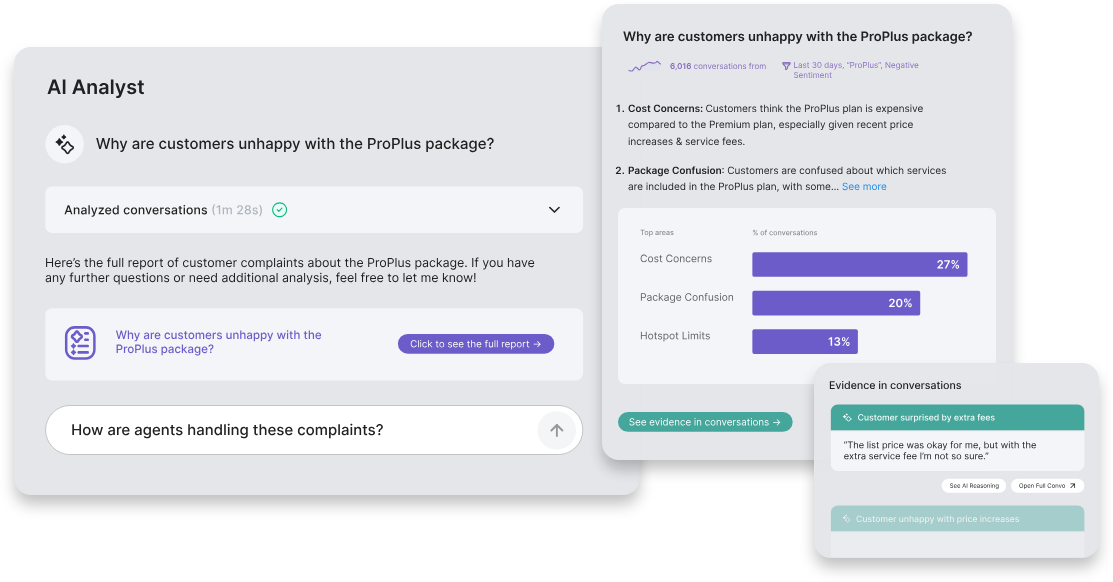
Conversation Intelligence: Every interaction gets analyzed, transcribed, and scored. Managers can ask natural-language questions through an AI Analyst feature and get answers fast. Something like "which agents had the longest handle time last week?" comes back as a direct answer without building reports from scratch.
No-Code Workflow Builder (Opera): Cresta Opera is a visual builder for designing conversation flows, coaching rules, and automation logic. It's aimed at contact center operators who want to make changes without writing code or waiting on a dev team.
Pricing
Cresta doesn't publish pricing on its site. Every contract goes through a custom sales process. The final number depends on which modules you need, your seat count, and your interaction volume.
AWS Marketplace lists two anchor points. Agent Assist for Voice runs about $150,000 per year and includes up to 100,000 calls, with a $1.50 charge for each additional call. Agent Assist for Chat is also about $150,000 per year, covering 125,000 chats at $1.20 per extra chat. For a custom quote, contact Cresta sales.
Rating
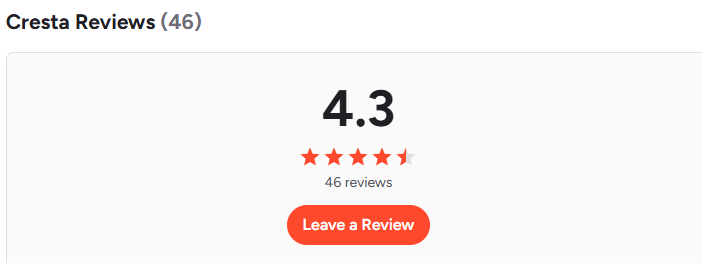
G2 ratings: 4.3/5 (46 reviews as of September 2026). Ease of use scores around 9.1/10 and ease of setup around 8.0/10. About 45.2% of reviewers come from mid-market or enterprise companies. Forrester named Cresta a Leader in Conversation Intelligence for Contact Centers (Q2 2025).
What We Like
The Agent Coaching Is the Deepest in the Category: Sub-200ms guidance means an agent gets the right suggestion before the customer finishes their sentence. Smart Compose, knowledge answers, and compliance monitoring all run live during the call. For large teams that need to get 200 agents performing like their best 20, it's the strongest tool available.
One Platform for Human and AI Agents: You can start with agent assist and add autonomous virtual agents later, and they'll share the same knowledge base, conversation history, and governance rules. That shared context layer is rare. Few platforms let you run both on a single engine without bolting one on as an afterthought.
The Compliance Stack Is One of the Deepest in the Industry: SOC 2 Type II, HIPAA, ISO 27001, ISO 27701, ISO 42001, PCI DSS, GDPR, and TISAX. Cresta was the first contact center AI provider to earn ISO 42001 (the AI governance standard). If you're in financial services, insurance, telecom, or healthcare, that list matters.
It Layers on Top of What You Already Have: Cresta integrates with Genesys, Five9, Amazon Connect, NICE CXone, Avaya, Twilio, 8x8, and LivePerson. You don't need to rip out your existing CCaaS platform to use it, and that cuts a massive migration risk for enterprise teams.
What We Don’t Like
Getting Started Is Slow: Implementation takes 4 to 8 weeks depending on your setup, and it'll require coordination across telephony, CRM, and knowledge integrations. You'll also need to invest internal time tuning the AI to your specific business before it performs well. For a team that needs to be live this week, that's a dealbreaker.
There’s No Public Pricing, and Minimums Are High: Every contract is custom-quoted, seat minimums start at 50 to 100+, and annual commitments are the norm. If you're a 20-person team trying to understand what this'll cost before you talk to sales, you won't find that answer on the site.
Knowledge-Suggest Accuracy and Transcription Have Gaps: The knowledge-assist feature sometimes suggests answers that don't match the caller's intent. And transcription accuracy drops for bilingual or accented callers, which is a genuine concern for multilingual contact centers.
There’s No Native Outbound Campaign Builder: Cresta handles outbound conversations, but it doesn't offer self-serve campaign tools like CSV batch dialing, retry logic, or calling windows. If your workflow is campaign-driven with sequenced outbound at volume, you'll need to build that layer yourself or bring another tool.
Who Cresta Is Not for
Cresta was built for enterprise contact centers, and it shows in every part of the buying and setup process. If any of these describe your team, it's probably not the right fit.
Smaller Teams: If you're a 15-person support team or a growing support operation, you'll be below Cresta's enterprise minimums before the conversation starts.
Anyone Who Needs to Go Live This Week: Between the 4 to 8 week implementation and the tuning period, a product launch next month or a seasonal spike coming won't wait for Cresta.
Campaign-Driven Outbound Operations: Without a native campaign builder, sequenced outbound at volume means building that layer separately.
Teams That Want to Own the Rollout: Getting live on Cresta means a services engagement and a tuning period run with its team. If your CX operators want to build, edit, and ship changes themselves within days, you'll want a platform designed for that.
Cresta Competitors
If you're evaluating Cresta, you're likely looking at other platforms in the enterprise CX and contact center AI space. Here are the main alternatives worth comparing.
1. Sierra
Sierra runs autonomous AI agents across chat, SMS, WhatsApp, email, and voice on a single platform. It uses outcome-based pricing tied to resolved conversations, saved cancellations, and upsells. Sierra's a strong option for large enterprise CX teams, though implementation still takes 4 to 10 weeks and pricing is custom-quoted. Compare more options in our Sierra alternatives guide.
2. Decagon
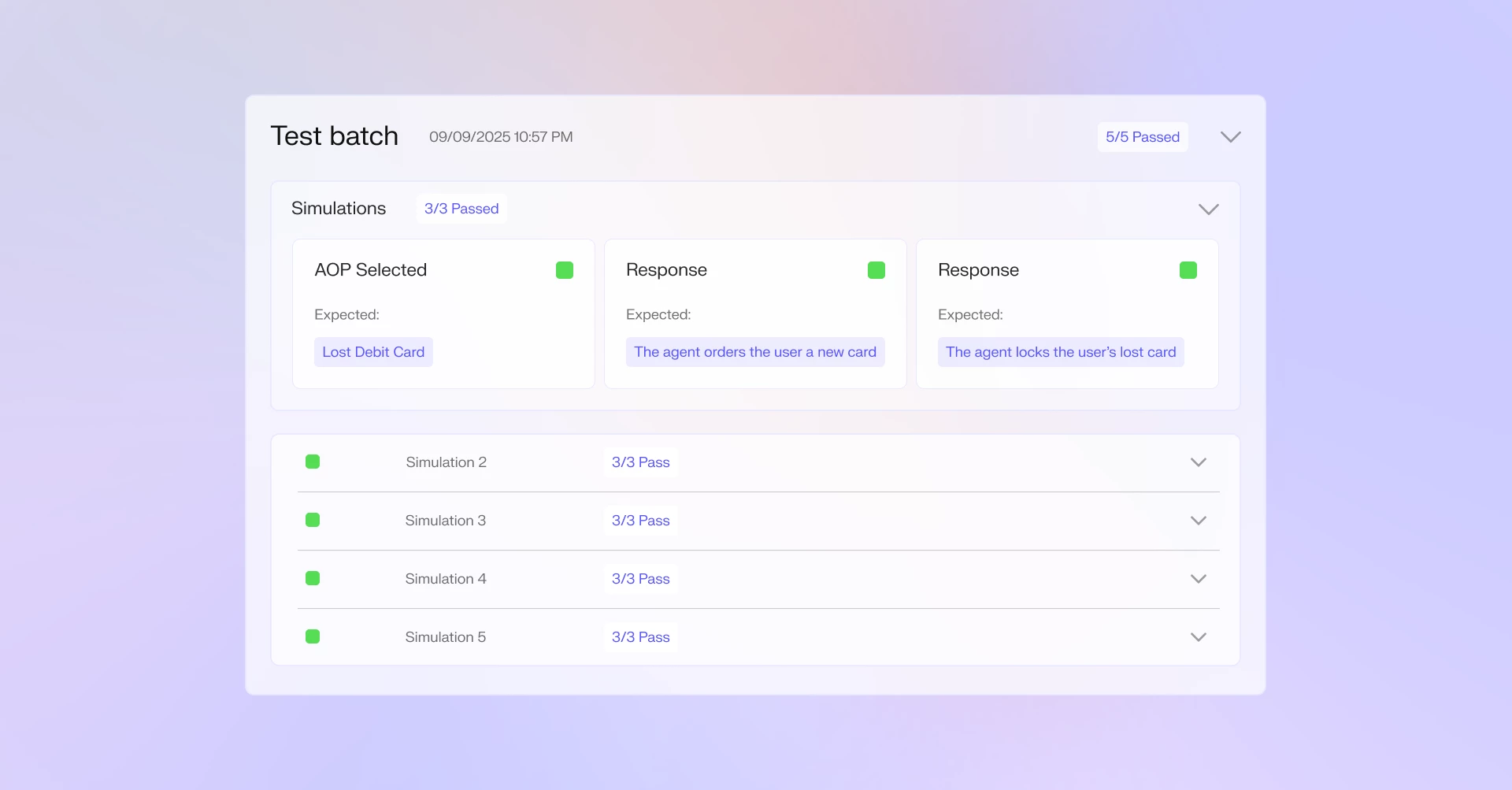
Decagon focuses on high-volume support agents built with natural-language Agent Operating Procedures. It's earned enterprise traction with proof points like 70% deflection in some deployments and pricing is quote-only. See our Decagon alternatives guide for a fuller comparison.
3. Cognigy
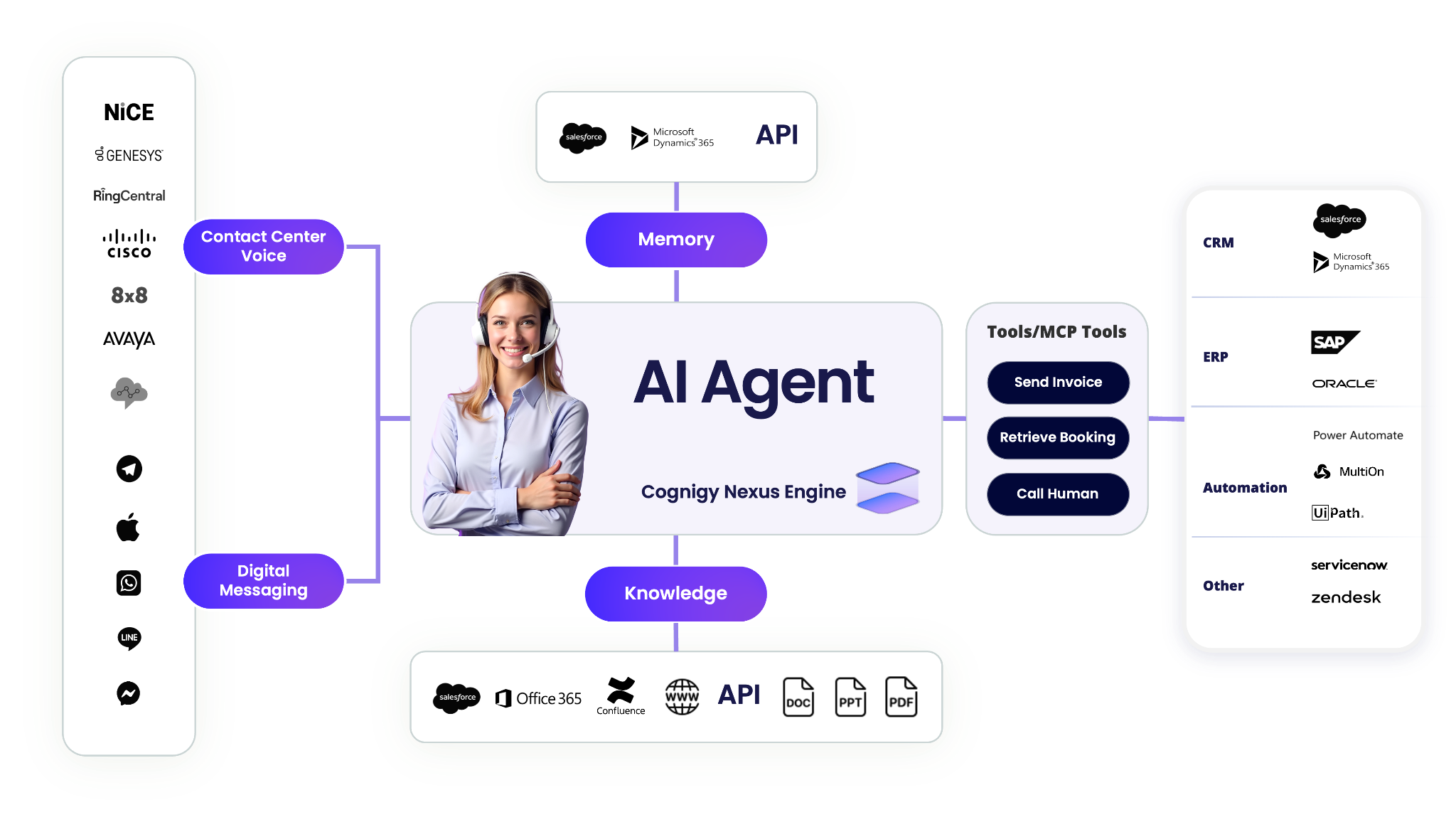
Cognigy is a Gartner Magic Quadrant Leader with deep CCaaS integrations, 100+ languages, and an on-premise option for EU data residency. It's the strongest option for enterprise teams that need analyst-validated compliance. However, modules are licensed separately, and implementations run 2 to 4 months.
4. PolyAI
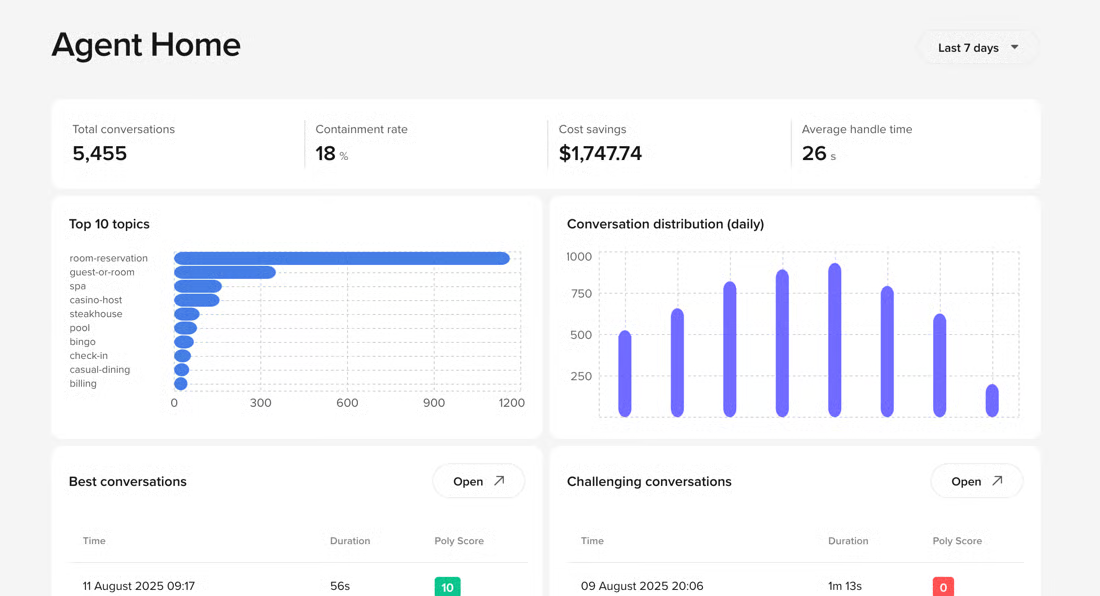
PolyAI is a voice-first platform with proprietary Raven models tuned for interruptions, accents, and noisy environments. It's purpose-built for inbound CX, not outbound campaigns. Enterprise accounts include Marriott and FedEx. Pricing is custom with implementation and optimization services bundled.
5. Wonderful
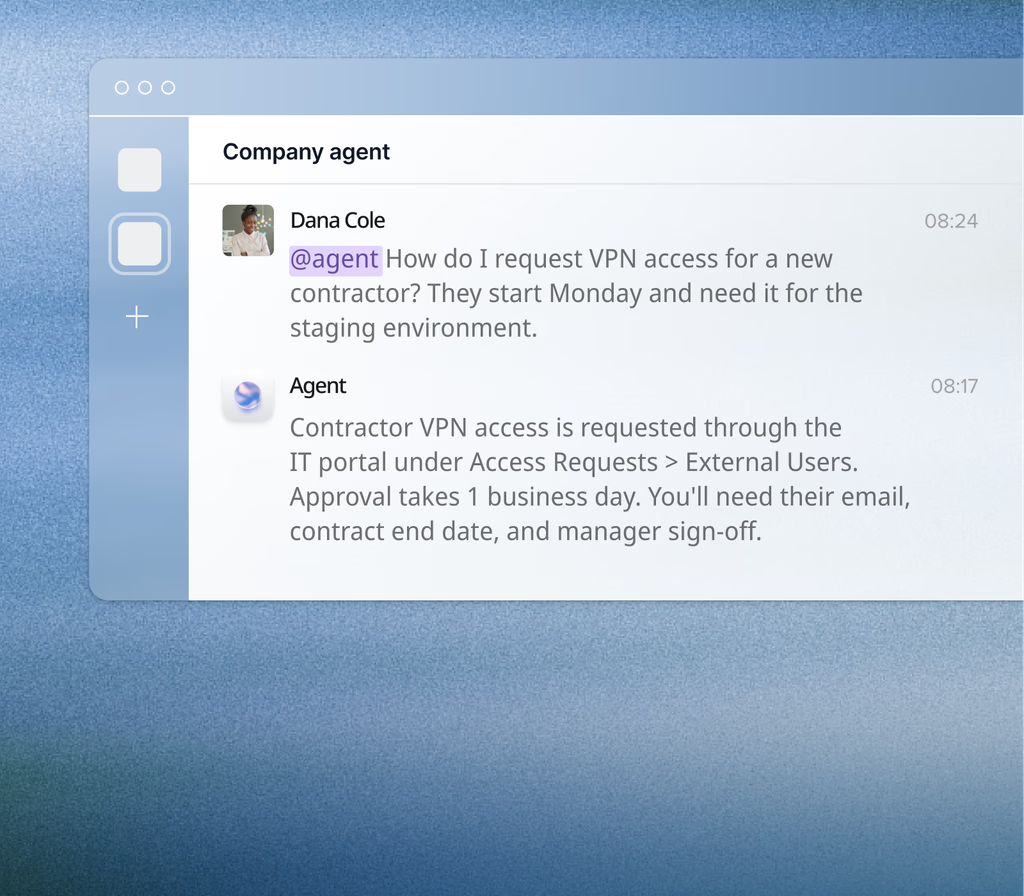
Wonderful is positioned for multilingual enterprises outside the English-speaking market. It's services-led with embedded local delivery teams per country. Series B at $2B valuation (March 2026), with customers including Bezeq, Bank Hapoalim, and Telefonica. But it doesn't offer a self-serve option or HIPAA certification, and its documented Bezeq deployment took 120 days.
For a broader comparison across the category, see our best conversational AI platforms guide.
How Callers Compares
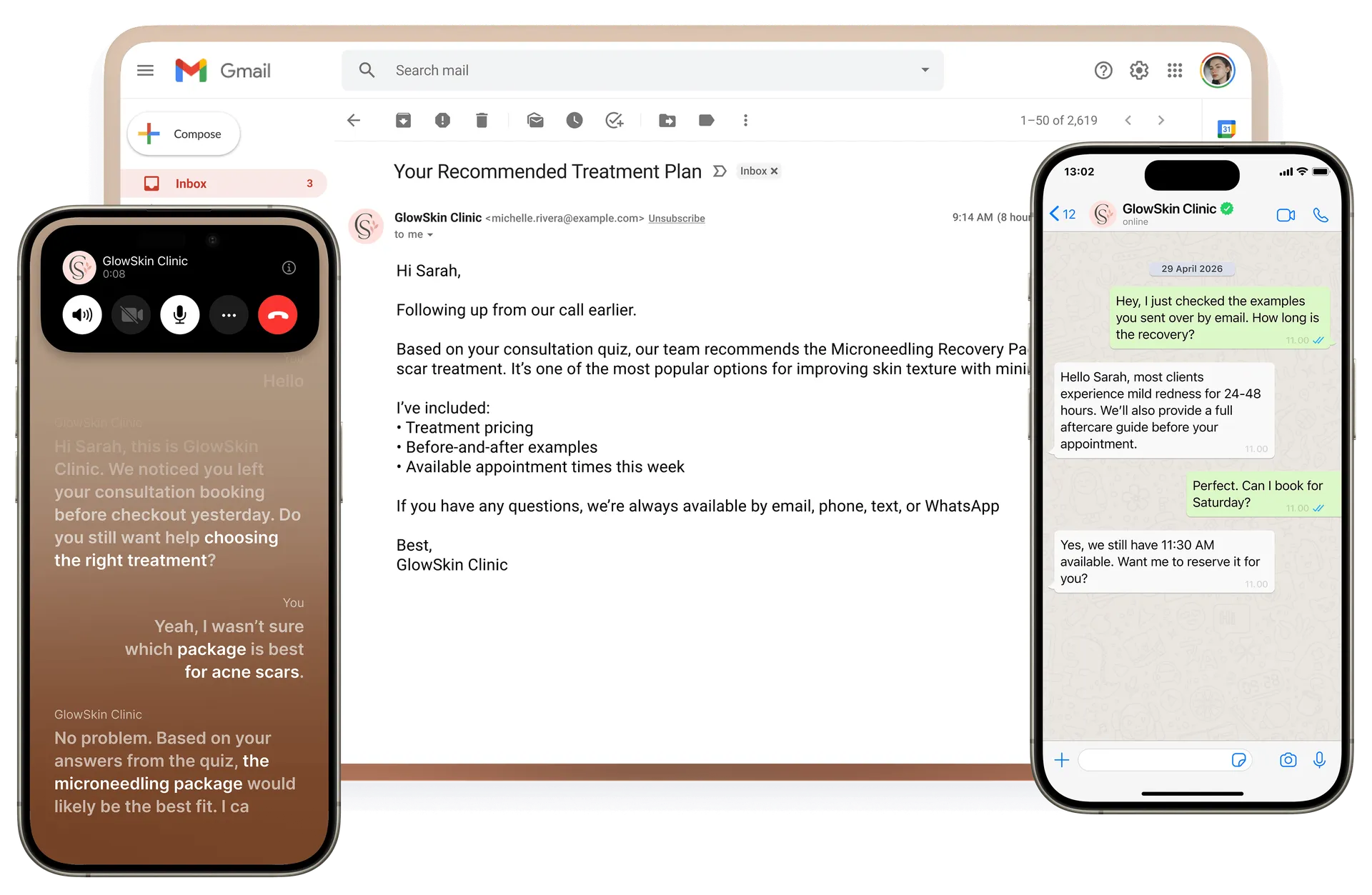
Callers is a conversational AI platform that automates conversations across calls, SMS, WhatsApp, email, and chat with a single AI brain sharing context across every channel. It's built for enterprise B2C brands with high conversation volume that need to move fast.
Where Cresta gives you the deepest real-time agent assist on the market, Callers gives you speed and operator ownership. Every plan includes white-glove onboarding with a dedicated CSM. Teams go live in days, not weeks. Your CX team builds and edits agents in a no-code builder without waiting on developers. And step-level analytics show exactly where conversations drop off, so you can fix them the same day.
Pick the Platform That Fits How Your Team Works
Cresta's a serious platform with genuine depth. The agent-assist technology is the strongest in the category, the compliance certifications are extensive, and Fortune 500 companies trust it for a reason. If you're running a 200-seat contact center in a regulated industry and you've got the budget for a multi-week implementation, it's a strong choice.
But if your team needs to move fast, Callers was built for exactly that. One AI agent handles inbound support across voice, SMS, WhatsApp, email, and chat with shared context. You'll go live in days, own the build without developers, and work with a dedicated CSM from day one.
If you've been comparing platforms for speed to value and hands-on support, book a demo with Callers and see the difference.
FAQs
1. Is Cresta AI Good for Smaller Teams?
Cresta's purpose-built for enterprise contact centers with 100+ agents. Seat minimums start at 50 to 100+, and implementation takes 4 to 8 weeks. Teams with fewer agents and shorter timelines will likely find it oversized for their needs.
2. Does Cresta AI Publish Pricing?
No. Cresta doesn't list pricing on its site. Every contract is custom-quoted based on your seat count, modules, and interaction volume. AWS Marketplace lists Agent Assist modules at about $150,000 per year each, but your actual cost depends on the scope of your deal.
3. What CCaaS Platforms Does Cresta Integrate With?
Cresta sits on top of your existing contact center stack. It integrates with Genesys, Five9, Amazon Connect, NICE CXone, Avaya, Twilio, 8x8, and LivePerson. You don't need to migrate off your current platform to use it.
4. How Does Cresta Compare to Callers?
Cresta's built for large enterprises that want agent coaching alongside autonomous AI agents. It also carries one of the deepest compliance stacks in the category. Callers is built for enterprise B2C brands with high conversation volume that want omnichannel AI agents, step-level analytics, white-glove onboarding, and a fast path to live. The right choice depends on whether you need real-time coaching for a large human team or an agent your CX operators can own and ship in days.