
Kore.ai Review (2026): What It Does, What It Costs, and Who It Fits
:quality(80))
:quality(80))
Quick Summary
Kore.ai is an enterprise AI that helps businesses drive outcomes in customer service and employee productivity with agentic AI. It covers voice, chat, email, and 30+ channels, and it's been a Gartner Magic Quadrant Leader for four years running. But the steep learning curve, usage limitations, and slow loading time make it a tough fit for teams that need to move quickly.
Kore.ai Is Built for the Enterprise, and the Commitment Reflects It
By its own numbers, Kore.ai automates 450 million interactions a day for roughly 200 million consumers and 2 million enterprise users worldwide. That kind of scale is exactly why CX leaders and contact center teams keep putting it on the shortlist when they’re evaluating a platform that handles voice, chat, and messaging at scale.
This review covers what Kore.ai does, how it's priced, and where it falls short, so you can decide if it fits your team.
Why Trust Us?
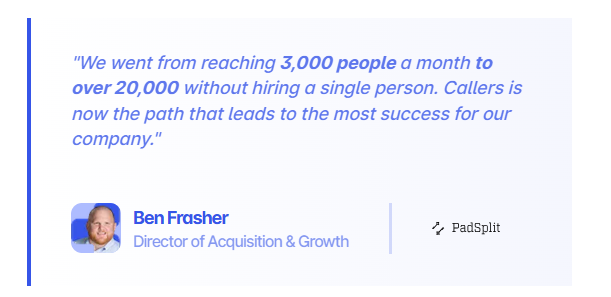
At Callers, we build AI-driven CX automation for high-volume call and message operations. We’ve seen firsthand what it takes to make these systems work at scale. Einride saved over $65,000 a year on inbound handling, went live in three weeks, and holds a 99.8% connection rate. That experience spans millions of real customer conversations.
So this review comes from that vantage point: what actually holds up when a platform hits real volume?
What Is Kore.ai?
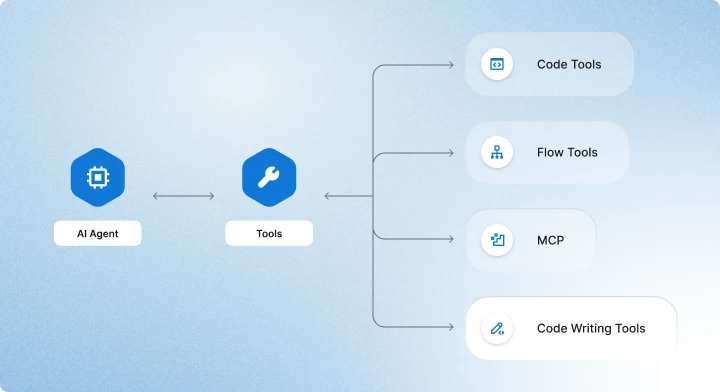
Kore.ai is an enterprise AI platform that builds and deploys virtual assistants and AI agents for companies. The company was founded in 2014 by Raj Koneru and is headquartered in Orlando, Florida. It covers voice, chat, SMS, email, and 30+ other channels.
The company has raised $422 million across multiple funding rounds. That includes a $150 million round in 2024, led by FTV Capital, with Nvidia and other existing investors participating.
Kore.ai has built its reputation in banking, healthcare, and telecom. Its vertical-specific solutions are a big part of that positioning. The platform serves over 400 enterprise customers, including Cigna, AT&T, PNC, Coca-Cola, Airbus, and Roche.
Kore.ai calls itself an "agentic AI platform" for enterprises. It's designed for organizations that need multi-channel automation and deep integrations with CRMs, ERPs, and helpdesks. You can deploy on cloud, on-premise, or hybrid infrastructure.
Key Features of Kore.ai
XO Platform (Experience Optimization): This core product is a no-code/low-code and pro-code dialog builder with a multi-engine NLU. The NLU combines intent detection, contextual memory, and domain tuning. Business teams can build flows visually and developers can use JavaScript, API service nodes, and webhooks for custom logic.
GALE (Generative AI Layer for Enterprises): GALE is Kore.ai's framework for bringing large language models into the platform safely. It includes prompt management, model evaluation, retrieval-augmented generation (RAG) over enterprise knowledge bases, and governance controls.
AgentAssist: This real-time agent copilot surfaces relevant knowledge, scripts, and suggested actions during live conversations. It helps human agents resolve issues faster without toggling between multiple systems.
Industry-specific Solutions: Kore.ai provides pre-built vertical apps for businesses across banking, healthcare, IT support, and retail. Each vertical comes pre-configured with domain-specific intents and workflows.
Pricing
Kore.ai doesn't publish pricing on its website. Every deal goes through a sales process and the pricing is custom by contract.
From what's publicly known, the platform bills differently by product line:
Automation AI uses session-based billing in 15-minute increments
The Contact Center AI and Agent AI are billed per seat
Voice minutes, volume discounts, and add-ons like multilingual support and advanced analytics are negotiated separately
Professional services and custom training fees are additional and vary by implementation complexity
Unfortunately, there's no self-serve tier and no free plan you can test on your own.
Rating

Kore.ai holds a 4.6 out of 5 on G2 with roughly 500 reviews. It's also been named a Leader in the Gartner Magic Quadrant for Conversational AI Platforms for four consecutive years. On Gartner Peer Insights, it's recognized for "Completeness of Vision" and rated highest for "Ability to Execute."
What We Like
Several Kore.ai strengths help it remain a strong contender on enterprises shortlists. Some of these strengths include:
Deep NLU and Dialog Engine: The multi-engine NLU combines intent detection, contextual memory, and domain tuning. This combination allows the platform to hold multi-turn conversations and switch topics without losing track. Query comprehension is one of the platform's clearest strengths.
Flexible Deployment Options: You can run Kore.ai on cloud, on-premise, or hybrid infrastructure. For regulated industries like banking and healthcare, on-premise keeps all data within your own environment. That's a hard requirement for organizations with strict data sovereignty rules.
Enterprise Compliance Coverage: The platform has SOC 2 Type II, HIPAA (with signed Business Associate Agreements), and GDPR-aligned infrastructure. Data's encrypted in transit (TLS) and at rest (AES-256). It also supports SSO integration with Google, Azure, and Okta.
Analyst Recognition: Four consecutive Gartner Magic Quadrant Leader placements is a strong signal for buyers who need to justify a vendor choice to procurement. Kore.ai's also been recognized as a Leader by Forrester and Everest Group.
What We Don't Like
Kore.ai’s depth comes at a cost, and it shows up fast once you’re past the sales deck. Between the learning curve, the timeline, and the pricing opacity, here’s where teams tend to hit friction:
Steep Learning Curve: The platform requires significant technical expertise, even with the visual builder. It's overwhelming for non-technical users, and teams should plan for dedicated training time before they can build anything meaningful.
Thin Documentation for Complex Integrations: The documentation for custom API integrations is sparse and slows down development. If your use case requires deep integrations with legacy systems, expect to spend extra time figuring out the connections.
Long Implementation Timelines: Standard deployments typically take three to six months. Complex enterprise implementations can stretch between 12 and 18 months. Advanced AI features like GALE are often managed by Kore.ai's own implementation team, which can slow down experimentation.
Latency Under Load: The platform hits latency spikes when bots pull data from multiple integrations at once. Sometimes, the cloud instances average 800 to 1,000 milliseconds of latency in typical use cases.
Who Kore.ai Isn't a Fit For
Kore.ai is built for enterprises with dedicated AI teams, long procurement cycles, and the budget for a multi-month implementation. If that doesn't describe your organization, the platform will probably create more friction than it solves.
You'll need to be comfortable with a three-to-six-month window for deployments. For CX teams that need to go live quickly, that timeline is a dealbreaker on its own.
You'll also need technical staff to own the platform. The learning curve is steep enough that business users and CX operators can't self-serve on it. Expect to assign developers or a dedicated bot team to build and maintain your agents.
And if you need predictable pricing you can check before a sales call, Kore.ai's quote-only model makes that hard. There's no public pricing page and no way to estimate costs before you talk to their sales team.
Kore.ai Alternatives
If Kore.ai's enterprise-heavy approach doesn't match what your team needs, there are platforms that get you live faster with less technical overhead.
Platform | Typical Time to Live | Pricing Model | Channel Focus | Top Features |
Kore.ai | 3-6 months (12-18 for complex builds) | Custom quote only | Voice, chat, SMS, email, 30+ channels | AgentAssist real-time agent copilot, multi-engine NLU with contextual memory |
Callers | Days | Custom (contact sales) | Voice, SMS, WhatsApp, email, chat (one shared context) | Live in days with no engineering wait, one AI agent that remembers a customer across every channel |
Cognigy (NiCE Cognigy) | 2-4 months | Custom quote, enterprise sales cycle | Voice, chat; deep CCaaS integrations | Built-in copilot for live agents, plugs directly into Genesys, Avaya, Amazon connect |
Poly AI | Weeks to month, services-led | Custom quote | Voice only | Built for phone-first, HIPAA, GDPR, PCI covered |
Decagon | Custom, sales-led | Per-conversation or per-resolution | Chat, email, voice | No code required, covers chat, email, and voice in one agent |
1. Callers
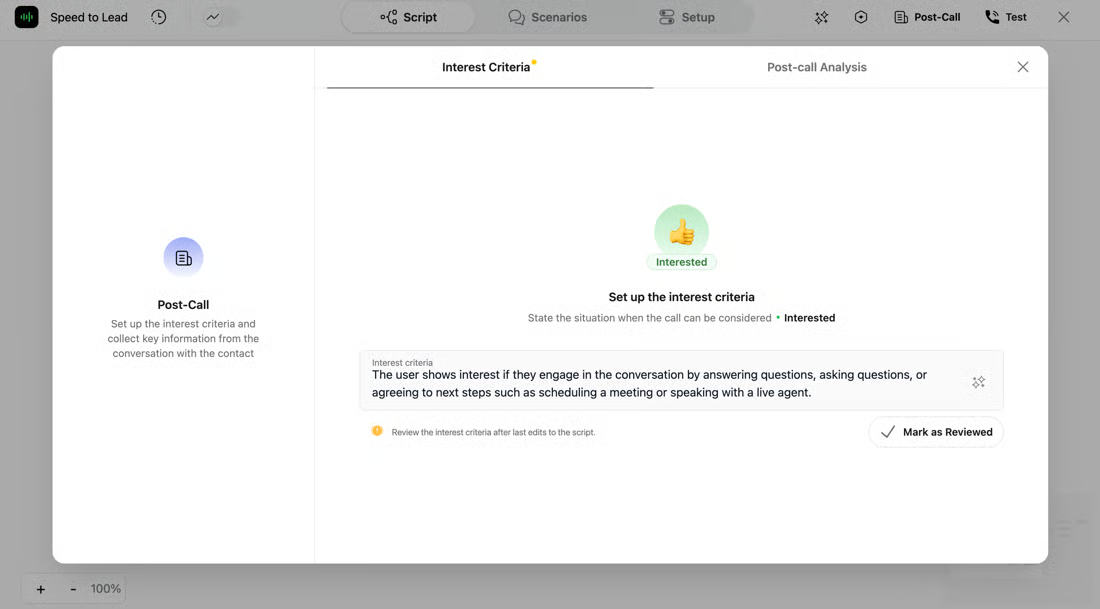
Callers is a conversational AI platform that runs autonomous AI agents across calls, SMS, WhatsApp, email, and chat. Every channel shares one context layer. So when a customer starts on a call and follows up over WhatsApp, the agent picks up exactly where it left off. The shared context allows the omnichannel experience to work in practice.
Your team goes live in days with a no-code flow builder and AI-assisted scripting. This allows your CX and growth operators to build and edit AI agents without developers. You also get campaign orchestration with conditional retries and 610+ native integrations, including HubSpot, Zendesk, and GoHighLevel.
Einride went live on Callers in three weeks, saved over $65,000 per year on inbound handling, and hit a 99.8% connection rate.
If you need conversational AI across multiple channels but don't have a six-month runway, Callers is worth a look.
2. Cognigy
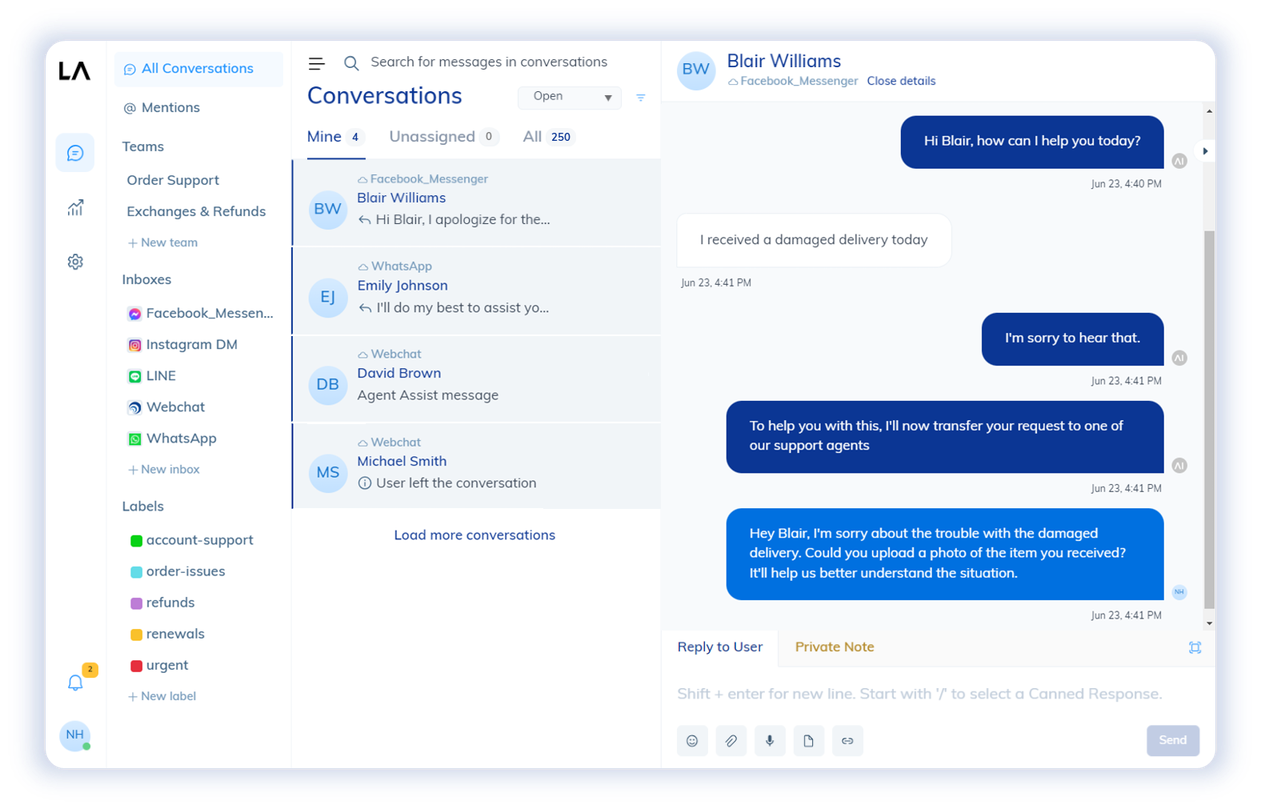
Cognigy (now called NiCE Cognigy) builds generative and agentic AI agents for voice and chat. If you're already running Genesys, Avaya, Amazon Connect, or NICE CXone, it plugs right in.
It's got similar depth to Kore.ai and it handles over a billion interactions a year with 99% routing accuracy. But you should expect a similar procurement timeline and sales process. If you want enterprise-grade without the enterprise wait, this isn't the tool for your team.
3. PolyAI
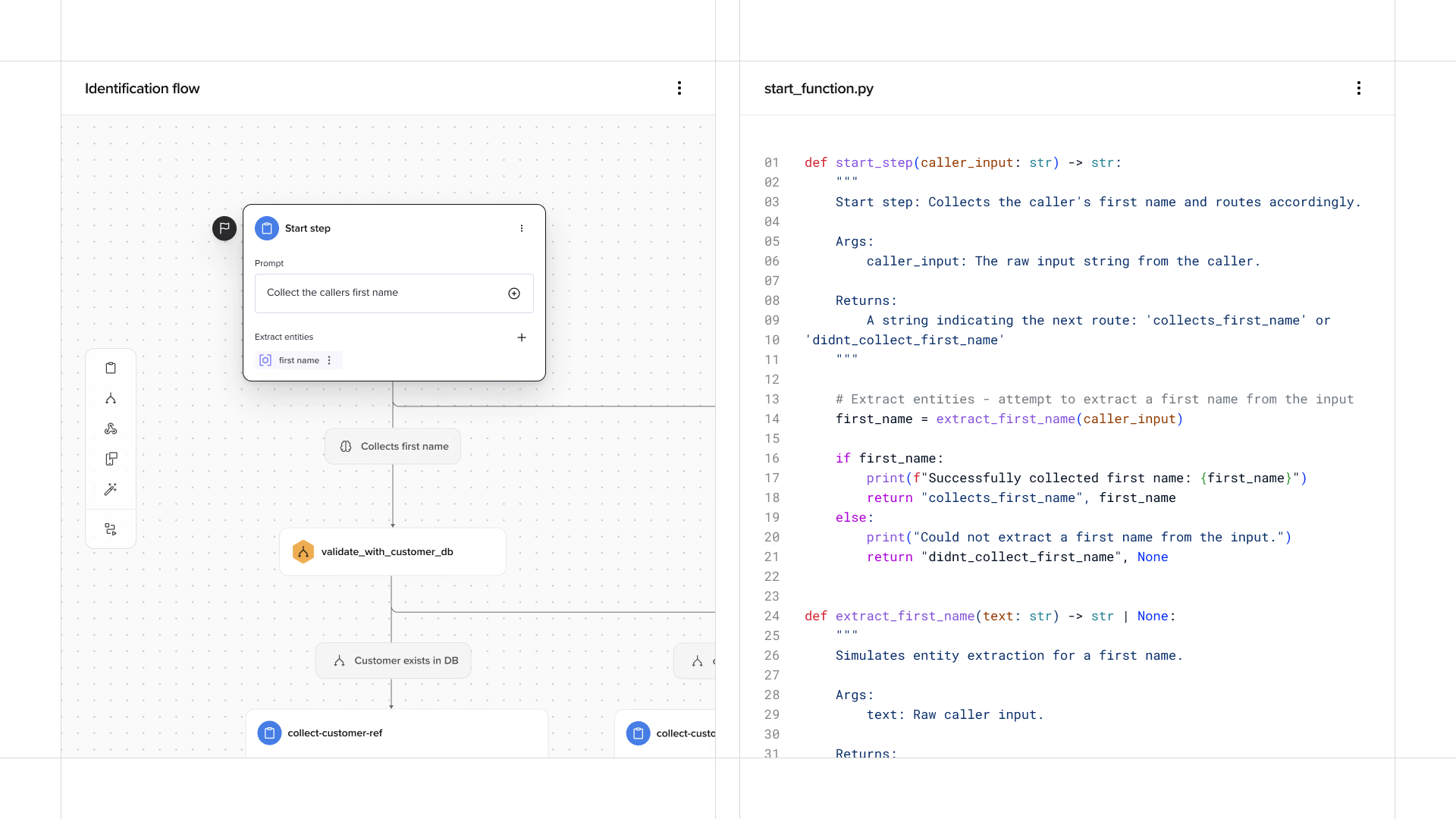
PolyAI is voice-first and is built around its proprietary Raven model that's been trained on over a billion enterprise conversations. If your primary need is phone automation and you don't need chat or email, it's purpose-built for exactly that.
The company offers custom pricing and ongoing use of the voice agent is priced on a per-minute basis. It also has SOC 2, HIPAA, GDPR, and PCI compliance. The trade-off is that it's voice-only, so there's no omnichannel you can tap into.
4. Decagon
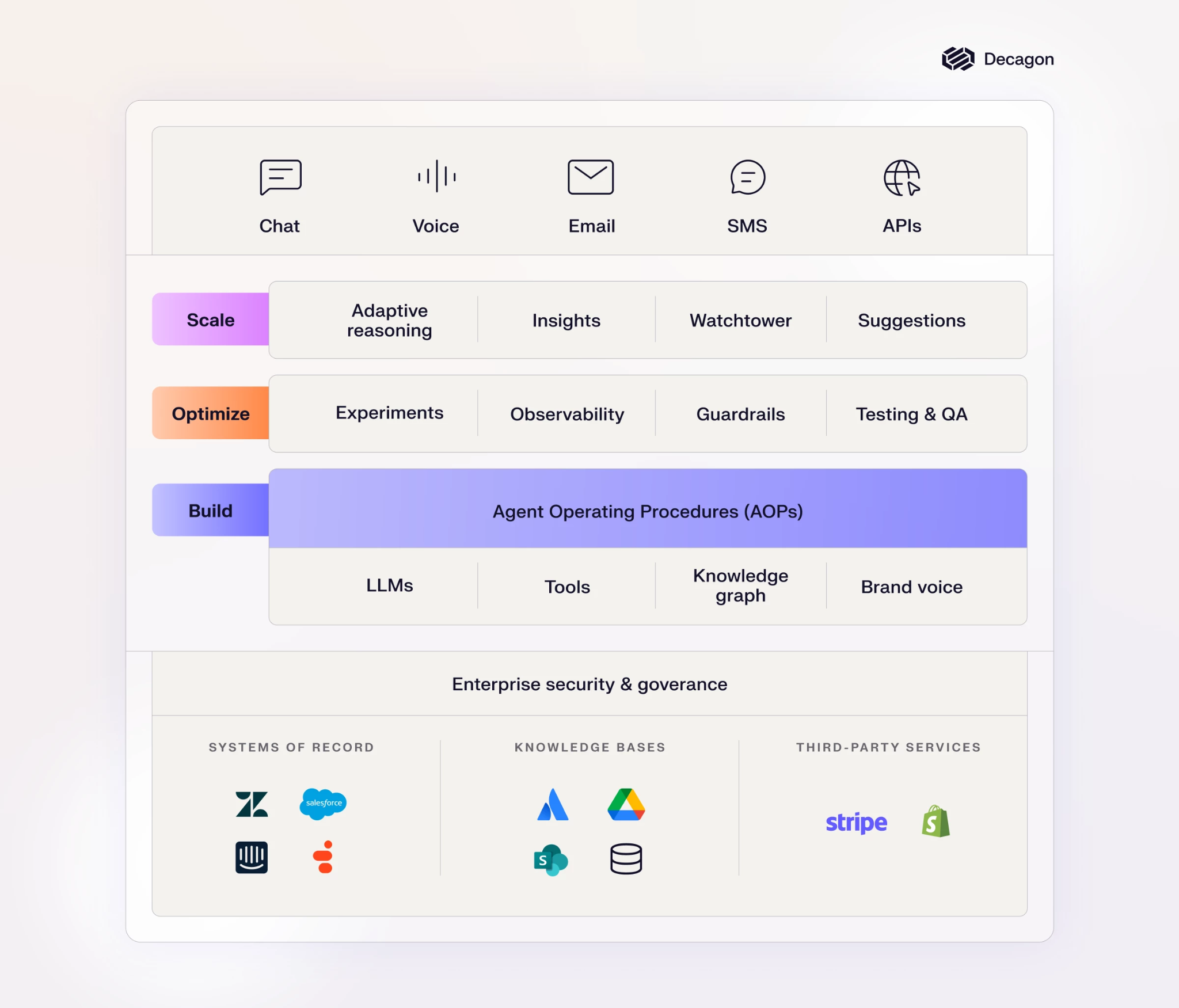
Decagon builds conversational AI agents for chat, email, and voice, and it works with big support teams like Chime, Duolingo, ClassPass, and Rippling.
Similar to Kore.ai, pricing isn't public and you'll need to go through sales. Decagon focuses more narrowly on customer support automation, so if your use case is broader than support, you may outgrow it.
For a broader comparison, see our guide on the best conversational AI platforms in 2026. And if you're evaluating Sierra, we've got a dedicated breakdown of Sierra AI alternatives.
Why Choose Callers?
Kore.ai’s strengths are best suited to buyers with a different budget, timeline, and risk tolerance than many CX teams. When you’re looking at a six-figure investment and months of implementation before your first agent goes live, the trade-offs can add up quickly. That’s where Callers offers a faster path to CX automation.
1. Go Live in Days
With Callers, most teams are up and running within a week. Your CX team can build agents using the no-code flow builder and AI-assisted scripting. There's no engineering wait and no service engagement.
The no-code builder also means you can iterate quickly. If an agent script needs adjusting, your team can update it the same day. Getting live that fast matters if you're losing leads or missing calls right now. Every month of implementation delay is a month of lost conversations.
2. Your CX Team Owns the Platform
Kore.ai's learning curve means you'll need dedicated developers or a bot team to build and maintain agents. With Callers, CX and growth operators build and edit AI agents themselves. The flow builder is visual, and AI-assisted scripting handles the heavy lifting so you don't need to write code.
Voyager GM, for example, saw a 90% increase in response time and a 60% lift in customer engagement after switching to Callers. Their operators ran the platform without pulling in engineering.
That result matters because Kore.ai's model ties you to their implementation team for advanced features. With Callers, your team controls the full workflow.
3. A Dedicated CSM on Every Plan
With Kore.ai, hands-on help usually comes through a professional services engagement. Advanced features like GALE are often run by its own implementation team, so the support you get depends on the contract you sign.
Callers includes white-glove onboarding and a dedicated customer success manager on every plan, regardless of tier. Your CSM works with your team through launch and stays on to optimize your agents as volume grows.
You don't need to buy a services package to get expert help, and you're never left to figure out a new platform alone.
There Are Faster Ways to Get Conversational AI Live
Kore.ai is a serious enterprise platform with genuine depth. The Gartner placements are deserved, the feature set is broad, and companies like Cigna and AT&T run it at scale.
But that depth comes with trade-offs that matter. Implementation takes months. The learning curve is steep enough that you'll need dedicated technical staff. And pricing is completely opaque until you talk to sales. These trade-offs add up for teams who need speed.
If you need conversational AI across voice, messaging, and chat, Callers gets you live in days. Book a demo and see how your CX team can own it.
Frequently Asked Questions
1. Does Kore.ai Offer a Free Trial?
Kore.ai offers a 14-day trial, but it's arranged through Kore.ai’s sales team rather than a self-serve signup. That's typically not enough time to evaluate the platform meaningfully, given the learning curve and the breadth of the product suite. You'll likely need the full sales process to understand what the platform can do for your use case.
2. How Long Does It Take to Implement Kore.ai?
Standard deployments take three to six months. More complex implementations with deep integrations and on-premises infrastructure can take 12 to 18 months. That's significantly longer than AI-native platforms like Callers, where teams go live in days.
3. Is Kore.ai HIPAA Compliant?
Kore.ai supports HIPAA compliance with signed Business Associate Agreements (BAAs). It offers on-premises deployment for organizations with strict data sovereignty requirements. It also has SOC 2 Type II and GDPR-aligned infrastructure.
4. What Industries Does Kore.ai Serve?
Kore.ai has the strongest presence in banking, healthcare, telecom, and retail. It offers pre-built vertical solutions (BankAssist, HealthAssist, RetailAssist) with domain-specific intents and workflows. Companies like Cigna, PNC, AT&T, and Florida Blue use the platform.
5. What Channels Does Kore.ai Support?
Kore.ai supports 30+ channels, including voice, chat, SMS, email, WhatsApp, Slack, Microsoft Teams, and social messaging. That channel breadth is one of its strengths, because you can put one virtual assistant on every channel your customers use.