
Decagon vs. Sierra: Which Enterprise AI Agent Platform Should You Choose?
:quality(80))
:quality(80))
Quick summary
Decagon lets your customer experience (CX) staff write and revise agent logic in plain English. Sierra keeps that control in-house and bills against the outcomes its agents resolve. Same buying committee, opposite ownership models. If you want enterprise depth live in days and step-level analytics, Callers is worth a look.
Here’s an overview:
Decagon | Sierra | Callers | |
|---|---|---|---|
Deployment model | Self-serve builder (Agent Operating Procedures), with vendor support | Vendor-built and managed through Agent Studio and an SDK | Self-serve, no-code, with a named CSM and AE on every plan |
Implementation timeline | Not published; buyer accounts describe weeks to a few months | CSM-guided onboarding runs 4 to 10 weeks, longer for complex builds | Live in days |
Channels | Chat, email, and voice in one system | Chat, SMS, WhatsApp, email, and voice | Voice, SMS, WhatsApp, Telegram, chat, email, and in-app on one agent |
Integrations | Not fully listed publicly | Not fully listed publicly | 610+ native integrations listed on its site |
Pricing approach | Custom, per-conversation or per-resolution, quote-only | Custom, outcome-based, quote-only | Custom (contact sales) |
Ideal customer | Enterprise teams that want to write and edit agent logic themselves | Enterprises that want a vendor-managed build tied to business outcomes | Enterprise B2C brands with high conversation volume that want CX automation live in days |
Who’s Responsible When the Agent Breaks?
Your team constantly needs to change the agent's logic. A script that worked last month won't work next month. And when that happens, somebody has to open it up and rewrite it.
Decagon hands your CX staff a plain-English workflow builder called the Agent Operating Procedure. They write the rules, revise the rules, and the changes go live without a build cycle. Sierra's team builds and tunes the agent through Agent Studio and a developer SDK. You'll see the results but they'll control the logic.
That's the axis this comparison focuses on.
Both platforms have added voice since late 2024 and they show up on the same shortlists. But the day something breaks at 2 pm on a Friday, you'll care a lot more about how much control your team has over the agent and how much vendor support you can bring in rather than which channels it covers.
Why Listen to Us?
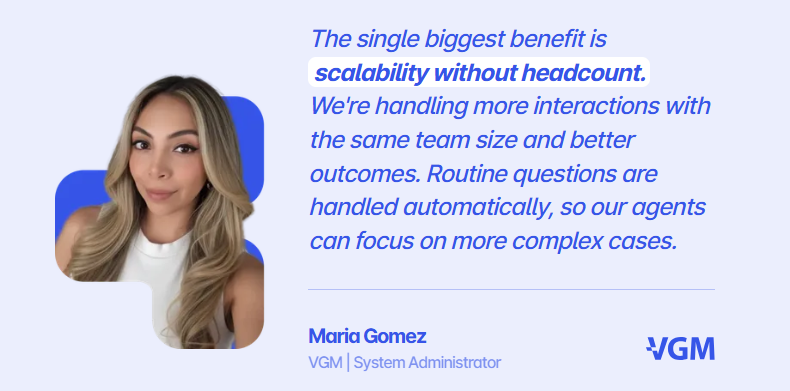
Callers builds conversational AI infrastructure for high-volume B2C brands. Our expertise comes from supporting companies with 150 million+ customer moments a year across 30 industries, including lending, real estate, and healthcare.
The teams reviewing Decagon and Sierra are the same teams we work with: CX leaders and growth operators trying to scale conversation volume and drive company goals without scaling headcount.
Decagon vs. Sierra vs. Callers: Feature Comparison
Capability | Decagon | Sierra | Callers |
|---|---|---|---|
Voice channel | Yes, added 2025 | Yes, now its primary channel | Yes, on one omnichannel agent |
Outbound calling | Yes, added 2025 | Yes | Yes |
No-code build | Yes, via Agent Operating Procedures | Partial, vendor-led through Agent Studio | Yes, with AI-assisted Script Writer |
Step-level funnel analytics | Partial | Not exposed | Yes |
Named CSM and AE on every plan | Not stated publicly | Yes, CSM-guided onboarding | Yes, included on every paid plan |
Native CRM and telephony integrations | Not fully listed | Not fully listed | 610+ listed |
Typical time to launch | Weeks to a few months, per buyer accounts | 4 to 10 weeks, longer for complex builds | Days |
Decagon vs. Sierra: Detailed Comparison
Decagon and Sierra land on most enterprise "AI customer service" shortlists. The split is in who does the building and how you'll pay for it.
Decagon
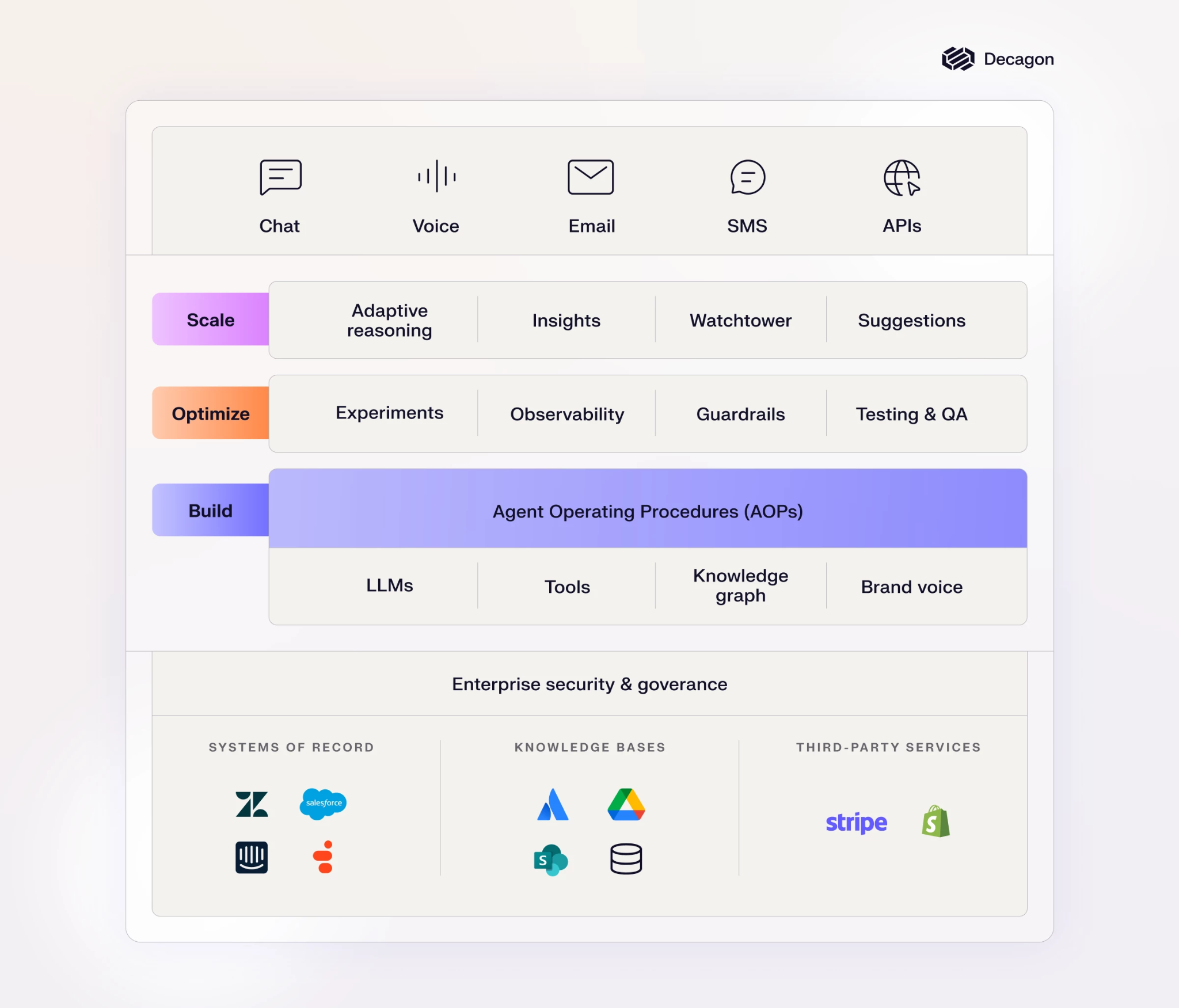
Best for: enterprise CX teams that want to own and edit their agent's logic directly without waiting on a vendor's services team.
Decagon builds conversational AI agents across chat, email, and voice for large support organizations. It's built on the Agent Operating Procedure. You write the workflow in plain English and it compiles it into the logic the agent runs on. Your CX staff writes and revises the AOP directly, and changes take effect without a new build cycle. Decagon added outbound voice in 2025, so agents can now place calls as well as answer them.
Key Features
Agent Operating Procedures: Write and revise agent workflows in plain English, without routing changes through a developer.
Omnichannel Intelligence Layer: Run chat, email, and voice through one shared understanding of the customer.
Action-taking Agents: Let the agent process a refund or update an account under guardrails.
Enterprise Infrastructure: Google Cloud with Cloudflare or VPC networking, encryption in transit and at rest, SSO, 2FA, RBAC, and audit logs.
Key Limitations
Decagon doesn't publish a rate card, so every deal starts with a sales conversation. Its warm-transfer rules and script-generation depth aren't documented publicly. For regulated buyers, the specific compliance certifications, attestations, and contractual commitments relevant to a deployment should be confirmed directly with Decagon.
AOP logic gets harder to manage as you go deeper into it. If your team doesn't have dedicated CX-ops capacity, that upkeep can get heavier than you'd expect.
Pricing Structure
Decagon prices per conversation or per resolution. Its own glossary explains resolution-based pricing. You'll pay a higher rate per ticket, but only for the ones the AI closes without a human. Decagon doesn't publish either rate on its site.
Pros
Teams can validate agent logic at scale before going live using the simulation tool
One shared intelligence layer across chat, email, and voice
Automated always-on QA layer monitors agent performance continuously
Cons
Channel scope doesn’t cover SMS, WhatsApp, Telegram, or in-app messaging
Compliance certifications like HIPAA and ISO 27001 aren't clearly stated publicly.
AOP logic has a steep learning curve for teams without dedicated CX-ops
Sierra
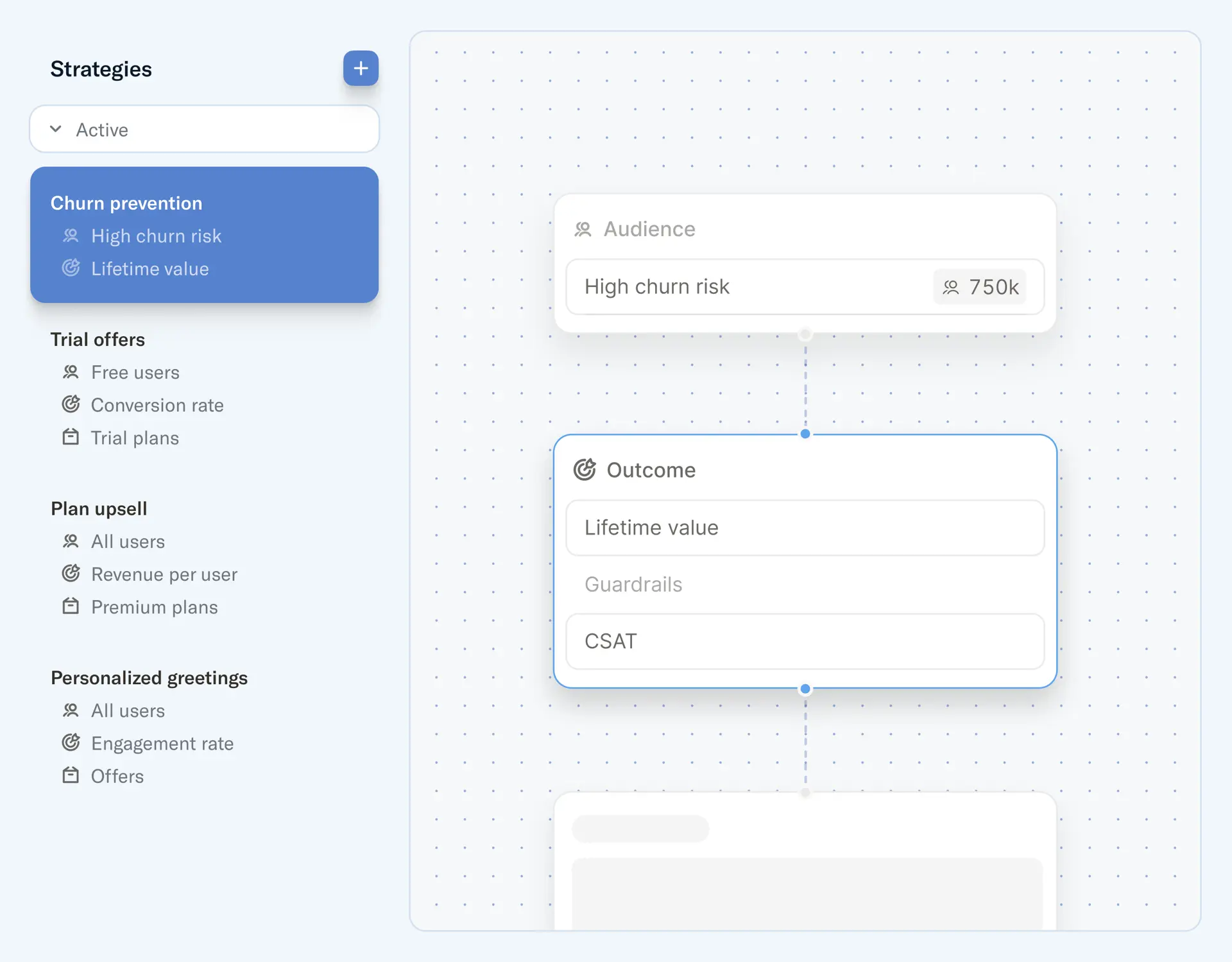
Best for: enterprises that want a vendor-managed build and are comfortable tying spend to resolved outcomes.
Sierra built its platform around a managed-build model. Their team designs and tunes your agent through an Agent Studio and a developer SDK. You hand them the requirements, they hand you back a working agent, and they keep iterating as your business changes.
Sierra recently added Ghostwriter, a tool that builds an agent from a standard operating procedure, a call transcript, or a recording. Voice has also grown into Sierra's primary channel, with a deep analytics layer for experimentation and decision tracking.
Key Features
Ghostwriter Agent Builder: Turn an SOP, a call transcript, or a recording into a working agent.
One Agent, Every Channel: Chat, SMS, WhatsApp, email, and voice through a single agent that keeps context across all of them.
Outcome-based Analytics: Track experimentation, observability, and decision-level data on what the agent resolved.
LiveAssist for Human Agents: Hand a conversation to a live agent with full context when the AI hits its limit.
Key Limitations
Onboarding runs through a CSM-guided process that typically takes 4 to 10 weeks or longer for complex builds. Compliance certifications aren't prominently listed on its product pages. Warm-transfer rules and script-generation depth aren't publicly documented either.
Sierra’s outcome-based billing makes it harder to forecast a monthly number until you've seen your own resolution volume.
Pricing Structure
Sierra ties billing to what its agents actually close. In most cases, you won't pay for a conversation that went nowhere, but you'll need volume data before you can forecast a monthly number. Like Decagon, Sierra doesn't publish the actual rate.
Pros
LiveAssist transfers conversations to a human agent with full context
Deploys across ChatGPT and other standard channels to expand business reach
You won't pay for conversations that go nowhere since billing is tied to outcomes
Multivariate testing and decision-level analytics let you track exactly what agents resolve and why
Cons
No public pricing, and complex implementations may take longer than the standard weeks-long deployment window
Integration channels are not explicitly listed publicly
Compliance certifications aren't clearly stated on the product pages
The Best Decagon and Sierra Alternative: Callers
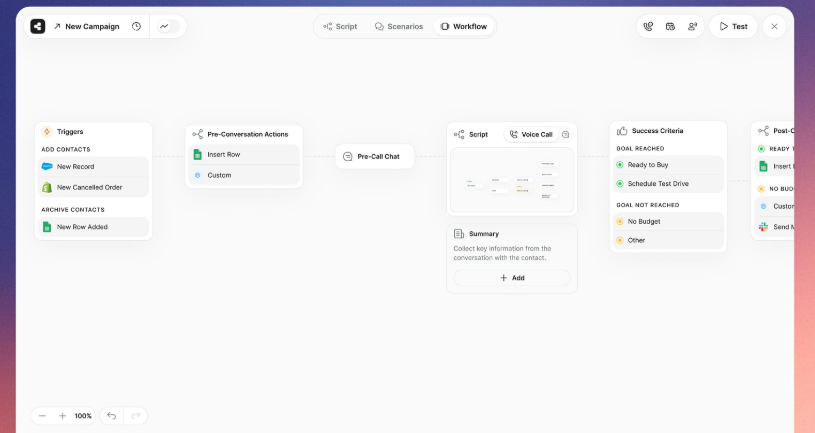
Best for: enterprise B2C brands with high conversation volume that want CX automation live in days, with white-glove onboarding and step-level analytics included.
Callers is a conversational AI platform that automates voice, messaging, and email conversations for high-volume B2C teams. The platform is built around a single dedicated agent per customer that carries persistent memory across every channel.
The no-code builder includes an AI-assisted Script Writer that'll draft a call flow from the use case you pick. What you get is a working agent without writing a line of code or waiting on a developer.
The company pulls ahead of Decagon and Sierra after launch. Your team gets step-level script and funnel analytics. You can see exactly where in a script a conversation stalls or drops, branch by branch. With 610+ native integrations, it also plugs into the CCaaS, CRM, and telephony stack you already run. You don't have to migrate your contact center to adopt Callers.
Key Features
AI-assisted Script Writer: Generate a working call flow from the use case you select.
Step-level Funnel Analytics: See exactly where in a script conversations drop off, branch by branch.
Omnichannel Context Layer: Share one memory across voice, SMS, WhatsApp, Telegram, chat, email, and in-app on a single agent.
Campaign Orchestration: Chain calls, texts, and emails into one sequence. The agent decides when to retry, what channel to use, and what to do after each conversation ends.
610+ Native Integrations: Connect directly to the CCaaS, CRM, and telephony tools you already run.
Key Limitations
Callers runs autonomous agents with warm transfer to your team when a conversation needs a human. If your live agents need real-time coaching, that's not something the platform can do. Cresta covers that use case. See our full breakdown of AI sales agents and conversational AI platforms if that's a hard requirement.
There’s no two-way video or a "who speaks first" toggle, and Callers isn’t yet listed in a Gartner or Forrester report.
Pricing Structure
Callers doesn't publish pricing. Contact sales for a quote based on your volume and channels.
Pros
Step-level funnel analytics show exactly where scripts stall, branch by branch. Neither competitor exposes that today
A dedicated CSM and AE handles kickoff and weekly reviews on every paid plan. No separate services invoice
Plugs into your existing CCaaS, CRM, and telephony stack through 610+ native integrations
Cons
Primarily autonomous, with warm transfer available when human intervention is needed
No two-way video support
Not yet included in major analyst reports
Getting Started
Decagon puts your team in control of the agent. Sierra keeps control and bills for what the agent resolves. Pick Decagon if your CX-ops staff wants direct control. Pick Sierra if you'd rather outsource the build and pay on outcomes.
If you want enterprise-grade automation live in days, compare Callers. Step-level analytics and a named CSM come included from day one. See how it stacks up on the full Decagon alternatives list, or check the Sierra head-to-head. Or skip the reading and book a Callers demo to see the analytics on your own use case.
This comparison is part of a two-piece enterprise CX matchup series alongside Sierra vs. Parloa.
Frequently Asked Questions
1. What's the Main Difference Between Decagon and Sierra?
Decagon gives your own CX team direct control over agent logic through natural-language Agent Operating Procedures. You don't need a developer or a services ticket to make changes. Sierra's team builds and tunes the agent through Agent Studio and an SDK, and they'll bill on resolved outcomes. Decagon suits a team that wants to own the logic. Sierra suits one that wants a managed build.
2. Do Decagon and Sierra Support Voice, or Just Chat?
Both support voice today. Decagon added voice in 2025 and outbound calling with Voice 2.0 that September, alongside its chat and email coverage. Sierra's voice channel has grown to the point where it's overtaken chat as its primary channel. Neither started as voice-first, so it's worth checking each vendor's current voice depth directly.
3. How Much Do Decagon and Sierra Cost?
Neither publishes pricing. Decagon charges per conversation or per resolution. Sierra charges on resolved outcomes, so you'll pay when the agent closes a ticket or completes a transaction. You'll need a sales call with either one to get an actual number.
4. Which Is Faster to Get Live, Decagon or Sierra?
Neither vendor publishes a standard timeline. Buyer accounts describe Decagon rollouts running weeks to a few months. Sierra's CSM-guided onboarding runs 4 to 10 weeks, and it can stretch longer for complex builds. You'll be live in days with Callers.
5. Can Callers Replace Decagon or Sierra?
If you want enterprise-grade automation live in days, Callers is a genuine alternative. You'll get step-level analytics and white-glove onboarding on every plan. If your priority is live human-agent assistance alongside AI, that's a need Callers doesn't cover today.