
10 Best Five9 Alternatives for Enterprise Contact Centers
:quality(80))
:quality(80))
Quick Summary
Five9's a solid CCaaS platform, but its AI ships as an add-on and the contracts run long. One question matters before anything else: Do you want to replace the whole contact center or just add AI voice agents on top of what you're already running?
Here are the top three Five9 alternatives at a glance:
# | Tool | Best For |
|---|---|---|
1 | Callers | Adding AI voice agents to your existing stack |
2 | NICE CXone | Full CCaaS replacement with AI and WFM |
3 | Genesys Cloud CX | Contact center, digital, and workforce in one |
Why Teams Look Past Five9
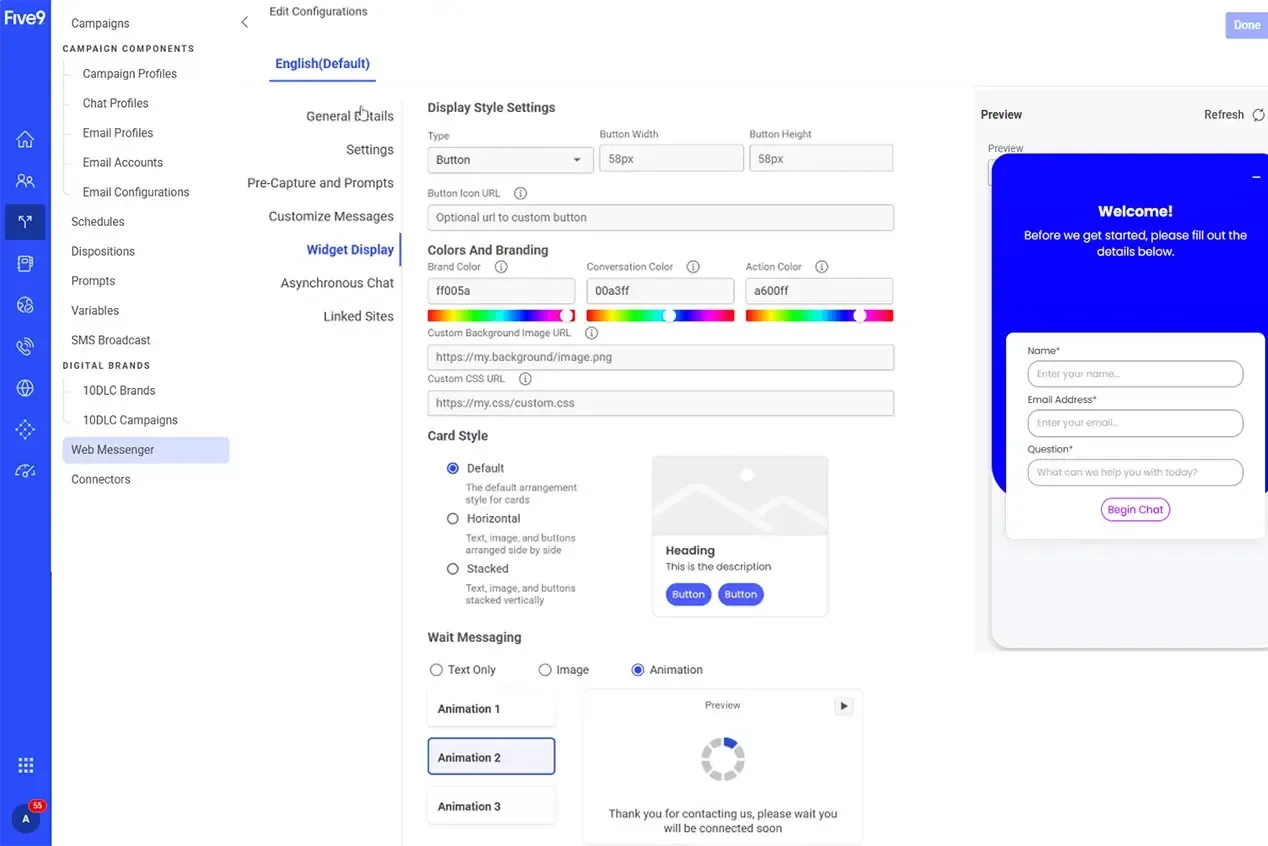
Five9's got a 4.1 on G2 mostly for its predictive dialer and Salesforce integration. But, pricing climbs fast. Digital-only starts around $119/seat/month, and by Ultimate, you're past $200 before add-ons. Most deals lock you into 36 months with a strict 50-seat minimum, so you're stuck paying for capacity you might not need.
The bigger problem is that Five9's AI Agents are licensed as add-ons rather than the core of the platform, so the AI features you want tend to sit in higher tiers or separate modules. On G2 and Trustpilot, the loudest complaints are billing disputes and support gaps once a deployment outgrows its original scope.
Why Listen to Us?
Callers runs live AI voice agents for paying customers across roughly 30 industries today. That’s the same kind of work the AI call center page walks through. This list was built on what a platform does at renewal, not what its homepage promises.
10 Best Five9 Alternatives
# | Tool | Pricing Model | Top Features |
|---|---|---|---|
1 | Callers | Custom (contact sales) | Live in days with no engineering wait, step-level funnel analytics showing exactly where a script loses people |
2 | NICE CXone | Per-agent, quote-based | Enlighten Copilot for live-call guidance, AI-driven workforce forecasting |
3 | Genesys Cloud CX | Per-user tiers, quote-based | Omnichannel routing across voice, chat, email, social. Experience orchestration for next-step decisions |
4 | Talkdesk | From $85/seat/month | Copilot provides answers on live calls, Autopilot handles routine queries |
5 | RingCentral RingCX | From $65/user/month | 20+ digital channels in one license, AVA Agent Assist for knowledge-base surfacing |
6 | JustCall | From $29/user/month + AI add-on | AI Voice Agent for overflow/after-hours, 100+ native integrations |
7 | Decagon | Per-conversation, quote-only | Enterprise infra on Google Cloud/Cloudflare, omnichannel across voice, chat, and email |
8 | Sierra | Outcome-based, quote-only | One agent across six channels including ChatGPT, ghostwriter builds multilingual agents from an SOP |
9 | Retell AI | From $0.07/min + LLM/telephony | Real-time function calling, live transfer API for warm/cold handoffs |
10 | Vapi | $0.05/min + provider costs | Full control over STT/LLM/TTS provider choice, built in call analysis with auto-summaries |
Callers
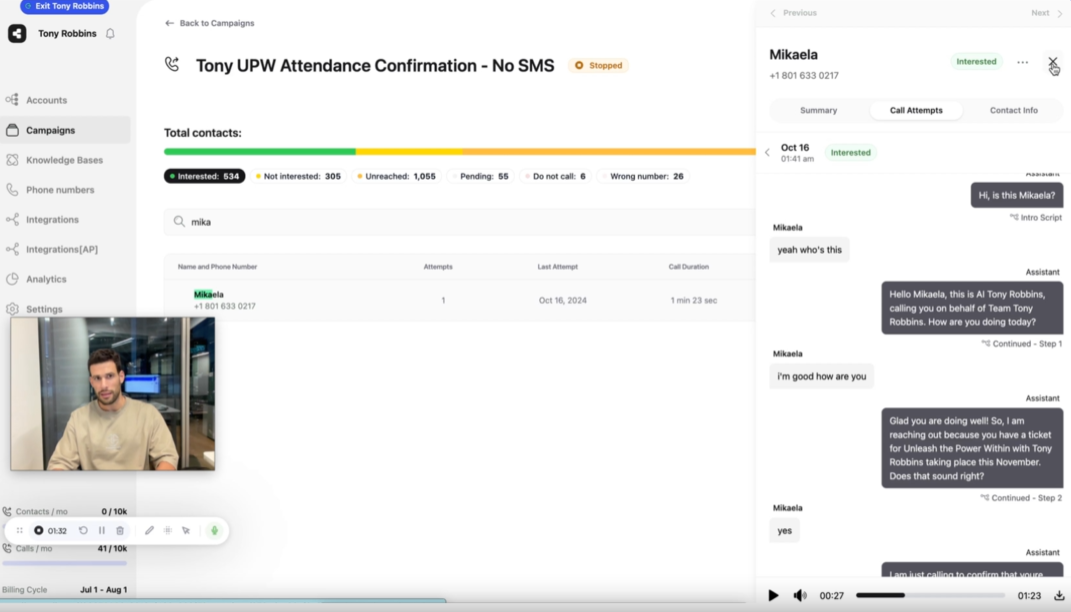
If you're not looking to rip out your whole contact center, Callers is built for exactly that scenario. It's a conversational AI platform that drops right into the telephony, CRM, and CCaaS you're already running.
What makes it different from most voice AI tools is the way it handles context. Callers runs one dedicated AI agent per customer across voice, SMS, WhatsApp, chat, and email, and that agent carries the same conversation history everywhere. So if someone calls in and then follows up on WhatsApp, there's no "can you repeat your issue" moment.
The analytics go deeper than you'd expect too. Instead of just telling you whether a call succeeded or failed, Callers tracks drop-off at each step and branch of a script. You'll see exactly where a flow loses people, which means you can fix the actual weak spot instead of guessing. See how that works on the AI call center page.
Key Features:
One AI agent per customer that carries persistent memory across every channel
610+ native integrations connecting into your CRM, telephony, and CCaaS
White-glove CSM and AE on every plan, so you've got a named contact from day one
Campaign orchestration with conditional retries and post-call actioning across the full customer lifecycle
Built-in AI-to-human handoff so that escalations route to a live agent without a separate tool
Compliance covered out of the box: SOC 2 Type II, HIPAA, PCI DSS, GDPR, and CCPA
Pricing: Callers doesn't publish pricing. Contact sales for a quote based on your volume and channels.
Pros:
24/7 coverage for after-hours and overflow calls, so peak volume doesn't turn into missed calls
CSM, AE, and implementation are all bundled so there's no separate services invoice
Mid-call language switching during a live conversation without the agent dropping context
Because Callers plugs into what you’re already running, there’s no CCaaS migration or multi-month RFP process to get through before you’re live
Compliance comes standard from day one. It's baked into every plan and not gated behind an enterprise tier
Cons:
No two-way video
It's not in a Gartner or Forrester report yet
Onboarding's white-glove by design, so it'll feel more hands-on than a pure self-serve API
NICE CXone
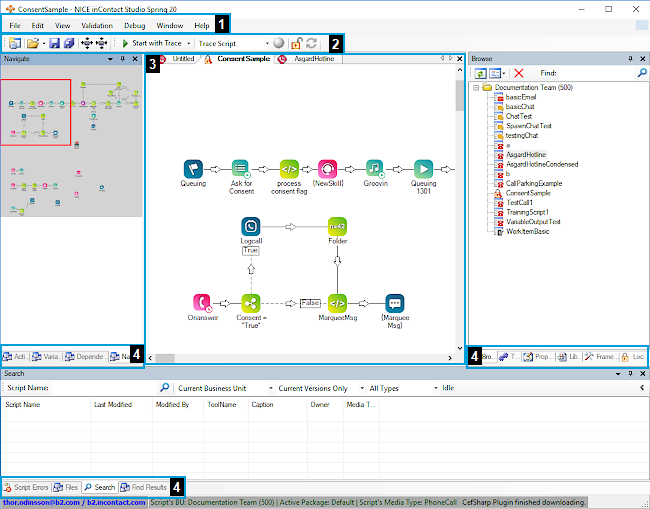
NICE CXone's one of the biggest CCaaS platforms out there, built around the Enlighten AI suite. Copilot gives live agents real-time guidance mid-call, and Autopilot runs AI self-service to contain volume before a human's needed. The AI-driven WFM forecasts staffing across both human and AI agents.
Standout Features
CXone Mpower's "skillability" feature transfers knowledge between human agents and AI in both directions
Continuous experience memory means the platform retains full context across every interaction a customer has had
The platform builds production-ready NiCE AI Agents directly from existing enterprise data
Pricing: Per-agent, tiered across digital-only, voice-only, and omnichannel. Rates are quote-based.
Rating: 4.3/5 on G2
It's a strong full replacement if you've got the budget. But AI and WFM sit in separate tiers, so getting both means a tier upgrade.
Genesys Cloud CX
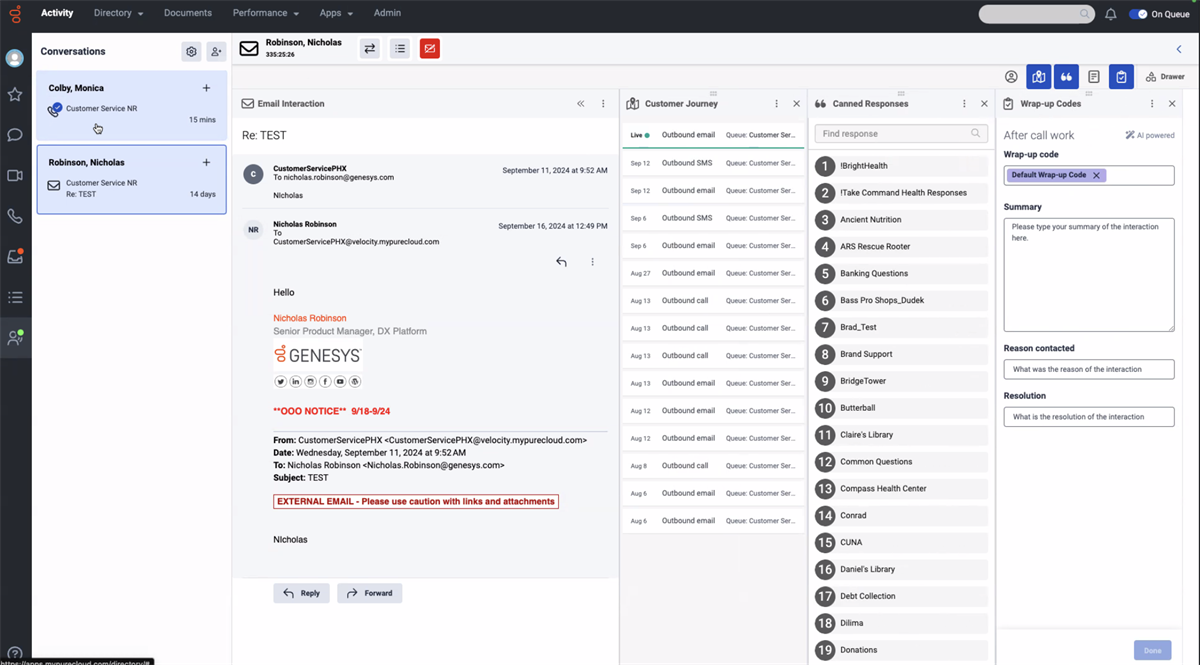
Genesys Cloud CX handles routing, digital channels, and workforce management in one platform. It's built around Experience Orchestration, which decides a customer's next step from real-time context instead of just routing to the next available agent.
Standout Features
Predictive routing uses AI to match each customer to the agent most likely to resolve their issue based on historical interaction
Omnichannel routing covers voice, chat, email, and social
Workforce Engagement Management for scheduling and coaching
Pricing: Four tiers (CX1 through CX4), per user per month, billed annually. Rates are quote-based.
Rating: 4.4/5 on G2
One platform for everything sounds great, but costs climb once you need chat, email, and quality management together. Most teams don't stay on CX1 long.
Talkdesk
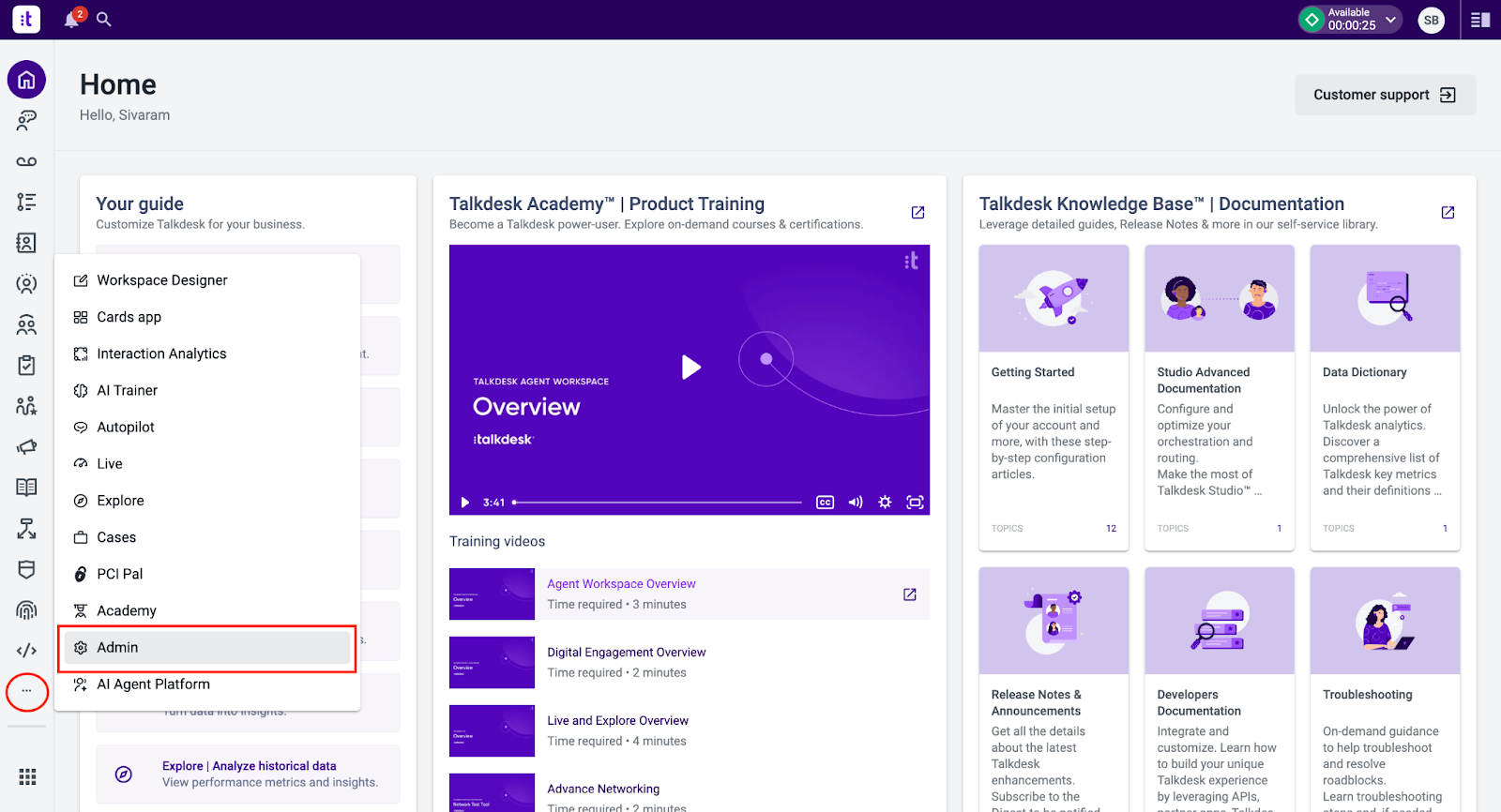
Talkdesk runs on a "hybrid workforce" model. Copilot listens on live calls and surfaces contextual answers. Autopilot handles common queries on its own, and Industry Experience Clouds bundle config for regulated verticals like healthcare.
Standout Features
Talkdesk Data Cloud pulls transcripts and CRM records into a shared layer every AI agent draws from
Interaction Analytics detects emerging topics and sentiment trends across conversations automatically
CXA layers onto your existing contact center without a platform migration or rip-and-replace
Pricing: Starts at $85/seat/month across four tiers. Multi-year deals often get discounted.
Rating: 4.4/5 on G2
Copilot and Autopilot are purpose-built, not a generic AI layer. But four tiers gate different channels and AI features, and Elite runs about $145 a seat.
RingCentral RingCX
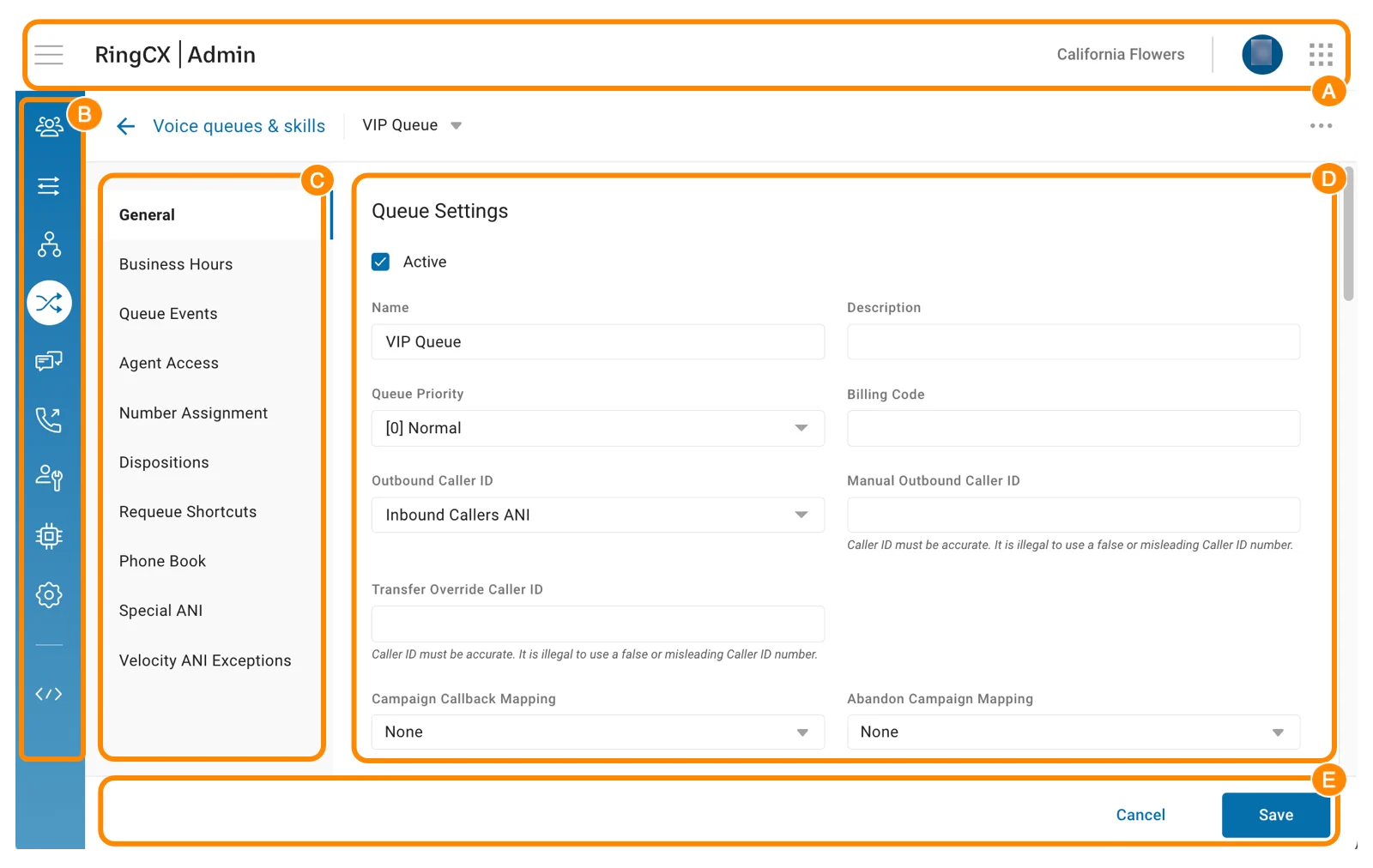
RingCX is RingCentral's contact center product. It covers 20+ digital channels in one license. AVA Agent Assist surfaces knowledge-base content for live agents, and AIR Pro combines voice and messaging into one autonomous agent.
Standout Features
AI Quality Management scores calls automatically and surfaces coaching feedback for supervisors
A bring-your-own IVA framework lets teams plug in their existing intelligent virtual agent
Integration with RingEX lets agents pull in internal subject-matter experts during a live interaction for faster first-contact resolution
Pricing: Starts at $65/user/month, including voice, video, digital channels, and AI summaries.
Rating: 4.5/5 on G2
If you're already on RingCentral, you can add contact center without bringing in a second vendor. It's newer though, so the review history's smaller than RingCentral's phone products.
JustCall
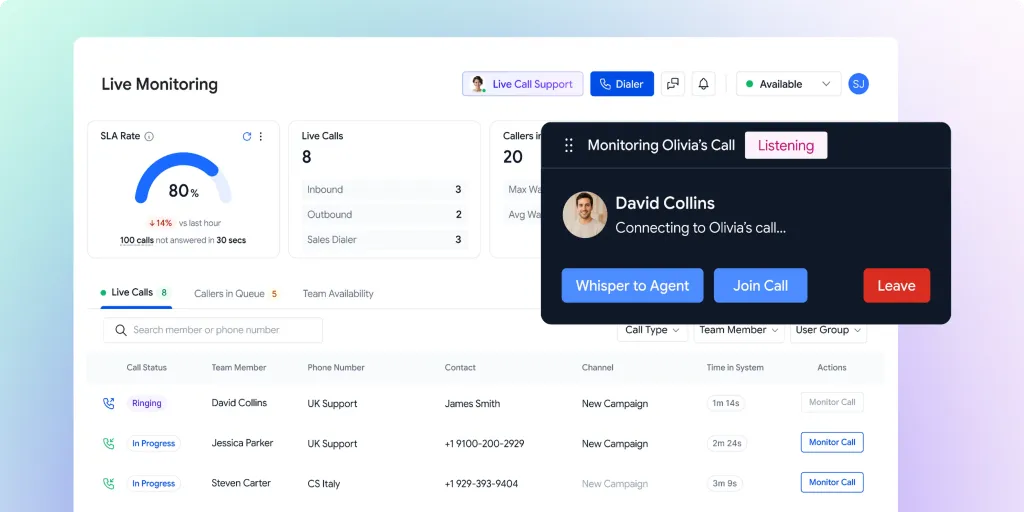
JustCall's a seat-based cloud phone and dialer for SMB and mid-market teams. It isn't AI-native, but it sells an AI Voice Agent as an add-on for overflow and after-hours calls. It connects natively to 100+ tools.
Standout Features
AI Dialer skips voicemails automatically so reps only connect on live answers
SMS Workflows trigger texts based on call outcomes or CRM events without any code
Dynamic Dialer pulls leads from your CRM in real time and dials them as they are created
Pricing: Team starts at $29/user/month annually ($39 monthly). AI Voice Agent's billed separately.
Rating: 4.3/5 on G2
HubSpot setup runs in about 15 minutes, and it covers most SMB CRMs. But the AI Voice Agent's a paid add-on, and HIPAA's only on the Business tier.
Decagon
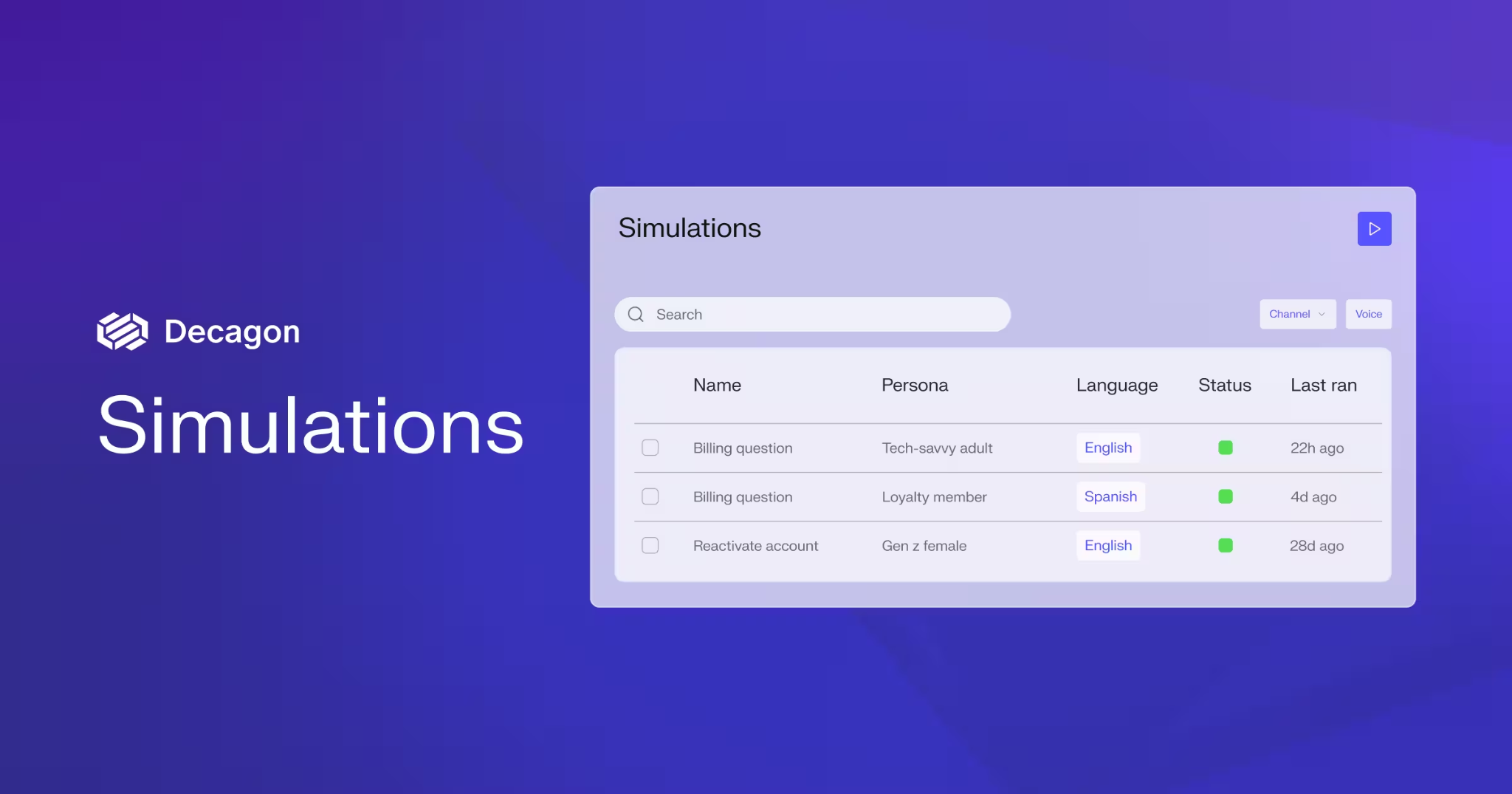
Decagon builds AI concierge agents using natural-language "Agent Operating Procedures." You don't drag boxes onto a canvas. Rather, you describe a workflow in plain language and Decagon turns it into a running agent across voice, chat, and email.
Standout Features
Knowledge Suggestions spots gaps in the knowledge base by analyzing unresolved conversations
Omnichannel intelligence across voice, chat, and email
Enterprise infra on Google Cloud and Cloudflare with SSO and audit logs
Pricing: Quote-only, priced per conversation or resolution.
Rating: 4.8/5 on G2
AOPs are a genuinely different approach but there's no public pricing, so budgeting starts with a sales call.
Sierra
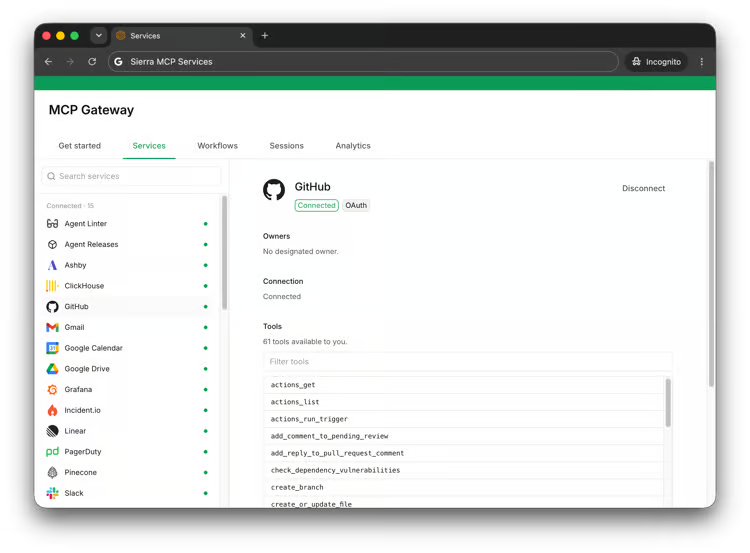
Sierra calls itself an "Agent OS" because you’re deploying an agent that plugs directly into your stack and takes action within it. You build with a no-code Agent Studio or Ghostwriter, and that agent runs across chat, SMS, WhatsApp, email, voice, and ChatGPT.
Standout Features
Context Engine connects memory across conversations so the agent knows who the customer is before they say a word
Horizon breaks complex multi-step goals into specific actions that run over days or weeks
One agent across six channels, including ChatGPT
Pricing: Quote-only, outcome-based.
Rating: 4.5/5 on G2
You're paying for results, not infrastructure. However, there's no public rate card, and onboarding runs between 4 and 10 weeks.
Retell AI
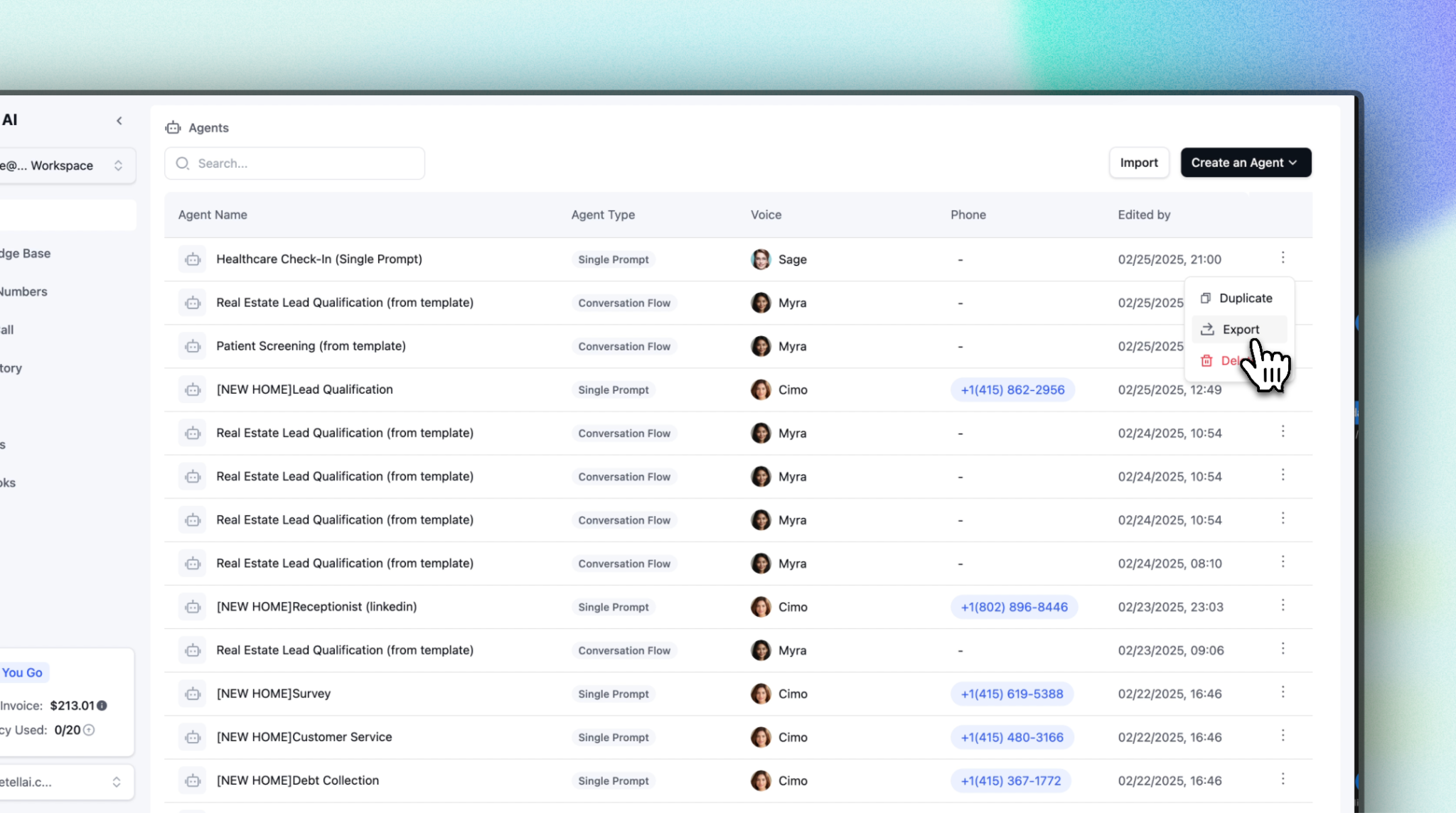
Retell AI's a developer-first voice agent platform built around low latency. The "Who speaks first" toggle lets you choose who opens each call, and a live transfer API handles both cold and warm handoffs to human agents.
Standout Features
Proprietary turn-taking model knows when to speak and when to listen
On-premise deployment option lets regulated teams run Retell within their own infrastructure
Real-time function calling that streams answers into live conversations
Pricing: Voice engine runs $0.07/min with LLM and telephony on top. A typical all-in config lands around $0.11/min.
Rating: 4.8/5 on G2
Latency's competitive with any voice AI out there but complex flows still need JSON or code, and there's no campaign dialer.
Vapi
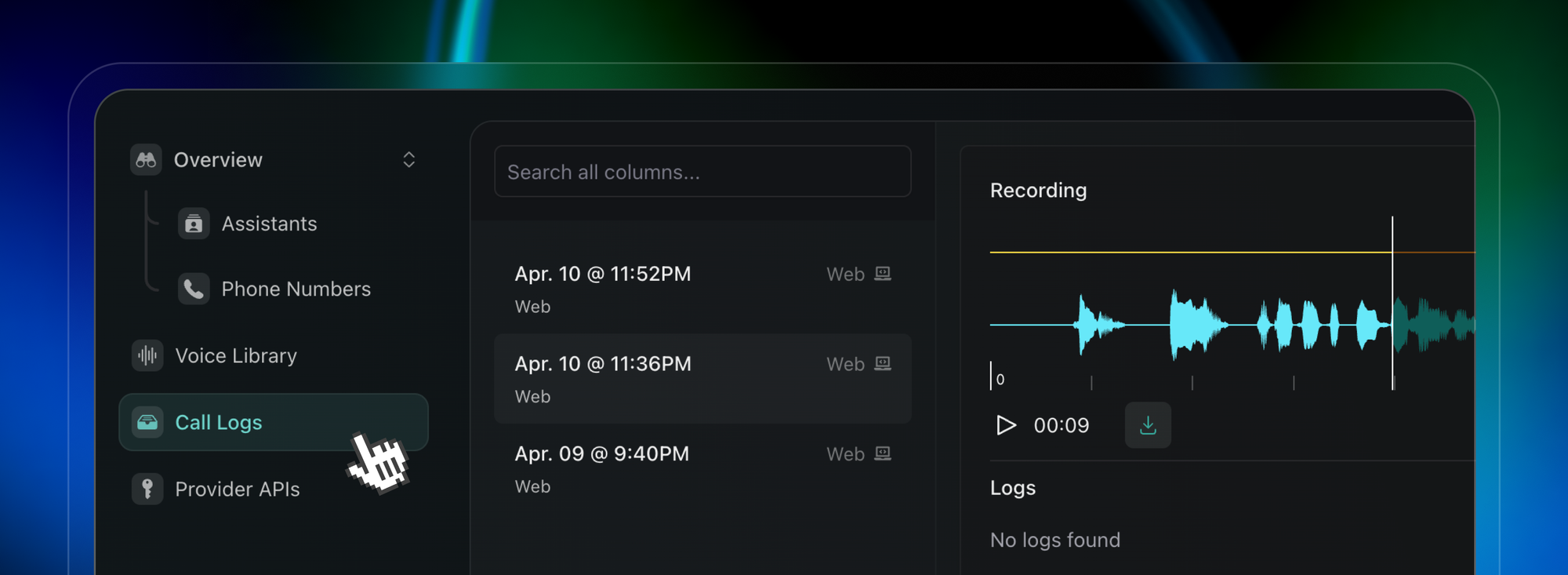
Vapi's a developer platform for orchestrating voice AI infrastructure. It doesn't pick your stack for you. It routes calls across your chosen STT, LLM, and TTS providers, so you've got control over every piece.
Standout Features
Orchestration layer across your chosen STT, LLM, and TTS providers
Squads for coordinating multiple agents on one workflow
Built-in call analysis with auto-generated summaries
Pricing: $0.05/min platform fee plus separately billed provider costs. Typical all-in runs $0.11 to $0.15 per minute.
Rating: 4.2/5 on G2
You've got full control over every provider choice. But everything's API or SDK with no no-code option, and latency can swing from call to call.
Selection Criteria
Comparing 10 Five9 alternatives means weighing very different kinds of platforms against each other (full CCaaS suites, AI agent layers that sit on your existing stack, and developer-first APIs). However, most of them don't fit the same yardstick. We decided to judge them on what actually matters when you're choosing a replacement or an add-on, not on homepage claims.
Here's the full detail on how each one stacked up:
How We Evaluated
We looked at whether AI agents are the core product or a bolted-on module, and how much hands-on support each platform gives you once the contract is signed. We also weighed how much of a stack you'd need to replace, compliance depth, and how fast you can get live.
How to Choose
If you're replacing Five9 entirely, NICE CXone, Genesys Cloud CX, and Talkdesk are your closest swaps. They all build AI into the routing and workforce management platform.
If you'd rather keep your existing telephony and add AI on top, Callers, Decagon, and Sierra are built for that. Technical teams building a custom stack fit Retell AI or Vapi better. A tight seat budget that just wants a light AI layer fits JustCall or RingCX. See our conversational AI platforms roundup for more.
Get AI Voice Agents Live Without Replacing Your Stack
Most Five9 alternatives ask you to migrate the whole contact center to get the AI features you want. Callers drops AI voice agents into the telephony, CRM, and CCaaS you're already running. White-glove onboarding and a named CSM and AE come with every plan, so you've got a dedicated contact from day one.
Book a Callers meeting and see it against your own use case.
Frequently Asked Questions
1. What's the Best Five9 Alternative for Enterprise Contact Centers?
NICE CXone and Genesys Cloud CX are your closest full replacements. Callers takes a different approach, adding AI voice agents to your existing stack without touching the CCaaS layer underneath.
2. Is There a Cheaper, Usage-Based Alternative to Five9?
Retell AI and Vapi both price by usage, so cost tracks actual call volume. Sierra bills by outcome, tying cost to resolved conversations rather than minutes used. If predictable, volume-based pricing matters more than outcome guarantees, the usage-based group is the better fit.
3. Do Any of These Platforms Work Without Long-Term Contracts?
Five9 typically locks you into multi-year terms with seat minimums, and several of the full-replacement alternatives here follow a similar quote-based, contract-heavy model. Usage-based platforms like Retell AI and Vapi don't require seat commitments, so you can scale down in a slow month without renegotiating.
4. How Long Does It Take to Switch From Five9?
Most full replacements, like NICE CXone, Genesys Cloud CX, Talkdesk, run a standard CCaaS migration, so expect weeks of porting numbers, IVR flows, and integrations before cutover. If you're keeping Five9 and just adding AI on top instead, Callers, Decagon, or Sierra sit alongside your existing telephony, so there's no migration at all.
5. How Is Callers Different From the Other AI-Native Options on This List?
Decagon, Sierra, and Vapi are all AI-native too, but each is quote-only with no public pricing, and Vapi requires developer resources to orchestrate the STT/LLM/TTS stack yourself. Callers pairs a no-code builder with white-glove onboarding and a dedicated CSM on every plan, so a CX team can go live in days without engineering.