
Conversational IVR Explained: What It Is, What It Replaces, and How to Choose One
:quality(80))
:quality(80))
Quick Summary
Conversational IVR is an AI phone system built on natural language understanding. It reads intent from a full sentence instead of forcing people through preset branches. It’s fine for routing and FAQs but not enough once someone needs something changed. Before picking a tool, check whether it finishes tasks and whether you're buying a suite or a standalone layer.
Where Menu-Tree IVR Contact Centers Lose Their Customers

Contact center leaders are replacing their phone menus because the old kind loses people before a human ever gets on the line. Someone who wants one specific thing still has to sit through several options that don't quite fit. Plenty of callers abandon somewhere inside a traditional IVR, and for menu-heavy industries like telecom, the drop-off runs even higher.
Conversational IVR fixes the interaction itself. It's a system that understands plain speech, so you state what you need once and it takes it from there. But conversational IVR isn't the same thing as a full AI voice agent, and knowing where that line sits changes which one your team needs.
Why Listen to Us
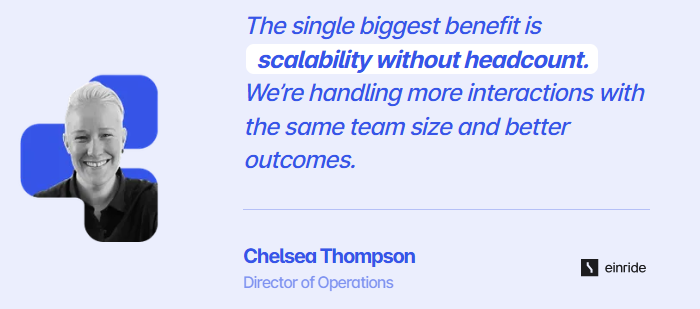
We handle 150 million+ customer moments a year across voice, SMS, WhatsApp, chat, and email. Einride, the autonomous freight company, runs Callers as the first point of contact on its inbound driver line, went live in three weeks, and saves over $65,000 a year. You can see more results on our case studies page.
That's the distinction this guide walks through, and it's why we can tell you plainly where conversational IVR stops being enough. Our AI IVR page has more on how that task completion works.
What Is Conversational IVR?
Conversational IVR is an AI-driven phone system that understands natural speech instead of routing calls through preset menu options. It uses natural language understanding to work out what you want. Then it'll respond with the right prompt or send the call to the right place.
Say you call a hotel and say, "I need to change my reservation for this weekend." A menu-tree IVR asks you to press 1 for reservations, then 2 for changes. Conversational IVR doesn't need either step. It goes straight to pulling up your reservation.
It's simpler than it sounds. Genesys, NICE, and Five9 build some form of this into their contact center platforms and a newer wave of voice AI vendors sells it too. Others sell it as a standalone layer that sits on top of whatever phone system you already run. If you want the fuller list, read the roundup of IVR software.
How Conversational IVR Differs From Menu-Tree IVR
Menu-tree IVR is deterministic. It plays a fixed list of options and waits for a keypress or a simple word like "sales" or "support." Then it follows the one path that matches. If what you want doesn't map cleanly onto one of those branches, you're stuck. You'll back up, try again, or mash until a human finally picks up.
Conversational IVR removes the branches. It works out the intent behind a full sentence instead of matching a keyword. You can say "I got charged twice this month and I need that fixed," and it understands that as a billing dispute. No numbered menu required.
That difference shows up hardest on calls with more than one thing going on. A menu forces you to pick whichever option comes closest to what you need. Conversational IVR can catch a call that mentions two topics at once. That’s because it's parsing the sentence for meaning, not scanning it for a matching keyword.
Conversational IVR still tends to hand the call off once it understands the request. It'll route you and answer a simple question, but it won't necessarily go do the thing you need done. That's the boundary the next section gets into.
How Conversational IVR Differs From a Full AI Voice Agent
A full AI voice agent does everything conversational IVR does, and then it goes further. Conversational IVR mostly routes a call or answers something simple, like an order status lookup that only needs one system to check. A full voice agent connects to your CRM, your ticketing system, and your booking calendar. It'll read from and write to all of them during the call itself.
Conversational IVR identifies what you want and sends you somewhere. A full voice agent finishes the task itself, the same way a live agent would. It'll hold a multi-turn conversation, keep context as the topic shifts, and complete the action instead of handing you off. If you're comparing the two categories more broadly, our breakdown of conversational AI platforms covers how they stack up.
Say you want to reschedule an appointment. Conversational IVR can recognize the request and route you to scheduling, or read back the time you've already booked. A full voice agent will open the calendar, check what's free, move the appointment, and confirm the new time back to you inside the same call.
That's also where the CRM and ticketing integrations a vendor advertises matter most. If a voice system can only look things up but can't update anything, it's still conversational IVR in practice. Not whatever the vendor calls it. See our AI IVR use case for what a full task-completing setup looks like end to end.
When Conversational IVR Is Enough, and When It Is Not

Conversational IVR earns its keep on calls that only need one clean answer or one correct destination. The system just has to understand the request, then answer it directly or send you somewhere that can.
It stops being enough the moment you need something changed. A billing dispute that needs a credit issued sits outside what conversational IVR can finish alone. So does an appointment that needs to move, or a claim that needs several systems updated. It'll recognize what you need. It just won't finish it.
Call complexity matters more than call volume here. If a request touches one system and one simple action, conversational IVR can handle it end to end. Once a call needs two or three systems to agree with each other, you'll need something built for multi-step work. Confirming an order, checking inventory, and issuing a replacement is exactly that kind of call.
That's the gap AI-powered customer service fills.
How to Evaluate Conversational IVR
Four things decide whether a conversational IVR system is worth buying:
1. Task Completion, Not Recognition Alone
Ask a vendor to show you a call where the system reads from and writes to a live system. Skip a demo where it only identifies intent and stops there. A lot of what's called "conversational IVR" is a well-spoken menu with the buttons removed. Don't take their word for it. Make them prove it can finish something.
2. What Happens on a Miss
Every system misunderstands you sometimes. It's what happens next that matters, so ask what the fallback looks like. Does it ask a clarifying question, or does it drop you into a dead-end loop or an old-style menu? A graceful recovery matters more than a high headline accuracy number.
3. The Pricing Model
Conversational IVR pricing almost always comes as a custom quote, tied to your call volume and the number of workflows you need. It's rarely a published rate card, so ask how it'll scale when you add a second use case. A quote that looks affordable at your current volume can climb fast.
4. Implementation and Change Control
Find out who edits the call flow after launch, your team or the vendor's. If a wording tweak takes two weeks to turn around, it'll fall behind your business fast.
Conversational IVR Vendors
The vendors below split into two groups, and they don't stack up the same way. Some are full contact center platforms with conversational IVR built into a broader suite. Others sell voice AI as a standalone layer you'd add to your existing phone system. Our IVR software roundup covers a wider set if you want more options.
Vendor | Deployment model | What it actually does | Pricing approach |
Genesys Cloud CX | Full CCaaS platform | Conversational IVR plus omnichannel routing, workforce tools, and reporting in one suite | Custom quote, no published per-seat rate |
NICE CXone | Full CCaaS platform | Conversational IVR and voice bots on NICE's contact center suite, now including Cognigy's conversational AI after NICE's 2025 acquisition | Custom quote, sales-led |
Five9 | Full CCaaS platform | AI-driven self-service and routing built into its cloud contact center | Custom quote, sales-led |
PolyAI | Standalone voice AI layer | Enterprise voice AI for high-volume phone lines, added on top of an existing phone system | Custom annual contract, scoped to call volume |
Twilio (Conversation Relay) | Developer toolkit | A building block for a team that wants to build its own conversational IVR on Twilio's voice infrastructure | Usage-based, priced on the voice and AI components you consume |
If you want to compare standalone AI customer service agents separately from full CCaaS suites, we've broken those out too.
How Callers Compares
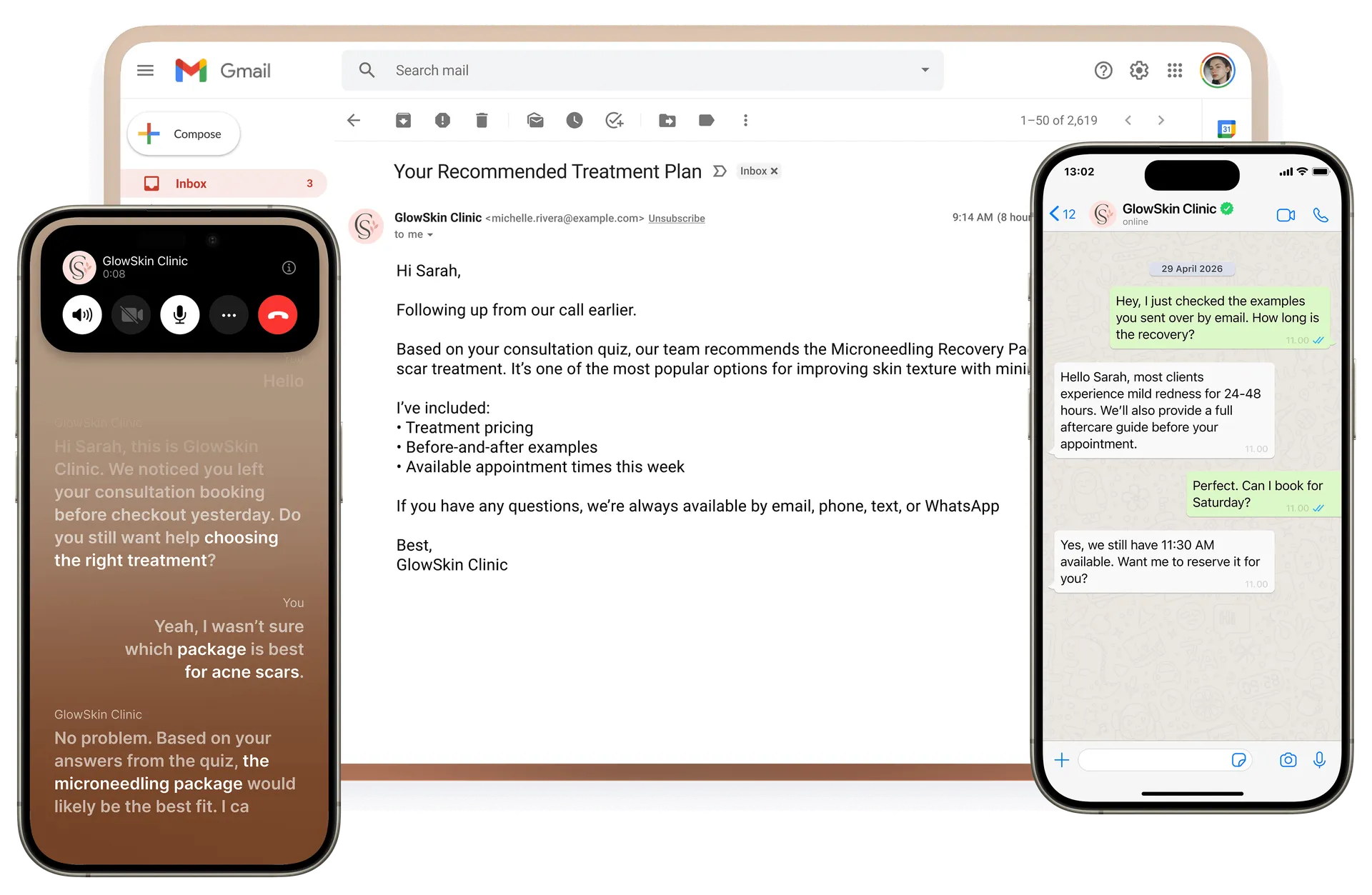
Callers is a conversational AI platform for high-volume B2C phone and messaging conversations. It’s built for industries like lending, retail CX, and home services. The agent reads from and writes to your CRM during the call, so a request gets finished on the spot instead of routed into a queue.
The platform also runs across voice, SMS, WhatsApp, chat, and email on one shared context layer, so the caller's history follows them regardless of channel. You'll find more about how that works as an AI communication platform.
Take the order example from above. Callers will confirm the order's missing, check inventory, and trigger a replacement in the same call. A conversational IVR layer could recognize that complaint and route it to the right team. It doesn't reach into your fulfillment or claims systems directly, so someone's still got to finish the rest by hand.
Where To Go From Here
If you're mapping out what your next phone system needs to do, start by testing whether it'll finish a task. Ask any vendor, Callers included, to show a live call where the platform changes something in a live system. Skip a demo that stops at understanding the request.
Do you need a system that completes work end to end across calls and messages? Book a demo with Callers. Bring your hardest call, the one with two things going on at once, and see if it'll finish both.
FAQs
1. Will Conversational IVR Work With the Phone System I Already Have?
Usually yes, for the standalone vendors. PolyAI and Twilio's Conversation Relay connect to a phone number and carrier setup you already have, and so does a full AI agent platform like Callers. Full CCaaS platforms like Genesys, NICE, and Five9? They'll generally expect you to run your phone system through their suite.
2. Is Conversational IVR the Same as an AI Voice Agent?
No. Conversational IVR mostly identifies what you want and sends you somewhere. A full AI voice agent goes further. It reads and writes to your CRM, ticketing system, or calendar during the call, and completes the task itself.
3. Does Conversational IVR Still Use a Menu?
It uses natural language instead of one. You state what you need in a full sentence, and the system works out the intent. There's no keypress and no keyword matched to a preset branch.
4. How Much Does Conversational IVR Cost?
It's almost always a custom quote, tied to your call volume and the workflows you need. Full CCaaS platforms like Genesys, NICE, and Five9 fold it into a broader suite. Standalone voice AI vendors price it separately.
5. Can Conversational IVR Handle More Than One Language?
Plenty of vendors support multiple languages, but accuracy varies a lot by provider and by language. Confirm the specific languages you need on a live demo call, not a marketing page. A short test call shows you the accuracy faster than any spec sheet.